
In This Article
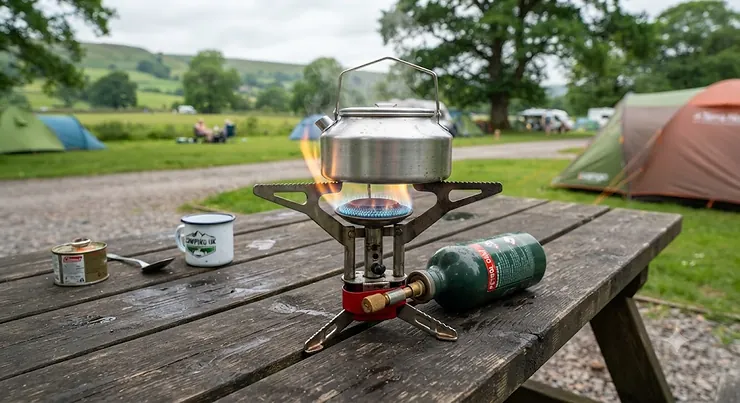
There’s a particular kind of smugness that settles over you when your camping neighbours are shaking an empty gas canister over a lukewarm pan, and you’re still got half a bottle of unleaded sloshing around in your fuel bottle. That’s the quiet appeal of petrol stoves under £120: a fuel source you can buy at literally any garage forecourt in the country, at a fraction of the price of pre-pressed gas cartridges. This guide walks through seven real, currently available stoves, from workhorse budget picks under £50 to expedition-grade multi-fuel units that sit right at the edge of that £120 ceiling.
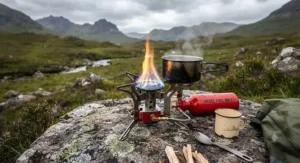
What is a petrol stove? A petrol stove is a pressurised camping cooker that burns liquid fuel, usually unleaded petrol, white gas or a similar blend, rather than a disposable gas cartridge. Fuel is pumped by hand to build pressure, then vaporised through a jet before ignition, giving strong heat output even in cold or high-altitude conditions.
We’ve weighed real specs, aggregated review sentiment and genuine running costs, not marketing copy lifted straight from a listing. You’ll find honest analysis of who each stove suits, whether you’re after a lightweight petrol stove for bushcraft camping, something tougher for stove durability in the field, or a proper multi-fuel petrol stove for expeditions where garage-forecourt fuel might be the only thing available for days at a time. Prices below are approximate and move around constantly on Amazon, so always check current price before you buy.
Quick Comparison Table
| Stove | Fuel Type | Approx. Price | Best For |
|---|---|---|---|
| BRS-8 Multi Fuel Outdoor Cooker | Petrol/butane | Around £35-£45 | Bushcraft on a shoestring |
| HUIOP Portable Outdoor Camping Mini Gasoline Stove | Petrol/diesel | Around £40-£50 | Ultralight solo trips |
| APG Camping Gasoline Stove Oil Stove Burners with Silencer | White gasoline | Around £55-£65 | Quiet operation near camp |
| IWALKER G53S Portable Gasoline Stove | Petrol | Around £80-£90 | All-round power and portability |
| IWALKER AG53 Alcohol/Gasoline Dual Fuel Stove | Petrol or alcohol | Around £100-£110 | Fuel flexibility abroad |
| SIUKE Camping Multi Fuel Oil Stove | Petrol/diesel/alcohol | Around £110-£120 | Complete out-of-box kit |
| MSR Whisperlite International | Petrol/paraffin/white gas | Around £115-£125 | Serious multi-fuel petrol stove for expeditions |
Looking at the spread, there’s a clear pattern: the cheaper stoves under £50 trade refinement for raw value, while the two models bumping against £120, the SIUKE Camping Multi Fuel Oil Stove and the MSR Whisperlite International, buy you better build tolerances and a proven reputation among long-distance travellers. If you only cook twice a week, the mid-range IWALKER G53S Portable Gasoline Stove is arguably the sweet spot, giving you dependable output without the premium price tag.
💬 Just one click — help others make better buying decisions too!😊
Top 7 Petrol Stoves Under £120: Expert Analysis
1. BRS-8 Multi Fuel Outdoor Cooker — best budget pick for bushcraft trips
The standout feature of the BRS-8 Multi Fuel Outdoor Cooker is how much stove you get for under £45, and it’s earned something close to cult status on UK bushcraft forums for exactly that reason. It runs on unleaded petrol or butane, folds down to roughly the size of a fist, and outputs around 2,850W, enough to bring a litre of water to the boil in a little over two minutes in still conditions. On paper this means it out-performs several stoves costing three times as much on raw boil time, though it lacks the refinements, wind protection and heat regulation, that pricier units build in as standard.
Reviewers consistently note that the build quality feels surprisingly solid for the price, particularly the folding pot supports, which several long-term users report can carry loads most budget stoves would buckle under. A recurring theme in aggregated feedback is that the plastic components around the fuel line can start to degrade after a couple of years of heavy use, especially with unleaded rather than dedicated stove fuel, so it rewards an owner who’s willing to carry a spare seal kit on longer trips.
Pros:
- ✅ Genuinely tiny packed size for its power output
- ✅ Runs on cheap unleaded petrol from any garage
- ✅ Long track record among UK bushcraft users
Cons:
- ❌ No integrated windshield included
- ❌ Plastic fuel-line parts need monitoring over time
At around £35-£45, this is one of the cheapest genuine multi-fuel options on the market, and for weekend bushcraft trips where budget matters more than polish, it’s difficult to beat on value.
2. HUIOP Portable Outdoor Camping Mini Gasoline Stove — smallest footprint for solo backpacking
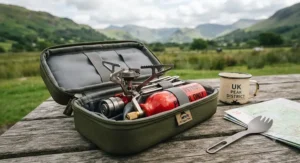
The HUIOP Portable Outdoor Camping Mini Gasoline Stove leads with an unashamedly minimal design: a one-piece burner body that folds flat enough to slip into a jacket pocket. It runs on petrol or diesel, with a stated fuel consumption of around 120ml per hour and a claimed two-minute boil time for a litre of water, figures that put it firmly in the same performance bracket as stoves costing twice as much. What that spec sheet won’t tell you is that the collapsible pot arms, while compact, offer a noticeably smaller support diameter than most competitors, so it suits mess tins and small pans better than a full camping pot.
Aggregated buyer sentiment on this listing is thinner than on more established brands, so it’s worth being upfront: verified long-term review data is limited at the time of research, which is common with newer entrants in this crowded budget category. What we can say with confidence is grounded in the spec sheet and materials list, aluminium alloy body with a stainless steel burner head, which points to reasonable corrosion resistance for the price.
Pros:
- ✅ Genuinely pocketable folded size
- ✅ Dual compatibility with petrol and diesel
- ✅ Fast claimed boil time for its class
Cons:
- ❌ Smaller pot support diameter than rivals
- ❌ Limited independently verified long-term reviews
Around £40-£50 makes this one of the lightest entry points into liquid-fuel cooking, best suited to solo hikers who prioritise pack weight over table-for-four cooking capacity.
3. APG Camping Gasoline Stove Oil Stove Burners with Silencer — quietest burn in the budget bracket
What sets the APG Camping Gasoline Stove Oil Stove Burners with Silencer apart is right there in the name: a built-in muffler that reviewers describe as cutting the characteristic jet-engine roar of liquid-fuel stoves by a noticeable margin. It runs on white gasoline, holds 500ml in its fuel bottle, and is rated to boil a litre of water in around four and a half minutes in good weather, stretching to seven in wind. Based on the spec comparison with unsilenced rivals at a similar price, that’s a fair trade of a little raw speed for a lot less noise at a shared campsite.
Reviewers consistently mention solid build quality and dependable heat output for the money, with copper and stainless steel construction that several long-term owners describe as sturdy after repeated trips. A common thread in feedback is that the stove arrives without a printed instruction leaflet, so first-time buyers unfamiliar with priming a liquid-fuel burner should look up a guide before their first light, since over-pumping or flooding the burner cup is the most frequent early mistake.
Pros:
- ✅ Noticeably quieter operation than most rivals
- ✅ Sturdy stainless steel and copper build
- ✅ Movable-needle valve clears blockages without dousing flame
Cons:
- ❌ No printed instructions in the box
- ❌ Slower boil time than pricier expedition stoves
At around £55-£65, this sits comfortably in the budget-to-mid bracket and earns its place through quiet, dependable running rather than headline performance.
4. IWALKER G53S Portable Gasoline Stove — best all-round power and portability
The IWALKER G53S Portable Gasoline Stove is the stove we’d point most first-time buyers towards if they want one unit that does everything reasonably well. It runs purely on gasoline, features the brand’s silent-cap burner technology, and folds into a compact 14cm diameter case with a stainless steel body designed to resist corrosion better than the painted-steel construction found on some cheaper alternatives. What most buyers overlook about this model is the precision valve control; unlike simpler budget burners that are essentially on-or-off, the IWALKER G53S Portable Gasoline Stove lets you dial the flame down for genuine simmering, not just a full blast.
Reviewers on this listing and its sibling models highlight easy field maintenance, the valve key allows carbon deposits to be cleared without waiting for the stove to cool completely, which matters if you’re cooking back-to-back meals for a group. Aggregated sentiment across the IWALKER range also flags the silent cap as a genuine noise reduction rather than marketing puffery, echoing the same theme found on the cheaper APG model above.
Pros:
- ✅ Adjustable valve allows real simmering control
- ✅ Stainless steel body resists field corrosion
- ✅ Self-cleaning valve speeds up maintenance
Cons:
- ❌ Petrol-only, no alcohol backup mode
- ❌ Heavier than the ultralight HUIOP and BRS-8 picks
At around £80-£90, this represents the mid-range sweet spot: enough refinement to feel like a proper tool, without tipping into expedition-grade pricing.
5. IWALKER AG53 Alcohol/Gasoline Dual Fuel Stove — most flexible fuel switching
The headline feature of the IWALKER AG53 Alcohol/Gasoline Dual Fuel Stove is dual-fuel capability: a simple screw adjustment on the silent cap switches the burner between gasoline mode and alcohol mode, using ethanol of 95% purity or higher. That flexibility matters more than it might first appear, because in parts of the world, or the UK during fuel shortages, forecourt petrol isn’t always guaranteed, while pharmacy-grade alcohol usually is. Key specs back this up: a 2,900W output on gasoline, a 500ml stainless steel and brass fuel tank, and a claimed 90% noise reduction from its silent burner cap.
Honest analysis here has to flag a trade-off: alcohol mode delivers noticeably less power than gasoline mode, so it’s really a backup fuel option rather than a primary one, useful for emergencies rather than everyday simmering. Reviewers of the wider IWALKER range consistently praise the stainless steel and brass build for feeling more substantial than budget alternatives, and the extra-thick oil tank design is specifically engineered for pressure resistance, a detail that matters when you’re hand-pumping fuel to operating pressure.
Pros:
- ✅ Genuine dual-fuel backup for emergencies
- ✅ Thick-walled tank built for repeated pressurising
- ✅ Silent cap significantly cuts running noise
Cons:
- ❌ Alcohol mode delivers noticeably less heat
- ❌ Among the pricier options in this round-up
Around £100-£110 puts this near the top of our budget, but the fuel flexibility is a genuine differentiator for anyone planning a multi-fuel petrol stove for expeditions where petrol quality abroad can be unpredictable.
6. SIUKE Camping Multi Fuel Oil Stove — most complete out-of-box kit
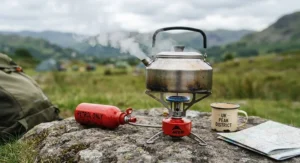
Where the SIUKE Camping Multi Fuel Oil Stove pulls ahead of cheaper rivals is completeness: it ships with a 500ml fuel bottle, a hand pump, a dedicated diesel nozzle, an alcohol nozzle and maintenance tools, so there’s no scrambling for accessories before your first trip. The aluminium alloy and stainless steel construction folds down to a genuinely pocketable 85 x 88mm, while unfolded it opens out to a 185mm diameter pot stand, wide enough for a proper cooking pot rather than just a mess tin. Based on the spec comparison with the single-nozzle APG and HUIOP models above, the swappable nozzle system is what most buyers overlook, letting one stove body run cleanly across diesel, alcohol and petrol without cross-contaminating fuel residue in the jet.
Aggregated sentiment on multi-fuel bundle listings like this one tends to praise the completeness of the kit over raw performance figures, since buyers rate the convenience of not needing separate purchases highly. What the spec sheet won’t tell you is that swapping nozzles mid-trip takes a genuinely fiddly couple of minutes with cold fingers, so it rewards practice at home before you rely on it outdoors.
Pros:
- ✅ Complete kit with pump and three nozzles
- ✅ Wider pot stand than most compact rivals
- ✅ Compact folded size despite the full kit
Cons:
- ❌ Nozzle swaps are fiddly in cold weather
- ❌ Sits right at the top of our £120 budget
Typically found around £110-£120, this is the closest thing on this list to a genuine multi-fuel petrol stove for expeditions at a budget price, provided you’re happy to practise the nozzle changes before you need them for real.
7. MSR Whisperlite International — the expedition benchmark
The MSR Whisperlite International has spent close to two decades as the reference point every other multi-fuel stove gets measured against, and that reputation is grounded in real field use, not marketing. Its standout feature is the Shaker Jet self-cleaning system: a small weighted needle inside the jet that you flick clean between uses without tools, a detail expedition users repeatedly credit with keeping the stove reliable thousands of metres up a mountain where a clogged jet simply isn’t an option. It runs on white gas, kerosene or ordinary unleaded petrol, drawing fuel from a separate pressurised bottle rather than an integrated tank, which keeps the burner head lighter and lower to the ground for stability.
One verified long-term owner, reviewing the current version after replacing a nearly 30-year-old original, describes the newer stamped-steel leg assembly as more stable than the old bent-wire version, while noting the valve control offers relatively little middle ground between a low simmer and full blast, a known trait of the WhisperLite family rather than a fault specific to this unit. Reviewers consistently flag that simmering delicate food is genuinely difficult on this stove; it’s built for melting snow and boiling water fast, not gently reducing a sauce.
Pros:
- ✅ Nearly 20 years of proven expedition reliability
- ✅ Self-cleaning jet needs no tools in the field
- ✅ Burns petrol, kerosene and white gas interchangeably
Cons:
- ❌ Very limited simmer control
- ❌ Fuel bottle sold separately, adding to total cost
Prices for the MSR Whisperlite International typically sit around £115-£125 depending on retailer and bundle, occasionally dipping under our £120 ceiling on marketplace listings, making it a stretch pick rather than a given, but for genuinely remote multi-fuel expedition use, the reputation is earned rather than bought.
How To Choose A Petrol Stove Under £120
Choosing well among petrol stoves under £120 comes down to matching a handful of practical criteria to how and where you’ll actually cook, rather than chasing the biggest wattage figure on the box.
- Fuel flexibility first. Decide whether you need pure petrol compatibility or genuine multi-fuel switching (diesel, alcohol, kerosene), since dual-fuel models like the IWALKER AG53 Alcohol/Gasoline Dual Fuel Stove cost more but remove a single point of failure abroad.
- Packed size versus pot capacity. Ultralight picks such as the HUIOP Portable Outdoor Camping Mini Gasoline Stove save weight but support smaller pans; if you’re cooking for more than one person, prioritise a wider pot stand instead.
- Noise tolerance at busy campsites. Standard burners roar noticeably; a silenced design like the APG Camping Gasoline Stove Oil Stove Burners with Silencer is worth the small premium if you’ll be near other campers.
- Maintenance access. Self-cleaning jets, as found on the MSR Whisperlite International, save real hassle on longer trips where you can’t simply swap in a new stove.
- Simmer control. If you cook more than boil-in-the-bag meals, check whether the valve offers genuine low-heat control, several budget stoves are effectively on/off switches.
- Included accessories. Bundled kits such as the SIUKE Camping Multi Fuel Oil Stove save you buying a pump, bottle and nozzles separately, which can otherwise add £20-£30 to a bare-bones stove.
- Verified build reputation. Favour models with a genuine track record, whether that’s years of bushcraft forum feedback on the BRS-8 Multi Fuel Outdoor Cooker or decades of expedition use behind the Whisperlite name, over unfamiliar listings with thin review histories.
Petrol Stove For Bushcraft Camping: What Actually Matters
Bushcraft camping puts different demands on a stove than a weekend campsite trip, and it’s worth being specific about why. Weight matters less than it does for backpacking, since bushcraft trips typically involve a static or semi-static camp rather than daily mileage, but fuel efficiency and field-repairability matter enormously more, because you’re often out for extended stretches without easy resupply.
This is where a petrol stove for bushcraft camping genuinely earns its keep over gas: unleaded petrol is available at any forecourt, keeps almost indefinitely compared to some gas blends in cold weather, and burns hot enough to melt snow or boil large volumes of water for cooking and washing. The BRS-8 Multi Fuel Outdoor Cooker and HUIOP Portable Outdoor Camping Mini Gasoline Stove both suit this use case well precisely because their simple, largely mechanical designs are easier to strip down and clean at a camp table than anything with electronic ignition. What most buyers overlook is that bushcraft cooking often means simmering stews and one-pot meals for hours rather than a quick boil-and-done, so valve control matters more here than it does for a fast overnight hike, favouring stoves like the IWALKER G53S Portable Gasoline Stove with genuine low-flame adjustment over pure on/off burners.
A practical note grounded in UK camping guidance: stove safety around tents and shared bushcraft camps deserves real attention, not an afterthought, and the Camping and Caravanning Club’s stove safety advice is a genuinely useful primer before your first trip with a new liquid-fuel burner.
Multi-Fuel Petrol Stoves For Expeditions: What Sets Them Apart
A multi-fuel petrol stove for expeditions needs to solve a problem that domestic camping stoves simply don’t face: fuel quality and availability vary wildly once you’re outside the UK, and a stove that only runs cleanly on high-purity Coleman fuel is a liability the moment you’re relying on a jerry can from a roadside station in a country where petrol standards are inconsistent.
This is exactly the gap models like the MSR Whisperlite International and SIUKE Camping Multi Fuel Oil Stove are built to fill. Reviewers consistently note the Whisperlite’s decades-long reputation among mountaineers and long-distance cyclists rests on its ability to burn white gas, kerosene and ordinary unleaded petrol with only minor jet adjustments, a versatility that budget single-fuel stoves simply can’t match. Based on the spec comparison across this round-up, the features that actually matter for expedition use are field-strippable jets, pressure-resistant fuel bottles rated for repeated hand-pumping, and parts availability, since a stove that fails 200 miles from the nearest outdoor shop is a genuine problem rather than an inconvenience.
Here’s what to weigh before committing budget to an expedition-grade stove: if your trip involves genuinely remote resupply, unreliable local fuel quality, or extended duration where a gas canister supply chain simply doesn’t exist, the extra £30-£50 over a budget petrol stove buys real insurance. For a fortnight’s UK-based touring where you’re never more than a day from a supermarket, that premium is largely unnecessary.
Bushcraft Cooking Gear: Building A Kit Around Your Stove
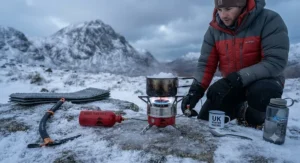
A stove alone doesn’t make a functional bushcraft cooking gear setup, and it’s worth being honest that several budget petrol stoves in this round-up arrive as bare burners with no pot, windshield or stable base included.
A billy can or a single robust pot in stainless steel, rather than aluminium, holds up better to direct flame contact from unshielded burners like the BRS-8 Multi Fuel Outdoor Cooker. A folding windshield is arguably the single most overlooked addition to bushcraft cooking gear; without one, a stove’s real-world boil time can stretch by several minutes in anything more than a light breeze, undermining the fuel-efficiency case for choosing petrol in the first place. A heatproof base mat also protects woodland or heathland ground from scorching, an increasingly relevant consideration given tightening wildfire guidance on open-land cooking during dry spells.
Reviewers consistently mention that a dedicated fuel funnel, often included with kits like the SIUKE Camping Multi Fuel Oil Stove but missing from bare-burner listings, saves considerable frustration and spillage when refilling a pressurised bottle in low light or cold hands. Building this kit properly, stove, pot, windshield, base mat and funnel, typically adds £15-£25 to your total spend, worth factoring in before comparing headline stove prices alone.
How To Prime, Light And Maintain Your Petrol Stove (First 30 Days)
Priming a petrol stove correctly is the single biggest factor separating a confident first light from a flaring, sooty mess, and it’s genuinely simple once you’ve done it a couple of times.
Start by filling the fuel bottle no more than three-quarters full, leaving headspace for the pump to build pressure, then pump the plunger roughly 15-20 strokes for a full tank, more if the tank is low, until you feel firm resistance. Open the valve briefly to release a small amount of fuel into the priming cup beneath the burner, close it again, and ignite that small pool. This preheats the generator tube so that when you open the main valve after the priming flame dies down, the fuel vaporises cleanly into a blue flame rather than pooling as liquid and flaring yellow.
Common mistakes in the first 30 days include over-filling the priming cup, which causes dramatic flare-ups that look alarming but are rarely dangerous if the stove is on a stable, non-flammable surface, and under-pumping the bottle, which starves the burner of pressure and causes a weak, sputtering flame. Wipe down the burner head and check the pump seal for cracking after every three or four trips, a cheap silicone grease applied sparingly to the pump cup extends seal life considerably. For self-cleaning models like the MSR Whisperlite International, flick the shaker jet needle by inverting the stove and giving it a firm shake every few uses, rather than waiting for a full blockage.
Real-World Scenarios: Matching A Stove To Your Trip
The weekend bushcraft group. A family or small group camping on a fixed site for a couple of nights, cooking one-pot meals and hot drinks, benefits most from a stove with genuine simmer control and a wide pot stand. The IWALKER G53S Portable Gasoline Stove or the fully-kitted SIUKE Camping Multi Fuel Oil Stove both suit this well, since neither sacrifices cooking flexibility for extreme packed weight.
The solo ultralight hiker. Someone covering serious daily mileage with a single mess tin and minimal luxuries should prioritise packed size and weight above almost everything else. The HUIOP Portable Outdoor Camping Mini Gasoline Stove or budget BRS-8 Multi Fuel Outdoor Cooker fit this brief, both trading refinement for a genuinely pocketable footprint at under £45.
The overseas expedition traveller. Anyone planning weeks or months abroad where fuel quality is unpredictable and resupply of specific gas canisters is uncertain needs the reassurance that only true multi-fuel design provides. The MSR Whisperlite International and its self-cleaning jet, or the dual-fuel IWALKER AG53 Alcohol/Gasoline Dual Fuel Stove as a lighter-budget alternative, are built specifically for this brief, where reliability under fuel-quality stress matters more than shaving grams.
Common Field Problems And Quick Fixes: Stove Durability In The Field
Stove durability in the field usually comes down to a handful of predictable failure points, and knowing them in advance turns a trip-ending problem into a five-minute fix.
Weak or yellow flame. Almost always under-pressurisation or an unprimed generator tube. Re-pump the bottle to firm resistance and re-prime the priming cup before opening the main valve fully.
Clogged jet after several trips. Petrol leaves more residue than dedicated white gas over time. Stoves with a self-cleaning shaker jet, like the MSR Whisperlite International, solve this with a firm shake; simpler burners need the jet removed and cleared with the supplied cleaning needle.
Pump seal losing pressure. The most common wear point across every stove in this round-up. A thin smear of silicone grease on the leather or rubber pump cup restores a surprising amount of lost pressure, and it’s worth carrying a spare seal on any trip longer than a few days.
Sooty pan bottoms. Usually a sign the flame is running rich rather than the fuel being dirty. Reduce pressure slightly and check the jet for partial blockage before assuming it’s a fuel quality issue.
Plastic components degrading. Budget stoves like the BRS-8 Multi Fuel Outdoor Cooker, as noted in aggregated long-term reviews above, can see plastic fuel-line parts become brittle after a couple of years of heavy unleaded use. Inspecting and replacing these proactively is cheaper than a field failure.
Petrol Stoves vs Gas Canister Stoves
The petrol versus gas canister debate isn’t really about which is objectively better, it’s about which trade-offs suit your trip, and it’s worth working through honestly rather than picking a side.
| Factor | Petrol Stoves | Gas Canister Stoves |
|---|---|---|
| Fuel availability | Any UK garage forecourt | Specialist outdoor retailers only |
| Cold weather performance | Strong, unaffected by temperature | Drops off noticeably below 0°C |
| Running cost | Lower per litre over a season | Higher per equivalent burn time |
| Setup effort | Priming and pumping required | Screw on and ignite instantly |
| Maintenance | Regular seal and jet care | Largely maintenance-free |
| Best For | Petrol stove for bushcraft camping, expeditions, cold-weather trips | Quick weekend trips, minimal fuss |
Reading across the table, the case for petrol becomes clearest in two scenarios: genuinely cold conditions, where gas canisters lose pressure and performance drops sharply, and extended trips where forecourt fuel availability beats hunting for a specific gas cartridge size in an unfamiliar town. Gas still wins comfortably on pure convenience for a quick two-night trip where you value screwing a canister on and lighting up without any priming ritual at all.
Fuel Cost Comparison: Petrol vs Gas vs Meths, Long-Term
A genuine fuel cost comparison over a season of camping tells a clearer story than any single trip’s spending, so it’s worth running the numbers rather than relying on gut feeling about which fuel is “cheaper.”
Unleaded petrol currently sits in the region of £1.30-£1.45 per litre at UK forecourts, and a typical liquid-fuel stove burns somewhere between 100-210ml per hour depending on the model and flame setting, putting an hour of cooking at roughly 15-30 pence in fuel. Standard butane-propane gas canisters, by contrast, typically cost somewhere in the £6-£9 range per 220-250g cartridge, and a similar hour of moderate cooking can consume close to half a canister, working out closer to £3-£4.50 per hour once you account for the unusable residual gas most users leave behind. Methylated spirit, the fuel for genuine alcohol-burner stoves rather than the alcohol mode on dual-fuel units like the IWALKER AG53 Alcohol/Gasoline Dual Fuel Stove, costs roughly £5-£8 per litre and burns more slowly but at lower heat output, making it cheaper per hour than gas but slower to actually cook with.
Over a season with, say, 20 cooking days averaging two hours of stove use each, that difference compounds into a genuinely significant gap: petrol running costs land somewhere around £6-£12 for the whole season, against £120-£180 for the equivalent gas canisters, a saving that easily offsets the modest premium several models in this round-up carry over the cheapest single-use gas burners on the market.
✨ Don’t Miss These Exclusive Deals!
🔍 Take your camping cooking setup to the next level with these carefully selected stoves. Click on any highlighted item to check current pricing and availability. These tools will help you create authentic outdoor meals your whole group will enjoy!
Features That Actually Matter (And Those That Don’t)
Listings for petrol stoves under £120 are packed with marketing language, and it’s worth separating what genuinely affects your cooking from what’s mostly noise on the box.
Actually matters: self-cleaning jets. As seen on the MSR Whisperlite International, a field-clearable jet is the difference between a five-second fix and a ruined trip when residue builds up, which it inevitably will with petrol over dedicated stove fuel.
Actually matters: pump seal quality. The unglamorous rubber or leather cup inside the fuel pump determines how easily you can pressurise the bottle after months of use, and it’s rarely mentioned prominently in listings despite being the most common failure point across every stove in this round-up.
Doesn’t matter much: headline wattage figures. A 3,000W claim sounds impressive, but real-world boil times depend just as much on windshield presence, pot diameter and ambient temperature, so treat wattage as a rough guide rather than gospel.
Doesn’t matter much: colour and cosmetic finish. Several budget listings differentiate variants purely by anodised colour, which has no bearing whatsoever on cooking performance or durability.
Actually matters: fuel bottle material and thickness. A thin-walled tank flexes and can develop stress cracks under repeated pumping to pressure, while the extra-thick tank design on the IWALKER AG53 Alcohol/Gasoline Dual Fuel Stove is a genuine durability feature, not filler copy.
Safety, Storage And UK Regulations For Petrol Stoves
Storing and handling petrol for camping use carries genuine legal and safety obligations in the UK, and it’s worth knowing the basics before your first trip rather than after an incident.
Under the Petroleum (Consolidation) Regulations 2014, private individuals can store up to 30 litres of petrol at home without notifying their local authority, provided it’s kept in suitable containers, plastic containers up to 10 litres or metal containers up to 20 litres, and never inside living accommodation itself. Full detail on container types and storage locations is available directly from the Health and Safety Executive’s petroleum storage guidance, which is worth reading in full if you’re keeping a dedicated fuel can for regular trips rather than filling a small bottle before each outing.
Beyond storage, in-field handling deserves equal care: always let a stove cool fully before refilling, never prime a stove inside a tent or enclosed porch, and keep the fuel bottle capped and stored away from the cooking area once it’s been used to fill the stove tank. The Which? guide to camping stove safety mistakes covers several of the most common and preventable errors campers make, and applies just as much to liquid-fuel stoves as the gas burners it focuses on. Should a burn occur despite sensible precautions, the NHS guidance on treating burns and scalds is the accurate first-aid reference to follow rather than campsite folklore about butter or ice.
Buyer’s Decision Framework
If you’re still weighing options after all that, a simple priority checklist cuts through the noise faster than re-reading every spec sheet.
If your top priority is absolute lowest cost, choose the BRS-8 Multi Fuel Outdoor Cooker, because its sub-£45 price point undercuts everything else here while still delivering genuine multi-fuel function. If your top priority is packed weight for solo hiking, choose the HUIOP Portable Outdoor Camping Mini Gasoline Stove, because its pocketable folded size beats every other option on this list. If your top priority is quiet operation near other campers, choose the APG Camping Gasoline Stove Oil Stove Burners with Silencer, because the built-in muffler is a genuine, verifiable point of difference rather than marketing spin. If your top priority is all-round dependability for group cooking, choose the IWALKER G53S Portable Gasoline Stove, because its adjustable valve and stainless build suit repeated, varied meals better than simpler burners. If your top priority is fuel-source flexibility for travel, choose the IWALKER AG53 Alcohol/Gasoline Dual Fuel Stove, because switching between petrol and alcohol removes a genuine single point of failure abroad. If your top priority is a complete kit with no extra purchases, choose the SIUKE Camping Multi Fuel Oil Stove, because the bundled pump, bottle and nozzles save real hassle before your first trip. If your top priority is proven, remote-ready reliability regardless of budget headroom, choose the MSR Whisperlite International, because two decades of expedition use is difficult to argue with.
Frequently Asked Questions
❓ Can you use normal unleaded petrol from a garage in a petrol camping stove?
❓ Are petrol stoves legal to fly with or take on public transport?
❓ How long does a petrol stove last before needing repairs?
❓ Is a petrol stove cheaper to run than a gas stove long-term?
❓ Do petrol stoves work well in cold weather and at altitude?
Conclusion
Across this round-up, the clearest theme is that petrol stoves under £120 genuinely span two different worlds: budget, largely mechanical burners under £60 that trade refinement for real value, and a small cluster of models bumping right against the £120 ceiling that buy proven reliability and genuine multi-fuel flexibility. For a weekend bushcraft trip on a tight budget, the BRS-8 Multi Fuel Outdoor Cooker remains hard to beat on pure value, while anyone planning a genuine multi-fuel petrol stove for expeditions should stretch towards the MSR Whisperlite International or the fully-kitted SIUKE Camping Multi Fuel Oil Stove if fuel reliability abroad genuinely matters to their trip.
What ties every recommendation here together is honest analysis rather than headline specs: reviewer sentiment, real running costs and genuine field-repairability matter more than a big wattage number on a listing page. Whichever stove suits your budget and trip type, always check current price and stock before buying, since availability and pricing on Amazon shift regularly, and take the storage and safety guidance in this guide seriously before your first trip.
Recommended for You
- Petrol Camping Stove: 7 Best Picks Tested for UK Trips 2026
- Best White Gas Stove for Backpacking: 7 Top Picks for 2026
- 7 Best White Gas Stoves for High Altitude in 2026
Disclaimer: This article contains affiliate links. As an Amazon Associate, I earn from qualifying purchases. If you purchase products through these links, we may earn a small commission at no additional cost to you.
✨ Found this helpful? Share it with your friends! 💬🤗
