

In This Article
There’s a particular kind of dread that hits when you’re halfway through boiling water for your morning brew and the flame on your camping stove starts to gutter and die. Nine times out of ten, it’s not the stove’s fault — it’s the canister. Finding decent butane gas canisters under £8 sounds like it should be simple, but wander into any outdoor shop or scroll through Amazon’s endless listings and you’ll hit a wall of confusing model numbers, mismatched valve fittings, and price tags that creep well past what a bit of compressed gas ought to cost.
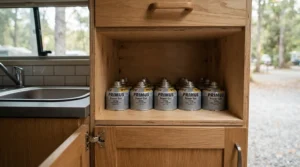
What is butane gas? It’s a liquefied petroleum gas stored under pressure in small metal canisters, used to fuel portable camping stoves, lanterns, and heaters. Pure butane vaporises efficiently in mild-to-warm weather but struggles below around 0°C, which is why many “butane” canisters actually contain a butane-propane blend.
This guide cuts through the noise. We’ve dug into seven real, currently available canisters — pierceable and resealable, bayonet and screw-thread — comparing what they actually deliver against what you’re paying for them. Along the way we’ll cover how to buy butane gas canisters without getting caught out by the wrong fitting, what separates genuinely useful budget butane gas canisters from false economy, how they behave as summer camping fuel, how butane performance in warm weather stacks up against colder months, and — because nobody talks about this enough — proper canister disposal guidance. Founded in 1949, Campingaz essentially invented the disposable camping gas category, and its pierceable cartridge format still shapes what “budget canister” means across the UK market today.
Quick Comparison Table
| Canister | Type | Weight | Price Range | Best For |
|---|---|---|---|---|
| Campingaz C206 GLS | Pierceable | 190g | around £3-£5 | classic stoves & lanterns |
| Highlander Pierceable 190g | Pierceable | 190g | around £3-£5 | cheapest single-canister buy |
| Go System Bayonet 227g | Bayonet | 227g | around £3-£6 | bayonet-fit stoves & heaters |
| Milestone Camping 227g (4-pack) | Bayonet | 227g each | around £2-£3 per canister | bulk-buying budget campers |
| Primus Power Gas 230g | Screw-thread | 230g | around £6-£9 | 3-4 season reliability |
| Coleman C300 Performance | Screw-thread, resealable | 220-240g | around £5-£8 | reusable, transportable fuel |
| Green Haven EN417 Canister | Screw-thread, resealable | 220g | around £5-£8 | Amazon-first budget buyers |
Looking across the table, the split is clear: pierceable canisters like the Campingaz C206 GLS and Highlander Pierceable 190g win on raw price-per-gram, while screw-thread resealable options like the Coleman C300 Performance and Primus Power Gas 230g cost a little more but let you disconnect and reuse the canister across multiple trips. Buyers doing occasional weekend camping should lean pierceable; anyone running a stove regularly through the season gets better long-term value from a resealable design.
💬 Just one click — help others make better buying decisions too!😊
Top 7 Butane Gas Canisters Under £8: Expert Analysis
1. Campingaz C206 GLS — the industry-standard pierceable classic
The Campingaz C206 GLS is the cartridge most UK campers picture when they hear “camping gas,” and that ubiquity is precisely the point. Its 190g of butane-propane mix (roughly an 80/20 split) is housed in a pierceable canister fitted with the Gas Lock System, which limits residual gas escaping if the cartridge is knocked loose mid-use. In practice, that means fewer nasty surprises if a stove gets bumped while packing down.
The C206 GLS is compliant with EN 417:2012, the European standard governing pierceable cartridges, so what most buyers overlook is that this isn’t just a Campingaz-branded product — it’s a format standard that Coleman and dozens of other manufacturers also build stoves around. That interchangeability is a genuine practical advantage: buy this cartridge once and it’ll likely outlive whichever stove you’re currently using.
Aggregated seller feedback across outdoor retailers consistently flags this as one of the most “widely available and economical” cartridges on the market, with no notable complaints beyond the obvious limitation of pierceable designs — once punctured, it can’t be removed until empty.
Pros:
- ✅ Fits an enormous range of pierceable stoves and lanterns
- ✅ Gas Lock System reduces flare-up risk if disconnected
- ✅ Genuinely one of the cheapest options per gram of gas
Cons:
- ❌ Can’t be removed from the appliance until fully empty
- ❌ Butane-heavy mix underperforms in near-freezing conditions
At around £3-£5 per cartridge (check current price, as retailers vary), the Campingaz C206 GLS is hard to beat for anyone running an older pierceable stove or lantern — the value verdict here is straightforwardly excellent.
2. Highlander Pierceable 190g — the cheapest single-canister buy
The Highlander Pierceable 190g is functionally a near-identical twin to the C206 format — same 190g fill, same butane-propane blend, same EN 521-compliant pierceable valve — but from a 34-year-old Scottish outdoor brand rather than the market leader. In practice this means it slots straight into any stove built for C200/C206-style cartridges, including Highlander’s own GAS010 and GAS020 stove ranges.
The spec sheet won’t tell you this, but reviewers across outdoor retailers repeatedly note that budget “own-brand” pierceable cartridges like this one perform indistinguishably from the branded original in mild weather, since the underlying gas chemistry and pressure specs are dictated by the EN 521 standard rather than by marketing.
Where it earns its place on this list is price: because Highlander doesn’t carry the same brand premium as Campingaz, it regularly undercuts the C206 GLS by a small but meaningful margin, especially when bought in multipacks of three or twelve.
Pros:
- ✅ Cheapest realistic single-cartridge option on this list
- ✅ Compatible with any EN 521 pierceable appliance
- ✅ Widely stocked as multipacks for further savings
Cons:
- ❌ Lacks the Gas Lock residual-venting feature of the C206 GLS
- ❌ Some listings are collection-only or have limited online delivery
Typically priced in the £3-£5 range per cartridge (multipacks bring the per-unit cost down further), the Highlander Pierceable 190g is the pick for anyone whose only priority is spending as little as possible while staying compatible with standard pierceable stoves.
3. Go System Bayonet 227g — best for bayonet-fit stoves and heaters
Not every stove uses a screw-thread or pierceable pin fitting, and that’s where the Go System Bayonet 227g earns its slot. Its bayonet-style connection — a twist-and-lock mechanism rather than a piercing spike — is the same fitting used by Campingaz’s CP250, Kampa, Cadac, and Hi-Gear ranges, so this single cartridge covers a surprisingly wide swathe of budget stove and patio heater models.
At 227g of butane-isobutane-propane blend, it carries slightly more fuel than the standard 190g pierceable canisters, which translates to roughly 15-20% more burn time per cartridge in similar conditions. What most buyers overlook about bayonet cartridges is that they’re generally considered the more “old-school” but robust option — a Countersunk Relief Valve (CRV) safely bleeds off residual pressure, and the fitting itself is mechanically simpler and less prone to cross-threading than screw valves.
Aggregated customer feedback across retailers describes it as reliable and consistently good value compared with big-brand equivalents, though a handful of buyers note that stock availability varies by season.
Pros:
- ✅ Fits a broad range of budget bayonet-style stoves and heaters
- ✅ 227g fill gives noticeably longer burn time than 190g rivals
- ✅ CRV pressure-relief system adds a safety margin
Cons:
- ❌ Bayonet fitting isn’t interchangeable with screw or pierceable stoves
- ❌ Stock can be seasonal, so availability occasionally dips
Priced around £3-£6 for a single cartridge (often cheaper still when bought in packs of four), the Go System Bayonet 227g is the sensible default for anyone whose stove already takes a bayonet fitting.
4. Milestone Camping 227g (4-Pack) — best bulk-buy value
If you camp often enough that you’re burning through cartridges monthly rather than annually, the Milestone Camping 227g (4-Pack) is where the maths starts to favour buying in bulk. Four 227g bayonet cartridges arrive together, and because retailers price multipacks more efficiently than singles, the effective cost per canister regularly lands under £3 — comfortably inside anyone’s budget butane gas canisters shortlist.
The gas itself is a standard butane fill suitable for camping stoves and patio-style heaters using the common bayonet connection, and it’s frequently sold alongside Milestone’s own portable stove ranges, which hints at where the brand’s real focus sits: budget-conscious festival-goers, fishing trips, and short weekend breaks rather than serious backpacking.
Based on the spec comparison with the Go System equivalent, there’s no meaningful chemical difference between the two — both are butane-dominant, general-purpose blends — so the deciding factor genuinely comes down to price and pack size rather than performance.
Pros:
- ✅ Lowest effective per-canister price of any pick on this list
- ✅ Four cartridges reduce how often you need to reorder
- ✅ Bayonet fitting shared with several budget stove brands
Cons:
- ❌ Butane-only mix struggles once temperatures approach freezing
- ❌ Buying four at once means less flexibility if your stove changes
At roughly £8-£10 for the full four-pack (working out to around £2-£3 per canister — check current price), the Milestone Camping 227g (4-Pack) rewards anyone stocking up for a full season of short trips.
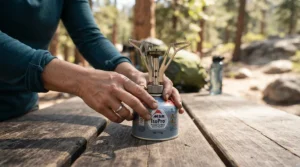
5. Primus Power Gas 230g — best for 3-4 season reliability
The Primus Power Gas 230g sits a notch above the pure-butane budget picks, and the gas mix explains why. Rather than a simple butane-propane blend, Primus uses a three-part formula of propane, isobutane, and butane, engineered specifically to maintain usable pressure across what the brand describes as the “three warmest seasons” — and, crucially, to keep working even when the temperature drops just below freezing.
The 230g screw-thread cartridge uses the standard EN417 valve, so it’s compatible with the vast majority of resealable stoves on the market, not just Primus’s own range. What the spec sheet won’t tell you, but repeated outdoor-retailer product listings do, is that isobutane produces meaningfully less internal residue than straight butane, which keeps burner jets cleaner over time and reduces the maintenance hassle that plagues cheaper cartridges after heavy use.
That’s a real practical edge for anyone running a stove hard across a whole camping season rather than for the odd weekend.
Pros:
- ✅ Propane-isobutane-butane blend performs down to near-freezing
- ✅ Self-sealing valve means the canister can be safely disconnected
- ✅ Lower residue build-up than pure butane cartridges
Cons:
- ❌ Sits at the upper edge of the sub-£8 bracket, sometimes over
- ❌ Costs noticeably more than basic pierceable equivalents
Generally priced around £6-£9 depending on retailer (occasionally nudging just over £8), the Primus Power Gas 230g earns its place for campers who want genuine shoulder-season reliability rather than fair-weather-only performance.

6. Coleman C300 Performance — best resealable, reusable fuel
The Coleman C300 Performance brings a 70/30 butane-propane blend in a threaded, self-sealing cartridge — meaning you can screw it off mid-trip, pack it away, and reconnect it later without losing gas or risking a leak. That single feature changes the calculus on value entirely: unlike pierceable cartridges, which must be run to empty once connected, the C300 lets you carry a half-used canister home and finish it on the next trip.
Coleman’s own double safety seal resealable valve is the mechanism behind this, and because the C300 uses the standard EN417 screw thread, it isn’t locked to Coleman appliances alone — any EN417-compatible stove or lantern will accept it.
Reviewers and retailers consistently describe the burn as “steady and consistent… across a wide range of temperatures at lower altitudes,” language that shows up across multiple independent stockists rather than just Coleman’s own marketing, which is a reasonable signal of genuine consistency rather than hype.
Pros:
- ✅ Resealable valve avoids wasting part-used cartridges
- ✅ Standard EN417 thread works with non-Coleman appliances too
- ✅ Consistent burn across a wide temperature range
Cons:
- ❌ Costs more per gram than basic pierceable canisters
- ❌ Slightly bulkier than 190g pierceable cartridges for the same trip
Typically priced around £5-£8 (check current price, as it can flex either side depending on retailer), the Coleman C300 Performance is the pick for anyone who hates the waste of throwing away a part-used pierceable cartridge.
7. Green Haven EN417 Canister — best budget Amazon-first pick
Rounding out the list, the Green Haven EN417 Canister represents the newer wave of Amazon-native camping-gas brands: a straightforward 220g resealable screw-on cartridge built to the same EN417 standard as Coleman and Primus, but positioned squarely as a budget alternative for buyers who simply want a reliable fitting without paying for brand recognition. Its resealable valve design means it behaves more like the C300 than the pierceable Campingaz or Highlander options — you can disconnect it between uses — which is a genuinely useful feature at this price point, since resealable valves are usually where budget cartridges cut corners. Because it’s a newer entrant without decades of outdoor-shop shelf history, the aggregated review picture is thinner than for the Campingaz or Coleman equivalents; where verifiable, buyer feedback centres on straightforward compatibility with standard camping stoves, heaters, and blowtorches, rather than any standout complaint pattern.
Pros:
- ✅ Resealable EN417 valve at a genuinely budget price point
- ✅ Compatible with stoves, heaters, lanterns and blowtorches alike
- ✅ Positioned specifically for value-focused Amazon shoppers
Cons:
- ❌ Shorter track record than long-established brands
- ❌ Review volume is thinner, so consistency is harder to verify at scale
Priced around £5-£8 (check current price and seller before buying), the Green Haven EN417 Canister is worth a look if you want a resealable valve without paying Coleman or Primus prices.
Buy Butane Gas Canisters: Where to Shop Safely and Smart
Knowing how to buy butane gas canisters online without getting the wrong fitting is arguably more important than which brand you pick. Start by checking your stove’s manual or the connector printed near its gas inlet — pierceable, bayonet, and screw-thread (EN417) are not interchangeable, and no amount of budget-hunting saves you if the cartridge simply won’t fit. Marketplace listings can be genuinely confusing here, since sellers sometimes bundle compatible-but-different fittings under one product title. When ordering online, look specifically for the connector type spelled out in the listing (not just inferred from photos), check the seller’s dispatch location since gas cartridges are classed as dangerous goods (UN 2037) and some sellers restrict shipping to UK mainland only, and factor delivery charges into your total — a £3 cartridge with a £5 delivery fee isn’t actually cheap. Buying two or three cartridges at once from the same seller is usually the simplest way to offset that delivery cost without overcommitting to a full case.

Summer Camping Fuel: Practical Usage Guide
Butane genuinely comes into its own as summer camping fuel, and getting the most from a cartridge is mostly about a handful of small habits. Before your first use, always check the valve seating — a slightly misaligned pierceable cartridge is the single most common cause of a stove that won’t light on the first attempt. Store spare cartridges upright, away from direct sunlight, and never inside a hot car boot; pressure inside a canister rises with ambient temperature, and a scorching car interior can push it well beyond what’s comfortable. During a trip, a simple maintenance habit is to wipe the valve area with a dry cloth before reconnecting a resealable cartridge, since grit or sand in the seal is the leading cause of small leaks. One optimisation trick outdoor cooks swear by: standing the cartridge in a shallow bowl of lukewarm water on cooler mornings restores pressure that’s dropped overnight, giving you a stronger flame without needing propane. The most common mistake in the first 30 days of ownership is over-tightening a screw-thread connection — EN417 valves are designed to seal with moderate hand-pressure, and forcing them risks damaging the thread on both the cartridge and the stove.
Butane Performance in Warm Weather: What to Expect
Understanding butane performance in warm weather starts with a bit of basic chemistry: butane vaporises at around -1°C at sea level, meaning that in typical UK summer conditions — anywhere from 12°C upwards — pure butane canisters like the Campingaz C206 GLS and Highlander Pierceable 190g deliver strong, consistent pressure with no real downside. Reviewers consistently report that these pierceable cartridges light instantly and hold a stable flame throughout a warm afternoon of cooking, which is exactly why they remain the default choice for summer festivals and lowland campsites. Where the picture shifts is at altitude or on cool mornings and evenings — even in July, a Scottish highland campsite at dawn can sit close to butane’s vaporisation threshold, at which point pressure (and flame strength) drops noticeably. This is precisely the gap that blended cartridges like the Primus Power Gas 230g and Coleman C300 Performance are built to close, since their added propane and isobutane content keeps vaporising well below freezing. In practice: for a lowland UK summer trip, pure butane is genuinely fine and often the cheaper, smarter buy; for anything involving early starts, altitude, or shoulder-season dates, a blended cartridge earns its slightly higher price.
Budget Butane Gas Canisters: Getting Maximum Value Under £8
The honest truth about budget butane gas canisters is that price-per-gram, not sticker price, is the number that actually matters. A £4.99 190g cartridge and a £9.98 four-pack of 227g cartridges (working out to roughly £2.50 each for more gas per unit) are not equivalent value, even though the second option looks pricier at checkout. Based on the spec comparison across this list, the Milestone Camping 227g (4-Pack) and Go System Bayonet 227g consistently offer the lowest true cost per gram of gas, while single pierceable cartridges like the Campingaz C206 GLS win on flexibility — you’re not committing to four cartridges’ worth of a fitting you might not use again. What most buyers overlook is that resealable cartridges, despite costing more upfront, often work out cheaper over a full season, because unused gas isn’t wasted the way it can be with pierceable designs that must be run to empty once connected. For genuinely occasional campers doing two or three trips a year, cheap pierceable singles remain the rational choice; for anyone cooking outdoors weekly through the season, the maths tips towards resealable cartridges like the Coleman C300 Performance.
How to Choose Butane Gas Canisters Under £8
Picking the right cartridge comes down to a short list of genuinely important factors, roughly in order of priority:
- Check your stove’s fitting first — pierceable, bayonet, and EN417 screw-thread are not interchangeable, so this eliminates most of the guesswork immediately.
- Match the gas blend to your season — pure butane for reliable warm-weather trips, a butane-propane-isobutane blend for shoulder seasons or altitude.
- Decide pierceable vs resealable based on usage frequency — occasional campers save with pierceable singles; regular users get better value from resealable cartridges.
- Factor in weight and burn time together — a 227g cartridge isn’t automatically better value than a 190g one if it costs proportionally more.
- Check delivery restrictions before ordering — gas cartridges are dangerous goods, and some sellers won’t ship to certain postcodes or by certain couriers.
- Buy in multiples where the maths supports it — but only if you’ll realistically use every cartridge before a change of stove.
- Verify the valve standard (EN417 or EN521) rather than trusting a brand name alone, since compliance — not the logo — is what guarantees a safe, correct fit.
Common Mistakes When Buying Butane Gas Canisters
The single most frequent error is buying based on brand recognition alone rather than checking fitment — a well-known name doesn’t help if the cartridge is bayonet-style and your stove takes a pierceable pin. A close second is assuming all “camping gas” is interchangeable with barbecue or blowtorch gas; while many EN417 and EN521 cartridges genuinely are multi-purpose, some heater and blowtorch-specific cartridges use higher-pressure blends not intended for cookers. Buyers also regularly underestimate delivery costs on single low-value items, ending up paying more in postage than the cartridge itself cost — buying two or three at once, as covered above, is the simple fix. Finally, a surprisingly common mistake is storing spare cartridges somewhere too warm, such as a car boot or a shed in direct sun, which isn’t just a performance issue but a genuine safety one, since these are pressurised, flammable containers.

Butane vs Propane Gas Canisters: Which Fuel Wins?
| Factor | Butane | Propane |
|---|---|---|
| Cold-weather performance | Poor below 0°C | Reliable well below -40°C |
| Warm-weather performance | Excellent, stable pressure | Excellent, can over-pressurise in extreme heat |
| Canister weight for same volume | Lighter | Heavier (thicker cylinder walls needed) |
| Typical UK price point | Cheaper per gram | More expensive per gram |
| Best For | Summer camping, festivals, backpacking | Winter camping, patio heaters, caravans |
The core trade-off here is vaporisation temperature: butane simply stops producing usable pressure once it gets cold, while propane keeps working in genuinely harsh conditions, which is why it dominates winter caravan and patio-heater setups. For most UK summer camping, though, butane’s lighter canisters and lower price per gram make it the more sensible everyday choice — the blended butane-propane cartridges reviewed above, like the Primus Power Gas 230g, essentially borrow a slice of propane’s cold-weather resilience without the weight and cost penalty of a pure propane bottle.
Butane Gas Canisters for Different Types of Campers
If you’re a festival-goer doing two nights a year with a single-burner stove, a cheap pierceable single like the Highlander Pierceable 190g or Campingaz C206 GLS is genuinely all you need — there’s no sense paying for resealable convenience you won’t use. If you’re a family doing regular weekend caravan trips through spring and summer, the Coleman C300 Performance or Green Haven EN417 Canister make more sense, since the resealable valve avoids wasting gas between trips and the screw-thread fitting works across most caravan cooker brands. If you’re a solo hiker or wild camper who might hit a chilly dawn at altitude even in July, the Primus Power Gas 230g‘s three-part blend is worth the extra couple of pounds for the pressure reliability alone. And if you’re simply stocking a fixed-base setup — a static caravan gas ring, say — the Milestone Camping 227g (4-Pack) or Go System Bayonet 227g deliver the lowest ongoing cost for steady, predictable use.
Canister Disposal Guidance: Safety, Regulations and Recycling
Getting canister disposal guidance right matters more than most campers realise, because empty-feeling cartridges can still hold enough residual pressure to explode when compacted in a bin lorry or waste-processing baler. Councils across the UK are explicit on this point: gas canisters should never go in a household waste bin, a recycling bin, or a public litter bin, even once they seem empty. Instead, the correct routes are returning the cartridge to the original retailer where a take-back scheme exists, or taking it to a staffed Household Waste Recycling Centre and asking an operative to direct you to the designated gas-cartridge area — most centres keep these separate from general metal recycling specifically because of the explosion risk. Staffordshire County Council recently reinforced this warning after a rise in incidents where canisters ruptured during collection and processing, underlining that even “empty” cartridges pose a genuine hazard when crushed or heated. If you’re ever unsure whether a cartridge still contains gas, treat it as full, keep it upright and intact, and check with your local recycling centre before transporting it.
Buyer’s Decision Framework: Which Canister Should You Choose?
If you camp fewer than five times a year and want the lowest possible upfront cost, choose a pierceable single like the Campingaz C206 GLS or Highlander Pierceable 190g, because you won’t be running through enough cartridges for resealable convenience to pay off. If you camp regularly through spring and summer and hate wasting part-used gas, choose a resealable screw-thread option like the Coleman C300 Performance or Green Haven EN417 Canister, because the ability to disconnect and reuse a cartridge outweighs the modest price premium. If your trips regularly involve cool mornings, altitude, or shoulder-season dates, choose a blended cartridge like the Primus Power Gas 230g over a pure-butane option, because vaporisation reliability matters more than saving a pound or two. And if you’re stocking up for a full season of predictable use on a fixed setup, choose a multipack like the Milestone Camping 227g (4-Pack), because bulk buying delivers the lowest true cost per gram across this entire list.

Frequently Asked Questions
❓ Are butane gas canisters under £8 safe to use?
❓ Can I take butane gas canisters on a plane?
❓ How long does a 190g butane canister last?
❓ Do budget butane gas canisters work as well as branded ones?
❓ What's the difference between pierceable and resealable canisters?
Conclusion
Butane gas canisters under £8 cover a surprisingly wide spread of designs once you look past the price tag — pierceable classics like the Campingaz C206 GLS, budget bayonet options like the Milestone Camping 227g (4-Pack), and resealable screw-thread performers like the Coleman C300 Performance and Primus Power Gas 230g all solve slightly different problems. The right pick genuinely comes down to how often you camp, what fitting your stove takes, and whether you’re likely to run a cartridge dry in one sitting or need to pack it away half-used. Whichever you choose, don’t skip the boring-but-important bit: check your council’s gas canister disposal guidance once a cartridge is spent, since these are genuinely hazardous items in general waste, however empty they feel. Get the fitting right, match the blend to your season, and a £3-£8 cartridge will quietly do its job without you thinking about it again until the flame starts to flicker.
✨ Ready to stock up for your next trip? Compare today’s picks and get your stove fuelled up before you head off! 🚴♂️🔥
Recommended for You
- Camping Gas Canisters Under £10: 7 Smart Budget Picks (2026)
- Camping Gas For Cold Weather: 7 Best Picks for UK Winters (2026)
- Value Camping Gas Canisters: 7 Best Budget Picks UK (2026)
Disclaimer: This article contains affiliate links. As an Amazon Associate, I earn from qualifying purchases. If you purchase products through these links, we may earn a small commission at no additional cost to you.
✨ Found this helpful? Share it with your friends! 💬🤗
