
In This Article
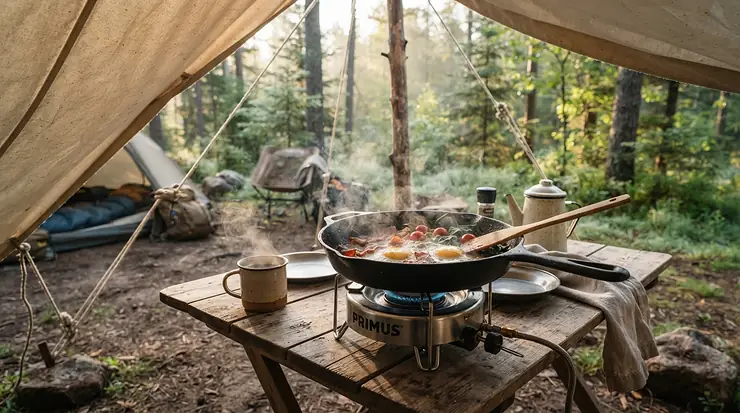
There’s a particular kind of panic that hits when your caravan hob splutters out mid-omelette because the canister’s run dry and you didn’t pack a spare. Butane canisters for caravan cooking are the small pressurised metal cartridges — usually filled with pure butane or a butane/propane blend — that power portable stoves, caravan hobs with compatible fittings, and camping cookers when you’re away from mains gas. They’re cheap, compact, and refillable in the sense that you simply swap the empty for a full one rather than topping it up yourself.
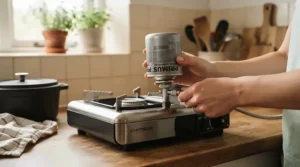
This guide walks through seven real, currently available options spanning budget bayonet multipacks right through to refillable exchange cylinders that’ll outlast a decade of summer trips. Along the way we’ll dig into how caravan gas hob fittings actually work, why multipack deals aren’t always the bargain they appear on the shelf, and the storage habits that keep a small metal canister from becoming a genuinely dangerous object. Because that’s the bit the product listing never quite spells out: a butane canister is a small, docile-looking tin that’s storing liquid fuel under pressure, and treating it casually is where most caravan gas mishaps start.
Whether you’re kitting out a first caravan, restocking before a European tour, or just trying to work out why your multipack of “12 canisters” costs almost the same as a mate’s pack of 4, this article covers the ground properly.
Quick Comparison Table
| Product | Fitting Type | Fuel Type | Price Range | Best For |
|---|---|---|---|---|
| Campingaz R907 | Screw-on Campingaz regulator | Butane | £35-£50 | Refillable long-haul touring |
| Calor Gas 4.5kg Butane | Calor-specific screw regulator | Butane | £20-£35 (refill) | UK-wide caravan mainstay |
| Coleman C500 6-Pack | EN417 screw thread | Butane/Propane | £30-£40 | Multipack value for hobs |
| Go System 227g Bayonet | CV270/bayonet | Butane/Propane | £15-£25 (4-pack) | Bayonet caravan cookers |
| Primus Power Gas 450g | EN417 screw thread | Isobutane/Propane | £15-£20 | Cold-morning reliability |
| Easy Shopping 8-Pack | Bayonet | Butane | Under £15 | Tightest budget |
| Coleman C300 Performance | EN417 screw thread | Butane/Propane | £8-£12 | Single-canister portable stove |
Looking across the table, the split really comes down to fitting type first and budget second — a bayonet-only caravan hob will never take an EN417 screw canister, whatever the price. The Campingaz R907 and Calor Gas 4.5kg Butane sit apart from the rest because they’re refillable exchange cylinders rather than disposable cartridges, which changes the whole cost calculation over a season. For anyone running a genuinely portable single-burner stove alongside the fixed hob, the screw-thread cartridges from Coleman, Primus and Go System cover that gap.
💬 Found a fitting that matches your caravan hob? Bookmark this table before you head to the checkout — it’ll save a return trip.
Top 7 Butane Canisters for Caravan Cooking: Expert Analysis
1. Campingaz R907 — best for European touring with exchange network access
The standout here is the exchange network: this refillable 2.75kg butane cylinder can be swapped for a full one at thousands of stockists across the UK and mainland Europe, which matters enormously if you’re touring rather than staying put. It holds roughly 2.75kg of butane and, according to retailer specifications, will run a double-burner stove for around eight hours of continuous use, so a single cylinder comfortably covers a long weekend of proper cooking rather than just reheating soup. Based on the spec comparison with disposable cartridges, the Campingaz R907 earns its place through longevity rather than convenience — it’s a commitment to the Campingaz regulator system, not a grab-and-go option, and it needs a dedicated gas locker rather than a cupboard shelf.
This is the pick for caravanners who tour regularly, particularly into Europe, since the exchange model removes the anxiety of finding compatible gas in an unfamiliar country. Reviewers consistently note that the screw-on cap and built-in handle make it manageable to carry even when full, though several mention that the exchange-only purchase model (you need an empty cylinder to swap) catches first-time buyers out.
Pros:
- ✅ Exchangeable at thousands of European locations
- ✅ Around eight hours of double-burner runtime per fill
- ✅ Robust, well-established regulator ecosystem
Cons:
- ❌ Exchange-only purchasing model trips up newcomers
- ❌ Heavier and bulkier than disposable cartridges
At around £35-£50 for the cylinder (gas exchange priced separately), the Campingaz R907 represents strong long-term value for frequent tourers, even if the upfront outlay looks steep next to a multipack of small canisters.

2. Calor Gas 4.5kg Butane Cylinder — best for UK-wide caravan mainstay
What most buyers overlook about Calor is just how deeply embedded it is in UK caravan culture — it’s the cylinder generations of British caravanners have grown up refilling at garden centres and caravan dealerships nationwide. The 4.5kg butane size is specifically sized for touring caravan gas lockers, striking a balance between runtime and the manageable weight limits most locker designs impose. Based on the spec comparison, butane delivers marginally more energy per cylinder volume than propane, which is why it remains the default choice for caravanners who mostly holiday in the UK’s milder months rather than winter camping.
It’s worth flagging a genuine industry wrinkle here for honesty’s sake: Calor announced in January 2023 that it would discontinue its small-capacity LPG cylinders, causing considerable alarm among caravanners and boaters whose gas systems were built around these exact sizes. Following pushback from industry bodies, Calor confirmed in May 2023 that it would continue to exchange and refill serviceable 3.9kg propane and 4.5kg butane cylinders, so the supply chain has stabilised — but it’s a reminder that Calor’s small-cylinder availability has genuinely fluctuated in recent years, and worth double-checking with your local stockist rather than assuming permanence.
Pros:
- ✅ Extensive UK stockist network at garden centres and dealers
- ✅ Sized specifically for touring caravan gas lockers
- ✅ Slightly better energy density than propane equivalents
Cons:
- ❌ Recent supply uncertainty around small-cylinder availability
- ❌ Poor cold-weather performance below roughly 0°C
Refills typically sit in the £20-£35 range depending on region and stockist, making this one of the more cost-effective ongoing options for UK-based caravanning once you own the cylinder.
3. Coleman C500 Performance Gas Cartridge 6-Pack — best multipack value for hob use
The standout feature is the sheer convenience of six cartridges arriving in one box, each holding roughly 440g of a 70/30 butane-propane blend that Coleman rates for reliable performance even at lower temperatures. Here’s what to weigh: the self-sealing double-safety valve means you can disconnect a partially used cartridge and reconnect it later without gas hissing everywhere, which is a genuinely useful feature for caravan cooking where you might only need one canister’s worth for a single meal rather than draining it in one sitting.
This multipack suits caravanners running an EN417-compatible hob or portable burner who cook regularly enough to burn through six cartridges across a season, rather than occasional weekend users who’ll find gas going stale in storage. Reviewers on retailer sites consistently praise the steady flame and low-temperature reliability, with the propane component doing the heavy lifting when butane alone would struggle below freezing.
Pros:
- ✅ Six cartridges reduce per-unit cost versus singles
- ✅ Reliable performance in colder shoulder-season conditions
- ✅ Resealable valve avoids gas waste on part-used cartridges
Cons:
- ❌ EN417 screw fitting only — no bayonet compatibility
- ❌ Bulkier to store than a single small cartridge
At around £30-£40 for the six-pack, the per-cartridge cost comes in noticeably below buying singles, making this a sensible default for anyone with a compatible screw-fitting hob.
4. Go System 227g Bayonet Valve Cartridge (Multipack) — best for bayonet-fitting caravan cookers
The standout feature is the CRV safety valve, which automatically bleeds off gas slowly if pressure builds up rather than risking a more dangerous failure — a detail that matters more than most spec sheets let on. This bayonet cartridge holds 227g of an ISO butane/propane mix rated for use down to around -20°C, and because it’s a bayonet fitting rather than a screw thread, it slots directly into the many older caravan hobs and cookers built around that connector, no adapter required. What most buyers overlook is that Go System cartridges can also be converted to screw-fitting use with a cheap adapter, giving a bit of flexibility if you later switch appliances.
This is squarely the pick for owners of bayonet-style caravan cookers, a fitting that’s still common on older touring vans and some budget camping stoves. Reviewers consistently describe the gas as good value and long-lasting, with several noting they’ve stuck with the brand across multiple purchases specifically because of the reliable burn quality.
Pros:
- ✅ CRV safety valve bleeds pressure automatically
- ✅ Rated down to -20°C for shoulder-season trips
- ✅ Can be adapted to screw-fitting use if needed
Cons:
- ❌ Bayonet-only out of the box, adapter needed for EN417
- ❌ Multipack sizes vary by seller, worth checking count before buying
Multipacks (commonly sold in 4, 8 or 12) tend to land around £15-£25 for a 4-pack at the time of research, making this a solid mid-range pick for bayonet-fitting caravans specifically.
5. Primus Power Gas 450g — best for cold-morning reliability
The standout advantage is the gas mix itself: an 80% isobutane, 20% propane blend that behaves noticeably better than plain butane once the temperature drops, since isobutane has a meaningfully higher vapour pressure. What the spec sheet won’t tell you, but the chemistry explains, is why this matters for caravan cooking specifically — a chilly autumn morning brewing the first coffee of the day is exactly when a cheap butane-only canister struggles to maintain pressure, while this isobutane blend keeps performing down to around -10°C.
This suits caravanners who camp into the shoulder seasons — spring and autumn trips where overnight temperatures dip but you’re not quite in full winter-camping territory. Reviewers describe the canisters as durable and good value, with several specifically praising the 450g size as ideal for longer trips or bigger meals where a smaller cartridge would run out mid-cook.
Pros:
- ✅ Isobutane blend performs well down to -10°C
- ✅ Higher energy content means less gas used per session
- ✅ Cleaner combustion reduces stove residue and maintenance
Cons:
- ❌ EN417 screw fitting only, incompatible with bayonet hobs
- ❌ Premium pricing relative to plain butane equivalents
At roughly £15-£20 for the 450g size, it costs more per gram than basic butane, but the reduced consumption per cooking session and superior cold performance make the value case for regular shoulder-season users.
6. Easy Shopping 8 x Butane Gas Canister Bottles — best budget multipack for tight budgets
The standout feature is simply the price point — eight bayonet-fitment canisters at 227g each, positioned as a straightforward, no-frills fuel supply for compatible cookers, heaters and blow torches. Based on the spec comparison with premium blends, this is plain butane rather than an isobutane or propane-enhanced mix, so performance will noticeably dip in colder conditions, but for fair-weather caravan trips through spring and summer that trade-off rarely matters in practice.
This is the pick for budget-conscious caravanners who already own a bayonet-fitting cooker and simply need a reliable stack of fuel without paying a premium for cold-weather chemistry they won’t use. Given the price bracket, verified individual review data is thinner than for the bigger brands above, so treat this as a solid value option to trial in small quantities before committing to bulk buying, rather than a brand with the long review history of Calor or Campingaz.
Pros:
- ✅ Lowest per-canister cost of any option covered here
- ✅ Bayonet fitting suits many existing budget cookers
- ✅ Practical multipack size for a full camping season
Cons:
- ❌ Plain butane only, weaker cold-weather performance
- ❌ Less established review history than major brands
At under £15 for the full 8-pack at the time of research, this is comfortably the cheapest way into a caravan cooking fuel stock, provided your appliance takes bayonet canisters.
7. Coleman C300 Performance Gas Cartridge — best compact single canister for portable stoves
The standout feature is portability: a compact 230g screw-fitting cartridge holding a 70/30 butane/propane blend, small enough to toss in a rucksack for a portable stove trip away from the caravan itself — a beach cook-up, a walk with a brew-up stop, or a backup for the caravan hob if the main supply runs dry. Based on the spec comparison, the blend is tuned for consistent performance at lower altitudes rather than the more extreme cold-weather rating of the Primus option above, which suits general UK caravan-adjacent use rather than serious winter expeditions.
This suits caravanners who want a genuinely portable stove option separate from the fixed hob, plus a compact emergency backup that doesn’t take up much locker space. Reviewers highlight the double safety seal valve, which allows the cartridge to be disconnected mid-use without gas escaping — handy when you’re moving a portable stove between the awning and a picnic table.
Pros:
- ✅ Compact and lightweight for genuinely portable use
- ✅ Safe disconnect-and-reconnect valve system
- ✅ Manufactured under Coleman’s own European quality control
Cons:
- ❌ Small capacity means frequent replacement for regular cooking
- ❌ EN417 screw fitting only
Priced around £8-£12 at the time of research, it’s an affordable way to add a dedicated portable stove option or emergency backup without committing to a multipack.
Practical Usage Guide: Setting Up and Maintaining Your Canister Supply
Getting a new butane canister connected properly matters more than most first-time caravanners expect. Start by checking the regulator matches the canister’s fitting exactly — screw-thread EN417 cartridges and bayonet cartridges are not interchangeable without an adapter, and forcing a mismatched connection is a common cause of leaks. Once connected, always do a soapy-water leak test around the joint before lighting anything: a few bubbles forming means a leak, no bubbles means you’re good to light up.
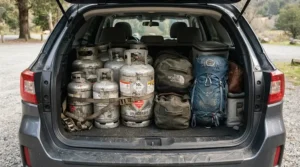
For the first 30 days of ownership, the most common mistake is over-tightening the connection in an attempt to “make sure it’s sealed” — this can actually damage the seal and cause the exact leak you were trying to prevent. A firm hand-tight connection is normally sufficient. Store spare canisters upright, in a ventilated locker away from living space, and rotate stock so older canisters get used before newer ones, since gas quality can be affected by long-term storage in fluctuating temperatures. Check valves for corrosion or dents before every trip, particularly on cylinders that have travelled loose in a car boot.
Real-World Scenarios: Matching Canisters to How You Actually Caravan
Consider a retired couple touring Europe for six weeks each summer: the Campingaz R907‘s exchange network across the continent removes the stress of sourcing UK-specific gas abroad, and the eight-hour runtime per fill comfortably covers daily cooking without constant swaps. Compare that with a young family doing three or four UK long-weekend trips a year with a budget bayonet hob — the Easy Shopping 8-Pack or Go System multipack covers a whole season cheaply, without the upfront cost of a refillable cylinder system that wouldn’t be used often enough to justify itself.
Then there’s the solo wild-camper-adjacent caravanner who also carries a portable stove for cooking outside the van entirely — here the Coleman C300 or Primus Power Gas 450g makes more sense than committing to a multipack of one type, since a single compact cartridge covers the portable stove use case without cluttering the gas locker with excess stock.
How to Choose Butane Canisters for Caravan Cooking
Choosing the right canister comes down to a handful of practical checks rather than guesswork:
- Check your hob’s fitting type first — screw-thread EN417 and bayonet connectors are not interchangeable, so this eliminates most of the list immediately.
- Match the trip length to cylinder size — weekend trips rarely justify a full refillable cylinder, while regular touring usually does.
- Factor in the season — plain butane struggles below roughly 0°C, so isobutane or propane-blend cartridges earn their premium in colder months.
- Consider your travel range — European touring favours exchange networks like Campingaz; UK-only trips can lean on Calor’s dealer network.
- Weigh multipack size against usage rate — buying more than you’ll use within a season or two risks gas sitting unused for years.
- Check locker capacity and weight limits — larger cylinders add noticeable weight to front lockers, which matters for towing balance.
- Verify current availability with your supplier — cylinder ranges and stock have shifted in recent years, so a quick check before a big trip avoids disappointment.
Caravan Gas Hob Fittings: Getting the Connection Right
Caravan gas hob fittings trip up more first-time buyers than almost anything else in this category, mostly because the terminology varies by manufacturer while the underlying mechanics don’t. Most fixed caravan hobs run off a bulk cylinder (Calor or equivalent) via a regulator and hose rather than plugging directly into small disposable cartridges — the cartridges above are typically for portable stoves used alongside the fixed hob, not a replacement for it. Since September 2003, a European standard has set the gas supply pressure at 30 millibar for both butane and propane throughout the EU, replacing the older system where butane ran at 28mbar and propane at 37mbar — worth knowing if you’re buying a regulator separately, since an old mismatched regulator can undersupply or oversupply your hob. If you’re at all unsure whether your caravan’s fittings match a cylinder or cartridge you’re considering, the Camping and Caravanning Club’s gas guide is a genuinely useful reference, and a Gas Safe registered engineer should handle any permanent installation work.
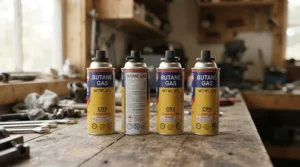
Butane Canister Multipack Deals: Are They Worth It?
Multipack deals look like an obvious win on the shelf — six or eight canisters for barely more than the price of four — but the real value only holds up if you’ll actually use them within a reasonable window. Canisters don’t spoil overnight, but valves and seals can degrade over years of storage, particularly in a caravan locker that swings between summer heat and winter damp. Based on the spec comparison of the products above, the Coleman C500 6-Pack and Go System multipacks both offer a genuine per-unit saving over buying singles, but only if your appliance’s fitting matches and your annual usage realistically burns through the pack within two or three seasons.
Canister Storage Safety
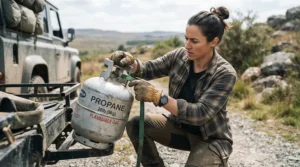
This is the section worth reading properly rather than skimming, because gas cylinder incidents in caravans are rare but genuinely serious when they happen. Cylinders must always be stored and used upright, since laying a cylinder on its side can allow liquid LPG to escape and rapidly expand into a large volume of flammable gas vapour. Keep cylinders in a dedicated, ventilated gas locker that vents outward rather than into the living space, away from any source of ignition, and check for dents, rust or corrosion before every trip — a damaged cylinder is a leak risk regardless of how new the gas inside is. Turn the cylinder valve off whenever the appliance isn’t in use and always before towing, and never bring a canister or cylinder that’s designed for external use into the living area of the caravan. For the full official picture, the Health and Safety Executive’s guidance on gas safety in caravans is a thorough, authoritative starting point, and it’s worth a read even for experienced caravanners since the details around ventilation and cylinder testing intervals are easy to forget between trips. If you ever suspect a leak, the standard advice holds: turn off the cylinder valve and all appliances, open doors and windows, and don’t touch any electrical switches until the area’s been ventilated and checked.
Butane Canisters for Portable Stove Use
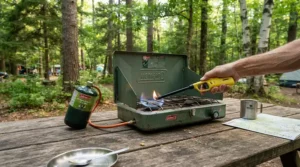
Portable stoves are a slightly different use case from the fixed caravan hob, and it’s worth treating them separately when choosing fuel. A portable stove used outside the caravan — for a beach cook-up, a walk, or simply cooking outdoors on a nice evening — benefits from a compact, lightweight cartridge rather than a bulky refillable cylinder, which is where options like the Coleman C300 and smaller Primus Power Gas sizes come into their own. Reviewers consistently note that lighter cartridges are easier to pack alongside cookware without adding meaningful weight, and the self-sealing valve designs common across EN417 cartridges mean you can safely disconnect a part-used canister and take it home rather than needing to burn it dry in one sitting.
Long-Term Cost & Multipack Value Comparison
| Comparison Factor | Refillable Cylinder (e.g. Campingaz R907) | Multipack Cartridges (e.g. Coleman C500) |
|---|---|---|
| Upfront cost | Higher (cylinder + fill) | Lower per pack |
| Cost per cooking hour | Lower over time | Higher over time |
| Storage footprint | Larger, needs gas locker | Compact, flexible |
| Best For | Frequent, regular touring | Occasional or portable use |
Interpreting the numbers, a refillable cylinder like the Campingaz R907 wins on cost-per-cooking-hour for anyone caravanning several times a season, since the exchange refill price undercuts the equivalent volume of cartridges. For occasional users, though, the Coleman C500 or Easy Shopping multipacks avoid the sunk cost of a cylinder system that might sit unused for months between trips, making them the more sensible total-cost-of-ownership choice for lighter use.
💬 Worked out which option fits your caravanning style? A quick vote helps other readers decide too!😊
FAQ
❓ What’s the difference between butane and propane for caravan cooking?
Butane performs poorly below roughly 0°C but is slightly more energy-dense, while propane keeps working in much colder conditions. Many modern cartridges blend both to get reliable performance across UK seasons without needing to switch fuel types…
❓ Can I use camping gas cartridges in a fixed caravan hob?
It depends entirely on your hob’s fitting and regulator setup — most fixed hobs run off a bulk cylinder via a regulator, not small cartridges directly. Check your caravan’s handbook or ask a Gas Safe engineer before assuming compatibility…
❓ How long does a butane canister multipack last in storage?
There’s no strict expiry, but valves and seals can degrade over several years, especially with temperature swings in a locker. Buying only what you’ll realistically use within two or three seasons is the safer approach…
❓ Are bayonet or screw-fitting canisters better for caravans?
Neither is universally better — it depends entirely on what your specific cooker or hob accepts. Bayonet fittings are common on older or budget appliances, while EN417 screw threads dominate newer stoves…
❓ Is it safe to store spare gas canisters inside a touring caravan?
No — spare canisters and cylinders should be kept in a ventilated, dedicated gas locker that vents outward, never inside the living area, due to leak and carbon monoxide risks…
Conclusion
There’s no single “best” butane canister for caravan cooking — the right choice depends entirely on how often you tour, what your hob’s fitting actually accepts, and whether you’re feeding a fixed kitchen or a portable stove on the side. Frequent European tourers get real value from a refillable system like the Campingaz R907, UK-based caravanners lean naturally on Calor Gas‘s dealer network, and anyone on a tighter budget or running occasional trips will find multipacks like the Coleman C500, Go System or Easy Shopping 8-Pack cover a season without overcommitting.
Whichever option fits your setup, the details that actually protect you — upright storage, ventilated lockers, matching the fitting correctly, and checking cylinders for damage before every trip — matter more than which brand’s name is on the tin. Get those right, and the rest is really just picking whatever suits your travel pattern and budget.
Recommended for You
- Butane Gas Canisters Under £8: 7 Best UK Picks (2026)
- Camping Gas Canisters Under £10: 7 Smart Budget Picks (2026)
- Camping Gas For Cold Weather: 7 Best Picks for UK Winters (2026)
Disclaimer: This article contains affiliate links. As an Amazon Associate, I earn from qualifying purchases. If you purchase products through these links, we may earn a small commission at no additional cost to you.
✨ Found this helpful? Share it with your friends! 💬🤗
