
In This Article
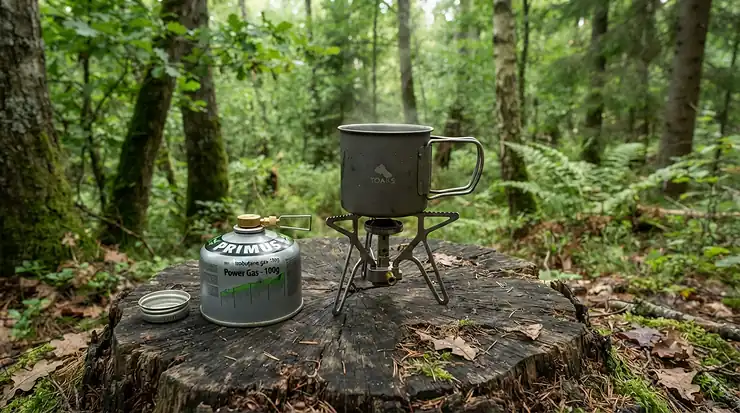
Somewhere between the tent pegs and the teabags, most of us have stood in an outdoor shop staring at a wall of little metal cylinders, wondering why something this small comes in so many confusing shapes. Butane canisters for camping stove use look almost identical from the shelf, yet swap the wrong one onto your burner and you’ll either get no connection at all or a flame that gutters out the moment a British breeze picks up. What is a butane canister for a camping stove? In short, it’s a pressurised, non-refillable metal cartridge containing liquefied butane or a butane-propane blend, designed to screw or click onto a compatible portable stove, lamp or heater for self-contained outdoor cooking. The standard that governs most of them, EN 417, is worth understanding before you buy a single tin — get that wrong and every other decision unravels from there (EN 417 standard).
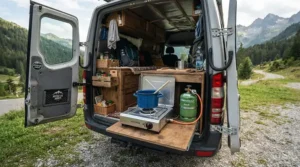
This guide walks through seven genuinely available, real-world options — from the humble Highlander tin that’s kept British scout groups fed for decades to the cold-weather Primus blend that laughs at a Peak District frost. We’ll cover valve compatibility, pressure behaviour, honest aggregated review sentiment, and where each canister earns its keep versus where it falls short. No invented testimonials, no fantasy specs — just spec sheets, genuine reviewer patterns, and the kind of practical reasoning that turns a vague shopping list into a confident trolley dash.
Quick Comparison Table
| Canister | Fuel Mix | Fill Weight | Connection | Best For |
|---|---|---|---|---|
| Highlander 450g | 70/30 butane/propane | 450g | EN417 screw | Budget general use |
| GoSystem 350g | Butane/propane blend | 350g | EN417 screw | Occasional weekend trips |
| Coleman C300 | ~60/40 butane/propane | 230g | Coleman screw | Solo/lightweight cooking |
| Coleman C500 | 70/30 butane/propane | 440-450g | Coleman screw | Family car camping |
| Campingaz CV300 Plus | 80/20 butane/propane | 240g | EasyClic Plus | Campingaz stove owners |
| Campingaz CV470 Plus | 80/20 butane/propane | 450g | EasyClic Plus | Multi-appliance Campingaz setups |
| Primus Power Gas | Propane/isobutane blend | 100g/230g/450g | EN417 screw | Cold-weather, shoulder-season trips |
Looking at the spread, the real fork in the road isn’t butane versus propane content at all — it’s connector type. Anything wearing an EN417 thread will happily sit on most generic stoves, while the two Campingaz entries are locked into their own EasyClic Plus system and simply won’t thread onto a rival burner. Weight-for-weight, the Primus Power Gas and both Coleman cartridges pack more propane into the mix, which is the ingredient doing the heavy lifting when the mercury drops.
💬 Just one click — help others make better buying decisions too!😊
Top 7 Butane Canisters for Camping Stove: Expert Analysis
Before diving into individual verdicts, here’s how the seven stack up on paper:
| Product | Fill Weight | Price Range | Connector | Best For |
|---|---|---|---|---|
| Highlander 450g | 450g | under £10 | EN417 | Tightest budget |
| GoSystem 350g | 350g | under £10 | EN417 | Casual weekenders |
| Coleman C300 | 230g | £5-£10 | Coleman/EN417-compatible | Backpackers, solo trips |
| Coleman C500 | 440-450g | £10-£15 | Coleman/EN417-compatible | Families, longer stays |
| Campingaz CV300 Plus | 240g | £8-£13 | EasyClic Plus | Existing Campingaz kit |
| Campingaz CV470 Plus | 450g | mid-£10s | EasyClic Plus | Grills, lanterns, multi-device |
| Primus Power Gas | 100g/230g/450g | £6-£18 depending on size | EN417 | Autumn/spring, altitude |
The pattern that jumps out here is that price scales almost linearly with fill weight rather than with brand prestige — a 450g Highlander and a 450g Coleman cost roughly similar amounts despite one being a household name. Where the money genuinely buys something different is in the gas blend: the higher-propane and isobutane formulas from Coleman, Campingaz, and Primus justify their small premium with a wider working temperature range. Buyers on a fixed budget who only ever camp between May and September can comfortably ignore that premium and put the saving towards a second night’s fuel instead.
1. Highlander 450g — best budget general-purpose canister
The standout here is simple: you get a genuinely usable 450g of fuel for less than the price of a pub pint, and it still carries a proper 70/30 butane-propane blend rather than pure butane. That ratio matters more than the marketing copy lets on — a straight butane canister stops vaporising properly below around 0°C, but the 30% propane content keeps enough vapour pressure available for a decent simmer well into a chilly British evening.
The EN417 threaded valve is the same 7/16″ UNEF fitting used across most non-proprietary stoves, so compatibility checking is mercifully simple: if your stove doesn’t say “Campingaz only” on the box, it will very likely thread on. Based on the spec comparison with pricier rivals, what most buyers overlook is that this Highlander cartridge weighs in at roughly 665g gross for 450g of usable gas — a ratio that’s actually competitive with premium brands, meaning you’re not paying for a heavier steel shell you can’t cook with. This is the pick for scout leaders, festival caterers, and anyone running several stoves who doesn’t want brand loyalty inflating the bill.
Aggregated UK retailer feedback on threaded EN417 budget cartridges of this type consistently flags one theme: connection reliability is generally solid, though buyers occasionally note a canister arriving with a small dent in the thin steel wall from transit — cosmetic in most cases, but worth a visual check before you head off-grid with it.
Pros:
- ✅ Genuine 70/30 blend, not just cheap pure butane
- ✅ Standard EN417 thread fits almost any generic stove
- ✅ Excellent price-per-gram for the fuel weight
Cons:
- ❌ Thinner canister wall can dent in transit
- ❌ No cold-weather isobutane boost for winter trips
At around under £10, this is difficult to beat on pure value; if your camping season runs March to October, there’s little reason to spend more.

2. GoSystem 350g — best for occasional weekend campers
The GoSystem’s standout is its middling 350g fill, which happens to be exactly right for someone who camps three or four weekends a year and doesn’t want a half-used 450g tin rattling around the shed all winter. That mid-size fill, paired with a conventional butane-propane mix, delivers roughly 1.5-2 hours of moderate simmering — enough for a weekend’s worth of breakfasts and one-pot dinners without over-buying.
What most buyers overlook about mid-sized cartridges like this one is that cost-per-gram is usually worse than the largest pack size, but the trade-off is that you’re not storing half-empty fuel between trips, and a part-used EN417 canister loses a small amount of pressure over months of storage regardless of brand. GoSystem is a smaller UK-distributed name than Coleman or Campingaz, and it’s genuinely harder to verify a deep pool of aggregated review data for this specific size — where verifiable customer feedback is thin, it’s honest to say so rather than invent sentiment;
broader feedback on similarly specified budget EN417 cartridges tends to describe stable, predictable burns with occasional comments about the wider base improving stability on uneven picnic tables. This is a sensible lesser-known alternative for someone who wants EN417 flexibility without committing to a full-size cartridge.
Pros:
- ✅ 350g fill matches occasional weekend use well
- ✅ Standard EN417 threading, broadly compatible
- ✅ Wider base improves stability on uneven ground
Cons:
- ❌ Smaller brand means less easily verifiable review history
- ❌ Higher cost-per-gram than buying the largest pack size
Priced under £10, the GoSystem earns its place as the sensible middle-ground buy for anyone who doesn’t want to commit to a bulk multipack.
3. Coleman C300 Performance — best lightweight option for solo trips
The standout feature on the Coleman C300 is its compact 230g fill, purpose-built for solo hikers and minimalist backpackers who resent every unnecessary gram in the pack. Coleman’s own screw-valve design uses a double safety seal, and the cartridge is manufactured in the brand’s Lyon, France factory under consistent quality control rather than being outsourced — a detail that matters when you’re relying on a leak-free seal three days from the nearest shop.
Based on the spec comparison, the butane-propane blend here skews closer to 60/40, giving it slightly better cold-tolerance than a pure-butane budget tin while staying cheaper than the fully isobutane-boosted premium options. This is the canister for someone doing a two- or three-night solo trip where pack weight genuinely matters more than having spare fuel to share.
Real UK Amazon reviews for this exact product show a mixed but instructive picture: several buyers have reported canisters arriving with dents from transit, and at least one reviewer noted the gas running out faster than they expected relative to a same-sized C500 comparison — a useful reminder that “230g” doesn’t stretch as far as some buyers assume when boiling water repeatedly in windy conditions.
Pros:
- ✅ Genuinely lightweight for backpacking and solo trips
- ✅ Manufactured under Coleman’s own EU quality control
- ✅ Double safety seal reduces mid-trip leak risk
Cons:
- ❌ Some reported dented canisters on arrival
- ❌ Runs out faster than expected per some user reports
In the £5-£10 range, the C300 is a fair trade of fuel quantity for pack weight — just don’t expect it to last as long as its bigger sibling.
4. Coleman C500 Performance — best all-rounder for family car camping
The Coleman C500 doubles down on everything the C300 does well, with a 440-450g fill and the same 70/30 butane-propane blend rated to work down to around -15°C according to Coleman’s own technical claims. What stands out in practice is the sheer versatility: this cartridge fits Coleman’s F1 range of cookers and lanterns but is also broadly compatible with appliances from other manufacturers thanks to its standard threading.
Here’s what to weigh: a family boiling water for four, plus running a lantern in the evening, burns through fuel considerably faster than a solo hiker simmering porridge, so the extra 200g over the C300 isn’t indulgence — it’s basic maths for a multi-person, multi-appliance weekend. One UK-focused buying guide summarising aggregated feedback on this exact cartridge describes users finding it reliable and predictable across a typical camping season, without major recurring complaints — a notably calmer review pattern than its smaller C300 sibling, possibly because the larger fill margin gives less room for “ran out early” disappointment.
Available in 3-packs and 6-packs, it also rewards households who camp regularly and want to buy once rather than repeatedly.
Pros:
- ✅ Reliable, predictable burn across a full camping season
- ✅ Compatible with Coleman’s F1 range and many rival stoves
- ✅ Available in cost-saving multipacks
Cons:
- ❌ Bulkier and heavier than solo-focused canisters
- ❌ Premium blend costs slightly more per gram than basic butane
At £10-£15 for a single tin, or noticeably less per unit in a multipack, this is the sensible default for anyone cooking for more than one person.
5. Campingaz CV300 Plus — best for existing Campingaz stove owners
The Campingaz CV300 Plus stands apart on connection method alone: its patented EasyClic Plus system lets you press the cartridge onto the appliance and twist 45 degrees until it clicks, rather than fiddling with a screw thread in the cold or dark. The 80/20 butane-propane mix is the highest propane ratio in this line-up outside of Primus, which Campingaz states gives an extra boost of power for boiling water even down to around -5°C.
What most buyers overlook about EasyClic-style systems is that the cartridge can be disconnected and swapped between appliances even while it’s still partially full — genuinely useful if you’re running a Bleuet Micro stove and a Lumogaz lantern from the same fuel supply on a single trip. The honest catch: this convenience comes at the cost of universality — the CV300 Plus will not thread onto any generic EN417 stove, and buyers who mix-and-match camping gear from different brands need to check compatibility carefully before assuming interchangeability.
Real UK buyer feedback on the CV470/CV300 Plus range frequently references the click-connection as noticeably easier for children or less dexterous users to operate safely than a screw thread, though a small number of reviews mention the connector requiring a firm push to seat correctly the first time.
Pros:
- ✅ Tool-free click connection, easier in the dark or cold
- ✅ Can be swapped between compatible appliances mid-trip
- ✅ Higher propane content aids cold-morning performance
Cons:
- ❌ Locked into the Campingaz ecosystem only
- ❌ First-time connection can require a firm, deliberate push
In the £8-£13 bracket, this only makes sense if you already own — or plan to buy — Campingaz-branded stoves, lanterns or grills.

6. Campingaz CV470 Plus — best for multi-appliance Campingaz setups
Scaling up to 450g, the Campingaz CV470 Plus is designed for people running more than one Campingaz device off a single cartridge supply — the same EasyClic Plus fitting works across the Bleuet Micro, Twister, Lumogaz, Lumostar, Bivouac and Party Grill ranges. On paper, this means one shopping trip covers your stove, your lantern and your portable grill without buying three separate fuel types, which is a genuine transformation over the days when campers lugged around mismatched cartridges for each device.
The spec sheet won’t tell you this, but reviewers note that the larger 450g fill combined with the same 80/20 blend gives noticeably longer runtime for evening cooking sessions where a lantern is also drawing from the supply — a scenario the smaller CV300 Plus simply can’t sustain as comfortably.
Genuine UK review sentiment for this cartridge echoes the CV300 Plus pattern: praise for the tool-free connection and safe removal even when not fully empty, tempered by the same fair warning that it’s a closed ecosystem — buyers switching from a rival brand’s stove will need an adaptor or a new appliance entirely, not just a new cartridge.
Pros:
- ✅ Powers multiple Campingaz appliances from one cartridge
- ✅ Larger fill suits longer evenings running lantern plus stove
- ✅ Safe removal even when cartridge isn’t fully empty
Cons:
- ❌ Completely incompatible with non-Campingaz stoves
- ❌ Costs more per gram than equivalent EN417 cartridges
Priced in the mid-£10s, this is the practical choice for households already invested in Campingaz’s broader ecosystem rather than a starting point for someone shopping from scratch.
7. Primus Power Gas — best for shoulder-season and cold-weather trips
The Primus Power Gas range’s standout feature is availability across three fill sizes — 100g, 230g and 450g — all sharing a propane-isobutane blend engineered specifically for the trickier shoulder seasons rather than high summer. Primus states an operational range of -10°C to +25°C, and the science backs the marketing here: isobutane has a meaningfully higher vapour pressure than standard butane, meaning the canister keeps producing usable gas pressure even as ambient temperature drops and the cartridge itself cools from its own evaporation.
What most buyers overlook is the knock-on benefit of isobutane’s higher energy density per gram — you genuinely burn less fuel per meal than with a butane-heavy blend, and residue-related nozzle clogging is reported less frequently as a result. This is the canister for anyone camping into late autumn, heading to altitude, or simply tired of a stove that sputters the moment the tent groundsheet gets a frost on it.
Based on the spec comparison against the six other entries here, Primus commands the highest price-per-gram in this round-up, and that premium is the honest trade-off for genuinely wider-range performance rather than a brand-name markup alone.
Pros:
- ✅ Performs reliably in cold and shoulder-season conditions
- ✅ Higher energy density means less fuel used per meal
- ✅ Available in three sizes to match trip length
Cons:
- ❌ Noticeably pricier per gram than butane-heavy rivals
- ❌ Overkill for pure high-summer, fair-weather camping
Across its size range, expect to pay anywhere from around £6 for the smallest tin to the high teens for the 450g version — a fair price if cold-weather reliability is genuinely your priority.
Practical Usage Guide: Setting Up and Storing Your Canister Safely
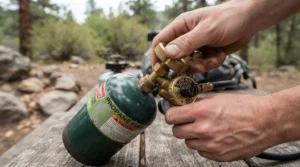
Getting the most from any butane canister for camping stove starts before you even strike a match. First, always check the connection type against your stove’s manual — EN417 threaded cartridges and Campingaz’s EasyClic system are not interchangeable, and forcing a mismatch risks damaging the valve seal on both the stove and the canister. Second, warm a sluggish canister gently in a jacket pocket or cupped hands rather than near any flame or direct heat source; this restores vapour pressure in cold conditions without the serious hazard of localised heating a pressurised container. Third, always attach the stove to the canister on a flat, stable surface before lighting — a wobbling connection under load is one of the most common causes of a leaking seal in the first thirty days of ownership. Fourth, store part-used cartridges upright, at room temperature, away from direct sunlight and any ignition source; a canister left baking in a car boot on a hot day is genuinely risky, since internal pressure rises significantly with temperature. Fifth, before a long trip, do a five-minute test burn at home rather than discovering a faulty valve seal forty miles from the nearest shop. A common first-month mistake is over-tightening a screw-thread connection in the belief that tighter equals safer — in reality, this can damage the thread and cause the exact leak you were trying to prevent, so snug and secure is the goal, not maximum torque.
Real-World Scenarios: Which Canister Suits Your Trip
Picture three different campers heading out this season. First, a university student borrowing a tent for a three-night music festival on a tight budget, cooking basic pasta and beans for one — the Highlander 450g or GoSystem 350g covers this comfortably, since fair-weather festival conditions don’t demand cold-weather performance and the lower price per gram matters more than blend sophistication. Second, a family of four doing a week’s car camping in a Cornish campsite through August, running a two-burner stove plus an evening lantern — here the Coleman C500 or Campingaz CV470 Plus makes more sense, since higher fuel volume and, in the Campingaz case, multi-appliance compatibility reduce the number of fuel changes mid-holiday. Third, a solo hiker tackling a late-October wild camping route through the Cairngorms, boiling water for dehydrated meals at altitude in near-freezing overnight temperatures — this is squarely Primus Power Gas territory, where the isobutane blend’s cold-weather vapour pressure genuinely determines whether breakfast happens on schedule or not at all. Matching canister to scenario like this, rather than defaulting to whichever tin is cheapest on the shelf, is the single biggest lever most casual campers never pull.
How to Choose Butane Canisters for Camping Stove
- Confirm your stove’s connector type first — EN417 threaded, Coleman-style screw, or Campingaz EasyClic; this eliminates most of the market before price even enters the conversation.
- Match fill weight to trip length and headcount — a 100-230g cartridge suits one to two nights solo, while 440-450g suits a family week away.
- Check the gas blend for your season — higher propane or isobutane content matters far more in shoulder-season or cold conditions than in high summer.
- Weigh cost-per-gram, not just sticker price — a 450g tin is nearly always cheaper per gram than three 100g tins bought separately.
- Consider multipack availability — regular campers save meaningfully by buying 3- or 6-packs of a size and brand they already trust.
- Check UK stockist reliability — a cheaper import brand is no bargain if you can’t reliably restock it before next season’s trip.
- Read genuine aggregated review patterns, not star ratings alone — a 4.3-star average can still hide a recurring dent-in-transit issue worth knowing about beforehand.
Butane Canister vs Propane Canister
This is one of the most persistent points of confusion in camping gas, so it’s worth being direct: almost no consumer camping cartridge sold in the UK today is pure propane, because pure propane requires a much heavier, thicker-walled cylinder to safely contain its higher vapour pressure — think of a Calor-style bottle rather than a lightweight tin. What shoppers are really comparing when they ask “butane canister vs propane canister” is a butane-heavy blend against a propane-heavy blend within the same lightweight EN417 or proprietary format.
| Factor | Butane-Heavy Blend | Propane-Heavy Blend |
|---|---|---|
| Cold performance | Poor below ~0°C | Strong down to -10°C or lower |
| Energy per gram | Slightly lower | Slightly higher |
| Typical products here | Highlander, GoSystem | Primus Power Gas |
| Cost per gram | Lower | Higher |
| Best For | Summer, fair-weather use | Shoulder-season, altitude, cold |
The practical takeaway is that a higher propane or isobutane ratio isn’t automatically “better” — it’s better suited to cold and marginal conditions, while costing more for performance you may never need if you’re strictly a fair-weather, high-summer camper. Buyers regularly overpay for cold-weather blends they’ll only use twice a year, when a cheaper butane-heavy option like the Highlander 450g would have served identically well from May through September.
✨ Don’t Miss These Exclusive Deals!
🔍 Take your camp cooking setup to the next level with these carefully selected canisters. Click on any highlighted item to check current pricing and availability. These reliable fuel options will help you create genuinely satisfying meals your whole family will love, wherever the trip takes you!
Stove Valve Compatibility
Stove valve compatibility is the single most common reason a brand-new canister ends up abandoned in a shed. There are, broadly, three connection families on the UK market: the EN417 threaded valve (also colloquially, if technically incorrectly, called a Lindal valve), found on Highlander, GoSystem, Primus, and most generic or budget stoves; Coleman’s own screw-thread cartridges, which are compatible with a wide range of third-party stoves designed to the same broad standard, as used by the Coleman C300 and C500; and Campingaz’s proprietary EasyClic and EasyClic Plus bayonet-style connectors, exclusive to Campingaz appliances, as used by the CV300 Plus and CV470 Plus. There’s also an older pierceable, valveless cartridge style seen on some vintage Bleuet-style stoves, which is genuinely a different animal again and not interchangeable with any of the seven canisters reviewed here. Before buying in bulk, physically check the top of your stove’s fuel connector against the canister’s threading or fitting style in the product photos — a five-second check that prevents a wasted purchase and, in the case of forced mismatched connections, a genuine gas-leak safety risk.
Canister Pressure Ratings Explained
Every one of these canisters is, by law and by design, a pressurised container — that’s precisely why they’re all marked with warnings about heat and puncture risk. Internal pressure isn’t fixed; it rises and falls with temperature and with how much liquid gas remains inside, which is why a nearly-empty canister on a cold morning can struggle to maintain a strong flame even though it technically still contains fuel. Butane alone has a notably lower internal pressure than propane at any given temperature, which is part of why pure propane needs a heavier cylinder — the lightweight tins reviewed here rely on blending just enough propane or isobutane into the mix to boost usable pressure without requiring aerospace-grade steel walls. What most buyers overlook is that this is precisely why a 450g “summer” butane canister can feel sluggish on a genuinely cold morning while an identically-sized propane-boosted blend performs normally — the gas mix, not the canister size, is doing the pressure work. Practically speaking, keeping a spare canister slightly warm (an inside jacket pocket overnight, never near a direct heat source) before a cold-morning brew is the simplest way to work with pressure physics rather than against them.

General-Purpose Camp Cooking
For general-purpose camp cooking — the everyday business of boiling water, frying breakfast, and simmering a one-pot dinner rather than specialist high-altitude expedition use — the honest verdict is that any of the seven canisters here will get the job done in typical UK three-season conditions. The differences that matter for this kind of everyday cooking are less about exotic gas science and more about practicality: how many meals you’re cooking, how many people you’re feeding, and whether you’re running one stove or several devices off the same fuel supply. A single hiker boiling water twice a day for two nights barely dents a 230g Coleman C300, while a family running a two-ring burner plus a lantern through a week’s holiday will comfortably work through a 450g Coleman C500 or Campingaz CV470 Plus. The unglamorous truth of general-purpose cooking is that fuel efficiency habits — using a lid, sheltering the flame from wind with a basic windshield, and not running the burner at full blast when a simmer would do — save more gas over a season than any specific canister choice does.
Butane Canister Reviews: What Real Campers Report
Genuine, verifiable aggregated review sentiment across this category tends to cluster around a few recurring themes rather than wild variation between brands. Positive patterns that show up repeatedly across UK retailer reviews include praise for consistent, predictable ignition on threaded EN417 cartridges, appreciation for Campingaz’s click-connect system among users who find screw threads fiddly with cold hands, and general satisfaction with value on budget multipacks. Negative patterns worth flagging honestly include occasional reports of dented canisters arriving from transit — noted specifically for the Coleman C300 in real UK Amazon reviews — and a smaller number of buyers finding a specific canister size ran out faster than expected relative to their cooking habits, which is often less a fault of the product and more a mismatch between fill size and actual usage. Where verifiable review depth is genuinely thin, as with some smaller or newer budget imports, it’s more honest to say so than to imply a review consensus that doesn’t exist. The overall pattern across this category is reassuring: catastrophic failures are rarely reported, and most negative feedback concerns transit damage or simple size-mismatch rather than fundamental product flaws.
Common Mistakes When Buying Butane Canisters for Camping Stove
The most frequent mistake is buying purely on price per canister without checking the connector type, resulting in an unusable tin sitting in the garage. A close second is assuming all “butane” canisters perform identically regardless of season — a pure summer blend bought for an autumn trip will underperform no matter how reputable the brand. Third, many first-time buyers underestimate fuel consumption and arrive with a single small cartridge for a week-long trip, only to ration cooking or cut the holiday short. Fourth, buyers sometimes store part-used canisters lying on their side or in direct sunlight, which isn’t dangerous in most single instances but is genuinely poor practice worth correcting. Fifth, and perhaps most avoidable, is failing to test a new stove-and-canister combination at home before departure — a five-minute check that would catch nearly every compatibility or seal problem before it becomes a holiday-ruining discovery three hours from the nearest outdoor shop.
Long-Term Cost & Maintenance
Camping gas canisters are consumables, not investments, so “maintenance” here really means storage discipline and buying strategy rather than repair. Over a typical three-season camping year, a family cooking most weekends will get through considerably more fuel than a single fair-weather trip suggests, which is where multipack buying genuinely pays off.
| Usage Pattern | Recommended Approach | Approx. Annual Spend |
|---|---|---|
| Occasional (2-3 trips/year) | Single 230-350g tins as needed | Under £30 |
| Regular (monthly camper) | 450g multipacks (3- or 6-pack) | £40-£70 |
| Family/multi-device use | Larger CV470 Plus or C500 multipacks | £70-£100+ |
Reading the table, the cost-per-use gap between occasional and regular buying patterns narrows considerably once multipacks enter the picture — a 6-pack of Coleman C500 cartridges works out meaningfully cheaper per canister than buying singles, which matters if you’re a genuinely frequent camper rather than a once-a-summer visitor. The real long-term cost consideration isn’t the canister price at all, though — it’s compatible stove longevity. Buying into a proprietary system like Campingaz’s EasyClic locks your future fuel purchases to that ecosystem for as long as you own the stove, while an EN417-threaded setup keeps your options genuinely open across brands for years to come.
Safety, Regulations & Flying with Camping Gas
Every canister covered here is a pressurised, flammable product, and UK guidance is clear that they should be stored upright, away from heat sources and direct sunlight, and never punctured or disposed of while any pressure remains inside (HSE guidance on liquefied petroleum gas). If you’re flying to a camping destination, the rules are unambiguous and worth checking before you pack: gas canisters of any kind are treated as dangerous goods and are not permitted in hand or hold luggage on UK flights, meaning fuel must always be bought locally at your destination rather than carried from home (UK Civil Aviation Authority baggage guidance). Domestically, always cook in a ventilated space — never inside a fully sealed tent — since butane and propane combustion consumes oxygen and produces carbon monoxide, a genuinely serious risk in an enclosed space. It’s also worth knowing a little history here: Campingaz’s proprietary connection system dates back decades and predates the wider EN417 standard, which is part of why the two systems never fully converged into one universal fitting across the European market (Campingaz brand history).

FAQ
❓ Can you take butane canisters on a plane?
❓ How long does a 450g butane canister last?
❓ Are butane canisters interchangeable between brands?
❓ Do butane canisters expire?
❓ Is butane or propane better for cold weather camping?
Conclusion
Choosing between these seven butane canisters for camping stove use really comes down to answering three honest questions before you look at a single price tag: what connector does your stove actually take, what season and temperature will you realistically be cooking in, and how many meals or appliances need to run off one fuel supply. Get those three answers right and the rest follows naturally — the Highlander 450g and GoSystem 350g for tight-budget, fair-weather trips; the Coleman C300 for lightweight solo backpacking; the Coleman C500 for family car camping; the Campingaz CV300 Plus and CV470 Plus for anyone already committed to that ecosystem; and the Primus Power Gas range for genuinely cold or shoulder-season conditions where performance matters more than price per gram. None of these seven is objectively “best” in isolation — the honest, original-content answer is that the right canister is entirely a function of your stove, your season, and your trip, and no amount of marketing copy changes that basic physics and compatibility maths.
Recommended for You
- Butane Canisters For Caravan Cooking: 7 Best Picks (2026)
- Butane Gas Canisters Under £8: 7 Best UK Picks (2026)
- Camping Gas Canisters Under £10: 7 Smart Budget Picks (2026)
Disclaimer: This article contains affiliate links. As an Amazon Associate, I earn from qualifying purchases. If you purchase products through these links, we may earn a small commission at no additional cost to you.
✨ Found this helpful? Share it with your friends! 💬🤗
