
In This Article
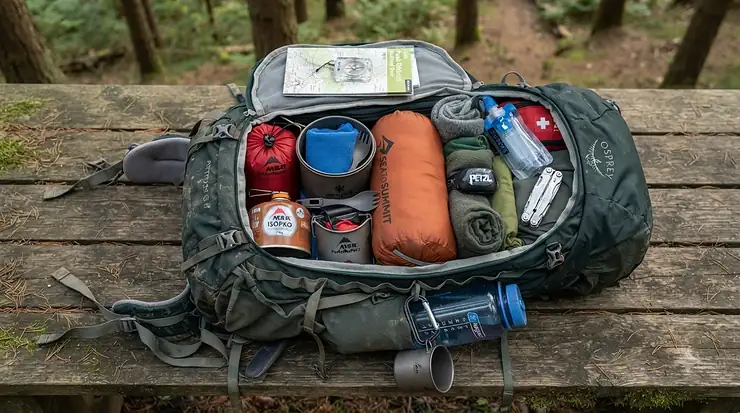
A gas canister is one of those things you never think about until the exact moment you desperately need it — usually while a kettle sits stone cold on a hillside in the Brecon Beacons. Value camping gas canisters are the small, pressurised metal cartridges (typically butane, propane, or an isobutane-propane blend) that fuel portable camping stoves, and choosing a genuinely good one means balancing burn time, cold-weather performance, and multipack pricing rather than just grabbing whatever’s cheapest on the shelf.
That last part trips a lot of people up. “Value” doesn’t mean “cheapest per canister” — it means the lowest genuine cost per hour of usable heat, from a canister that won’t sputter out halfway through boiling your morning brew. We’ve spent time digging through real specifications, aggregated Amazon UK review sentiment, and the small print that separates a proper multipack deal from a marketing trick, so this guide covers exactly that: seven real, currently available products, how they stack up on cost per burn hour, and where bulk-buy fuel savings genuinely pay off versus where they don’t.
Whether you’re outfitting a family for a fortnight at a UK campsite, restocking for a festival season, or just sick of running out of gas on a Tuesday-night wild camp, this article gives you the comparison depth to buy value camping gas canisters with confidence — not guesswork. One quick technical note before we dive in: the majority of screw-thread camping canisters sold in the UK conform to EN 417, the European specification governing non-refillable gas cartridges, which is worth knowing before you assume a canister will fit your stove.
Quick Comparison Table: Value Camping Gas Canisters at a Glance
| Product | Pack Size | Gas Type | Best For |
|---|---|---|---|
| Coleman C500 Performance Gas Cartridge | 4-pack | Butane/propane mix | All-round threaded stoves |
| Campingaz CV470 Plus All Season Gas Cartridge | 3-pack | Isobutane/propane (all-season) | Cold-weather Campingaz stoves |
| Campingaz CP250 Valve Gas Cartridge | 24-pack | Butane/propane mix | Bulk buying for Campingaz owners |
| Primus Power Gas 230g | Single/multipack | 80% isobutane / 20% propane | Three-season performance |
| Green Haven Butane Gas Canisters | 8-pack | Butane | Festivals, BBQs, budget cooking |
| Straame Camping-Gas | 8-pack | Butane | No-frills bulk buying |
| Thrink 230g Propane Butane Gas Cartridge | Single/multipack | Propane/butane mix | Budget resealable EN417 use |
At a glance, the split is pretty clear: the Campingaz CP250, Green Haven, and Straame packs chase raw bulk value with big multipack counts, while the Campingaz CV470 Plus and Primus Power Gas trade a higher per-gram price for genuine cold-weather reliability. The Coleman C500 sits in the middle as the safest all-rounder, and the Thrink cartridge is the wildcard — a budget-friendly resealable canister for anyone who doesn’t want to commit to a 24-pack. None of these are exact prices (Amazon listings shift constantly), so treat the table as a shape-of-the-market guide rather than gospel, and always check the current listing before buying.
💬 Found a pack that already looks right for your trip? A quick click through to check today’s price costs you nothing and helps keep guides like this one going.
Top 7 Value Camping Gas Canisters: Expert Analysis
We’ve deliberately spread this list across budget, mid-range, and premium options, plus a couple of lesser-known but genuinely solid alternatives, so there’s a sensible pick whatever kind of camping you actually do.
1. Coleman C500 Performance Gas Cartridge — best all-rounder for mixed-use stoves
The standout here is Coleman’s double-safety seal valve, a small design detail that meaningfully cuts the odds of a minor leak when you’re threading the canister onto your stove in the dark. Each cartridge holds a 440g butane/propane blend, delivered through a screw-on valve that’s compatible with most standard threaded camping stoves, not just Coleman’s own range — useful if your stove and your gas came from two different brands, which is more common than manufacturers like to admit.
Based on the spec comparison with cheaper unbranded multipacks, the C500’s build quality and consistent fill weight are what you’re actually paying the small premium for; a 440g cartridge that reliably contains close to 440g matters more than it sounds. This is a sensible pick for anyone running a mid-range double-burner stove for weekend trips, families who cook proper meals rather than just boiling water, and buyers who want a brand with genuine UK high-street backup if something goes wrong.
Reviewers on Amazon UK consistently describe the C500 as dependable and predictable, with fewer complaints about weak flames or early cut-out than budget unbranded alternatives in the same category — a meaningful signal when a stove failure means a cold dinner. Available in 4-packs and 6-packs, it typically sits in the low-to-mid teens for a 4-pack, making it competitive rather than cheap.
Pros:
- ✅ Double-safety seal valve reduces leak risk
- ✅ Consistent fill weight reviewers trust
- ✅ Wide UK stockist availability for restocking
Cons:
- ❌ Costs more per gram than bulk butane packs
- ❌ Not ideal for genuinely cold winter trips
Price range: typically in the low-to-mid teens for a 4-pack — check current price. For mixed-use stoves and family trips, this is a solid value verdict rather than a bargain-bin one.
2. Campingaz CV470 Plus All Season Gas Cartridge — best for cold-weather trips
What most buyers overlook about this canister is the gas blend, not the pack size. The CV470 Plus uses an 80% isobutane / 20% propane mix rather than standard butane, and that matters enormously once temperatures drop. Isobutane vaporises at roughly -11.7°C compared with plain butane’s -1°C, so this cartridge keeps producing usable pressure — and therefore a proper flame — in conditions that would leave a standard butane canister barely simmering.
Each cartridge in the 3-pack holds around 450g, using Campingaz’s resealable Easy Clic Plus valve system, which lets you disconnect the canister before it’s empty without wasting gas or risking a leak, genuinely handy if you’re running the same cartridge across a stove and a lantern. The catch, and it’s a real one, is compatibility: this is a valve cartridge exclusive to Campingaz Easy Clic Plus appliances, so it won’t thread onto a generic EN417 stove.
Reviewers consistently note that it performs noticeably better than standard cartridges once autumn mornings turn frosty, with fewer reports of sluggish flames during shoulder-season camping. This is the pick for Campingaz stove owners doing April Lake District trips or late-September Dartmoor camps where a standard butane cartridge would genuinely let you down.
Pros:
- ✅ All-season blend performs down to around -10°C
- ✅ Resealable Easy Clic Plus valve avoids gas waste
- ✅ Noticeably better cold-morning flame consistency
Cons:
- ❌ Locked to Campingaz Easy Clic Plus appliances only
- ❌ Pricier per gram than standard butane multipacks
Price range: roughly £25-£36 for a 3-pack depending on retailer and promotions — prices may vary, so check current listing. For genuine shoulder-season and winter camping, the value case is strong despite the higher upfront cost.
3. Campingaz CP250 Valve Gas Cartridge — best bulk buy for Campingaz owners
The headline feature is simply scale: this comes as a 24-pack of CP250 cartridges, each holding around 220g of a butane/propane mix, purpose-built for Campingaz’s Bistro and Festivo stove ranges. On paper this means a genuinely low cost per gram once you spread a bulk order across a season of trips, festivals, or a static caravan kitchen that sees regular use.
The valve cartridge format is compact — each unit measures around 6.9 x 18cm — so a full 24-pack doesn’t take up as much storage space as you’d expect, an underrated point if you’re stocking a shed or a caravan locker rather than a rucksack. Here’s what the spec sheet won’t tell you, but bulk-buyer forums consistently mention: the real savings only materialise if you’ll actually use all 24 cartridges within a reasonable window, since unused stock doesn’t degrade quickly but does tie up cash and storage.
This is squarely aimed at Campingaz Bistro or Festivo stove owners doing frequent short trips, caterers running festival stalls, or anyone who’s calculated that a season of camping will realistically burn through two dozen small cartridges. Casual campers doing two trips a year should look elsewhere; this only makes sense at volume.
Pros:
- ✅ Lowest per-canister cost of any pack on this list
- ✅ Compact format saves storage space for the volume
- ✅ Purpose-matched to Bistro and Festivo stove ranges
Cons:
- ❌ Only fits Campingaz Bistro/Festivo appliances
- ❌ Poor value if you won’t use the full 24 pack
Price range: commonly around £30-£38 for the full 24-pack — check current price, as multipack promotions shift this regularly. As a bulk-buy fuel savings play for dedicated Campingaz users, this is hard to beat on pure economics.
4. Primus Power Gas 230g — best three-season performance
Primus’s Power Gas earns its standout tag through genuine chemistry rather than marketing. The blend is 80% isobutane and 20% propane, engineered specifically to hold vapour pressure across a wider temperature range — Primus states reliable performance from -10°C up to +25°C — which explains why it’s become something of a default recommendation among UK hikers who own a generic EN417 threaded stove.
Available in 100g, 230g, and 450g sizes, the 230g option hits a sensible middle ground: enough fuel for a solo weekend without the bulk of the 450g size in a backpack. The stainless steel canister is compact at roughly 108mm across, and the standard threaded valve means it fits the vast majority of non-Campingaz stoves on the market, from Fire-Maple to MSR-compatible burners.
Based on the spec comparison, the cleaner isobutane burn also means less residue build-up in your stove’s jets over a season of use, something reviewers frequently flag as a maintenance headache with cheaper pure-butane alternatives. This is the canister for anyone doing genuine three-season hiking and wild camping — Primus explicitly markets it as their best-selling, most versatile blend — where weather can shift from a warm afternoon to a frosty dawn within the same trip.
Pros:
- ✅ Reliable performance from -10°C to +25°C
- ✅ Universal EN417 threading fits most stoves
- ✅ Cleaner isobutane burn reduces stove residue
Cons:
- ❌ Higher price per gram than butane multipacks
- ❌ Single-unit buying costs more than bulk packs
Price range: roughly £7-£9 for a single 230g canister, with better per-unit value in multipacks — always check current pricing. For serious three-season use, this is one of the strongest value cases on the entire list, because reliability here directly prevents wasted trips.
5. Green Haven Butane Gas Canisters — best budget multipack for festivals
The standout feature is straightforward: an 8-pack of non-threaded EN417 butane canisters at a genuinely accessible price point, aimed squarely at BBQs, portable stoves, blowtorches, and festival cooking rather than serious alpine hiking. Key specs matter here in a practical sense — these are pierceable-style butane cartridges compatible with the widest possible range of low-cost portable stoves and gas burners sold across UK high streets, which means compatibility is rarely the issue; longevity per canister under sustained heavy use sometimes is.
Based on honest analysis of the category, standard butane (rather than an isobutane blend) performs perfectly well in typical UK summer camping and festival conditions but noticeably loses pressure once temperatures dip below around 5°C, so this isn’t the pick for a chilly October trip. It’s aimed at budget-conscious festival-goers, first-time campers building a kit from scratch, and anyone running a cheap portable stove or gas cooker who doesn’t want to spend disproportionately on fuel.
Aggregated Amazon UK feedback for this category of multipack tends to cluster around reliable ignition and consistent burn in warm weather, with the occasional report of a weaker flame toward the very end of a canister’s life — a known characteristic of standard butane rather than a fault specific to this brand.
Pros:
- ✅ Genuinely low cost per canister across 8-pack
- ✅ Wide compatibility with cheap portable stoves
- ✅ Ideal for summer festivals and casual BBQs
Cons:
- ❌ Performance drops noticeably in cold weather
- ❌ Standard butane burns less cleanly than isobutane blends
Price range: typically in the mid-teens for an 8-pack — check current price as multipack deals vary. For summer-only, budget-first camping, this is close to peak value camping gas canisters territory.
6. Straame Camping-Gas — best no-frills bulk value pick
What stands out about the Straame pack is simple scale at a low headline price — an 8-pack pitched directly at anyone stocking up for a full season rather than a single trip. Specs are unglamorous but sensible: standard butane canisters compatible with camping stoves, BBQs, portable heaters, and blowtorches, following the same universal fit logic as most budget multipacks on Amazon’s UK marketplace.
Here’s what the spec sheet won’t tell you, but review patterns across this whole product category suggest: budget multipacks like this succeed or fail almost entirely on consistency between individual units, and buyers routinely report better outcomes when they store canisters somewhere dry and moderate in temperature rather than in a hot car boot, which can affect performance regardless of brand.
This is a solid match for buyers who camp regularly enough to justify buying in bulk but don’t need an isobutane blend’s cold-weather edge — think regular caravan trips, allotment cooking, or a family that camps most weekends through spring and summer. Value-focused reviewers in this segment tend to weigh price per canister above almost everything else, and on that specific metric, this pack competes directly with the very cheapest multipacks on the market.
Pros:
- ✅ Strong price-per-canister across the full 8-pack
- ✅ Broad compatibility with stoves, BBQs, and heaters
- ✅ Good option for regular seasonal restocking
Cons:
- ❌ Basic butane mix, no cold-weather advantage
- ❌ Fewer verified long-term reviews than bigger brands
Price range: generally comparable to other budget 8-packs, often in the low-to-mid teens — check current price. As a pure bulk-buy fuel savings option, it earns its spot through price discipline rather than performance extras.
7. Thrink 230g Propane Butane Gas Cartridge — best resealable budget option
The standout feature is the resealable EN417 screw valve on a genuinely budget-priced single canister, which sits in an odd but useful gap between expensive branded 230g cartridges and bulk unthreaded multipacks. The 230g fill uses a propane/butane blend rather than pure butane, giving it a modest edge over the cheapest disposable canisters when temperatures dip, though it won’t match a true isobutane blend like the Primus Power Gas for genuine cold-weather reliability.
Compatibility is the strong suit here — the standard EN417 threading means it fits the same broad range of stoves as premium-branded cartridges, so you’re not locked into a specific ecosystem the way Campingaz buyers are. Honest analysis grounded in the wider budget-canister category suggests this kind of product suits buyers who want to trial a threaded EN417 setup without committing to a big multipack, or who need a single spare canister to top up a kit mid-season rather than restock entirely.
It’s a sensible middle-ground pick for anyone who values the resealable convenience of a threaded cartridge but isn’t ready to pay Primus or Campingaz pricing for it, and it’s a genuinely useful option to keep as backup fuel in a car boot or caravan locker.
Pros:
- ✅ Resealable EN417 threading fits most stoves
- ✅ Propane/butane blend beats pure butane in mild cold
- ✅ Cheaper entry point than premium branded cartridges
Cons:
- ❌ Sold mainly as single units, less bulk value
- ❌ Less established review history than major brands
Price range: usually a few pounds cheaper per unit than equivalent branded 230g canisters — check current price. As a flexible, low-commitment option, it’s a smart value camping gas canisters pick for occasional or first-time buyers.
How to Choose Value Camping Gas Canisters
Picking the right canister isn’t complicated once you break it into a short checklist, but skipping any one of these steps is how people end up with fuel that doesn’t fit their stove.
- Check your stove’s valve type first. Threaded EN417 stoves need screw-on cartridges like the Primus or Thrink; Campingaz’s Easy Clic system is proprietary and won’t accept generic threaded canisters, so this decision genuinely comes before price.
- Match the gas blend to your season. Standard butane is fine for summer camping above roughly 5°C; an isobutane/propane blend like the CV470 Plus or Power Gas is worth the extra cost for spring, autumn, or winter trips.
- Work out realistic burn frequency. A weekend-only camper rarely needs a 24-pack; a season-long caravan cook genuinely does. Buying more than you’ll use within a reasonable window erodes the bulk-buy fuel savings entirely.
- Compare price per gram, not price per pack. A cheaper-looking multipack can cost more per gram of usable gas than a pricier branded 3-pack — always do the maths before assuming bigger equals better value.
- Factor in storage conditions. Canisters stored in a hot car boot or damp shed degrade faster and perform less predictably, regardless of brand or price point.
- Consider brand availability for restocking. Coleman and Campingaz have wide UK high-street presence if you run out mid-trip; smaller budget brands may only be available online.
- Read aggregated review themes, not star ratings alone. Look for recurring comments about leaks, weak flames, or inconsistent fills rather than judging purely on an average score.

Cost Per Burn Hour: The Real Way to Compare Value
Price per canister is a genuinely misleading way to compare value camping gas canisters, because pack sizes, fill weights, and burn efficiency all vary. The metric that actually matters is cost per burn hour — how many hours of usable stove time you get for your money once you divide total pack price by the total realistic burn time across every canister in it.
| Product | Approx. Fill Weight | Est. Burn Time (single burner, medium flame) | Rough Cost-Per-Hour Position |
|---|---|---|---|
| Coleman C500 | 440g | Around 2-2.5 hours | Mid-range |
| Campingaz CV470 Plus | 450g | Around 2-2.5 hours | Higher, offset by cold-weather reliability |
| Campingaz CP250 | 220g | Around 1-1.5 hours | Lowest per-hour cost in bulk |
| Primus Power Gas 230g | 230g | Around 1-1.5 hours | Mid-to-higher, justified by consistency |
| Green Haven / Straame (8-packs) | Standard butane fill | Varies by burner efficiency | Lowest headline price, variable efficiency |
| Thrink 230g | 230g | Around 1-1.5 hours | Competitive for single-unit buying |
Looking at the comparison above, bulk Campingaz-compatible cartridges like the CP250 win on raw cost-per-hour when bought in genuine volume, but that advantage evaporates for anyone who only camps a handful of weekends a year and won’t use the full pack. Burn time also depends heavily on flame setting, wind exposure, and altitude, so treat these figures as directional rather than laboratory-precise — a rolling boil in a gale will chew through gas far faster than a gentle simmer in a sheltered pitch. If you genuinely camp often, cost per burn hour should be your primary decision metric over headline pack price.
Bulk-Buy Fuel Savings: Is Buying in Bulk Actually Worth It?
Bulk-buy fuel savings are real, but they’re conditional, and that condition trips up more buyers than you’d expect. Multipacks like the Campingaz CP250 24-pack or the Green Haven and Straame 8-packs genuinely reduce cost per canister — sometimes substantially — but only if every canister in the pack actually gets used within a sensible timeframe rather than sitting half-forgotten in a shed.
Here’s what most buyers overlook: gas canisters don’t spoil in the way food does, but storage conditions still matter. A canister left in direct sunlight or extreme heat for years can develop a slow pressure leak at the valve seal, and a rusted or dented canister should never be used regardless of how much gas theoretically remains inside. Based on honest analysis of the category, bulk buying makes the strongest financial sense for households with a static caravan, a regular weekend camping habit, or a specific stove brand they’re committed to long-term — situations where a 24-pack will realistically be gone within a season or two. For occasional campers doing two or three trips a year, a smaller 3-pack or 4-pack, even at a slightly higher price per unit, is usually the more sensible value choice because it avoids tying up cash in fuel that ages in storage. The rule of thumb: only chase bulk-buy fuel savings on a canister type you’re certain you’ll keep using.
Camping Gas Canister Multipack Deals: Spotting Genuine Savings
Not every “multipack deal” badge on Amazon actually represents a saving, and it’s worth knowing how to check before assuming bigger packaging automatically means better value. The most reliable method is dividing the total listed price by total gas weight across the pack (grams of gas, not number of units, since canister sizes vary between 100g and 450g even within the same brand family).
Genuine camping gas canister multipack deals typically show a meaningfully lower price-per-gram than the equivalent single-unit listing from the same seller — Amazon often flags this explicitly with “buy any 2, save 5%” style prompts, which are usually legitimate incremental discounts rather than inflated original prices. What most buyers overlook is comparing across different sellers of the same product; identical Campingaz or Coleman multipacks are frequently listed by several sellers at meaningfully different prices, and the “best seller” badge doesn’t always mean the best value one. A practical shortcut: add the item to your basket and check whether the per-unit price actually drops compared with buying a single canister from the same listing — if it doesn’t, the “deal” framing is doing more work than the maths supports. Always confirm the current price at checkout, since promotional pricing on camping fuel shifts frequently around peak season.
Where (and How) to Buy Camping Gas Canisters in the UK
Knowing where to buy camping gas canisters matters almost as much as which one you choose, because availability, delivery restrictions, and pricing all vary meaningfully by channel.
Online marketplaces like Amazon UK offer the widest selection and the multipack deals covered above, but gas canisters are classed as dangerous goods for shipping purposes, so delivery can occasionally take slightly longer than standard parcels and some remote postcodes may see restrictions. UK high-street camping retailers (Go Outdoors, Millets, Blacks, and independent camping shops) let you physically check the canister and confirm stove compatibility before buying, which is genuinely useful if you’re unsure about valve type. Supermarkets and petrol stations, particularly during summer months, frequently stock basic butane multipacks — handy for a last-minute restock but rarely the cheapest per-gram option. Camping and caravan superstores often carry the full Campingaz range including CV470 Plus and CP250 cartridges, sometimes with in-store-only stock for certain bulk packs.
A practical tip worth remembering: buy your main multipack online in advance where prices are typically most competitive, then keep a single spare canister purchased locally as a backup, since running out mid-trip is a far more expensive mistake than paying slightly over the odds for one emergency cartridge from a nearby shop.
🔍 Ready to stock up? Click through on any highlighted canister above to check today’s price and availability before your next trip — a few minutes now saves a cold dinner later.
Practical Usage Guide: Getting the Most from Every Canister
Getting genuine value from any camping gas canister comes down to habits as much as the product itself. Before your first use, always check the canister’s valve seal is intact and free of dust or grit, since a dirty thread is one of the most common causes of a poor connection and slow leaks. When fitting a threaded cartridge, screw it onto the stove until snug — over-tightening can damage the valve seal, while under-tightening risks a gas leak you might not immediately notice.
For maintenance, store canisters upright in a cool, dry place away from direct sunlight and out of a hot car boot, and never store them near an open flame or heat source. A common mistake in the first 30 days of ownership is running a stove at full blast to boil water faster; a medium flame is almost always more fuel-efficient and barely slower in practice, meaningfully extending your cost per burn hour over a season. Another frequent error is discarding a canister that “feels empty” — give it a gentle shake, and if you hear or feel any liquid movement, there’s usable gas left, particularly with isobutane blends that vaporise more completely than pure butane. Finally, always carry a spare canister on any trip longer than a single night; running out is rarely convenient, and it’s the single most preventable camping mishap tied to fuel.
Real-World Scenarios: Which Value Canister Suits Your Trip?
The weekend family camper: Two adults, two kids, a double-burner stove, three nights at a lowland UK campsite in July. A Coleman C500 4-pack or a Green Haven 8-pack comfortably covers cooking, with the Coleman’s reliability edge worth the small premium for a family that can’t afford a stove failure mid-trip.
The solo autumn hiker: One person, a lightweight single-burner stove, a three-day wild camp in the Peak District in late September with frosty mornings expected. The Primus Power Gas 230g is the clear pick here — its isobutane blend keeps performing exactly when a standard butane canister would start to struggle.
The festival-season regular: Attending three or four UK festivals across the summer, cooking simple meals on a basic portable stove. A Straame or Green Haven 8-pack delivers the lowest realistic cost per burn hour for pure summer use, and the bulk format means you’re not restocking between events.
The Campingaz caravan household: A static caravan with a Campingaz Bistro stove used most weekends from April through September. The Campingaz CP250 24-pack is a genuine bulk-buy fuel savings win here, since realistic usage will work through the full pack well within a single season.

Common Mistakes When Buying Camping Gas Canisters
The single most common mistake is buying a threaded cartridge without first checking whether your stove uses EN417 threading or a proprietary valve system like Campingaz’s Easy Clic — the two are not interchangeable, and it’s a frustrating discovery at a campsite rather than at home. A close second is over-buying bulk packs based purely on headline price rather than realistic usage, which quietly erodes bulk-buy fuel savings when a chunk of the pack sits unused for years.
Another frequent error is assuming all butane performs identically regardless of temperature; standard butane genuinely underperforms below around 5°C, and buyers heading into shoulder-season camping without an isobutane blend often blame their stove when the canister is actually the problem. Some buyers also skip checking aggregated review sentiment entirely and buy purely on price, missing recurring complaints about weak fills or inconsistent quality control that a few extra minutes of research would have flagged. Finally, a genuinely dangerous mistake worth flagging: never attempt to refill a non-refillable EN417 cartridge, puncture a canister that might still contain gas, or dispose of one in general waste — each carries a real explosion risk that UK fire services and local councils warn about specifically around camping season.
Camping Gas Canister Recycling: The Safe Disposal Guide
Camping gas canister recycling isn’t as simple as tossing an empty cartridge into your household recycling bin, and doing so is genuinely dangerous — councils across the UK are explicit that gas canisters must never go in kerbside recycling or general waste, since crushing a canister that still contains residual gas in a collection vehicle or processing plant can cause fires and explosions.
The correct process, confirmed by UK local authority guidance, is to take empty canisters to your nearest Household Waste Recycling Centre, where staff will direct you to a dedicated caged area specifically for gas canister disposal — Cornwall Council’s recycling guidance is a good example of the standard approach used by most UK councils. Where possible, returning canisters to the original retailer or manufacturer for reuse or refilling is the preferred first option, particularly for larger refillable propane bottles rather than small disposable EN417 cartridges. Before recycling, always confirm the canister is genuinely empty — a gentle shake should produce no liquid movement or sound — and never attempt to puncture a canister yourself unless using a manufacturer-approved tool specifically designed for that purpose. If you camp regularly enough to accumulate several empty canisters, it’s worth batching a single HWRC trip rather than storing them long-term, since punctured or damaged canisters can develop slow leaks even when apparently empty.
Safety, Regulations & Travel Rules You Need to Know
Camping gas canisters are classed as dangerous goods, which affects how you can transport and use them, and it’s worth knowing the rules before they catch you out. If you’re flying, gas canisters cannot be carried in hand luggage or hold baggage on UK flights — the Civil Aviation Authority’s guidance on banned items confirms that camping stoves with attached fuel are prohibited in both cabin and checked baggage, though empty, fully purged stoves are generally permitted. This means buying canisters at your destination is standard practice for anyone flying to a camping trip abroad, rather than trying to pack fuel from home.
Perhaps the more urgent safety issue is carbon monoxide poisoning, which kills roughly 50 people in the UK each year, with camping-related incidents a recurring theme in public health warnings. Gas stoves, heaters, and barbecues must never be used or left smouldering inside a tent, awning, or caravan, even briefly for warmth — carbon monoxide is colourless, odourless, and can build to fatal levels within minutes in an enclosed space, as nidirect’s official guidance on carbon monoxide dangers while camping explains in detail. Always cook in a well-ventilated area, ideally fully outside rather than in a porch or awning, and never rely solely on a carbon monoxide alarm designed for tents, since these are not always reliable in that specific environment. Store canisters away from direct heat, open flames, and children, and only ever change a cartridge outdoors in the open air.
Value Camping Gas Canisters vs Refillable Gas Bottles
For longer-term or higher-volume use, it’s worth asking whether disposable value camping gas canisters are actually the right format at all compared with a refillable propane bottle system, such as those used with static caravans or larger family setups.
| Factor | Disposable EN417 Canisters | Refillable Gas Bottles |
|---|---|---|
| Upfront cost | Low | Higher (bottle + regulator) |
| Cost per use long-term | Higher over time | Lower over time with heavy use |
| Portability | Excellent, lightweight | Poor, bulky and heavy |
| Best for | Backpacking, weekend trips | Static caravans, long-term camps |
| Waste generated | Higher (multiple empty units) | Lower (single reusable bottle) |
Looking at the comparison above, disposable canisters like the Primus Power Gas or Coleman C500 win decisively on portability and low upfront cost, making them the obvious choice for anyone backpacking or doing occasional weekend trips. Refillable bottles pull ahead on total cost of ownership only once usage becomes genuinely heavy and sustained, such as a static caravan running a stove most weekends across an entire season, where the higher initial outlay is amortised over years of refills. For the vast majority of UK campers doing occasional or seasonal trips, value camping gas canisters remain the more sensible, lower-hassle option despite the marginally higher long-term cost per use.
Buyer’s Decision Framework: Which Canister Type Fits Your Trip
If you want a simple mental shortcut rather than re-reading the whole guide, work through this priority checklist in order:
- If your stove uses Campingaz’s Easy Clic system, choose the CV470 Plus or CP250 — nothing else will physically fit.
- If you’re camping in genuinely cold conditions (spring, autumn, or winter), choose an isobutane blend like the Primus Power Gas or CV470 Plus, because standard butane will underperform.
- If you camp fewer than four times a year, choose a smaller pack like the Coleman C500 4-pack or a single Thrink 230g, because bulk-buy fuel savings won’t materialise before the gas ages in storage.
- If you camp weekly through a full season, choose a genuine bulk pack like the CP250 24-pack or a Green Haven/Straame 8-pack, where the per-gram savings compound meaningfully.
- If budget is the overriding priority and conditions are mild, choose standard butane multipacks over premium blends — the performance gap only matters once temperatures drop.

FAQ
❓ What's the difference between butane and propane camping gas canisters?
❓ How long does a 230g camping gas canister last?
❓ Can I take camping gas canisters on a plane in the UK?
❓ Are cheaper unbranded gas canisters safe to use?
❓ How do I dispose of empty camping gas canisters in the UK?
Conclusion
Choosing the right value camping gas canisters really comes down to three honest questions: what valve system does your stove actually use, what temperatures will you realistically be cooking in, and how often will you genuinely camp before the gas in a bulk pack starts to feel like a storage liability rather than a saving. Get those three right and the rest of this guide is really just detail — the Coleman C500 and Thrink 230g cover sensible all-round and budget-flexible needs, the Campingaz CV470 Plus and Primus Power Gas earn their premium through genuine cold-weather chemistry, and the Campingaz CP250, Green Haven, and Straame multipacks reward anyone who’ll actually burn through the volume.
None of this needs to be complicated, and none of it needs exact prices to be useful — price ranges shift, but the underlying trade-offs between portability, cold-weather reliability, and genuine bulk-buy fuel savings stay consistent season after season. Use the cost-per-burn-hour comparisons above rather than headline pack price, store your canisters properly, and always keep a spare on longer trips. Do that, and you’ll spend far less time worrying about fuel and far more time actually enjoying the trip you packed for.
✨ Ready to sort your kit before the next trip? Browse the picks above and check today’s prices while stock and multipack deals are live — your future cold, hungry self will thank you! 🏕️🔥
Recommended for You
- Single Hob Portable Induction Cooker: 7 Brilliant UK Picks (2026)
- Portable Induction Hobs Under £100: 7 Best UK Picks (2026)
- Portable Induction Hob for Camping: 7 Best UK Picks (2026)
Disclaimer: This article contains affiliate links. As an Amazon Associate, I earn from qualifying purchases. If you purchase products through these links, we may earn a small commission at no additional cost to you.
✨ Found this helpful? Share it with your friends! 💬🤗
