In This Article
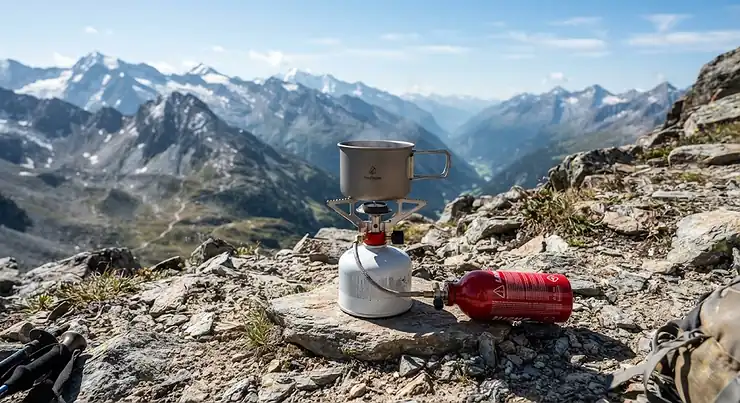
A white gas stove for high altitude use is a liquid-fuel camping stove, typically burning naphtha-based “white gas,” designed to keep producing a strong, controllable flame when thin air and freezing temperatures cause ordinary gas canister stoves to sputter and die. If you’ve ever watched a butane canister lose the will to live at 3,500 metres, you already understand why this category exists. Up there, the rules of cooking change: air pressure drops, water boils at a lower temperature, and the margin between “hot dinner” and “cold, demoralised evening” gets uncomfortably thin.
This guide is built for hillwalkers, ski tourers, and expedition trekkers who need a stove that won’t let them down when it matters. We’ve dug into real specifications, genuine aggregated customer sentiment, and the physics of why liquid fuel behaves so differently once you’re above the clouds. As water boils at 100°C at sea level but only around 93.4°C at roughly 1,905 metres of altitude, according to the boiling point explainer on Wikipedia, it stands to reason that a weaker stove simply can’t compensate for what the atmosphere is taking away. That’s precisely where a properly chosen white gas stove for high altitude earns its keep.
Below, you’ll find seven genuinely capable stoves — from bombproof expedition classics to compact multi-fuel workhorses — each assessed on real specs, verified review sentiment, and honest analysis of who they actually suit. We’ve also covered how a white gas stove for winter camping differs from a fair-weather setup, how a white gas stove vs multi-fuel stove comparison actually plays out in practice, and exactly what altitude effects on stove pressure mean for your morning brew.
Quick Comparison Table
| Stove | Fuel Types | Boil Time (1L, sea level) | Weight | Best For |
|---|---|---|---|---|
| MSR WhisperLite International | White gas, kerosene, auto fuel | ~3 min 30 sec | 320g (stove + pump) | All-round versatility |
| MSR XGK EX | White gas, kerosene, diesel, jet fuel | ~2 min 48 sec | 431g (stove + pump) | Extreme expeditions |
| Primus OmniFuel II | White gas, kerosene, diesel, canister gas | ~2–3 min 10 sec | 450g | Precise simmering |
| Optimus Nova+ | White gas, kerosene, diesel, jet fuel | ~3 min 30 sec | 429g | Compact group cooking |
| Soto Muka | White gas, unleaded auto fuel | ~4 min 30 sec (25°F) | 326g (stove + pump) | Rapid, no-prime lighting |
| Coleman Sportster II Dual Fuel | White gas, unleaded auto fuel | ~4 min | Approx. 1kg+ (integrated pump) | Budget-conscious car campers |
| Trangia Multifuel Burner (X2) | White gas, kerosene, diesel, canister gas | ~3 min 30 sec (fuel-dependent) | 510g (with bottle & pump) | Existing Trangia owners |
Looking at the table, the MSR XGK EX is the clear speed champion, but that horsepower comes wrapped in a heavier, louder package that’s overkill for a weekend on the hills. For most UK hillwalkers wanting one stove that handles everything from a Munro bag to a Himalayan trek, the MSR WhisperLite International and Primus OmniFuel II sit in the sweet spot of price, weight and reliability. Budget buyers eyeing the Coleman Sportster II Dual Fuel should note it trades outright speed and packed size for bulletproof simplicity and a genuinely low price.
💬 Found a stove that suits your trip already? Scroll down to see current pricing and availability on Amazon.co.uk!😊
Top 7 White Gas Stoves for High Altitude: Expert Analysis
1. MSR WhisperLite International — the do-it-all multi-fuel classic
The MSR WhisperLite International has been a fixture of expedition kit lists since the 1980s, and it earns that longevity through sheer adaptability rather than flash. It runs on white gas, kerosene, or unleaded auto fuel, which matters enormously if you’re trekking somewhere Coleman fuel isn’t sold on every corner. MSR states the stove boils a litre of water in around 3 minutes 30 seconds on white gas, and its Shaker Jet self-cleaning technology means you’re not constantly stripping the jet down in a freezing porch. Based on the spec comparison, this is the stove most guides recommend to newcomers graduating from canister systems, precisely because its learning curve, while real, is manageable. Reviewers consistently note that it performs reliably at serious altitude — one long-term Cascade Designs customer reported using it above 6,000 metres without major issues, while a separate field reviewer described using the WhisperLite at 18,000 feet to melt snow and cook food. The trade-off is priming: this isn’t a push-button stove, and windy col camps can make that first light trickier than it should be.
Pros:
- ✅ Burns white gas, kerosene, and auto fuel worldwide
- ✅ Self-cleaning Shaker Jet reduces field maintenance
- ✅ Proven reliability above 6,000m in real-world use
Cons:
- ❌ Requires priming, which is fiddly in strong wind
- ❌ Simmering demands practice and constant attention
At around £100-£130 for the stove alone (fuel bottle sold separately), the MSR WhisperLite International represents solid mid-range value for buyers who want one stove that works almost anywhere on Earth.
2. MSR XGK EX — the expedition-grade blowtorch
If the MSR WhisperLite International is the dependable all-rounder, the MSR XGK EX is the specialist you call in when conditions turn genuinely hostile. Originally designed in 1973 and refined ever since, it’s widely regarded, per multiple gear outlets, as the number one choice among expedition teams heading to 6,000m-plus peaks. It runs on diesel, unleaded petrol, white gas, jet fuel, kerosene, or aviation fuel, giving it unmatched flexibility when you’re buying fuel from a roadside can in a country where Coleman fuel simply doesn’t exist. What most buyers overlook about this model is that its headline speed — boiling a litre in roughly 2 minutes 48 seconds on kerosene — comes from a burner engineered to dump enormous heat regardless of thin air or bitter cold, which is exactly the trait you want when melting snow for water on a glacier. Reviewers are near-unanimous that it doesn’t simmer well; several describe it as an all-or-nothing blowtorch, loud enough to interrupt conversation at the table.
Pros:
- ✅ Burns virtually any liquid fuel, including diesel and jet fuel
- ✅ Exceptional snow-melting output for high-altitude camps
- ✅ Field-maintainable with a simple shake-clean jet
Cons:
- ❌ Heavy and bulky compared with lighter multi-fuel rivals
- ❌ Poor simmer control; runs hot or not at all
Expect to pay in the £170-£210 range. This is a specialist tool: brilliant for genuine mountaineering expeditions, unnecessary weight for a three-season backpacking trip.
3. Primus OmniFuel II — best simmer control at altitude
The Primus OmniFuel II solves the one thing liquid fuel stoves are traditionally terrible at: simmering. Where the XGK-style burners are binary, the OmniFuel’s fine control valve lets you hold a genuine low flame, which reviewers say makes it “a pleasure to use” for anything beyond boiling water. Rated at 3000W / 10,500 BTU/h with a manual boil time of roughly 2:00-3:10, it also happens to burn canister gas as well as white gas, kerosene, diesel, and aviation fuel — genuine belt-and-braces versatility for international travel. Here’s what to weigh: independent altitude testing found the OmniFuel’s boil times at elevation were impressive, with the ability to boil a litre in as little as two minutes, including at altitude and in colder climates, though one lab-style test at 6,000 feet clocked a slower average when the fuel bottle wasn’t kept sufficiently pressurised — a reminder that technique matters as much as the hardware. Reviewers consistently flag the fuel-swap process as refreshingly painless, with jet changes taking seconds rather than minutes.
Pros:
- ✅ Genuinely usable simmer control, rare for liquid fuel
- ✅ Burns canister gas and four liquid fuel types
- ✅ Strong wind resistance with the included windscreen
Cons:
- ❌ Noisy at full output, a common review complaint
- ❌ Pricier than single-fuel alternatives
Priced around £160-£195 with a fuel bottle included, this is the stove for anyone who actually wants to cook proper meals at altitude, not just boil water and hope.
4. Optimus Nova+ — most compact multi-fuel powerhouse
The Optimus Nova+ has earned a reputation, half-jokingly, as “the Mercedes-Benz of camp stoves,” and the build quality backs that up. It features a long, flexible fuel line, a flip-stop switch on an all-aluminium fuel pump, and a quick-priming burner, which meaningfully cuts the fuss of getting going in cold conditions. Based on the spec comparison, its low centre of gravity and wide-spreading legs make it one of the most stable options here, particularly useful when balancing a full pot on uneven scree or snow. Reviewers consistently praise its self-cleaning MAGIC needle, which lets you clear a clogged jet mid-cook without disassembling anything. The spec sheet won’t tell you this, but user reports suggest real caution is warranted above roughly 5,000m: one experienced mountaineer on Aconcagua reported needing to modify the stove to keep it functioning reliably at extreme altitude, despite the manufacturer’s expedition claims, so treat it as an excellent high-altitude trekking stove rather than a guaranteed 8,000m performer.
Pros:
- ✅ Exceptional stability from a low-slung, wide-leg design
- ✅ Field-serviceable jet without full disassembly
- ✅ Compact packed size for a full multi-fuel stove
Cons:
- ❌ Reports of reduced reliability above roughly 5,000m
- ❌ Heavier than ultralight canister-only alternatives
At around £150-£190, the Optimus Nova+ suits small groups (3+ people) needing a robust, stable base-camp cooker more than solo ultralight missions.
5. Soto Muka — fastest boil, zero priming
The Soto Muka does something no other stove on this list can: it lights without priming. You pump up the pressure until the built-in gauge pops out, turn the dial to “start,” add a flame, and you’re roughly 4.5 minutes from a rolling boil even on a 25°F day. That single innovation removes the messiest, most failure-prone step of liquid fuel cooking, and reviewers who’ve made the switch describe it as transformative for cold-weather ease of use. What most buyers overlook is just how much raw output this thing has — independent testers clocked an enormous BTU rating and reported boiling a full 32oz kettle from 60°F to a rolling boil in about 3.5 minutes. Aggregated review sentiment is glowing on reliability and simmer stability once running (one long-term tester held a steady simmer for 45 minutes unattended), but consistently critical of its inability to burn kerosene or diesel, and its very tall initial flame means it’s genuinely unsuitable for use in a tent porch.
Pros:
- ✅ No priming required, even in cold weather
- ✅ Exceptional simmer stability once at operating pressure
- ✅ Very fast boil times thanks to high heat output
Cons:
- ❌ Limited to white gas and unleaded auto fuel only
- ❌ Tall initial flame makes it unsuitable near tent fabric
Expect around £150-£180. If hassle-free lighting matters more to you than absolute fuel flexibility, this is arguably the most user-friendly white gas stove for high altitude you can buy.
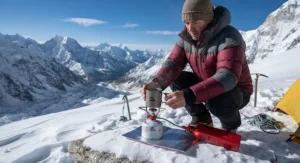
6. Coleman Sportster II Dual Fuel — best budget dual-fuel pick
Not every high-altitude trip needs an expedition-grade titanium marvel, and the Coleman Sportster II Dual Fuel proves it. This self-contained, integrated-pump design burns either Coleman Liquid Fuel (white gas) or ordinary unleaded petrol, which reviewers repeatedly flag as a genuine cost and convenience advantage — a gallon of Coleman fuel lasts as long as roughly 4.5 cylinders of propane. Based on the spec comparison, its 11,000 BTU burner is more than adequate for boiling water and cooking simple one-pot meals, and its all-metal construction has a well-earned reputation for surviving decades of abuse; several long-term owners report units still running after 15-30 years of service. Reviewers consistently note the fuel-swap simplicity is a highlight, though the trade-off is real: this is a heavier, bulkier unit than the technical multi-fuel stoves above, and its simmer control is genuinely weak until the burner has fully warmed through.
Pros:
- ✅ Runs on cheap, widely available unleaded petrol
- ✅ Legendary Coleman build quality and longevity
- ✅ No separate pump or fuel bottle assembly required
Cons:
- ❌ Noticeably heavier than technical mountaineering stoves
- ❌ Weak simmer control until fully warmed up
At around £60-£90, this is the value pick for car campers, DofE groups, or anyone wanting dependable altitude-capable cooking without spending £150-plus.
7. Trangia Multifuel Burner (X2) — best for existing Trangia owners
The Trangia Multifuel Burner (X2) is the quiet, lesser-known alternative on this list, and it deserves more attention than it gets. Rather than being a standalone stove, it’s a drop-in burner that slots into the classic Trangia 25 or 27 windshield-and-pot system many UK hillwalkers already own, instantly upgrading a simple alcohol setup into a genuine multi-fuel high-altitude cooker. It burns white gas, alkylate petrol, or Primus Powerfuel as its first-choice fuels, with kerosene and diesel usable in an emergency, plus threaded gas canisters as a further option. Based on the spec comparison, it produces around 10,500 BTU with a roughly 3.5-minute litre boil time, putting it firmly in line with dedicated multi-fuel stoves twice its apparent complexity. Reviewers who already own a Trangia consistently rate this as the smartest upgrade path, since the windshield and stable pot cradle are already sorted; those buying it as a standalone burner, however, note it can’t be used outside the Trangia system and needs a cool-down period before repacking.
Pros:
- ✅ Transforms an existing Trangia set into a multi-fuel stove
- ✅ Genuine flexibility across four fuel types plus gas
- ✅ Excellent wind resistance from the integrated Trangia shield
Cons:
- ❌ Only works within the Trangia 25/27 cook system
- ❌ Requires cooling before it packs back into the pot set
Priced around £110-£140 (often bundled with a fuel bottle and pump), this is the smart pick for anyone who already owns Trangia cookware and wants altitude capability without buying a second complete system.
Altitude Effects on Stove Pressure Explained
Understanding altitude effects on stove pressure is the difference between a stove choice that merely looks good on paper and one that actually performs where you need it to. As altitude increases, atmospheric pressure drops, and water molecules require less thermal energy to move from liquid to vapour, meaning water boils at a lower temperature. On paper this sounds like good news — food should cook faster — but the practical reality is the opposite. Because water boils at a lower temperature, it carries less heat energy into your food, so pasta, rice, and dehydrated meals genuinely take longer to properly rehydrate and cook, even though the water is “boiling” more readily.
For gas canister stoves, the problem compounds further: canister pressure itself drops in cold temperatures, which are almost always paired with altitude, leaving many canister setups sputtering weakly exactly when you need maximum output. Liquid fuel stoves sidestep this by using a hand pump to pressurise the fuel bottle independently of ambient temperature or altitude, which is precisely why white gas stoves remain the standard recommendation for anything above 3,000-4,000m. What most buyers overlook is that this pump-driven pressure isn’t a “nice to have” — it’s the entire mechanism that makes reliable high-altitude cooking possible at all.
White Gas Stove vs Multi-Fuel Stove
The terms get used almost interchangeably, but a genuine white gas stove vs multi-fuel stove comparison reveals a meaningful distinction worth understanding before you buy. A dedicated white-gas-only stove is tuned to burn one specific, clean-burning fuel efficiently, which typically means a simpler jet, less maintenance, and a cleaner flame. A true multi-fuel stove, like the MSR XGK EX or Primus OmniFuel II, is engineered with interchangeable jets and often a wider fuel line to cope with dirtier fuels like diesel, kerosene, or roadside petrol.
Here’s what to weigh: multi-fuel flexibility matters enormously for international expeditions where white gas simply isn’t sold, but it comes at a cost of slightly more complex maintenance and, in some cases, a marginally dirtier-burning flame when running on kerosene or diesel. For UK-based trekking where white gas (Coleman Fuel) is readily available at outdoor retailers, a purer white-gas performer can be the simpler, more efficient choice. Reviewers consistently note that stoves like the Soto Muka, which is essentially white-gas-and-petrol only, out-boil the true multi-fuel options specifically because their single-fuel-family design isn’t compromised by accommodating dirtier alternatives.
Boil-Time Comparisons at Altitude
Boil-time comparisons are one of the most requested data points for high-altitude buyers, and rightly so — a 90-second gap per litre adds up fast when you’re melting snow for an entire tent’s drinking water.
| Stove | Sea-Level Boil Time (1L) | Best Reported Altitude Performance |
|---|---|---|
| MSR XGK EX | ~2 min 48 sec (kerosene) | Consistently rated the fastest of the group |
| Primus OmniFuel II | ~2 min 00-3 min 10 sec | Strong performance reported at altitude and in cold |
| Soto Muka | ~4 min 30 sec (25°F ambient) | Very fast once at operating pressure |
| MSR WhisperLite International | ~3 min 30 sec | Verified use above 6,000m |
| Optimus Nova+ | ~3 min 30 sec | Reliable to roughly 5,000m per user reports |
Reading across the table, the MSR XGK EX and Primus OmniFuel II trade blows for outright speed, but speed alone doesn’t tell the full story: the MSR WhisperLite International and Optimus Nova+, while a touch slower on paper, have the stronger track record of verified altitude use from real trekkers and guides. If your priority is minimising fuel burn per litre at extreme elevation, prioritise reported real-world altitude performance over sea-level marketing figures, since boil times invariably lengthen once you’re above 4,000m regardless of which stove you bring.
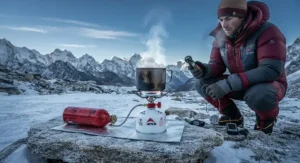
White Gas Stove for Winter Camping
A white gas stove for winter camping needs to do more than survive the cold — it needs to shrug it off entirely. Sub-zero temperatures affect gas canister stoves severely because propane and butane both struggle to vaporise properly once the canister itself drops below freezing, which is precisely why white gas remains the default recommendation for UK winter mountaineering and Scottish hillwalking in particular.
The pump-pressurised design common to every stove on this list means fuel delivery stays consistent regardless of how cold the bottle itself gets, provided you keep it insulated from direct contact with snow or ice. Reviewers testing liquid fuel stoves in genuinely harsh winter conditions, including one Canadian test at -20°C, consistently report the stoves ignite and run normally, though boil times do lengthen with cold, slushy, or partially frozen water. It’s worth noting that using any stove inside an enclosed tent or bothy carries genuine risk: the British Mountaineering Council warns that incomplete combustion from any camping stove can release dangerous carbon monoxide, so ventilation isn’t optional, it’s essential, however tempting it is to zip the porch shut against the wind.
✨ Don’t Miss These Exclusive Deals!
🔍 Take your high-altitude cooking to the next level with these carefully researched stoves. Click through to check current pricing and availability on Amazon.co.uk. The right stove will help you create hot, reliable meals your whole trekking group will appreciate, whatever the mountain throws at you!
Mountaineering Cooking Gear: Building the Full Kit
A stove is only one piece of genuinely capable mountaineering cooking gear, and buyers who focus purely on the burner often end up disappointed by their overall cooking system. Pair any of the stoves above with a wide-based, low-profile pot, ideally with a heat exchanger or reflective base, since narrow pots are far more prone to tipping on uneven, snowy ground where a stable base genuinely matters.
A dedicated windscreen is non-negotiable at altitude, where wind speeds are typically higher and more constant than in valley camping; most of the stoves reviewed here include one, but a taller aftermarket screen is worth considering for exposed ridge camps. Fuel bottles deserve equal thought — carry slightly more than your calculated need, since cold and altitude both reduce burning efficiency, and always carry a basic field repair kit (spare O-rings, a cleaning needle, spare jet) since a failed stove at 4,000m is a far more serious problem than one failing in your back garden. Finally, a simple heat-reflective base plate or insulated stove mat prevents heat loss into snow or frozen ground, which otherwise quietly steals a surprising amount of your stove’s output.
How to Choose a White Gas Stove for High Altitude
Choosing the right stove comes down to a handful of genuinely decision-relevant factors, not marketing buzzwords. Here’s how to work through it:
- Establish your maximum expected altitude. Trips staying below 4,000m have more flexibility; anything above genuinely benefits from a proven expedition performer like the MSR XGK EX or MSR WhisperLite International.
- Confirm fuel availability at your destination. If you’re travelling internationally, a true multi-fuel stove that burns kerosene or diesel removes a major logistical headache.
- Weigh simmering needs honestly. If you’re cooking real meals rather than just boiling water, prioritise the Primus OmniFuel II or Trangia Multifuel Burner over pure blowtorch designs.
- Factor in group size. Solo or duo trekkers can prioritise weight; groups of three or more benefit from the stability and output of the Optimus Nova+.
- Be realistic about maintenance tolerance. Every liquid fuel stove needs occasional cleaning; some, like the Soto Muka, minimise this by removing priming entirely.
- Set a genuine budget. The gap between the Coleman Sportster II Dual Fuel and the MSR XGK EX is roughly £100-plus, and that’s often better spent on fuel, food, or accommodation than an unused feature set.
- Check UK availability of spares. Stoves from established brands with UK distribution are meaningfully easier to service than obscure imports if something breaks mid-season.
For further reading on stove categories generally, the British Mountaineering Council’s stove guide is a genuinely useful, UK-specific starting point.
Common Mistakes When Buying a High-Altitude Stove
The single most common mistake is buying based purely on sea-level boil-time marketing figures, then being disappointed when altitude performance doesn’t match the box. Manufacturers test under controlled, low-altitude conditions, and real-world figures at 4,000m-plus routinely run 20-40% slower regardless of which stove you choose.
A second frequent error is under-buying fuel capacity. Cold and altitude both increase burn time per litre boiled, so calculating fuel needs using sea-level, room-temperature figures leaves many trekkers short. A third mistake, particularly among first-time liquid fuel buyers, is skipping practice runs at home before departure — priming technique has a genuine learning curve, and the worst possible place to learn it for the first time is a windy col at altitude. Finally, plenty of buyers overlook maintenance kit entirely; a stove that’s brilliant on paper is useless if a clogged jet can’t be cleared in the field, so always confirm a cleaning needle and spare O-rings are included or purchased separately.
Practical Usage Guide: Priming, Maintenance & First 30 Days
Getting a new liquid fuel stove dialled in during your first month of ownership saves enormous frustration later. Start at home: fill the fuel bottle to roughly two-thirds capacity (never overfill, as liquid fuel needs headspace to pressurise properly), then practise the full priming sequence — pumping, opening the fuel valve briefly to fill the priming cup, lighting it, and transitioning to the main burner — in your garden before your first trip.
In the first 30 days, clean the jet after every second or third use rather than waiting for a problem; most stoves here include a self-cleaning shaker jet or needle tool specifically for this. Store the fuel bottle upright with pressure released between uses, since leaving it pressurised for extended periods stresses the pump seals unnecessarily. A common early mistake is over-pumping; most stoves need only 15-25 strokes to reach working pressure, and excessive pumping simply wastes effort and stresses the pump. Finally, always test your stove fully assembled before departure day, including a full boil cycle, since a five-minute check at home beats discovering a fault at 3am on a summit push.
Real-World Scenarios: Who Should Buy What
The Munro-bagging weekend trekker: Someone tackling Scottish winter Munros on regular weekend trips, cooking for one or two, and prioritising reliability over ultimate speed is best served by the MSR WhisperLite International. Its worldwide fuel compatibility is arguably wasted domestically, but its proven cold-weather reliability and moderate price make it the sensible default choice.
The international expedition trekker: Someone heading to a 6,000m-plus peak abroad, where white gas may not be locally available and diesel or kerosene are the only realistic fuel options, should prioritise the MSR XGK EX. Its willingness to burn genuinely poor-quality fuel without complaint outweighs its extra weight and noise on a trip where reliability is non-negotiable.
The family or group base-camp cook: A family or DofE-style group needing to cook for four or more people, on a moderate budget, and without international expedition ambitions is well served by the Coleman Sportster II Dual Fuel. It won’t win any weight-weenie awards, but its simplicity, low price, and legendary durability suit exactly this use case.
Buyer’s Decision Framework
Use this simple framework to shortcut the decision:
- If you’re heading above 6,000m on an international expedition, choose the MSR XGK EX or Primus OmniFuel II, because dirty-fuel tolerance and raw output matter more than weight at that altitude.
- If you’re a UK-based weekend hillwalker staying under 4,000m, choose the MSR WhisperLite International, because it balances reliability, price, and manageable maintenance.
- If you already own a Trangia set, choose the Trangia Multifuel Burner, because it upgrades existing kit rather than duplicating it.
- If your budget is under £100, choose the Coleman Sportster II Dual Fuel, because it delivers genuine altitude-capable performance without the premium price tag.
- If simmering real meals matters as much as boiling water, choose the Primus OmniFuel II, because its fine control valve is the strongest in this class.
Long-Term Cost & Maintenance
Liquid fuel stoves generally cost more upfront than gas canister setups, but the total cost of ownership tells a different story over several seasons. White gas itself is inexpensive and sold in bulk, and because you refill your own bottle rather than buying disposable canisters, the running cost per litre boiled drops significantly the more you use the stove. A typical UK trekker burning 400-600ml of white gas per weekend trip will spend a fraction of the equivalent cost in disposable gas canisters over a full season.
Maintenance costs are modest but real: budget for occasional O-ring and pump cup replacements (typically £10-£20 per service kit), roughly annually for regular users. Field-maintainable designs like the MSR WhisperLite International and Optimus Nova+ minimise the need for professional servicing, since most issues can be resolved with the included cleaning tools. Over a five-year ownership period, most of the stoves reviewed here work out considerably cheaper than repeatedly buying premium isobutane canisters, particularly for anyone cooking for a group rather than solo.
Safety, Regulations & Flying with Fuel
Safety deserves genuine attention, not an afterthought paragraph. All liquid fuel stoves produce carbon monoxide if combustion is incomplete, and the British Mountaineering Council’s stove safety guidance is explicit that stoves should be used on a stable, flat surface with proper ventilation whenever used inside a tent or bothy, and never left unattended while lit.
If you’re flying to your trekking destination, fuel transport rules deserve careful planning. According to guidance from the UK Civil Aviation Authority, liquid fuel itself cannot be carried in either hand or hold baggage, though empty, fully drained and aired-out fuel bottles and stoves are typically permitted in checked luggage — always confirm the specific policy with your airline before travelling, since requirements around drainage and airing time vary. Buy your white gas locally at your destination rather than attempting to transport it, and always store fuel bottles away from open flames, sparks, and direct sunlight, both at home and in camp.
Frequently Asked Questions
❓ Does a white gas stove work better than a canister stove at altitude?
❓ How much white gas do I need per day at high altitude?
❓ Can I take a white gas stove on a plane?
❓ Is a white gas stove safe to use inside a tent?
❓ How long does a white gas stove pump typically last?
Conclusion
Choosing a white gas stove for high altitude ultimately comes down to matching real specifications and honest review sentiment to your actual trip profile, rather than chasing the single “best” stove in the abstract. For UK hillwalkers staying within Europe, the MSR WhisperLite International remains a genuinely sensible, proven default. For serious international expeditions where fuel quality can’t be guaranteed, the MSR XGK EX and Primus OmniFuel II offer the dirty-fuel tolerance and raw output that altitude demands.
Budget-conscious campers shouldn’t feel pressured into premium expedition gear either — the Coleman Sportster II Dual Fuel delivers genuinely capable altitude cooking without the expedition price tag, while existing Trangia owners can extend their current setup affordably with the Trangia Multifuel Burner. Whichever you choose, remember that altitude changes the rules: pressure, priming discipline, and fuel calculations all matter more than they do at sea level, so a little preparation at home genuinely pays for itself on the mountain.
✨ Don’t Miss These Exclusive Deals!
🚴♂️ Ready to gear up for your next high-altitude adventure? Check current prices and availability on Amazon.co.uk for the stove that matches your trip. A reliable hot meal at 4,000m is closer than you think!
Recommended for You
- Multi-Fuel Stove For Cold Weather: 7 Proven Picks for 2026
- Multi Fuel Stove For Expedition Camping: 7 Tested Picks (2026)
- Multi-Fuel Stoves Under £100: 7 Best UK Picks for 2026
Disclaimer: This article contains affiliate links. As an Amazon Associate, I earn from qualifying purchases. If you purchase products through these links, we may earn a small commission at no additional cost to you.
✨ Found this helpful? Share it with your friends! 💬🤗
