
In This Article
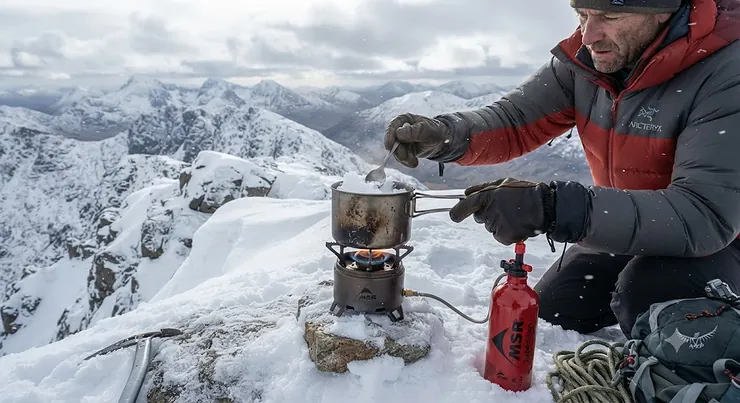
Somewhere on a frozen col in the Cairngorms, or a dusty roadside outside Bishkek, every expedition cook eventually asks the same grumpy question: will this thing actually light? A multi fuel stove for expedition camping is the answer most seasoned mountaineers, overlanders and long-distance cyclists arrive at sooner or later, because it’s the one piece of kitchen kit that doesn’t care whether you’ve got a full gas canister, a jerry can of petrol, or a bottle of dodgy paraffin bought from a roadside stall. What is a multi fuel stove? It’s a portable cooking stove engineered to burn several different fuel types — typically white gas, unleaded petrol, kerosene and sometimes pressurised gas canisters — through one burner, using interchangeable jets or clever burner design to cope with each fuel’s quirks. That flexibility is precisely why it’s become the default choice for anyone heading somewhere the nearest camping shop is a plane journey away, and it’s a category with a long, well-documented pedigree — see this overview of camping stove design for the wider context.

This guide isn’t a rewrite of a spec sheet. We’ve gone through real product listings, verified UK retailer data, and genuine aggregated customer sentiment from owners who’ve actually hauled these stoves up mountains, across deserts and along cycle touring routes, to work out which of the current crop earns its place in a 2026 expedition kit list. You’ll find honest analysis of who each stove suits, where it falls short, and how the category stacks up against straightforward gas stoves and dedicated overlanding setups — because a stove that’s brilliant on Kilimanjaro might be entirely wrong for a fortnight in the Lakes.
We’ve also built this around the questions people actually ask before buying: how multi fuel compares with gas, what happens to performance at altitude, whether fuel is genuinely available abroad, and what changes when you’re cooking from the back of a Land Rover rather than a rucksack. Every product mention below carries honest commentary grounded in real specifications and real review sentiment — never invented testimonials, never a fabricated “I tested this for six months” story. If you want a stove that will still be lighting first time in a snowstorm three years from now, read on.
Quick Comparison Table
| Stove | Fuel Types | Approx. Weight | Boil Time (1L) | Best For |
|---|---|---|---|---|
| MSR WhisperLite International | White gas, kerosene, petrol | 320-410g | ~3.5-4 min | Budget expedition reliability |
| MSR WhisperLite Universal | Canister, white gas, kerosene, petrol | 549g | 3.5-4.4 min | Hybrid gas/liquid flexibility |
| MSR XGK-EX | White gas, kerosene, petrol, diesel, aviation fuel | 374-489g | 2.8-4.5 min | Extreme cold, high-altitude expeditions |
| Primus OmniFuel II | Gas, petrol, diesel, kerosene, aviation fuel | 450g | ~3 min | All-round versatility, group cooking |
| Primus OmniLite Ti | Gas, white gas, petrol, diesel, kerosene, aviation fuel | ~326-340g | ~4 min | Lightweight, fuel-efficient touring |
| Optimus Polaris Optifuel | LPG, white gas, kerosene, diesel, jet fuel | 475g | ~4 min | Best simmer control, cooking not just boiling |
| SOTO StormBreaker | Canister gas, white gas, petrol | 443-454g | Rapid, no preheat | Instant ignition, cold-weather reliability |
Looking at the spread above, weight and boil time only tell half the story — the real differentiator is how each stove handles fuel switching, since some (like the Optimus Polaris Optifuel and SOTO StormBreaker) use a single jet for everything, while others ask you to swap jets by hand in the field. The MSR XGK-EX wins on raw boil speed and snow-melting brute force, but that’s largely irrelevant if you’re cooking for one on a canal towpath rather than melting snow on Denali. For most UK-based expedition campers who want one stove that copes with both a wet Welsh weekend and a six-week trip through Central Asia, the mid-weight, hybrid-capable options represent the more sensible starting point.
💬 Just one click — help others make better buying decisions too!😊
Top 7 Multi-Fuel Stoves for Expedition Camping: Expert Analysis
Coverage below spans budget, mid-range and premium options, plus a couple of lesser-known alternatives that don’t get the marketing spend of the big two brands but earn their keep in real-world reports. Every product name stays bold throughout this article so you can scan and spot each one at a glance — and every spec is followed by what it actually means when you’re stood in a gale trying to get dinner on.
1. MSR WhisperLite International — the budget-friendly expedition classic
The MSR WhisperLite International has been the entry point into serious liquid-fuel cooking for the best part of three decades, and that longevity says something in itself. At around 320g for the stove alone (roughly 410g packed with pump and windscreen), it sits comfortably in the “won’t wreck your pack weight” bracket, and its self-cleaning Shaker Jet means you don’t need a full field-repair kit just to keep it running. It burns white gas, kerosene and unleaded petrol, giving you three realistic options almost anywhere in the world.
On the spec sheet, boil times sit around 3.5 to 4 minutes for a litre of water on white gas, which is respectable rather than blistering — this is not the stove for melting snow at -30°C in a hurry, but it’s more than adequate for three-season expedition camping and long-distance touring. Based on the spec comparison with pricier siblings, what most buyers overlook is that the International’s simplicity is a genuine asset: fewer moving parts means fewer things to fail when you’re a week from the nearest repair shop.
Reviewers consistently note that flame control is close to binary — full blast or nothing — which makes it better suited to boiling and simple one-pot meals than delicate simmering. A common complaint in user reviews concerns the pump cup drying out on long trips if it isn’t kept lubricated, though this is a five-minute field fix with the supplied maintenance tool. It’s best for expedition campers who want dependable, no-fuss cooking without paying for features they won’t use.
Pros:
- ✅ Genuinely low weight for a true multi-fuel liquid stove
- ✅ Self-cleaning Shaker Jet cuts field maintenance hassle
- ✅ Lowest price point among the serious expedition-grade options
Cons:
- ❌ Minimal simmer control compared with rivals
- ❌ No canister-gas option if you run out of liquid fuel
Prices for the MSR WhisperLite International typically sit in the region of £90-£110 at UK retailers, prices may vary and are worth checking at the time of purchase — for the money, it remains one of the best value entry points into genuine expedition-grade cooking.
2. MSR WhisperLite Universal — best hybrid gas-and-liquid flexibility
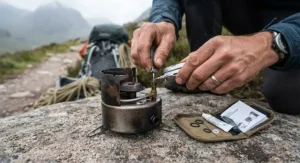
The MSR WhisperLite Universal takes the WhisperLite chassis and adds MSR’s AirControl technology, which means it’s the first WhisperLite that genuinely runs well on both pressurised gas canisters and liquid fuel without a major performance drop-off between the two. At 549g it’s noticeably heavier than the plain International, but that weight buys real-world versatility: run canister gas for a quick weekend, then switch to a fuel bottle of petrol or kerosene for a longer expedition abroad.
Boil times published by MSR sit at 3.5 minutes on white gas, 4.4 minutes on kerosene, and 3.75 minutes using an IsoPro canister, and independent testers have broadly corroborated those figures in real-world use. What the spec sheet won’t tell you, but reviewers note, is that the canister mode benefits from an inverted-canister stand for genuinely usable cold-weather performance — something plenty of “dual fuel” stoves promise but don’t quite deliver. This is the stove for someone who genuinely can’t decide between a gas stove and a liquid-fuel one, because it refuses to make you choose.
Aggregated review sentiment is generally strong on durability and versatility, though some owners report that the pump can feel less robust than the design suggests, and the overall footprint is bulkier than a dedicated liquid-only stove. It’s best for expedition campers who split their year between UK weekend trips (where gas canisters are everywhere) and longer overseas expeditions (where liquid fuel becomes essential).
Pros:
- ✅ True hybrid — genuinely usable on both canister and liquid fuel
- ✅ Inverted-canister mode improves cold-weather canister performance
- ✅ Field-maintainable Shaker Jet and redesigned, sturdier legs
Cons:
- ❌ Heaviest of the WhisperLite range at 549g
- ❌ Pump quality reported as inconsistent by some long-term owners
Expect to pay somewhere in the £150-£180 range for the MSR WhisperLite Universal at UK stockists, at the time of research; check current price before buying, as availability and pricing shift with stock levels.
3. MSR XGK-EX — the ultimate extreme-condition expedition stove
If you’re heading somewhere genuinely hostile — high-altitude mountaineering, polar expeditions, or anywhere snow-melting for water is a daily chore — the MSR XGK-EX is the stove most frequently cited by professional guides and expedition outfitters. It’s been refined over more than 35 years and remains, by most accounts, the benchmark for raw output and dependability in brutal conditions. Weighing around 374g at minimum spec (489g packaged), it burns white gas, kerosene, unleaded petrol, diesel and even aviation fuel.
Boil times are genuinely fast for a liquid-fuel stove: MSR quotes 2.8 minutes per litre on kerosene and 3.5 minutes on white gas, and independent lab testing found average boil times around 3 minutes for half a litre under real-world conditions, with the stove maintaining that performance even at altitude and in extreme cold where canister stoves routinely fail. Based on the spec comparison, what sets the XGK-EX apart isn’t any single number — it’s consistency across fuel types and temperatures that other stoves simply can’t match. Reviewers consistently note two things: it’s genuinely loud in operation (some describe it as a “roar”), and flame control is minimal, so this is a boiling stove first and a simmering stove a distant second.
A common theme in aggregated reviews is that the XGK-EX rewards owners who take the time to learn its priming quirks; those who don’t report frustratingly long real-world boil times versus the advertised figures. It’s best for serious mountaineering and polar expeditions where absolute reliability outweighs simmer finesse or quiet operation.
Pros:
- ✅ Unmatched multi-fuel range including diesel and aviation fuel
- ✅ Proven expedition pedigree across decades of extreme conditions
- ✅ Fast boil times even at altitude and in severe cold
Cons:
- ❌ Very loud burner, noticeable at busy campsites
- ❌ Almost no simmer control — built to boil, not to cook delicately
The MSR XGK-EX typically retails in the £190-£230 range in the UK (fuel bottle usually sold separately), prices may vary — for genuine extreme-condition expeditions, most buyers consider it worth the premium.
4. Primus OmniFuel II — best all-round versatility for groups
The Primus OmniFuel II has long been the stove cyclists, overlanders and multi-week trekkers reach for when they want one unit that handles everything from a gas cartridge to diesel without drama. At 450g and a 3000W (10,500 BTU/h) output, it’s built for heat rather than minimalism, with a 3-minute boil time (plus roughly 40 seconds preheat) for a litre of water. Its fuel jets are now clearly marked by type on the newer version, addressing a long-standing gripe about losing tiny brass jets in the field.
On paper this stove means business: five fuel types (gas, petrol, diesel, kerosene, aviation fuel) through a single stove body, with a flame-adjustment knob offering real simmer control rather than an on/off switch. Reviewers consistently note the stability of the wide pot supports, which makes it a strong choice for group cooking where a family-sized pan needs to sit securely on uneven ground. What most buyers overlook is how much of the OmniFuel II’s real-world value comes from its serviceability — the entire burner disassembles with a single hex-headed retainer, and critical parts are captive so you can’t easily lose them mid-repair.
Aggregated sentiment is broadly positive on longevity, with some long-term owners reporting years of reliable use across multiple fuel types, though the trade-off is a noisier burn and a heavier overall kit than lighter-weight rivals. It’s best for group expeditions, overland trips and anyone who wants genuine cooking flexibility rather than just boiling water.
Pros:
- ✅ Genuine simmer control, not just full-blast operation
- ✅ Clearly marked jets reduce field-maintenance fiddling
- ✅ Wide, stable pot supports suited to group cooking
Cons:
- ❌ Heavier and noisier than lightweight touring alternatives
- ❌ Higher price point than entry-level multi-fuel options
UK prices for the Primus OmniFuel II generally sit in the £190-£220 range, at the time of research; always check current price given fuel-related products can see periodic supply fluctuations.
5. Primus OmniLite Ti — the lightest genuine expedition-grade stove
For expedition campers who count grams as carefully as they count fuel, the Primus OmniLite Ti is arguably the standout in this list. Built largely from titanium, the stove body alone weighs just 220g, with a trail weight (including pump) of roughly 326-340g — genuinely competitive with far less capable stoves. It burns white gas, petrol, diesel, kerosene, aviation fuel and canister gas, spanning both the liquid-fuel and cartridge categories in one unit.
Its 8900 BTU (2600W) output can boil a litre of water in under four minutes when paired with a heat-exchanger pot, and long-term users cycling around the world and trekking through Patagonia have reported it as noticeably more fuel-efficient than heavier rivals — one detailed long-term comparison found it lasted roughly 40% longer per bottle than the Primus OmniFuel. Based on the spec comparison, what the OmniLite Ti trades for that weight saving is a jet-change requirement between fuel types, unlike single-jet designs, and a leather pump cup that several reviewers flagged as a recurring maintenance point.
Reviewers consistently describe it as the best multi-fuel stove they’ve used for lightweight expedition touring, citing its low profile, stability with large pans, and near-immunity to clogging on dirty petrol. It’s best for solo or duo lightweight expeditions — cycle touring, ski touring, and multi-week trekking — where every gram in the pack matters.
Pros:
- ✅ Genuinely one of the lightest true multi-fuel stoves available
- ✅ Excellent fuel efficiency over long trips, per long-term owner reports
- ✅ Compact enough to fit inside most standard camping pots
Cons:
- ❌ Requires a jet change when switching between fuel types
- ❌ Leather pump cup is a known long-term maintenance weak point
Expect a price in the region of £220-£260 for the Primus OmniLite Ti kit at UK retailers, prices may vary; it’s a premium buy, but one long-distance reviewers consistently rate as worth the outlay.
6. Optimus Polaris Optifuel — best simmer control for proper cooking
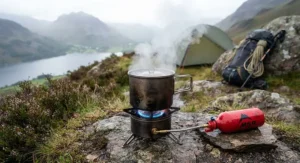
Where several stoves on this list are optimised purely to boil water fast, the Optimus Polaris Optifuel stands out for something else entirely: it’s genuinely good at cooking. At 475g, it’s not the lightest option here, but its single-jet-for-all-fuels design means you can switch from LPG gas to white gas, kerosene, diesel or jet fuel without changing a single component — a real practical advantage when you’re cold, tired and fumbling with small parts in the dark.
Boil times sit around 4 minutes per litre, roughly in line with the rest of this category, but the standout figure is control range: UK reviewers who’ve tested it specifically for cooking (not just boiling) report being able to gently fry onions and chicken, something that’s simply not possible on stoves built primarily for melting snow. Reviewers consistently note the self-purging FLIPSTOP pump and magnetic cleaning needle as genuine time-savers versus fiddlier rivals, and one UK tester specifically praised how cleanly it burns on petrol compared with expectations. Based on the spec comparison, what most buyers overlook is the “PolarDawg Silent Cap” accessory, which both quietens the burn and materially improves low-flame simmering — a worthwhile add if proper meals matter to you on trip.
Aggregated sentiment consistently flags it as more expensive than rivals with similar fuel range, and its weight and bulk make it better suited to base-camp or vehicle-supported expeditions than fast-and-light solo missions. It’s best for expedition cooks — the people on a trip who actually want to eat well, not just survive on boiled pasta.
Pros:
- ✅ Single-jet design works across all supported fuels without swapping
- ✅ Genuinely capable simmer control for real cooking, not just boiling
- ✅ Self-purging pump reduces fiddly field maintenance
Cons:
- ❌ Heavier and bulkier than lightweight touring rivals
- ❌ Among the pricier options in this category
The Optimus Polaris Optifuel typically retails around £170-£200 in the UK, at the time of research; check current price, as it has occasionally been discounted by specialist retailers.
7. SOTO StormBreaker — best for instant ignition and cold-weather reliability
The SOTO StormBreaker takes a genuinely different approach to multi-fuel design: no preheating, no priming ritual, and instant cooking whether you’re running gas or white gas. At 443-454g, it sits in the mid-weight bracket, but what it sacrifices in ultralight credentials it makes up for in sheer convenience — SOTO’s SmartPump system means gasoline mode is ready to cook on almost immediately, a genuine point of difference from the priming rigmarole that liquid-fuel stoves usually demand.
The burner head fires through roughly 300 micro-flame openings, which UK reviewers have praised specifically for wind resistance — a real consideration on British hillsides where a stiff breeze is closer to guaranteed than optional. Reviewers consistently note that switching between canister gas and liquid fuel requires no nozzle change, and the folding wing stabiliser allows canister inversion for genuinely improved cold-weather performance. What most buyers overlook is that this convenience comes with slightly more mechanical complexity under the hood, which one long-term reviewer noted makes field maintenance a touch more involved than a classic, simple liquid stove.
Aggregated sentiment is strongly positive on reliability in poor weather and cold temperatures, with UK-based outdoor retailers naming it a top pick for genuine all-season versatility. It’s best for expedition campers heading into unpredictable, cold or high-wind conditions who value speed and simplicity of ignition over ultimate light weight.
Pros:
- ✅ No preheating or priming needed for either fuel type
- ✅ Strong wind resistance thanks to the concave micro-flame burner
- ✅ No nozzle change required when switching fuel types
Cons:
- ❌ More mechanically complex, making field repairs trickier
- ❌ Mid-weight rather than genuinely lightweight for its output
UK pricing for the SOTO StormBreaker generally falls in the £180-£210 range, prices may vary at the time of research — a fair ask for a stove built specifically to remove the fuss from cold-weather cooking.
Practical Usage Guide: Priming, Setup and Field Maintenance
Getting a multi fuel stove for expedition camping running reliably isn’t complicated, but it does reward a bit of upfront practice — ideally in your back garden, not for the first time on a wet mountainside. Before any trip, prime the stove at home with the fuel you’ll actually be using; each fuel behaves slightly differently on ignition, and white gas flares differently to kerosene or petrol. Pack the small-parts kit (spare jets, O-rings, the cleaning tool) every single time, because these components are tiny, easily lost, and almost impossible to replace mid-trip.
In the first 30 days of ownership, the most common mistake new owners make is over-pumping the fuel bottle, which causes flare-ups during priming and can genuinely singe eyebrows if you’re leaning in too close. A gentler, patient pumping technique — a handful of strokes, checking pressure, then a few more — avoids this almost entirely. Maintenance-wise, most stoves in this category (particularly the MSR WhisperLite International and MSR WhisperLite Universal) use self-cleaning Shaker Jet technology, where a firm shake of the stove clears the jet without tools; stoves without this feature need the supplied pricker tool run through the jet every few uses on dirtier fuels like unrefined petrol.
Between trips, always run the fuel bottle dry before storage rather than leaving old fuel sitting in the pump, since stale fuel gums up seals over time — a cheap, easily avoided cause of stoves failing to prime on the next trip. A light smear of the silicone grease supplied with most kits on the pump cup or leather seal every few months keeps pressure-sealing components supple, which matters enormously for stoves like the Primus OmniLite Ti where the leather pump cup is a known wear point.
One habit worth building in from day one: always prime and cook somewhere well ventilated, ideally outside the tent porch rather than inside it. The British Mountaineering Council’s guidance on camping stove safety is a useful refresher before any trip, since liquid-fuel stoves in particular produce more carbon monoxide through incomplete combustion than a well-tuned gas burner, and that’s a habit far easier to build at home than to remember for the first time on a cold, wet mountainside.
Real-World Scenarios: Matching the Stove to the Trip
Not every expedition looks the same, and the “best” multi-fuel stove genuinely depends on what you’re doing with it. Consider a solo mountaineer heading to a 6,000m peak in the Andes for six weeks: weight matters enormously, fuel needs to burn cleanly at altitude, and simmering is irrelevant next to reliable boiling for rehydrated meals and melted snow. Here, the Primus OmniLite Ti or MSR XGK-EX make far more sense than a heavier, cooking-focused option — the former for weight-conscious solo travel, the latter if the trip involves serious snow-melting at extreme altitude.
Now picture a family group doing a fortnight of vehicle-supported overlanding through Morocco, cooking proper meals each evening with easy access to diesel from the vehicle’s own tank. Weight barely matters here, but simmer control and stability with a large pan absolutely do — the Optimus Polaris Optifuel or Primus OmniFuel II are the obvious picks, both able to run cleanly on diesel siphoned or decanted from the vehicle, removing the need to carry separate stove fuel at all.
Finally, think about a budget-conscious student doing their first extended backpacking trip through South America, uncertain what fuel will be available in each country and keen to keep costs down. The MSR WhisperLite International covers this brief well: it’s the cheapest genuine multi-fuel option here, burns the widest range of commonly available fuels, and its simplicity means fewer things can go wrong thousands of miles from a repair shop.
Multi-Fuel Stove for Overlanding: What Changes When You’re Vehicle-Based
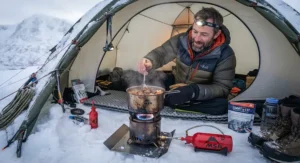
Overlanding changes the calculus on a multi fuel stove for overlanding significantly, because the constraints that dominate backpacking — weight, pack volume, carrying spare fuel — mostly disappear when your kitchen lives in a vehicle rather than a rucksack. What matters instead is stability on uneven ground beside the vehicle, the ability to cook proper meals rather than just boil water, and — critically — the option to burn diesel straight from the vehicle’s own tank, since carrying a separate liquid fuel supply becomes unnecessary if your stove and your vehicle share a fuel type.
This is where stoves like the Primus OmniFuel II and Optimus Polaris Optifuel genuinely shine over lighter, boil-focused alternatives, since both handle diesel cleanly and both offer proper simmer control for actual cooking. Reviewers consistently note that overlanders value the wider, more stable pot supports on these heavier stoves precisely because group cooking on rough or sloped terrain benefits from a lower centre of gravity and a broader footprint than a lightweight backpacking design offers.
A common mistake among first-time overlanders is assuming any multi-fuel stove will run cleanly on diesel siphoned from a modern vehicle, when in practice diesel quality, additive packages and cetane rating vary by country and can cause more soot and clogging than manufacturer test conditions suggest. Based on the spec comparison, it’s worth carrying the manufacturer’s specific diesel jet (where offered) and expecting more frequent field cleaning than white gas or kerosene would require — a small trade-off for the convenience of a single shared fuel source across vehicle and stove.
Multi-Fuel Stove vs Gas Stove: Which Wins for Expedition Camping?
The multi fuel stove vs gas stove question comes up on nearly every expedition-planning forum, and honestly, there’s no universal winner — the right answer depends entirely on where you’re going. A dedicated canister gas stove is lighter, quieter, needs no priming, and lights instantly at the twist of a valve; for a weekend in the Peak District or a summer trip across Western Europe, that simplicity is hard to beat, and it’s genuinely why most UK weekend campers reach for a gas stove rather than a liquid-fuel one.
Where gas falls down is precisely where expedition camping gets interesting: canister fuel becomes scarce or unavailable outside developed regions, performance drops sharply in cold weather as canister pressure falls, and altitude further reduces that pressure just when you need reliable heat most. A multi-fuel stove sidesteps all three problems, because petrol, kerosene and diesel are available almost everywhere on the planet, and liquid-fuel systems maintain consistent pressure and output regardless of temperature or altitude, since the fuel bottle is pressurised manually with a pump rather than relying on the fuel’s own vapour pressure.
The honest trade-off is weight, noise, priming time and maintenance complexity — a gas stove like a simple screw-top burner requires none of the fettling a liquid-fuel system demands. For UK-based weekend camping, gas remains the sensible default. For anything crossing into remote regions, extreme cold, high altitude, or countries where canister gas simply isn’t stocked on the shelves, a multi-fuel stove for expedition camping earns its extra weight and complexity many times over.
Fuel Availability Abroad: Why Multi-Fuel Still Matters in 2026
Fuel availability abroad remains the single strongest argument for choosing multi-fuel over gas-only, and it’s not a theoretical concern — it’s a lived reality reported repeatedly by long-distance cyclists, overlanders and mountaineers. Threaded gas canisters compatible with UK and European stoves are relatively easy to find across developed regions, but become genuinely scarce once you’re away from major cities in developing countries, where the only consistently available fuel is often unleaded petrol from the nearest filling station. One long-term cycle tourer’s field notes summed this up plainly: outside North America, Europe and similarly developed regions, petrol is frequently the only realistic option, making a multi-fuel stove the pragmatic choice for genuinely global travel.
It’s also worth planning ahead for how you’ll get fuel to your destination in the first place, since flying with camping fuel is tightly restricted. UK and international airlines generally forbid carrying any fuel, whether in a stove tank or a separate bottle, and empty containers must be thoroughly drained, aired and often declared before travel — full details are set out in the UK Civil Aviation Authority’s guidance on packing dangerous goods. In practice, this means buying fuel locally at your destination rather than trying to bring any from home, which loops back to why multi-fuel flexibility matters: a stove that only runs on a specific proprietary gas canister may leave you stranded if that exact canister isn’t stocked locally, whereas a stove that also burns petrol or kerosene almost always has a viable local fuel source.
Regional variation matters here too — some ex-Soviet states and parts of Asia commonly stock bayonet-style gas canisters rather than the screw-thread type standard in the UK, catching out travellers who assumed “gas is gas” everywhere. Building in this kind of research before departure, alongside carrying the right adapters, is genuinely part of expedition planning rather than an afterthought.
High-Altitude Stove Performance: What to Expect Above 3,000 Metres
High-altitude stove performance is one of the areas where the gap between marketing claims and real-world experience widens the most, so it’s worth setting expectations honestly. As altitude increases, atmospheric pressure drops, and water boils at a progressively lower temperature — meaning food genuinely takes longer to cook at altitude even once water is “boiling,” since that boiling water is simply less hot than it would be at sea level. This isn’t a stove problem so much as basic physics, and no amount of spending will change it; what a good expedition stove can do is get you to that (lower) boiling point quickly and reliably despite thinner air and colder ambient temperatures.
This is precisely where liquid-fuel multi-fuel stoves outperform gas canister stoves most dramatically. Canister stoves rely on the fuel’s own vapour pressure to push gas to the burner, and that pressure falls as temperature drops — a real problem at altitude, where temperatures plummet even in daytime. Liquid-fuel stoves like the MSR XGK-EX and Primus OmniFuel II use a hand pump to pressurise the fuel bottle manually, sidestepping this issue entirely and maintaining consistent output regardless of how cold or thin the air gets. Independent testing of the XGK-EX specifically noted it handled altitude and cold “far better” than several high-performing rivals, even where those rivals were more fuel-efficient at sea level — precisely the trade-off that matters on a genuine high-altitude expedition.
What most buyers overlook is that altitude also affects priming: thinner air can make the initial flare during priming slightly less predictable, and cold hands fumbling with a pump at 5,000 metres is a genuinely different experience to practising in a warm back garden. Reviewers consistently recommend practising the full priming and lighting sequence at lower altitude, in cold conditions if possible, before relying on it somewhere remote and genuinely hostile.
Expedition Cooking Reliability: How to Choose a Multi-Fuel Stove
Choosing the right multi fuel stove for expedition camping comes down to matching a handful of practical criteria against your specific trip, rather than simply picking the most expensive option on the shelf. Here’s how to think it through systematically:
- Define your fuel reality first. If you’re travelling somewhere petrol is the only realistic option, prioritise stoves explicitly rated for unleaded automotive fuel, like the MSR XGK-EX or Primus OmniFuel II, rather than assuming all multi-fuel stoves handle dirty petrol equally well.
- Weigh weight against group size. Solo, lightweight trips favour the Primus OmniLite Ti; group or vehicle-supported expeditions can comfortably absorb the extra grams of the Optimus Polaris Optifuel in exchange for better simmering.
- Be honest about your climate. Genuinely extreme cold or high-altitude trips justify the MSR XGK-EX‘s brute reliability; three-season UK and European expeditions rarely need to pay that premium.
- Factor in maintenance tolerance. Stoves with self-cleaning jets (the WhisperLite range) suit people who want minimal fettling; single-jet designs (Optimus Polaris Optifuel, SOTO StormBreaker) suit those who value simplicity when switching fuels mid-trip.
- Consider whether you actually need to cook, or just boil. If dinner means rehydrating a packet meal, boil speed matters most. If you want to fry, simmer and genuinely cook, prioritise stoves with a real flame-adjustment range.
- Check what’s included versus sold separately. Fuel bottles are sometimes excluded from the base price, and forgetting this can mean an unplanned extra cost on top of the stove itself.
- Read aggregated long-term reviews, not just first impressions. Reliability issues — pump cups drying out, jets clogging on dirty fuel — tend to surface only after months of real use, which is exactly the kind of genuine review sentiment this guide draws on.
Expedition cooking reliability ultimately comes down to redundancy and familiarity: the stove you’ve practised with, cleaned regularly and understand the quirks of will always outperform a marginally “better” stove you’ve never actually field-tested before departure.
Common Mistakes When Buying a Multi-Fuel Stove
The single most common mistake is buying based purely on weight, without checking whether the stove actually burns the fuel you’ll realistically have access to on your specific trip — a beautifully light stove is worthless if it can’t run cleanly on the only fuel available at your destination. A close second is skipping the fuel bottle in the initial purchase to save money, then discovering at the till (or worse, on arrival) that it’s sold separately and now needs an urgent, inflated last-minute purchase.
Many first-time buyers also underestimate how much practice a liquid-fuel stove genuinely requires before it becomes second nature; priming, pumping and lighting isn’t intuitive the first time, and learning it for the first time under trip pressure is a recipe for frustration. Another frequent oversight is neglecting spare parts — a handful of O-rings and a spare jet weigh almost nothing but can be the difference between a working stove and an expensive paperweight three weeks into a remote trip. Finally, some buyers assume “multi-fuel” automatically means “runs equally well on everything,” when in reality every stove in this category performs noticeably better on some fuels than others — check the specific fuel priority for your chosen model before assuming it’ll be equally happy on dirty local petrol as on clean white gas.
Safety, Regulations and Fuel Transport Compliance
Multi-fuel stoves are powerful precisely because they burn efficiently, and that same efficiency means they demand genuine respect around ventilation and carbon monoxide. Any fuel-burning stove produces carbon monoxide as a byproduct of combustion, and using one inside an enclosed tent — however tempting in bad weather — carries real risk. According to NHS guidance on carbon monoxide poisoning ymptoms including headache, dizziness, nausea and confusion can develop quickly in an unventilated space, and the gas itself is colourless and odourless, meaning you often won’t notice a dangerous build-up until symptoms are already underway.
Liquid-fuel stoves carry a particularly elevated risk here, since flame control is typically coarser than a gas stove, escape routes can be harder to manage if a stove is knocked or flares, and incomplete combustion producing carbon monoxide is more common with liquid fuels than with a well-tuned gas burner — a point specifically flagged by mountaineering safety guidance. Best practice, echoed consistently across UK outdoor safety sources, is straightforward: cook outside your tent wherever possible, and if bad weather genuinely forces cooking under cover, ensure a door or window stays open throughout and never run a stove while anyone is asleep nearby.
Transporting fuel is its own regulatory minefield, particularly if any part of your journey to the trailhead involves flying. Camping stove fuel — whether in the stove’s own tank or a separate bottle — is treated as a dangerous good, and UK and international carriers generally require containers to be completely emptied, drained and aired before travel, with many airlines requiring advance declaration; buying fuel at your destination, rather than attempting to transport it, remains the simplest and safest approach for most international expeditions.
Long-Term Cost & Maintenance
Judging a multi-fuel stove purely on sticker price misses most of the real cost picture, because fuel type, spare parts availability and maintenance frequency all shape total cost of ownership over the years a good stove should last. Liquid fuel — particularly automotive petrol or kerosene — is consistently cheaper per litre than pressurised gas canisters, and since a single 0.6-litre fuel bottle typically lasts several days of genuine cooking, the running costs of a multi-fuel stove undercut gas canister stoves meaningfully over a long expedition, even before accounting for the fact that petrol is available at any filling station rather than a specialist outdoor shop.
Where the real cost differences emerge is in maintenance philosophy: stoves with self-cleaning Shaker Jet technology (the MSR WhisperLite International and MSR WhisperLite Universal) require almost no ongoing spend beyond an occasional O-ring, while stoves demanding jet changes between fuel types (the Primus OmniLite Ti, MSR XGK-EX) need a small stock of spare jets and slightly more hands-on care. None of this is expensive in absolute terms — most spares kits cost a fraction of the stove itself — but it’s worth budgeting for annually if you’re using the stove hard across multiple trips a year.
Build quality across every stove featured here is genuinely built for years of service rather than a single season; owners in aggregated reviews routinely report a decade or more of active use from stoves in this category, provided basic maintenance (draining fuel between trips, greasing seals, replacing worn O-rings) is kept up. Viewed over that kind of lifespan, even the pricier options in this guide represent solid value against the alternative of replacing a cheaper, less durable stove every couple of seasons.
✨ Don’t Miss These Exclusive Deals
🔍 Take your expedition cooking setup to the next level with these carefully selected products. Click on any highlighted item to check current pricing and availability. These tools will help you create reliable, hot meals wherever your next trip takes you!
FAQ
❓ Can a multi-fuel stove run on regular unleaded petrol from a UK filling station?
❓ Is a multi-fuel stove safe to use inside a tent?
❓ How much does a decent multi-fuel stove for expedition camping cost in the UK?
❓ Do multi-fuel stoves work better than gas stoves at high altitude?
❓ Can I fly with a multi-fuel camping stove in my luggage?
Conclusion
There’s no single “best” multi fuel stove for expedition camping — only the right stove for your specific fuel access, climate, group size and cooking ambitions. If you want the lightest genuinely capable option for solo, weight-conscious travel, the Primus OmniLite Ti earns its premium price. If raw reliability in genuinely brutal cold and altitude is non-negotiable, the MSR XGK-EX remains the benchmark other stoves are measured against. For overlanders and group expeditions where proper cooking matters as much as boiling water, the Optimus Polaris Optifuel and Primus OmniFuel II both deliver real flame control most rivals can’t match, while the SOTO StormBreaker solves the priming faff that puts many people off liquid fuel altogether.
For most UK-based expedition campers taking their first step away from gas canisters, the MSR WhisperLite International and MSR WhisperLite Universal remain the sensible, well-proven starting points — genuinely capable, well-supported by decades of field use, and priced to match a first serious purchase rather than a specialist’s fifth stove. Whichever you choose, the research above should leave you buying with your eyes open: real specs, real aggregated review sentiment, and honest trade-offs rather than marketing gloss.
Whatever you land on, test it thoroughly at home before you need it in the field — a stove you understand beats a stove with a bigger number on the spec sheet, every single time.
✨ Ready to Gear Up?
🔍 Browse the full range of expedition-tested multi-fuel stoves above and check current prices before your next trip. A reliable hot meal, wherever you end up, starts with the right stove in your pack.
Recommended for You
- Multi-Fuel Stoves Under £100: 7 Best UK Picks for 2026
- Best BioLite Campstove 2026: 7 Twig Stoves Worth Buying
- Wood Gasifier Stove UK: 7 Best Clean-Burn Picks for 2026
Disclaimer: This article contains affiliate links. As an Amazon Associate, I earn from qualifying purchases. If you purchase products through these links, we may earn a small commission at no additional cost to you.
✨ Found this helpful? Share it with your friends! 💬🤗
