
In This Article
There’s a particular kind of smugness that comes from cooking dinner on a handful of twigs while the couple next to you fumble with an empty gas canister. That’s the quiet appeal of a wood gasifier stove: no fuel to carry, no valve to worry about, just fallen sticks and a clever bit of double-walled engineering doing the hard work. If you’ve spent any time in UK bushcraft forums or watched a wild camping video where the presenter somehow gets a rolling boil from a fistful of birch twigs, you’ve seen one of these in action.
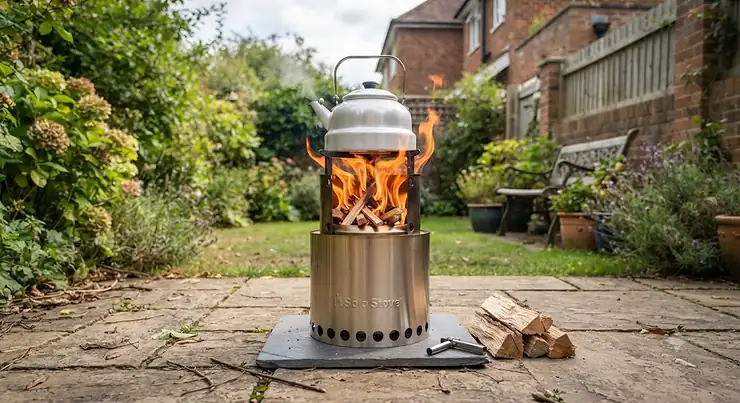
A wood gasifier stove is a compact, double-walled burner that channels heated air back into the fire to burn the wood gas a normal fire would waste as smoke — the result is a hotter, cleaner flame from less fuel. This matters more than it sounds: on a typical wood gasifier stove, you’ll use roughly a third of the twigs a basic open burner needs to boil the same pot of water, and you’ll do it with noticeably less smoke drifting into your tent porch.
This guide walks through seven real, currently available wood gasifier stove models — from budget stainless steel options under £20 to serious titanium and battery-charging designs — with honest analysis of who each one suits. We’ll also cover how forced air combustion actually works, what makes a genuinely clean burn stove, and where biomass cooking sits within UK fire law, because knowing where you can legally light one matters just as much as which model you buy. Whether you’re kitting out a bushcraft pack or just fed up with gas canister waste, there’s a sensible pick below.
Quick Comparison Table: Best Wood Gasifier Stove UK Options at a Glance
| Stove | Best For | Approx. Weight | Price Range |
|---|---|---|---|
| Ohuhu Wood Burning Camping Stove | Absolute beginners on a budget | 400g | Under £20 |
| Vargo Titanium Hexagon Wood Stove | Ultralight solo hikers | 130g | £35-45 range |
| TOAKS Titanium Backpacking Wood Burning Stove | Long-distance backpackers wanting durability | 225g | £45-60 range |
| Solo Stove Lite | Solo or duo wild camping | 255g | £60-80 range |
| Solo Stove Titan | 2-4 person group cooking | 470g | £90-120 range |
| BioLite CampStove 2+ | Off-grid trips needing device power | 935g | £130-160 range |
| Solo Stove Campfire | Family camping and basecamp heat | 2kg | £180-220 range |
Looking at the spread above, weight and price climb together almost in lockstep, which tells you something useful: this category rewards knowing exactly what you’ll use the stove for before you buy. The titanium options at the lighter end shave grams at a real cost premium, useful only if you’re counting every 50g on a multi-day trek. Meanwhile the BioLite CampStove 2+ and Solo Stove Campfire are pitched at entirely different use cases — device charging and group basecamp cooking respectively — so comparing them purely on price misses the point of what you’re actually paying for.
💬 Just one click — help others make better buying decisions too!😊
Top 7 Wood Gasifier Stoves: Expert Analysis
Below is our full breakdown of seven genuine wood gasifier stove models sold through amazon.co.uk and specialist UK outdoor retailers, spanning budget stainless steel through to titanium and hybrid battery-charging designs.
1. Ohuhu Wood Burning Camping Stove — cheapest genuine entry into gasification
The Ohuhu Wood Burning Camping Stove is the stove most UK campers try first, and there’s a good reason for that: it delivers real double-wall gasification for less than the price of a decent camping mug. The stainless steel body uses a vented double wall to preheat incoming air, producing a noticeably hotter, less smoky burn than a simple three-legged twig stove once it’s properly up to temperature. At roughly 400g with an adjustable ash catcher offering two height settings, it packs into a mesh bag small enough to disappear into a rucksack side pocket.
Based on the spec comparison against pricier titanium models, the Ohuhu trades refinement for accessibility — the steel is noticeably thicker and heavier than titanium equivalents, but that also makes it more forgiving of clumsy handling and rough ground. It’s the sensible first purchase for anyone testing whether gasifier cooking suits their camping style before committing to a premium model. Reviewers consistently report that it boils a litre of water in a similar time to a basic canister stove once the fire is established, though several UK buyers note it needs feeding fairly often because the fuel chamber is compact.
Aggregated feedback from UK verified purchases describes it as a reliable, no-fuss stove for Scout groups, festival cooking and budget wild camping trips, with a handful of reviewers wishing the stainless steel plate resisted scorch marks a little better over repeated use.
Pros:
- ✅ Genuinely low price for real gasification technology
- ✅ Doubles as a mini grill with the included grid
- ✅ Compact packed size fits inside most cook pots
Cons:
- ❌ Needs frequent feeding due to small fuel chamber
- ❌ Thin steel plate can warp with sustained high heat
At under £20, the Ohuhu represents outstanding value as a first gasifier stove or backup unit — it won’t outlast a titanium model over years of hard use, but as a way to try biomass cooking without financial risk, nothing on this list comes close.
2. Vargo Titanium Hexagon Wood Stove — lightest pack-flat design available
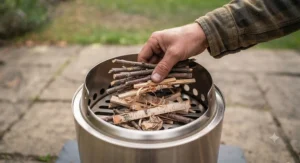
The Vargo Titanium Hexagon Wood Stove folds completely flat into a shape barely thicker than a phone case, then pops open into a hexagonal burn chamber — a genuinely clever engineering solution for anyone who resents carrying dead weight. At around 130g, it’s among the lightest wood-burning stoves sold in the UK, built from ultralight titanium that shrugs off years of direct flame without warping.
What most buyers overlook about the Hexagon is that it isn’t technically a forced-draft gasifier in the same sense as the double-walled Solo Stove or TOAKS designs — it’s a highly efficient heat-funnelling shape rather than a secondary-combustion burner. In practice this means slightly less complete combustion than true gasifiers, but the trade-off buys you unmatched pack size and a design that also accepts a meths burner as backup fuel. This makes it particularly well suited to hikers who want wood-burning capability without giving up a fuel-tablet or alcohol option for wet conditions.
Reviewers on outdoor retailer sites consistently praise the one-piece fold-flat design for being faster to deploy than snap-together alternatives, with several noting it boils two cups of water nearly as quickly as a canister stove once alight. The main recurring criticism is that heat output can’t be adjusted once burning — you get what the fire gives you.
Pros:
- ✅ Genuinely flat-packing design, smallest carry footprint here
- ✅ Titanium build resists warping and corrosion long-term
- ✅ Accepts meths or fuel tablets as a wet-weather backup
Cons:
- ❌ Not a true double-wall gasifier, so slightly less complete burn
- ❌ Small pot capacity limit around 1.5 litres
For minimalist backpackers who count every gram, the Vargo Titanium Hexagon is close to unbeatable — just understand you’re buying convenience and weight savings rather than the absolute cleanest possible burn.
3. TOAKS Titanium Backpacking Wood Burning Stove — best nesting design for ultralight kit
The TOAKS Titanium Backpacking Wood Burning Stove is a three-piece titanium can-style gasifier that slots together in seconds and nests neatly inside a TOAKS 1100ml or 1600ml pot, meaning your entire wood-burning cook system packs down into one compact unit. At 225g, it sits comfortably between the featherweight Vargo and the sturdier Solo Stove range.
The double-wall construction here is a proper inverted downdraft gasifier — cool air is drawn down between the walls, heats up, and re-enters the burn chamber near the top to combust the wood gas a second time. Here’s what to weigh: this genuinely reduces smoke once the stove reaches operating temperature, but reviewers and TOAKS’s own testing agree it needs roughly five minutes to fully “light off” before you get the clean secondary burn, so early smoke is normal and shouldn’t be mistaken for a fault. This makes it best suited to backpackers doing multi-day trips where the titanium’s durability and low weight matter more than instant convenience.
Aggregated UK and international review sentiment is strongly positive on build quality and burn efficiency, with the recurring theme that the stove performs best with a wide-bottomed pot rather than a narrow 750ml mug, and that lighting from the top (rather than the bottom) gives noticeably better results.
Pros:
- ✅ Genuine secondary-combustion gasifier with proper double wall
- ✅ Nests inside compatible TOAKS pots for compact storage
- ✅ Titanium construction essentially immune to rust
Cons:
- ❌ Takes around five minutes to reach full clean-burn stage
- ❌ Performs poorly with narrow pots under 750ml
If you already run a titanium pot system, the TOAKS stove is close to a no-brainer purchase — the nesting fit alone saves pack space that other stoves on this list simply can’t match.
4. Solo Stove Lite — best all-round gasifier for solo wild camping
The Solo Stove Lite is arguably the stove that popularised backyard-to-backcountry wood gasification in the English-speaking market, and it remains a strong pick for solo or duo trips. At 255g and roughly 10.7cm tall, it’s a double-walled stainless steel cylinder with a ring of air holes at the base feeding the primary fire, and smaller holes higher up the inner wall creating the secondary “gasified” burn that gives off that distinctive ring of blue-tinged flame once hot.
Described by outdoor reviewers as a “natural convection inverted downgas gasifier stove,” the Lite produces very fine ash and comparatively little smoke once established, though — as with all gasifiers of this size — you’ll need dry twigs and pine cones rather than damp deadwood for best results. On paper this means it’s not a stove you light and walk away from; it needs steady, small feeds of fuel through the gap in the pot support to maintain the secondary burn. That hands-on rhythm is part of the appeal for bushcraft enthusiasts, but it will frustrate anyone hoping for gas-stove convenience.
Reviewers consistently describe the Lite’s construction as built to outlast its owner, with UK-based reviewers noting it’s genuinely competitive against similar imported gasifiers, if a little heavier than pure titanium designs.
Pros:
- ✅ Excellent secondary combustion once properly established
- ✅ No moving parts, essentially nothing to break long-term
- ✅ Compact enough for solo backpacking loadouts
Cons:
- ❌ Requires frequent small feeds of fuel to sustain the burn
- ❌ Heavier than titanium rivals at the same capacity
For solo wild campers who value durability over ultimate weight savings, the Solo Stove Lite remains one of the most dependable clean burn stove options on the market today.
5. Solo Stove Titan — best mid-size gasifier for 2-4 person cooking
Stepping up from the Lite, the Solo Stove Titan is built for pairs or small groups, with pot supports rated for vessels up to two litres and a wider burn chamber to match. At 470g and roughly 20cm tall, it’s still compact enough to strap to the outside of a rucksack, though it’s clearly aimed more at car camping and short-hike basecamps than serious ultralight trekking.
The Titan uses the same double-wall inverted gasification principle as the Lite, drawing air up through the gap between the walls before it exits through smaller holes near the top to re-burn the rising wood gas. What the spec sheet won’t tell you, but reviewers note, is how quickly and reliably this stove gets going compared with cheaper single-wall alternatives — most UK reviewers report a strong, low-smoke fire within a couple of minutes using dry kindling. One recurring theme across independent gear reviews is that while it’s “ludicrously overbuilt” for casual use, that overengineering is exactly why owners report zero mechanical failures even after years of regular use.
A frequently cited drawback, both from Solo Stove’s own customer reviews and independent write-ups, is a tendency toward surface rust if the stove is packed away wet or damp — a fixable issue with basic post-trip care, but worth factoring into your maintenance routine.
Pros:
- ✅ Handles pots up to 2 litres, ideal for 2-4 people
- ✅ Fast, low-smoke fire once dry kindling is established
- ✅ Nesting pot-support design for compact storage
Cons:
- ❌ Heavier and bulkier than solo-focused alternatives
- ❌ Surface rust reported if stored damp without drying first
For small groups who want one reliable gasifier stove that scales beyond a single person’s needs, the Solo Stove Titan earns its reputation as a benchmark mid-range option.
6. BioLite CampStove 2+ — best gasifier stove for charging devices off-grid
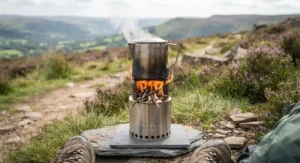
The BioLite CampStove 2+ takes wood gasification somewhere genuinely different: a built-in thermoelectric generator converts a portion of the fire’s heat into electricity, which powers an internal fan for hyper-efficient forced air combustion and simultaneously charges an onboard 3,200mAh battery. At 935g it’s the heaviest stove here bar the Campfire, but that weight buys real functionality — a smart LED dashboard shows fire strength and fan speed, and you can top up a phone or headlamp via USB while your dinner cooks.
Here’s what to weigh: because the fan actively forces air into the burn chamber rather than relying purely on convection, the CampStove 2+ produces one of the cleanest, most consistent burns on this list — BioLite states it boils a litre of water in around four and a half minutes, competitive with many canister stoves. That active airflow is the clearest real-world demonstration of forced air combustion in this entire line-up, and it’s the reason the CampStove line has become a genuine crossover product between camping gear and emergency-preparedness kit. Aggregated customer sentiment is broadly enthusiastic about the charging function specifically, with reviewers describing it as a lifesaver when a phone battery died mid-trip and no power bank was available.
The main criticism raised in reviews is unsurprising given the tech involved: it’s more expensive and more complex than a simple metal cylinder, with a fan and circuit board that basic gasifiers simply don’t have to worry about failing.
Pros:
- ✅ Active forced air combustion for exceptionally clean burns
- ✅ Genuinely useful USB device charging while cooking
- ✅ Real-time LED dashboard for fire and fan feedback
Cons:
- ❌ Significantly pricier than passive gasifier stoves
- ❌ Electronics add a failure point simpler designs avoid
For off-grid trips, van life, or emergency-preparedness kits where charging capability genuinely matters, the BioLite CampStove 2+ justifies its premium price in a way no purely passive stove on this list can.
7. Solo Stove Campfire — best gasifier stove for family and basecamp cooking
The Solo Stove Campfire is the largest model in this round-up, designed to cook for four or more people and double as a genuine warmth source for an evening around camp. At around 2kg and 30cm tall, it’s firmly a car-camping or basecamp tool rather than something you’d carry on a multi-day trek, but within that use case it’s hard to beat.
The same double-wall gasification principle scales up impressively here — the larger burn chamber holds substantially more fuel per load, meaning fewer trips to gather twigs and a sustained fire that comfortably supports a full-sized camping pot or griddle. Based on the spec comparison against the smaller Titan, the Campfire’s wider base and taller chamber translate directly into higher sustained heat output, useful for group cooking or simmering a stew rather than just flash-boiling water. Reviewers consistently highlight its dual role as both a cooking platform and an actual campfire substitute, particularly appealing on sites where open ground fires are restricted but contained stoves are permitted.
The trade-off is obvious from the weight alone: this isn’t a stove you’ll want in a backpack, and its size means it needs a genuinely stable, non-flammable surface to sit on given how hot the outer shell gets during extended use.
Pros:
- ✅ Comfortably cooks for four or more people
- ✅ Doubles as a legitimate evening campfire substitute
- ✅ Large fuel chamber reduces how often you need to feed it
Cons:
- ❌ Too heavy and bulky for backpacking use
- ❌ Outer shell reaches high temperatures, needs careful placement
For family camping trips or basecamp setups where weight isn’t the constraint, the Solo Stove Campfire delivers genuine group-cooking capability alongside the ambience of a proper fire, all from a design that many sites still permit where open fires are banned.
Full Spec Comparison: All 7 Stoves Side by Side
| Stove | Material | Weight | Best For | Price Range |
|---|---|---|---|---|
| Ohuhu Wood Burning Camping Stove | Stainless steel | 400g | Beginners, backup stove | Under £20 |
| Vargo Titanium Hexagon Wood Stove | Titanium | 130g | Ultralight solo hiking | £35-45 range |
| TOAKS Titanium Backpacking Wood Burning Stove | Titanium | 225g | Multi-day backpacking | £45-60 range |
| Solo Stove Lite | Stainless steel | 255g | Solo/duo wild camping | £60-80 range |
| Solo Stove Titan | Stainless steel | 470g | 2-4 person groups | £90-120 range |
| BioLite CampStove 2+ | Stainless steel/electronics | 935g | Off-grid charging | £130-160 range |
| Solo Stove Campfire | Stainless steel | 2kg | Family/basecamp | £180-220 range |
Set side by side, the pattern is clear: as capacity and features rise, so does both weight and price, with titanium as the one exception that buys weight savings at the mid-range price point rather than the budget end. If you’re torn between two models, weigh how often you’ll realistically carry this stove versus how many people you typically cook for — that single question eliminates most of the wrong choices on this table.
💬 Just one click — help others make better buying decisions too!😊
Practical Usage Guide: Setting Up and Maintaining Your Wood Gasifier Stove
Getting the most from any wood gasifier stove comes down to fuel prep more than the stove itself. Before your first trip, practise at home in a safe, ventilated outdoor space — garden patio slabs, not decking. Gather three fuel grades in advance: dry tinder (birch bark, cotton wool with petroleum jelly, or fatwood shavings), pencil-thin kindling, and finger-thick sticks. Damp or green wood is the single biggest cause of disappointing first burns, so if the ground’s been wet, snap sticks to check the core is dry before use.
Light from the top wherever the stove design allows it — this is counterintuitive to anyone used to building fires from the base up, but top-down lighting on gasifiers produces a faster, cleaner secondary burn because the flame front works downward through the fuel while heated air rises correctly through the double wall. Feed little and often once the fire’s established; overloading a gasifier’s chamber blocks the airflow that makes it work, turning a clean burn into a smoky one.
After each trip, empty ash while cold, wipe down with a dry cloth, and — critically for stainless steel models like the Solo Stove Titan — make sure the stove is fully dry before storing it in its bag, since packing it away damp is the leading cause of the surface rust several reviewers mention. Titanium models like the Vargo Titanium Hexagon and TOAKS Titanium Backpacking Wood Burning Stove are far more forgiving here, though a light wipe still keeps soot from transferring to other gear. Check the Countryside Code and any site-specific rules before your first outing, since permission to use a contained stove varies by location even where open fires are banned.
Common first-30-days mistakes worth avoiding: using wet wood and blaming the stove, overloading the fuel chamber and choking the airflow, forgetting a heatproof mat under the stove on grass or decking, and packing a stove away hot, which can scorch bag linings.
Real-World Scenarios: Which Wood Gasifier Stove Suits You?
The solo Munro-bagger. Sarah does three-day solo hikes across Scottish hillsides, carrying everything on her back and counting every gram. For her, the Vargo Titanium Hexagon Wood Stove or TOAKS Titanium Backpacking Wood Burning Stove makes the most sense — both weigh under 250g, and the TOAKS nests inside her existing titanium pot, meaning zero extra pack volume for a stove that lets her cook without carrying gas canisters through airport security or up steep terrain.
The weekend family campsite crew. Tom and his partner take two young kids camping four or five times a summer at sites with fire restrictions but stove allowances. For them, the Solo Stove Campfire solves two problems at once: it’s a genuine cooking platform for a family of four, and it gives the kids the ritual of an evening fire without breaking site rules on open ground fires. Weight is irrelevant since it travels in the car boot.
The off-grid van lifer. Priya spends long stretches away from mains power, relying on solar panels that sometimes underperform in overcast British weather. The BioLite CampStove 2+ gives her a genuine backup power source alongside cooking capability — when the solar setup falls short, twigs gathered from a layby become a phone charger, which none of the passive gasifiers on this list can offer.
Matching the stove to the actual pattern of your trips — not the trip you’d like to imagine yourself taking — is the single most useful piece of advice in this guide.
Biomass Cooking in the UK: Problem → Solution Guide
Problem: everything’s damp and won’t light. British weather rarely cooperates, so keep a small dry-tinder kit (cotton wool balls, a fire steel, or a few fatwood shavings) sealed in a freezer bag inside your pack at all times — even bone-dry kindling struggles without reliable tinder to start it.
Problem: the fire smokes heavily and won’t establish secondary combustion. This is almost always fuel that’s too wet, too thick, or packed too tightly. Break sticks down smaller, spread the first layer loosely rather than jamming it in, and be patient — most double-wall gasifiers need a genuine couple of minutes before the secondary burn kicks in and smoke drops off noticeably.
Problem: pot won’t sit stable, or keeps tipping. Check the ground is level before lighting, and where possible use a flat stone or heatproof base beneath the stove’s feet on soft or uneven ground.
Problem: running low on fuel mid-cook in sparse terrain. Above the treeline or on beaches, gather fuel before lighting, not during — pine cones, dead gorse, and driftwood all work in a pinch, but hunting for fuel with a half-cooked pot on the stove wastes both time and heat.
Problem: worried about fire risk on dry ground. This is the single most important consideration in biomass cooking, and it’s covered fully in the safety section below — when in doubt, don’t light at all.
What Is a Wood Gasifier Stove? Forced Air Combustion Explained
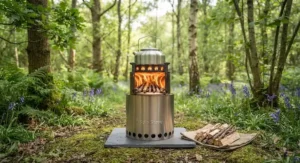
A wood gasifier stove is a double-walled burner that channels preheated air from between its walls back into the flame to combust the wood gas a normal fire releases as smoke, producing a hotter, more complete, and noticeably cleaner burn from a smaller amount of fuel.
The underlying chemistry isn’t new — wood gas has been used as a fuel source since at least the 19th century, most famously in wartime vehicle gasifiers — but the compact camping version works on the same basic principle at a fraction of the scale. As wood burns, it releases combustible gases (mostly carbon monoxide, hydrogen and various hydrocarbons) that a simple open fire loses to the air unburned, appearing as visible smoke. A gasifier stove’s double wall traps and preheats incoming air, feeding it back into the chamber at exactly the point where those unburned gases are rising, igniting them in what’s called secondary combustion.
Some designs, like the BioLite CampStove 2+, take this further with an active fan forcing air into the chamber rather than relying purely on the natural convection most stoves use — this is true forced air combustion, and it’s the reason fan-assisted gasifiers tend to burn even more completely and start faster in damp or cold conditions than passive designs. Passive gasifiers like the Solo Stove Lite and TOAKS Titanium Backpacking Wood Burning Stove achieve a similar effect through careful vent geometry alone, without any moving parts to fail.
How to Choose the Best Gasifier Stove UK Buyers Trust
- Decide your primary use case first. Solo backpacking, group camping, or emergency backup each point toward different stoves — don’t buy for the trip you might one day take.
- Weigh weight against durability honestly. Titanium saves grams but costs more; stainless steel weighs more but tends to shrug off rough handling better and costs less.
- Check pot compatibility before buying. Smaller stoves like the Vargo Hexagon cap out around 1.5 litres, which matters if you regularly cook for more than one person.
- Consider fuel availability where you actually camp. Dense woodland makes any gasifier easy to feed; sparse moorland or coastal terrain rewards a stove with a larger, more forgiving fuel chamber.
- Factor in whether you need charging capability. If you’re regularly off-grid for multiple days, the extra cost of a fan-assisted, charging-capable model like the BioLite can be genuinely worth it.
- Read aggregated review themes, not star ratings alone. A 4.6-star average tells you little; recurring complaints about rust, warping, or smoke tell you a lot more about long-term ownership.
- Confirm local fire rules before you buy anything. The best gasifier stove UK campers can actually use is the one permitted at your intended sites — check this before, not after, purchase.
Clean Burn Stove Technology: Why Smoke and Efficiency Matter
Smoke isn’t just an annoyance that clings to your tent porch and clothing — it’s unburned fuel escaping as particulate matter, and a genuinely clean burn stove design is directly linked to how efficiently it converts wood into usable heat. The double-wall gasification principle common to every stove on this list exists specifically to reduce that wasted particulate output by re-burning the wood gas that a basic fire simply loses.
Reviewers consistently note the practical upshot: less smoke means pans stay cleaner, clothes and hair don’t carry the smell home, and — for stoves used inside a tent porch vestibule in bad weather, which should always be done with extreme caution and good ventilation — the reduced particulate output matters for basic comfort and air quality. The BioLite CampStove 2+‘s fan-forced design represents the cleanest burn in this round-up precisely because active airflow gives more consistent, complete secondary combustion than passive convection alone can guarantee, particularly in damp UK conditions where natural draught is often sluggish.
What most buyers overlook is that fuel choice affects burn cleanliness just as much as stove design — genuinely dry, seasoned wood produces dramatically less smoke on any gasifier than damp deadwood, regardless of how good the stove’s engineering is. A premium clean burn stove paired with wet fuel will still smoke; a budget stove paired with properly dried tinder and kindling can burn surprisingly clean.
Wood Gasifier Stove vs Traditional Open Fire and Gas Camping Stoves
| Factor | Wood Gasifier Stove | Open Ground Fire | Canister Gas Stove |
|---|---|---|---|
| Fuel cost | Free (foraged wood) | Free (foraged wood) | Ongoing canister cost |
| Smoke output | Low once established | High throughout | None |
| Site restrictions | Often permitted where open fires aren’t | Frequently banned | Almost always permitted |
| Weight carried | Light to moderate | None (but fire risk) | Stove + canisters |
| Best For | Solo Stove Lite, TOAKS Titanium | Nowhere on restricted UK sites | Fast, no-fuss cooking |
Reading across the table, the strongest case for a gasifier stove is precisely the middle ground it occupies: it delivers the fuel-free appeal of an open fire without the smoke, the fire-risk, or the frequent site bans that come with unrestrained ground fires. Against gas stoves, the trade-off flips — you gain fuel independence and a lower running cost over time, but lose the instant, weather-proof convenience of turning a valve and getting flame in seconds regardless of how wet the ground is.
For UK conditions specifically, where dry, forageable wood isn’t guaranteed even in summer, many experienced campers carry a gasifier stove as their primary and a small gas or alcohol backup for genuinely wet trips — a belt-and-braces approach that avoids being caught with damp fuel and no dinner.
Safety, Regulations and the Countryside Code: Lighting Fires Responsibly in the UK
There is no single UK-wide law banning contained camping stoves outright, but the picture is genuinely patchwork, and getting it wrong carries real consequences. Local byelaws, National Park restrictions, and Public Spaces Protection Orders can all apply depending on where you are, and enforcement tightens sharply during dry spells when wildfire risk climbs. The government’s own wildfire safety guidance advises avoiding open fires in the countryside altogether and following local signage on what’s permitted, which is a useful baseline even for contained stoves.
Practically, this means checking site-specific rules before you travel — a campsite that welcomes gasifier stoves in spring may restrict all naked flames, including camp stoves, during a summer heatwave. Natural England has been explicit that portable stoves and abandoned fires are among the leading causes of wildfire damage to protected sites, so treat any “high risk” fire severity warning as a hard no rather than a suggestion, regardless of how contained your stove feels.
Sensible baseline practice: always use a stove on bare earth, gravel, or a dedicated fire mat rather than directly on dry grass or decking; keep water or a heavy blanket within arm’s reach; never leave a lit stove unattended even briefly; and let ash cool completely before disposal or packing away. None of the seven stoves reviewed here are designed for use on peat, moorland tinder-dry vegetation, or inside enclosed spaces without ventilation — treat that as a firm rule, not a guideline.
Long-Term Cost & Maintenance: Is a Wood Gasifier Stove Actually Worth It?
Run the numbers over a few seasons and the value case for a wood gasifier stove becomes clearer. A single gas canister for a typical canister stove costs somewhere in the £5-8 range and lasts perhaps four to six meals depending on conditions; over twenty camping trips a year, that’s a genuinely significant recurring cost that a gasifier stove — fuelled entirely by free, foraged wood — simply avoids after the initial purchase.
Maintenance costs are similarly low across every model here: stainless steel stoves like the Ohuhu and Solo Stove range need nothing beyond drying and occasional ash removal, while titanium models like the Vargo Titanium Hexagon and TOAKS Titanium Backpacking Wood Burning Stove are essentially maintenance-free thanks to their corrosion resistance. The one genuine ongoing cost sits with the BioLite CampStove 2+, where the internal fan and battery represent a component that could eventually need replacement, though BioLite’s track record on this front is solid according to aggregated long-term owner reviews.
Total cost of ownership, then, tends to favour gasifier stoves heavily for anyone camping regularly across multiple seasons — the break-even point against canister gas typically arrives within the first year for frequent campers, after which every trip effectively costs nothing in fuel.
Features That Actually Matter (And Those That Don’t)
Genuinely important: double-wall construction for real secondary combustion, a wide enough pot support for the vessels you actually own, and build material suited to how roughly you handle gear. Genuinely overrated: marketing claims of “smokeless” burning, which no wood stove achieves in the first minute or two of lighting regardless of price; and elaborate multi-piece accessory kits that add weight most campers never use in practice. If a listing emphasises accessory count over burn chamber design, that’s usually a signal the core engineering is an afterthought.
FAQ
❓ Are wood gasifier stoves legal to use in the UK?
❓ How much wood does a gasifier stove use to boil water?
❓ Can I use a wood gasifier stove inside a tent?
❓ What's the difference between a gasifier stove and a rocket stove?
❓ Do titanium wood gasifier stoves burn cleaner than stainless steel ones?
Conclusion
Picking the right wood gasifier stove really does come down to matching the design to your actual pattern of trips rather than chasing the lightest or most feature-packed option available. Solo hikers counting grams should look hard at the Vargo Titanium Hexagon Wood Stove or TOAKS Titanium Backpacking Wood Burning Stove; anyone cooking for a group will get far more use from the Solo Stove Titan or the family-sized Solo Stove Campfire; and campers who genuinely need to keep devices charged off-grid have a clear, if pricier, answer in the BioLite CampStove 2+. Budget-conscious first-timers, meanwhile, can start with the Ohuhu Wood Burning Camping Stove and upgrade once they know gasifier cooking suits their style.
Whichever model you land on, the fundamentals stay the same across every price point covered here: dry fuel, patient feeding, sensible ground preparation, and a genuine respect for local fire rules and wildfire risk. Get those right and even the cheapest stove on this list will reward you with a clean, efficient burn that makes gas canisters feel like an unnecessary expense.
Recommended for You
- Solo Stove Lite Review 2026: 7 Best Wood Stoves Tested
- Folding Wood Burning Stove 2026: 7 Best Flat-Pack Picks Ranked
- Solo Stove vs Rocket Stove 2026: 7 Smokeless Picks Tested
Disclaimer: This article contains affiliate links. As an Amazon Associate, I earn from qualifying purchases. If you purchase products through these links, we may earn a small commission at no additional cost to you.
✨ Found this helpful? Share it with your friends! 💬🤗
