
In This Article
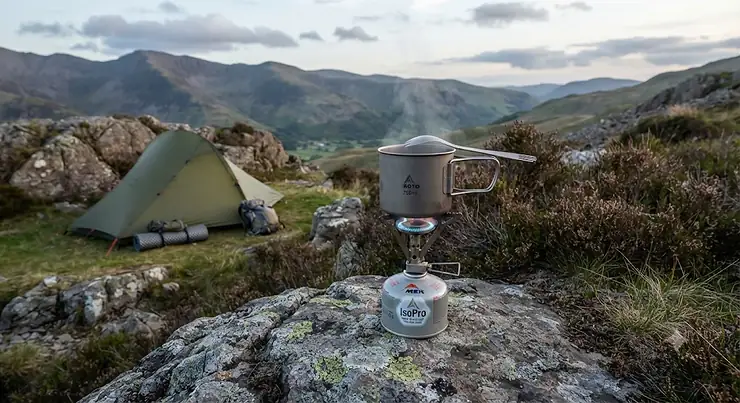
There’s a specific kind of joy in watching a stove that weighs less than your phone charger bring a litre of water to a rolling boil on a wet Welsh hillside. That’s the appeal of the best ultralight gas stove: it disappears into your pack, then quietly does the one job that actually matters after a long day of walking. Whether you’re shaving grams for a Cape Wrath Trail attempt or just tired of lugging a chunky two-burner unit up a Munro, the right screw-on burner changes how your whole backpacking kitchen feels on your back. This guide is built from real product research rather than marketing copy — genuine specs, aggregated review sentiment, and honest trade-offs, because a portable canister stove is legally classed as a dangerous good, and UK aviation authorities give clear guidance on what you can and can’t carry with one, which matters more than most buying guides let on.
So, what is an ultralight gas stove? It’s a compact portable stove design, usually under 100 grams, that screws directly onto a threaded isobutane-propane canister and produces enough heat output to boil water in two to five minutes. Unlike integrated systems or liquid-fuel stoves, it has almost no moving parts, which is precisely why it dominates fast-and-light UK backpacking and Duke of Edinburgh-style multi-day routes alike.
Across this article you’ll find seven genuinely available stoves spanning budget titanium picks to premium wind-resistant burners, four comparison tables with analysis, and honest guidance on pack weight, fuel maths, and screw-on burner mechanics — including a dedicated section on the Soto Amicus, one of the most searched-for models in this category. None of the prices below are exact figures; Amazon pricing shifts constantly, so every mention uses a range and you should always check current price on the listing itself.
Quick Comparison Table
| Stove | Weight | Boil Time (1L) | Material | Best For |
|---|---|---|---|---|
| Soto Amicus | ~75-81g | ~4 min 20 sec | Stainless/aluminium | Best value all-rounder |
| Soto WindMaster | ~87g (4Flex) / ~67g (TriFlex) | ~4 min | Stainless/titanium | Best wind resistance |
| MSR PocketRocket 2 | ~73g | ~4-4.5 min | Stainless steel | Best classic lightweight |
| BRS-3000T | ~25-27g | ~2 min 58 sec (0.5L, favourable) | Titanium alloy | Lightest on the market |
| Snow Peak LiteMax | ~53-56g | ~5-6 min | Titanium/aluminium | Best titanium build quality |
| Jetboil Stash | ~101g (stove + 0.8L pot) | ~2 min 30 sec | Titanium/hard-anodised aluminium | Best fuel-sipping hybrid |
| MSR PocketRocket Deluxe | ~82g | ~1 min 42 sec (2 cups) | Stainless steel | Best simmer control |
Looking across the table, the picture is really about which trade-off you’re willing to make: BRS-3000T wins outright on grams, Soto WindMaster wins in weather, and Jetboil Stash wins on fuel efficiency thanks to its heat-exchanger pot. No single stove tops every column, which is exactly why this list features seven, not one.
💬 Bookmark this comparison — it’s the fastest way to match a stove to your next trip’s conditions.
Top 7 Ultralight Gas Stoves: Expert Analysis
1. Soto Amicus — best all-round value pick
The Soto Amicus is the stove most UK backpackers reach for first, and there’s a straightforward reason: it does almost everything well without asking you to compromise on price. At roughly 75-81 grams depending on whether you choose the Stealth ignition version, it sits comfortably mid-pack on weight while offering a four-pronged pot stand that most rivals its price simply don’t include.
On specs, the Amicus produces around 2,600 kcal/h (roughly 10,210 BTU), which is genuinely hot for a stove this size, and independent testing consistently clocks it boiling two cups of water in around 110 seconds and a full litre in a little over four minutes. That output-to-weight ratio is what makes it a sensible default rather than a compromise pick.
Who should buy it? Based on the spec comparison, this is the right first stove for anyone doing weekend Munros, Welsh three-peaks trips, or their first Cairngorms overnighter — reliable, simmer-capable, and forgiving of clumsy fingers on a cold morning. Independent lab testing found it boils 2 cups of water in around 110 seconds, works acceptably in wind, simmers well, and packs down small, though reviewers note it isn’t the most windproof stove in its class — a fair trade for the price. Aggregated review sentiment across multiple outdoor publications repeatedly praises its ease of assembly and its stability with a fully loaded pot, while the recurring criticism is that boil times drop off noticeably once a breeze picks up.
Pros:
- ✅ Four-prong pot stand adds real stability for bigger pots
- ✅ Strong heat output for the weight class
- ✅ Reliable piezo ignition on the Stealth version
Cons:
- ❌ Wind resistance trails the pricier WindMaster
- ❌ Cone-shaped stuff sack fits awkwardly in some pack pockets
At around £35-£45, the Amicus sits in the sweet spot between disposable budget stoves and premium wind-cheating burners — genuinely good value for what it delivers.
2. Soto WindMaster — best wind resistance in its class
If you’ve ever crouched behind a boulder shielding a dying flame on an exposed ridge, the Soto WindMaster is the answer to that specific misery. What most buyers overlook about this model is that its burner head sits recessed below a protective lip, so the flame stays shielded even when the pot itself is exposed — a genuinely different design philosophy from most screw-on burners.
The stove weighs around 87 grams with the four-pronged 4Flex pot stand, or as little as 67 grams if you swap to the optional three-pronged TriFlex support. Independent testing found it boils two cups of water in around 106 seconds while working well in the wind, simmering well, and packing down small, with an auto-ignitor built in. Head-to-head trials back this up further: in one controlled comparison against the MSR PocketRocket Deluxe, the WindMaster boiled water using 22 grams of fuel against the MSR’s 27 grams under identical windy conditions, a meaningful fuel-efficiency gap for anyone counting canister weight over a multi-day route.
This is the stove for hillwalkers who regularly cook above the treeline or in genuinely blustery conditions — Scottish winter munro-baggers, Pennine Way thru-walkers, anyone who has learned the hard way that a naked flame and a Yorkshire gale don’t mix. Reviewers consistently rate it as one of the most fuel-efficient canister stoves tested, and the ability to swap pot stands depending on trip type is a rare bit of genuine flexibility in this category.
Pros:
- ✅ Recessed burner head shields flame from wind
- ✅ Swappable 4Flex/TriFlex pot stands for different trips
- ✅ Best-in-class fuel efficiency in independent tests
Cons:
- ❌ Costs noticeably more than the Amicus or PocketRocket 2
- ❌ 4Flex stand packs bulkier than simpler three-arm designs
Expect to pay in the £60-£75 range, and given the fuel savings over a long trip, the value case largely writes itself for anyone who camps in genuinely exposed spots.
3. MSR PocketRocket 2 — best classic lightweight
The MSR PocketRocket 2 has been the default recommendation for so long that it’s easy to forget how genuinely good it still is. At around 73 grams and folding down small enough to live inside a 750ml pot, it remains one of the most trusted names for a reason: it simply works, trip after trip.
In real-world testing it boils roughly a litre of water in 3.5 to 4 minutes in calm conditions, and an 8oz canister typically delivers 12 to 14 litres of boiled water — solid, predictable fuel economy for a stove this affordable. Here’s what to weigh: wind is its clear weak point, since there’s no windscreen around the burner, meaning the flame gets pushed around in a breeze and fuel consumption climbs noticeably. That’s a fair trade-off most buyers accept, given how compact and dependable the stove is otherwise.
This is the pick for backpackers who mostly boil water for coffee and freeze-dried meals rather than cooking elaborate trail dinners, and for anyone who wants a stove they can hand to a hiking partner without a lesson. Aggregated reviewer sentiment is remarkably consistent: praised for reliability and simplicity, criticised almost exclusively for wind performance and a valve that some testers describe as slightly touchy in cold conditions.
Pros:
- ✅ Compact enough to nest inside most 750ml pots
- ✅ Predictable, well-documented fuel efficiency
- ✅ Trusted design with a long track record
Cons:
- ❌ No wind protection around the burner head
- ❌ Valve can feel touchy with cold fingers
At roughly £40-£50, it undercuts the WindMaster while still delivering dependable everyday performance — a genuinely sensible middle-ground purchase.
4. BRS-3000T — lightest functional stove on the market
The BRS-3000T exists to answer one question: how little can a stove weigh and still light a flame? At around 25-27 grams, it’s roughly the size and weight of a cigarette lighter, and it remains the benchmark every other “ultralight” stove gets measured against.
The stove generates around 2,700W (roughly 9,200 BTU/hr), and testing shows it brings around half a litre of water to boil in about two minutes 30 to 50 seconds under favourable conditions. That’s a genuinely impressive power-to-weight figure. The catch, and it’s a real one: it has real trade-offs in wind performance and quality control, and some buyers report units that fail entirely after only a handful of boils, while others get years of reliable service from the same design — a lottery that’s genuinely worth knowing about before you rely on it solo, miles from anywhere.
Reviewers who’ve thru-hiked with it are split but converge on similar advice: the BRS-3000T is the right call for solo backpackers who live on boil-water meals, prioritise gram-counting over cooking versatility, and typically camp in at least partially sheltered terrain. Treat it as a precision instrument, not a workhorse, and it earns its place in an ultralight kit — ideally as a backup or fair-weather primary rather than your only option on a serious expedition.
Pros:
- ✅ Lightest genuinely usable canister stove available
- ✅ Strong power output relative to its size
- ✅ Extremely cheap entry point into ultralight cooking
Cons:
- ❌ Inconsistent build quality between units
- ❌ Weak wind resistance and flimsy pot support arms
At under £20, it’s arguably the best-value gram-for-pound purchase in this entire list, provided you treat it as delicate kit rather than a rugged daily driver.
5. Snow Peak LiteMax — best titanium gas stove for build quality
Ask any long-distance hiker to name the best titanium gas stove and the Snow Peak LiteMax comes up constantly, and not without reason. Weighing around 53-56 grams, it uses titanium and aluminium construction that feels genuinely premium in hand — this isn’t the flimsy, slightly wobbly feeling you get from some ultra-budget titanium stoves.
Independent testing found it to be the lightest stove tested and the easiest to assemble and disassemble, though with longer boil times than heavier rivals, clocking two cups of water in around 163 seconds. What most buyers overlook about titanium stoves generally is that the lighter build doesn’t necessarily mean better wind performance — quite the opposite here. The Snow Peak’s side-mounted burning ports mean boil times in wind run roughly three times longer than a genuinely wind-optimised design like the Soto WindMaster. That’s the honest trade-off buyers need to understand before purchase: titanium buys you weight savings and durability, not necessarily wind performance.
This is the stove for gram-counters who mostly cook in sheltered spots — wooded valleys, bothies, or below the treeline — rather than exposed ridgelines. Reviewers consistently describe it as beautifully engineered and reliably durable over hundreds of miles, with the main recurring complaint being that its narrow burner head concentrates heat centrally, making it a poor match for wide pans or two-person cooking.
Pros:
- ✅ Genuine titanium construction with premium feel
- ✅ Among the lightest full-function stoves available
- ✅ Excellent simmer control for its size
Cons:
- ❌ Weak performance once wind picks up
- ❌ Narrow burner head struggles with wide pots
Typically priced in the £55-£65 range, it commands a premium over steel rivals — a fair ask given the titanium build, provided you understand its wind limitations going in.
6. Jetboil Stash — best fuel-sipping hybrid system
The Jetboil Stash occupies an unusual niche: part minimalist screw-on burner, part integrated cooking system. Based on the spec comparison, it manages to combine the compactness of a standalone stove with the fuel efficiency normally reserved for bulkier heat-exchanger systems, which explains why it sold out repeatedly after launch.
The complete stove-and-pot combination weighs around 101 grams (roughly 1.9oz for the burner alone), and testing consistently records boil times around two minutes 30 seconds for smaller volumes thanks to the heat-exchanger pot pulling more usable energy from every gram of fuel burned. The trade-off worth flagging honestly: multiple aggregated reviews note that the Stash doesn’t perform particularly well in wind, since it lacks the windproof lip found on bulkier Jetboil siblings like the Flash.
This is the pick for solo ultralight hikers who want an all-in-one system without carrying a separate pot, and who mostly cook in reasonably sheltered conditions. It’s a smart choice for anyone doing back-to-back long days where fuel weight genuinely adds up over a week — the efficiency gains compound trip after trip in a way that’s easy to underestimate on paper.
Pros:
- ✅ Best-in-class fuel efficiency thanks to the heat exchanger
- ✅ All-in-one system saves carrying a separate pot
- ✅ Genuinely fast boil times for its size
Cons:
- ❌ Poor performance once wind picks up
- ❌ Pricier than most standalone screw-on burners
Expect to pay in the £115-£135 range for the full pot-and-stove system — steep next to a bare burner, but fair once you factor in the pot you’d otherwise need to buy separately.
7. MSR PocketRocket Deluxe — best simmer control on a budget-adjacent stove
The MSR PocketRocket Deluxe takes everything solid about the standard PocketRocket 2 and adds the one feature serious trail cooks actually want: genuine, fine-grained simmer control. At around 82 grams, it’s a touch heavier than its sibling, but the trade-off buys you a wide flame-control range that makes it genuinely usable for cooking, not just boiling.
Testing found it boils two cups of water in around 102 seconds, works acceptably in wind, simmers well, packs up small, and includes an auto-igniter and a sturdy three-prong pot stand. Fuel efficiency runs a shade behind the Soto WindMaster, but the faster raw boil times partly offset that in day-to-day use.
Who’s this for? Anyone who actually cooks on trail rather than just rehydrating meals — think simmered porridge, proper trail curries, or melting snow gradually rather than scorching it. Reviewers consistently rank it as a genuine step up from the base PocketRocket 2 for anyone willing to carry the extra nine grams, praising the auto-ignitor’s reliability across multiple seasons of use.
Pros:
- ✅ Wide, genuinely usable simmer range
- ✅ Reliable auto-ignitor across seasons
- ✅ Fastest raw boil times in independent testing
Cons:
- ❌ Heavier than the standard PocketRocket 2
- ❌ Slightly less fuel-efficient than the WindMaster
Pricing sits around £55-£65, positioning it as the sensible upgrade pick for anyone who cooks real meals rather than just boiling water for a freeze-dried pouch.
Top 7 Products: Specs and Value at a Glance
| Stove | Weight | Output | Ignition | Price Range | Best For |
|---|---|---|---|---|---|
| Soto Amicus | ~75-81g | ~10,210 BTU | Piezo (Stealth version) | £35-£45 | Best value all-rounder |
| Soto WindMaster | ~67-87g | ~11,000 BTU | Auto-ignitor | £60-£75 | Best in wind |
| MSR PocketRocket 2 | ~73g | ~8,200 BTU | Manual | £40-£50 | Best classic lightweight |
| BRS-3000T | ~25-27g | ~9,200 BTU | Manual | Under £20 | Lightest overall |
| Snow Peak LiteMax | ~53-56g | ~11,200 BTU | Manual | £55-£65 | Best titanium build |
| Jetboil Stash | ~101g (system) | High (HX-boosted) | Manual | £115-£135 | Best fuel efficiency |
| MSR PocketRocket Deluxe | ~82g | ~8,200 BTU | Auto-ignitor | £55-£65 | Best simmer control |
Read across this table and a clear pattern emerges: raw BTU output matters far less than how that heat is delivered and shielded. The Snow Peak LiteMax technically out-outputs the Soto WindMaster on paper, yet loses badly in wind because of burner geometry, not power. If you’re choosing purely by spec sheet, weigh wind design and pot-to-flame distance as heavily as weight and BTU figures.
✨ Ready to Cut Your Pack Weight?
🔍 Take your backpacking kitchen to the next level with these carefully selected stoves. Click through to check current pricing and availability, and pick the one that actually matches how — and where — you cook on trail.
Practical Usage Guide: Setting Up and Maintaining Your Ultralight Gas Stove
Getting a screw-on burner right on your first trip mostly comes down to habits, not gear. Before lighting, always thread the stove fully onto the canister — cross-threading is the single most common cause of a hissing leak at the joint, and you’ll smell it immediately if it happens. Give the connection a firm quarter-turn check before every light, even on a stove you’ve used a dozen times, since vibration in transit can loosen it slightly.
For your first 30 days with a new stove, a few common mistakes crop up repeatedly in aggregated reviewer feedback: overtightening the canister thread (which can damage the O-ring), using an oversized pot that overhangs the pot-stand arms and destabilises the whole setup, and lighting the stove at full blast before adjusting down, which wastes fuel and can singe eyebrows. Light on a low flame first, then open the valve gradually.
Maintenance is minimal by design, which is part of the appeal, but not zero. After each trip, wipe down the burner head to clear any spilled food residue, and periodically check the O-ring on the canister thread for cracking — a spare weighs nothing and has saved more than one trip. For optimisation, carry your stove and canister nested inside your pot along with a mini lighter as backup ignition; piezo igniters are convenient but do eventually fail, usually at the least convenient moment. Store canisters somewhere warm overnight in cold weather — inside your pack, never your sleeping bag — since cold isobutane struggles to vaporise and pressure drops noticeably below freezing, directly affecting boil performance the next morning.
Which Stove Suits Your Trip? Three Real-World Scenarios
If you’re a university student commuting into your first few Peak District weekends on a tight budget, the BRS-3000T or Soto Amicus makes the most sense — cheap enough to justify the risk of a first purchase, light enough to disappear into a small pack, and perfectly capable for boil-and-rehydrate meals in typically sheltered lowland camping spots.
If you’re planning a week on the West Highland Way or a similar multi-day Scottish route where weather is genuinely unpredictable, the Soto WindMaster earns its higher price through fuel savings alone — burning less gas per boil over seven days adds up to real pack-weight savings once you account for carrying fewer or smaller canisters.
If you’re a solo ultralight hiker chasing the lowest possible base weight on something like the Cape Wrath Trail, pair the Snow Peak LiteMax or Jetboil Stash with a narrow titanium pot and plan your route around known sheltered camp spots, since both trade wind performance for weight or fuel efficiency respectively. Match the stove to the actual conditions you’ll face, not the conditions you’d prefer to face.
The Screw-On Burner Decision Framework
Cutting through spec sheets, here’s a simple framework: if absolute minimum pack weight is your only priority, choose the BRS-3000T, because nothing else in this list gets close on grams. If you regularly camp above 500 metres or in exposed coastal spots, choose the Soto WindMaster, because wind resistance saves more real-world frustration than any other single spec. If you’re buying your first stove and don’t yet know your priorities, choose the Soto Amicus, because it’s the most balanced option and won’t leave you regretting the purchase once you do develop preferences. If you actually cook proper meals rather than just boiling water, choose the MSR PocketRocket Deluxe for its simmer control. And if fuel weight over multi-week trips is your bigger concern than stove weight itself, choose the Jetboil Stash and do the maths on canisters saved.
 How to Choose the Best Ultralight Gas Stove
Choosing the right ultralight gas stove comes down to weighing five factors against your actual trip profile, not against an abstract “lightest possible” ideal.
- Weight vs total system weight. A 25-gram stove paired with an unstable pot setup that spills dinner isn’t actually lighter in practice — factor in pot compatibility, not just the stove alone.
- Wind resistance. If you camp exposed, this matters more than raw BTU output; a recessed burner head like the WindMaster’s genuinely changes real-world boil times.
- Fuel efficiency. Over a week-long trip, a more efficient stove lets you carry a smaller canister, which can offset a heavier stove in total pack weight.
- Simmer control. If you cook real meals rather than rehydrating pouches, a stove with a wide, precise valve range earns its keep.
- Build material. Titanium saves weight and resists corrosion but costs more; stainless steel is heavier but typically more forgiving of rough handling.
- Ignition type. Piezo igniters are convenient but not infallible — always carry backup ignition regardless of what your stove includes.
- Pot stand stability. Wider, sturdier stands support bigger pots for group cooking; minimal stands save weight but limit you to smaller cookware.
Common Mistakes When Buying an Ultralight Gas Stove
The most common mistake is buying purely on gram count without checking wind performance, then being genuinely miserable on the first exposed camp of the trip. A close second is assuming titanium automatically means “best” — as the Snow Peak LiteMax demonstrates, titanium buys weight savings and durability, not necessarily performance in wind or with wide pots. Buyers also frequently underestimate fuel canister weight itself; a stove that saves 30 grams but burns fuel less efficiently can lose that saving over a multi-day trip once you tally canister weight. Finally, many first-time buyers skip checking canister thread compatibility — nearly all modern ultralight stoves use the standard threaded connection, but it’s always worth a two-second check against your existing canisters before assuming compatibility.
Best Titanium Gas Stove: What Titanium Actually Buys You
Titanium has become something of a magic word in ultralight gear marketing, so it’s worth being precise about what it actually delivers. The core benefit is a strength-to-weight ratio that lets manufacturers use thinner material without sacrificing structural integrity — that’s how the Snow Peak LiteMax hits 53-56 grams while still feeling solid in hand, unlike some budget aluminium-and-steel stoves that feel genuinely flimsy at similar weights.
What titanium doesn’t automatically fix is wind performance or burner geometry — those come down to design choices independent of material. The BRS-3000T is also marketed as titanium (technically titanium alloy) yet suffers from inconsistent quality control that has nothing to do with the metal itself and everything to do with manufacturing tolerances at a rock-bottom price point. The honest takeaway: pay the titanium premium for weight savings and corrosion resistance over years of use, but don’t assume it automatically buys you better wind resistance, faster boil times, or superior build consistency — check independent reviews for those factors separately, stove by stove.
Screw-On Burner vs Integrated and Remote Canister Systems
A screw-on burner, the type covered throughout this guide, threads directly onto an upright isobutane canister with no hose or separate fuel bottle — that simplicity is exactly why these stoves weigh so little. The trade-off is a higher centre of gravity, since the whole assembly balances on top of the canister rather than sitting low and stable like a remote-canister stove with a hose connection.
Integrated systems, like Jetboil’s Flash or MiniMo, bolt a stove permanently to a matched heat-exchanger pot, trading some flexibility for genuinely impressive fuel efficiency and near-instant boils. The Jetboil Stash sits in an interesting middle ground — closer in weight to a standalone screw-on burner while borrowing the heat-exchanger efficiency of a full integrated system. Remote canister stoves, meanwhile, connect via a hose to an inverted canister on the ground, offering better stability for wide pots and slightly better cold-weather performance, at the cost of extra weight most ultralight backpackers aren’t willing to carry. For solo or duo trail cooking with standard-sized pots, a screw-on burner remains the lightest genuinely practical choice.
Pack Weight Math: Building a Backpacking Kitchen Around Your Stove
Pack weight decisions rarely hinge on the stove alone — it’s the whole backpacking kitchen that adds up. A typical ultralight cook system runs: stove (25-90g), a 100g or 227g isobutane canister (100-227g plus canister weight of roughly 90-160g empty), a titanium or aluminium pot (85-150g for a 550-750ml size), and a spork (5-10g). That’s a genuinely achievable sub-500g total cooking system, which sounds trivial until you’re eleven miles into day four and every unnecessary gram is audible in your shoulders.
The maths gets more interesting when you factor fuel efficiency into weight decisions. A 100g canister typically delivers 6-8 days of one-meal-a-day freeze-dried cooking with an efficient stove like the WindMaster or Amicus, stretching further with a heat-exchanger system like the Stash. A less efficient stove might force you to carry a larger 227g canister for the same trip length, meaning the “lighter” stove on the shelf can end up as the heavier overall system in your pack. Always weigh stove-plus-fuel as a combined figure for your specific trip length, not the stove weight in isolation printed on the box.
Ultralight Gas Stove vs Traditional Camping Stove
| Factor | Ultralight Gas Stove | Traditional Two-Burner Camping Stove |
|---|---|---|
| Weight | 25-100g | 2-5kg |
| Setup time | Seconds | Minutes |
| Cooking capacity | Solo/duo, single pot | Multiple pots, larger meals |
| Fuel type | Isobutane-propane canister | Propane cylinder/bottled gas |
| Best For | Backpacking, wild camping, thru-hikes | Car camping, family trips, base camps |
The comparison here isn’t really a contest — it’s a question of trip type. An ultralight gas stove wins decisively for anything you carry on your back for multiple days, where every gram is felt directly, but a traditional two-burner unit wins for car camping and family holidays where cooking capacity and stability for multiple pots matter more than pack weight. Buying the wrong category for your trip type is a far more common regret than buying the wrong specific model within the right category.
Safety, Regulations and Flying With Gas Canisters
This is where a lot of first-time buyers get caught out, so it’s worth being explicit: international standards allow passengers to carry certain dangerous goods in carry-on baggage, checked baggage, or on their person, but airlines and security screening agencies retain the right to refuse carriage of specific dangerous goods, and gas canisters for camping stoves fall squarely into that restricted category. In practice, this means you should never attempt to fly with a filled isobutane canister in either hand luggage or the hold — plan to buy fuel at your destination instead, and check the UK Civil Aviation Authority’s official guidance before any trip involving air travel.
On the ground, safe use matters just as much. Never operate a canister stove inside an enclosed tent — carbon monoxide risk and fire risk both increase sharply in confined spaces, and even a “quick brew” inside a porch has caused serious accidents. Always cook on stable, level ground, keep the canister upright, and never fully enclose a stove in a windscreen, since trapping heat around the canister risks a dangerous pressure build-up. If you’re wild camping responsibly in Scotland, it’s worth noting that official access guidance specifically recommends using a stove rather than an open fire as part of leave-no-trace practice — one more reason a reliable, quick-lighting stove earns its keep beyond convenience. Similarly, countryside guidance for England and Wales reinforces avoiding open fires and packing out everything you bring, principles that apply directly to how and where you use a canister stove.
Long-Term Cost & Maintenance
The upfront price of a stove is only part of the real cost of ownership. Over a season of regular weekend trips, fuel consumption differences between stoves genuinely add up: a fuel-efficient model like the Soto WindMaster might use 15-20% less gas per boil than a less efficient design, which across 30-40 trips a year translates into several extra canisters saved — often more than the price difference between the budget and premium stove in the first place.
Durability plays into this equation too. A £20 BRS-3000T that fails after a season and needs replacing isn’t necessarily cheaper over three years than a £60 Soto WindMaster that’s still going strong. Maintenance costs are minimal across the board — an occasional replacement O-ring costs pennies — but the real long-term cost driver is fuel efficiency multiplied by how often you actually get out on trail. Frequent weekend backpackers should weight fuel efficiency more heavily in their buying decision than occasional campers, for whom upfront price reasonably dominates.
Frequently Asked Questions
❓ What is the lightest ultralight gas stove available?
❓ Is the Soto Amicus worth buying over cheaper alternatives?
❓ What's the difference between a titanium and steel gas stove?
❓ How long does a gas canister last on an ultralight stove?
❓ Can you take a gas stove and canister on a flight to the UK?
Conclusion
There’s no single “best” ultralight gas stove, only the right stove for how and where you actually camp. If you want the lightest possible number on the scale, the BRS-3000T is genuinely hard to beat, provided you accept its rougher edges. If wind is your recurring enemy, the Soto WindMaster earns every extra gram. And if you’re just starting out and want one stove that won’t leave you wishing you’d bought differently, the Soto Amicus remains the sensible, well-rounded choice most UK backpackers eventually land on anyway. Whichever you choose, pair it with honest fuel-weight maths for your actual trip length, respect the safety and flying restrictions covered above, and you’ll end up with a backpacking kitchen that earns its place on your back rather than fighting against it.
💬 Which stove matches your next trip?
Drop a comment below — it genuinely helps other backpackers weighing up the same decision! 😊
Recommended for You
- MSR Pocket Rocket vs Soto Windmaster: 7 Stoves Ranked (2026)
- Soto Windmaster Review 2026: 7 Best Remote Burner Stoves Tested
- MSR WindPro II Review 2026: 7 Best Remote Canister Stoves
Disclaimer: This article contains affiliate links. As an Amazon Associate, I earn from qualifying purchases. If you purchase products through these links, we may earn a small commission at no additional cost to you.
✨ Found this helpful? Share it with your fellow gram-counters! 💬🎒
