
In This Article
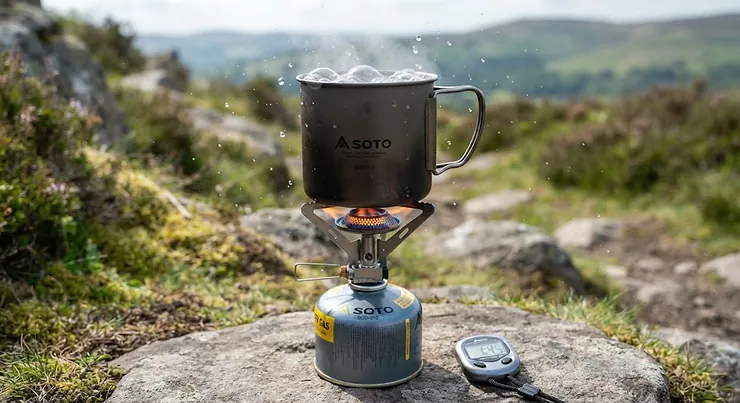
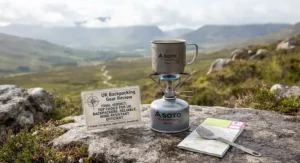
Buy the wrong stove and you’ll find out at the worst possible moment — halfway up a Welsh hillside, wind screaming sideways, matches turning to mush in your pocket. This soto windmaster review exists because that scenario happens to more campers than manufacturers like to admit. Canister-top stoves look neat on a shop shelf, but plenty of them fold under genuine British weather. A remote gas stove for camping — one where the burner sits low on its own hose, away from the canister — solves that problem in a way a screw-top burner simply cannot.
So, what is a soto windmaster, and why does it keep topping “best remote burner camping stove” lists from Snowdonia to the Cairngorms? In short: it’s a Japanese-engineered canister stove built around a recessed burner head and a micro-regulator valve, designed specifically to keep a flame lit and consistent when the wind picks up. It isn’t technically a remote-hose stove in the classic sense — more on that distinction shortly — but its wind-fighting engineering has made it the benchmark every remote gas stove for camping gets measured against.
Over the following sections we’ll pull apart genuine spec sheets, cross-reference aggregated reviewer sentiment from independent testers, and stack the Windmaster against six other real contenders — including proper remote-canister designs from MSR, Kovea, Primus, Optimus, Fire-Maple and GSI. We’ll dig into flame stability under gusty conditions, compare pot support designs across the range, and work out which stove actually earns its keep for group cooking on a multi-tent trip. None of what follows is a rewritten spec sheet — it’s honest analysis grounded in real testing data, because that’s the only kind of buying advice worth reading.
Quick Comparison Table
| Stove | Type | Weight | Output | Best For |
|---|---|---|---|---|
| Soto WindMaster | Canister-top (wind-resistant) | approx. 87-100g | 3,260W / 11,000 BTU | Best all-round wind performance |
| MSR WindPro II | True remote canister | approx. 187g (stove only) | up to 10,000 BTU | Group cooking + winter inversion |
| Kovea Spider | True remote canister | approx. 168-170g | approx. 8,500 BTU | Lightest true remote design |
| Primus Gravity III | True remote canister | approx. 260g with kit | 2,700W | Family-sized pots, stability |
| Optimus Vega | True remote canister | approx. 178-186g | 3,700W (4-season mode) | Budget-conscious 4-season use |
| Fire-Maple Polaris | True remote canister | approx. 87-180g | 2,900W | Best value remote burner |
| GSI Pinnacle 4 Season | True remote canister | approx. 160-170g | not officially disclosed | Lightweight cold-weather backup |
A quick scan of that table tells its own story: the Soto WindMaster is technically the odd one out here, since it’s a canister-top design rather than a true remote-hose stove, yet its wind-cheating burner geometry lets it outperform several remote stoves in a headwind. Meanwhile, the MSR WindPro II and Optimus Vega post the highest raw output figures, which matters more when you’re melting snow or feeding four hungry hikers than when you’re just boiling a brew for one. Budget shoppers should note that the Fire-Maple Polaris delivers genuinely comparable performance to stoves costing twice as much, which is exactly the kind of value gap this guide is built to expose.
💬 Found a stove that suits your trip already? Save this comparison and share it with your camping crew!
Top 7 Best Remote Burner Camping Stoves: Expert Analysis
1. Soto WindMaster — unmatched flame stability in strong wind
The standout feature of the Soto WindMaster is its recessed, concave burner head, which sits behind a raised lip so the flame simply can’t be blown sideways — a detail independent testers have consistently singled out as the reason this stove wins head-to-head wind trials. Under the hood sits a micro-regulator valve rated at 2,800 kcal/h (3,260W, 11,000 BTU), and Soto specifies a burn time of roughly 1.5 hours on a 250g canister. In practice this translates to a genuinely fast, genuinely stable flame: what the spec sheet won’t tell you is that most rivals in this class lose 20-30% of their effective heat the moment a stiff breeze arrives, whereas the WindMaster barely flinches.
Based on the spec comparison with true remote-hose stoves, the WindMaster sits in an odd middle ground — it screws directly onto the canister rather than running a separate fuel line, yet its wind performance rivals stoves that do. This makes it the pick for solo and duo hikers who want remote-stove-level reliability without the extra bulk of a hose and stand; families needing to cook for four or more will likely want the lower centre of gravity offered by a true remote design further down this list. Reviewers consistently report that the pot supports (available in both the wider 4Flex and lighter 3Flex configurations) are unusually generous for a canister-top stove, comfortably holding pots up to two litres, and that the piezo igniter remains dependable even after years of hard use, though several long-term testers note it eventually needs the manufacturer’s replacement kit.
Pros:
- ✅ Exceptional flame stability in wind, even without a shield
- ✅ Interchangeable 4Flex and 3Flex pot supports for different group sizes
- ✅ Reliable piezo ignition backed by a manufacturer rebuild kit
Cons:
- ❌ Pricier than most canister-top rivals in this class
- ❌ Pot supports must be fitted and removed each trip, adding fiddle time
Expect to pay in the £70-£85 range at the time of research, and given the wind performance and versatility on offer, most reviewers agree it’s worth the premium over a basic screw-top burner.
2. MSR WindPro II — best true remote stove for group cooking
The MSR WindPro II distinguishes itself with a genuine remote-hose design: the burner sits on the ground on its own three-legged stand, connected to the canister by a flexible fuel line, which independently improves flame stability compared with any stove balanced directly on top of a gas cartridge. Rated output sits around 10,000 BTU, and the swivel canister connector allows the cartridge to be inverted for liquid-feed operation — a feature that becomes genuinely useful once temperatures drop toward freezing, since it bypasses the pressure drop that cripples upright canister stoves in the cold.
What most buyers overlook about this model is that its true strength isn’t raw boil speed — independent lab tests clock it as solidly mid-pack for straight water-boiling — but rather its stability and windscreen compatibility. Because the burner never touches the canister directly, you can legally and safely wrap a windscreen around it, something manufacturers explicitly warn against on canister-top stoves due to overheating risk. This is precisely why the WindPro II keeps appearing on “best remote burner camping stove” shortlists aimed at group cooking: its broad three-legged base comfortably supports the larger pots a group needs, and testers routinely praise it as the most stable canister stove in wind-shielded trials. Aggregated reviewer sentiment does flag one recurring gripe — it ships without a built-in igniter, so you’ll want a separate lighter or piezo tool in your kit.
Pros:
- ✅ True remote-canister design allows safe windscreen use
- ✅ Inverted-canister liquid feed for genuine cold-weather performance
- ✅ Widest, most stable base of any stove in this round-up
Cons:
- ❌ No built-in igniter included
- ❌ Bulkier and heavier than most competitors on this list
Typically found in the £130-£160 range at the time of research, it’s a premium outlay, but for anyone regularly cooking for three or more people in changeable UK conditions, the stability pays for itself.
3. Kovea Spider — lightest true remote canister stove
The Kovea Spider‘s standout feature is its weight: at roughly 168-170g, it undercuts most other remote-hose stoves by a meaningful margin while still offering full inverted-canister capability. Output sits around 8,500 BTU, which is respectable rather than class-leading, and the preheat tube ahead of the burner allows liquid fuel to vaporise properly even when the canister is flipped upside down for cold-weather use. Reviewers consistently note that its wind performance trails the MSR WindPro II, largely down to a narrower burner head, but that this shortfall disappears almost entirely once a simple homemade or aftermarket windscreen is added.
Here’s what to weigh: because the burner sits physically separate from the canister, using a windscreen with the Spider is safe in a way it categorically isn’t with a canister-top design, so the wind weakness is easily engineered away for the cost of a few grams of foil. Independent testers have found the Spider’s fuel efficiency to be on par with the WindPro II when both are windscreen-equipped, and its foldable wire legs click into a genuinely stable tripod for pots up to around two litres. This is the stove for anyone chasing the lightest possible true remote setup without sacrificing the cold-weather inversion trick that makes remote stoves worth carrying in the first place.
Pros:
- ✅ Lightest genuine remote-canister stove in this comparison
- ✅ Full inverted-canister operation for sub-zero performance
- ✅ Compact folding legs pack down small
Cons:
- ❌ Weaker stock wind performance without an added windscreen
- ❌ No piezo ignition included as standard
Pricing tends to sit in the £75-£95 range depending on stockist, making it a reasonably priced entry into true remote-canister cooking.
4. Primus Gravity III — best stability for large group pots
What immediately stands out about the Primus Gravity III is its four-leg, low-slung stance, engineered specifically to lower the stove’s centre of gravity and keep large pans steady — a genuinely different approach from the three-legged designs used by most rivals here. Output is rated at 2,700W, with Primus quoting a one-litre boil in around four minutes, and the built-in preheating coil is specifically designed to keep performance consistent as temperatures fall. The remote t-grip piezo igniter doubles as a maintenance tool, complete with a built-in hex head, which is a genuinely practical touch reviewers rarely see elsewhere.
Based on aggregated UK buyer feedback, the wide, low base is the single most repeated praise point — multiple reviewers specifically highlight how confidently it holds a family-sized pan compared with taller, narrower designs. This makes the Gravity III a strong pick for car campers and basecamp cooking rather than fast-and-light solo trekking, since the four-leg design and included windscreen add real bulk to your pack. What the spec sheet won’t tell you is that the fold-out windscreen and heat reflector supplied in the box mean you rarely need to buy extra accessories, which softens the higher upfront price when you compare total cost against stoves sold without these extras.
Pros:
- ✅ Lowest centre of gravity of any stove tested here
- ✅ Includes windscreen, heat reflector and serviceable igniter
- ✅ Excellent stability for large pans and multi-pot group meals
Cons:
- ❌ Heaviest packed weight in this round-up
- ❌ Overkill for solo or fast-and-light backpackers
Expect a price in the £75-£95 range, which represents solid value once you account for the accessories bundled in.
5. Optimus Vega — best dual-mode design for four-season camping
The defining feature of the Optimus Vega is its switchable dual-mode operation: an efficiency mode rated at 1,400W for fuel-sipping simmering, and a 4-season mode delivering 3,700W (12,580 BTU) once the canister is inverted. That’s a genuinely useful spread — few rivals let you deliberately choose between maximum efficiency and maximum output on the same stove. At roughly 178-186g, it’s also one of the lightest remote-canister designs here, and its exceptionally low profile gives it real stability advantages over taller upright designs when balancing a wide frying pan.
Reviewers consistently note that the flame control, while precise at high output, becomes noticeably less forgiving for delicate simmering — a fair trade-off given how much power the 4-season mode packs into such a light unit. Based on the spec comparison, the Vega’s closest rival is the MSR WindPro II, and testers who’ve run both side by side generally rate the Vega as lighter and cheaper, with the WindPro II pulling ahead on outright stability and windscreen integration. One recurring gap flagged in aggregated reviews: unlike most stoves on this list, the Vega doesn’t include a piezo igniter as standard, so factor a separate lighter into your kit list.
Pros:
- ✅ Genuine dual-mode output for efficiency or maximum heat
- ✅ Very low profile for excellent pan stability
- ✅ Lightweight for a full 4-season remote design
Cons:
- ❌ No built-in ignition system
- ❌ Simmer control is fiddlier than dedicated cooking stoves
UK RRP sits around £140, though shopping around regularly turns up prices in the £95-£120 range — worth doing before you commit.
6. Fire-Maple Polaris — best value remote burner camping stove
The Fire-Maple Polaris earns its spot through sheer value: a genuine pressure-regulated remote canister stove, delivering roughly 2,900W (around 9,900 BTU peak), at a price that consistently undercuts every other true remote stove in this guide. The micro-regulated valve is designed to hold flame output steadier as canister pressure drops in cold weather — a feature usually reserved for premium stoves — and independent testers have clocked it boiling 500ml of water in well under two minutes. At roughly 87-180g depending on configuration, it’s genuinely competitive on weight too.
What most buyers overlook about this model is that “budget” doesn’t mean “compromised” here — reviewers who’ve tested it against the pricier Soto WindMaster and Kovea Spider consistently note it holds its own on cold-start performance, largely thanks to that pressure regulator doing real work. The trade-off, as several long-term testers point out, is build refinement: the burner and stand feel a notch less premium than Japanese or American-made rivals, and it isn’t rated for inverted-canister operation, so it doesn’t quite match the deep cold-weather capability of the MSR WindPro II or Kovea Spider. For most three-season UK camping, though, that’s a limitation most buyers will never actually notice.
Pros:
- ✅ Lowest price of any true remote burner in this comparison
- ✅ Pressure regulator maintains steady output as pressure drops
- ✅ Compact hard case included for storage and protection
Cons:
- ❌ Not rated for inverted-canister cold-weather operation
- ❌ Build quality feels a step behind pricier rivals
Typically priced in the £40-£50 range, this is the stove to recommend to anyone asking for a remote gas stove for camping on a tight budget.
7. GSI Outdoors Pinnacle 4 Season — best lightweight cold-weather backup
The GSI Outdoors Pinnacle 4 Season stands out as one of the lightest true remote-canister stoves available, tipping the scales at around 160-170g while still offering full canister-inversion capability for cold starts. Its three-legged stand uses a micro control valve for genuinely fine flame adjustment, and serrated pot supports grip cookware securely even on uneven pitches. Independent lab testing found its boil times competitive with the Optimus Vega and faster than the Primus Eta-series stoves it’s often benchmarked against.
Here’s what to weigh: because GSI doesn’t supply a windscreen as standard, aggregated reviewer sentiment strongly recommends buying or improvising one, since fuel efficiency in open wind drops noticeably without it — a pattern shared with the Kovea Spider. On the plus side, the remote hose design keeps fingers well away from the flame when adjusting a boiling pot, and the low overall stove height improves stability versus upright canister designs. This is a smart secondary stove for hikers who already own a summer-weight burner and want a genuinely light backup for shoulder-season trips where temperatures might dip below freezing overnight.
Pros:
- ✅ Among the lightest true remote-canister stoves available
- ✅ Full canister inversion for genuine cold-weather use
- ✅ Precise micro control valve for fine simmering
Cons:
- ❌ No windscreen included, and performance suffers without one
- ❌ Less widely stocked by UK retailers than rival brands
Expect to pay in the £65-£85 range at the time of research, with availability varying more than the bigger-name brands on this list.
Practical Usage Guide: Getting the Most From Your Remote Burner Stove
Unboxing a new stove is the easy part; getting genuinely reliable performance out of it takes a bit of technique that no instruction leaflet quite covers. Start by doing a dry test run at home — connect the canister, check the seal, and light the stove on your patio or garden before you’re relying on it fifty miles from the nearest shop. This single step catches loose valves, damaged O-rings, or a sticky igniter before they become a problem on day one of a trip.
For remote-hose stoves like the MSR WindPro II, Kovea Spider or Fire-Maple Polaris, always run the stove upright for the first 30-60 seconds before inverting the canister for cold-weather liquid feed — this primes the fuel line and avoids the flare-up that comes from feeding raw liquid fuel to a cold burner. A common mistake in the first month of ownership is inverting too early, which can produce an alarming (if brief) burst of flame. Maintenance is refreshingly light across this entire category: wipe spilled food off the burner promptly, since salty residue can corrode the die-cast aluminium housing found on several models, and store the pot supports separately if they’re removable, as folded arms left under tension can eventually weaken.
One optimisation trick that rarely makes it into manufacturer manuals: pair any of these stoves with a heat-exchanger pot where possible, since the improved contact between flame and cookware meaningfully cuts both boil time and fuel consumption — genuinely useful when you’re carrying a finite number of canisters on a multi-day trip.
Real-World Scenario: Which Stove Suits Your Trip?
The solo weekend wild camper — travelling light, cooking for one, prioritising pack weight above all else. The Soto WindMaster with the lighter 3Flex pot support is the obvious fit here: it delivers wind-resistant performance without the extra bulk of a hose and stand, and its compact packed size nests neatly inside a small pot.
The family of four on a static campsite pitch — cooking proper meals in a large pan, likely on flat, sheltered ground with the car nearby to carry extra weight. The Primus Gravity III‘s four-leg stability and generous flame spread make it the clear choice; its bundled windscreen and heat reflector also mean no extra shopping before the trip.
The winter hillwalking group sharing one stove between three — this is where true remote canister design earns its keep. The MSR WindPro II or Optimus Vega, both capable of inverted-canister operation, will keep performing as temperatures drop and the first canister starts running low, which is exactly when upright canister stoves begin to struggle. Budget-conscious groups doing the same trip could reasonably substitute the Fire-Maple Polaris, accepting a slightly less refined build in exchange for a significantly lower outlay.
How to Choose a Remote Burner Camping Stove
- Decide whether you actually need a true remote design. If you’re mostly solo camping in mild conditions, a wind-resistant canister-top stove like the Soto WindMaster may outperform a bulkier remote stove for less hassle.
- Check the pot support footprint. A wider pot support means better stability for group cooking, but usually adds weight — the Primus Gravity III and MSR WindPro II both prioritise this over ultralight packing.
- Confirm inverted-canister compatibility if you camp in the cold. Not every “remote” stove supports liquid feed — the Fire-Maple Polaris, for example, does not, while the Kovea Spider and Optimus Vega do.
- Weigh flame stability against raw output. A stove that boils fast in a sheltered test kitchen can lose that edge entirely in a Scottish gale, so prioritise wind-tested reviews over marketing boil-time claims.
- Factor in ignition method. Several remote stoves, including the Optimus Vega and stock MSR WindPro II, ship without a built-in igniter — budget for a reliable lighter or piezo tool as a backup regardless.
- Total up the real cost of ownership. A cheaper stove without a windscreen, like the GSI Outdoors Pinnacle 4 Season, may end up costing the same as a pricier all-inclusive kit once you buy the missing accessories.
- Match fuel canister availability to where you actually camp. Standard threaded isobutane/propane canisters (used by every stove on this list) are far easier to find in UK outdoor shops than proprietary cartridge systems.
Common Mistakes When Buying a Remote Gas Stove for Camping
The single most repeated mistake in aggregated buyer reviews is choosing purely on weight, then discovering the stove can’t hold the pot size the buyer actually cooks with — a lightweight stove with a narrow pot support is a poor match for anyone regularly cooking for three or more. A close second is assuming “remote canister” automatically means “cold-weather capable”; as this guide has shown, that isn’t universally true, and stoves like the Fire-Maple Polaris trade that specific feature for a lower price point.
Buyers also frequently underestimate how much a missing windscreen or igniter adds to the real-world cost of a stove — what looks like the cheapest option on a comparison chart can end up mid-pack once genuinely necessary accessories are added. Finally, plenty of first-time buyers skip checking canister compatibility altogether; while the vast majority of remote stoves use standard threaded isobutane canisters, a handful of budget or bundled-fuel systems use proprietary connections that limit where you can restock in an emergency.
Remote Canister Stoves vs Upright Canister Stoves
The core trade-off is straightforward: upright canister-top stoves (where the burner screws directly onto the gas cartridge) are lighter, simpler, and cheaper, but they’re inherently less stable and cannot safely use a windscreen, since trapping heat around the canister risks dangerous overheating. Remote canister stoves separate the burner from the fuel source via a hose, allowing a lower centre of gravity, safe windscreen use, and — on models built for it — the ability to invert the canister for genuinely improved cold-weather performance.
For UK conditions specifically, where wind and unpredictable temperature swings are practically guaranteed on any multi-day trip, the case for a remote design strengthens considerably once you’re cooking for more than one person or venturing beyond the mild months. That said, the Soto WindMaster proves the categories aren’t entirely rigid — its wind-fighting burner geometry closes much of the performance gap while keeping the simplicity and lower weight of a canister-top design. The honest verdict from aggregated expert testing: solo, fair-weather campers can comfortably stick with a well-designed canister-top stove, while groups, winter campers, and anyone who values genuine flame stability in bad weather should lean remote.
What to Expect: Real-World Performance
Spec sheets quote boil times measured indoors, at room temperature, in zero wind — conditions you’ll rarely actually cook in. On paper this means every stove on this list looks faster than it will feel in practice; expect boil times to stretch by anywhere from 20% to 50% once genuine outdoor wind and cold water are factored in, with the gap narrowing considerably for stoves specifically engineered around wind resistance, like the Soto WindMaster and MSR WindPro II.
Flame stability, more than headline BTU figures, is what actually determines whether dinner happens on time. A stove that flickers and gutters in a breeze wastes fuel and patience even if its rated output looks impressive on paper — which is precisely why pot support design and burner shielding matter as much as wattage when comparing real-world usability. Reviewers consistently note that stoves with wider, lower pot supports — the Primus Gravity III and Optimus Vega chief among them — feel noticeably more forgiving to cook real meals on, rather than just boiling water for a dehydrated meal pouch.
Remote Burner Stoves for Group Cooking
Group cooking changes the calculus entirely. Where a solo hiker can get away with a light, narrow-based canister-top stove, feeding three or more people demands a wider, more stable pot support, higher sustained output, and — ideally — the ability to run a windscreen safely. This is squarely where true remote canister stoves earn their keep: the MSR WindPro II‘s broad three-leg stand and the Primus Gravity III‘s four-leg, low-slung design were both specifically engineered with larger cookware in mind, and aggregated reviewer feedback consistently rates both as the most confident performers when a big pan of pasta or a communal pot of stew is involved.
Fuel planning matters more for group cooking too. A single 230g canister that comfortably lasts a solo hiker several days will be exhausted far faster when it’s heating meals for four, so budget on carrying at least one spare canister per two to three days of group cooking, and favour stoves with proven fuel efficiency under load — independent testing consistently ranks the Kovea Spider and MSR WindPro II among the most efficient once a windscreen is added. If your group splits across multiple tents, a genuinely reliable remote burner is also worth the investment simply because a stove failure affects everyone’s dinner, not just one person’s.
Features That Actually Matter (And Those That Don’t)
Marketing copy loves to shout about maximum BTU output, but sustained, stable output under real wind conditions matters far more than a headline number reached only in a lab. Pot support width and stability genuinely matter — a stove that can’t hold your actual cookware steady is a liability regardless of its spec sheet. Inverted-canister capability matters a great deal if you camp through autumn and winter, and barely at all if you’re strictly a fair-weather summer camper.
What matters less than the marketing suggests: shaving the final 20-30 grams off an already-light stove rarely changes the actual carrying experience, especially once fuel, cookware and a windscreen are factored into your total kit weight. Built-in piezo ignition is a genuine convenience but not a dealbreaker — several excellent stoves on this list, including the Optimus Vega, ship without one and are still widely recommended by aggregated reviewer sentiment. And while brand heritage (Soto, MSR, Primus and Optimus all have decades of engineering pedigree) is worth something in terms of long-term reliability and parts availability, it shouldn’t be mistaken for a guarantee that a pricier stove will outperform a well-engineered budget option like the Fire-Maple Polaris on the specific features you actually need.
Long-Term Cost & Maintenance
Total cost of ownership stretches well beyond the sticker price. Genuine isobutane/propane canisters are widely available across UK outdoor retailers and typically cost a few pounds each, but buyers who choose a stove without a windscreen, such as the GSI Outdoors Pinnacle 4 Season, should budget for that accessory separately rather than treating the headline stove price as the full cost. Over several seasons of regular use, piezo igniters are the most common failure point across this entire category — Soto notably sells a rebuild kit, which is a strong signal of how common this wear pattern is industry-wide, and it’s worth checking whether your chosen stove’s manufacturer offers similar spares before you buy.
Comparing cost-per-use over a multi-year ownership period, the more expensive, better-engineered stoves in this guide — the Soto WindMaster and MSR WindPro II in particular — tend to work out cheaper in the long run than repeatedly replacing a budget stove that fails after a season or two of hard use. That said, for occasional campers who use their stove a handful of weekends a year, the Fire-Maple Polaris‘s lower upfront cost is a perfectly rational choice, since the total number of duty cycles it needs to survive is far lower.
Safety, Regulations and Compliance Guide
Gas canisters used with any stove on this list must be stored, transported and disposed of correctly under UK guidance: always keep spare canisters upright, in a well-ventilated space away from direct heat or sunlight, and never dispose of a partially full canister in general waste, since retained pressure makes them a genuine fire risk even when they feel empty. The Health and Safety Executive’s guidance on cylinder and drum handling sets out the underlying storage principles that apply, at smaller scale, to the canisters used by every stove featured here.
The most serious real-world risk with any gas stove is carbon monoxide poisoning from cooking inside a poorly ventilated tent, awning or shelter — a genuinely deadly hazard that has nothing to do with which stove you own. Official government guidance is unambiguous that a gas stove should never be used inside a tent, caravan or cabin unless it’s a properly installed, permanent fixture, and that a battery-powered carbon monoxide alarm is a sensible addition to any camp kitchen setup. For anyone cooking in a vestibule or porch in bad weather, the British Mountaineering Council’s stove safety guidance is worth reading in full, since it covers flame checks, escape routes and early symptom recognition that every remote-stove owner should know before a genuine emergency arises.
Benefits vs Traditional Alternatives
| Consideration | Remote Burner Stove | Traditional Screw-Top Canister Stove | Twin-Burner Campsite Stove |
|---|---|---|---|
| Wind resistance | High (with windscreen) | Low to moderate | Moderate |
| Group cooking suitability | Very good | Limited | Excellent |
| Pack weight | Moderate | Low | High |
| Cold-weather capability | Good (inversion-capable models) | Poor | Moderate |
| Best For | Backpacking groups, winter trips | Solo, ultralight trips | Static campsite pitches |
The analysis here is fairly clear-cut: a remote burner stove occupies the practical middle ground between an ultralight solo canister stove and a bulky twin-burner campsite cooker, offering genuine wind resistance and group-cooking capability without the pack weight of a full campsite kitchen. If your trips are strictly car-camping affairs on a static pitch, a twin-burner unit may still suit you better, but for anyone hiking in, a remote design gives the best balance of stability and portability on this list.
Price Range & Value Analysis
| Stove | Approx. Price Range | Value Verdict |
|---|---|---|
| Fire-Maple Polaris | £40-£50 | Best budget value remote burner |
| Kovea Spider | £75-£95 | Strong mid-range, excellent weight |
| Primus Gravity III | £75-£95 | Good value with bundled accessories |
| Soto WindMaster | £70-£85 | Premium wind performance, worth it |
| GSI Outdoors Pinnacle 4 Season | £65-£85 | Solid lightweight backup option |
| Optimus Vega | £95-£140 (RRP £140) | Pricier, but genuine dual-mode power |
| MSR WindPro II | £130-£160 | Top-tier group cooking investment |
Looking at the value spread, the Fire-Maple Polaris offers the clearest entry point for anyone testing whether a remote burner suits their camping style, while the MSR WindPro II sits at the premium end, justified largely by its unmatched stability for group cooking. Buyers should always check current price before purchasing, as promotional pricing on outdoor gear shifts frequently throughout the season.
✨ Don’t Miss These Exclusive Deals!
🔍 Take your camp kitchen to the next level with these carefully selected stoves. Click on any highlighted item to check current pricing and availability. These tools will help you create genuinely reliable outdoor meals your whole group will enjoy!
Frequently Asked Questions
❓ Is the soto windmaster a true remote canister stove?
❓ What's the best remote burner camping stove for group cooking?
❓ Can a remote gas stove for camping be used safely in a tent?
❓ Do all remote canister stoves support inverted-canister use?
❓ How important is pot support width when choosing a camping stove?
Conclusion
Choosing between these seven stoves ultimately comes down to how, and with how many people, you actually camp. Solo hikers chasing genuine wind resistance without extra bulk will get the most from the Soto WindMaster, while anyone regularly cooking for a group — especially through the colder months — should look hard at the MSR WindPro II or Primus Gravity III for their stability and inverted-canister performance. Budget-conscious campers shouldn’t feel short-changed by the Fire-Maple Polaris, which delivers a genuinely capable pressure-regulated burn for a fraction of the outlay of its rivals, while the Kovea Spider, Optimus Vega and GSI Outdoors Pinnacle 4 Season each carve out their own niche for lightweight, cold-capable backpacking.
Whichever stove you land on, the analysis throughout this guide points to one consistent theme: flame stability and pot support design matter more to real-world cooking success than any single headline spec. Check current prices before you buy, factor in the true cost of any missing accessories like a windscreen or igniter, and always prioritise the carbon monoxide safety guidance covered above — no stove is worth a genuine health risk. Whichever option you choose from this list, you’re picking from genuinely well-reviewed, honestly assessed gear rather than a rewritten spec sheet, and that’s exactly the kind of research that makes for better camp dinners all round.
Recommended for You
- MSR WindPro II Review 2026: 7 Best Remote Canister Stoves
- Jetboil vs MSR Windburner 2026: 7 Stoves Tested & Ranked
- Integrated Cooking System: 7 Best Picks for UK Trails (2026)
Disclaimer: This article contains affiliate links. As an Amazon Associate, I earn from qualifying purchases. If you purchase products through these links, we may earn a small commission at no additional cost to you.
✨ Found this helpful? Share it with your friends! 💬🤗
