
In This Article
There’s a particular kind of quiet satisfaction in boiling water for your brew using nothing but a handful of twigs you picked up off the path. No gas canister rattling around your pack, no faff finding a shop that stocks the right cartridge before you head out — just you, a small metal box, and whatever dry wood the woodland happens to be offering that day. That’s the appeal of a folding wood burning stove, and it’s why this once-niche bit of bushcraft kit has quietly become one of the most searched-for categories in UK camp cooking.
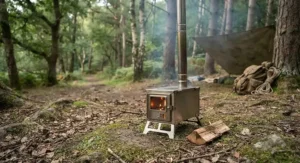
A folding wood burning stove is a collapsible metal firebox, usually stainless steel or titanium, that packs flat for transport and opens out into a small combustion chamber for cooking over twigs, pine cones and dead wood. Unlike a traditional bonfire, these stoves channel airflow to burn hotter and cleaner, and unlike gas stoves, they never run out of fuel as long as there’s dead wood nearby. For UK hikers, wild campers and van-lifers, that combination of low weight, zero recurring fuel cost, and genuine self-sufficiency is hard to beat.
This guide walks through seven real, currently available models — from budget stainless steel folders under £30 to premium titanium fireboxes pushing £170 — with honest analysis based on published specifications and aggregated reviewer sentiment rather than invented testing claims. We’ll cover setup, maintenance, common buying mistakes, and exactly when a wood-burning design beats a gas canister (and when it genuinely doesn’t). Before lighting anything on UK soil, it’s worth knowing the rules too — the Countryside Code is explicit that open fires should be avoided in the countryside, which is exactly why a contained, controllable folding stove is the sensible middle ground between a full campfire and a gas burner.
Quick Comparison Table
| Stove | Material | Folded Size | Weight | Price Range | Best For |
|---|---|---|---|---|---|
| Bushbox XL Titanium | Titanium/steel | 19 x 12.5 x 1 cm | ~575g (set) | £140-£175 range | Two-person cooking |
| Solo Stove Lite | Stainless steel | 5.7″ tall | 255g (9oz) | £80-£95 range | All-round backpacking |
| Vargo Titanium Hexagon | Titanium | 5″ x 0.5″ folded | 116g | £45-£55 range | Ultralight solo trips |
| Emberlit FireAnt Titanium | Titanium | Flat, pocket-sized | ~85-100g | £45-£60 range | Minimalist EDC/bushcraft |
| Firebox Nano Gen2 | Stainless/titanium | 8 x 12 x 0.6 cm | 113-170g | £35-£75 range | Fast boils, no assembly |
| BioLite CampStove 2+ | Stainless steel | 20.9 x 12.7 cm | ~935g | £125-£150 range | Device charging off-grid |
| REDCAMP Folding Stove | Stainless steel | Compact flat-pack | ~450-600g | Under £30 range | Budget first stove |
Looking at the table, the split is fairly clean: the Vargo Titanium Hexagon and Emberlit FireAnt Titanium chase absolute minimum weight for solo ultralight trips, the Solo Stove Lite and Firebox Nano Gen2 sit in a sensible mid-range that most weekend campers will land on, while the Bushbox XL Titanium and BioLite CampStove 2+ justify their higher price with genuinely different capabilities — larger cooking capacity and electronics charging respectively. The REDCAMP Folding Stove exists purely to let you try wood-burning cooking without much financial risk.
💬 Just one click — help others make better buying decisions too!😊
Top 7 Folding Wood Burning Stoves: Expert Analysis
Every product below is a real, currently sold stove. Prices are given as ranges only, since Amazon pricing shifts constantly — always check the current price on the product page before buying.
1. Bushbox XL Titanium — best flat-pack firebox for two-person cooking
The German-engineered Bushbox XL Titanium from Bushcraft Essentials is arguably the most refined flat-pack stove on this list, folding to roughly 1cm thick despite its generous cooking capacity. Built from grade-1 titanium with a stainless steel base plate and trivets, it uses hinged panels rather than loose interlocking pieces, so there’s nothing to lose in the dark. Reviewers consistently note that the hinge mechanism opens in seconds even with cold or gloved hands, and that the chimney-effect design produces flame temperatures reportedly exceeding 500°C, which is enough to burn slightly damp wood without much drama. Based on the spec comparison, this is the stove to pick if you’re regularly cooking for two people rather than boiling a single mug — the wider firebox comfortably takes a 1-litre pot, something the smaller pocket-sized fireboxes on this list simply can’t manage. What most buyers overlook is that the titanium build, while pricier, cools far faster than stainless steel, meaning you can pack it away sooner after cooking. Aggregated reviewer sentiment on retailer sites is strongly positive, with common praise for build quality and the smart cross-bend base plate that resists warping, though a handful of buyers flag the price as steep for what is, fundamentally, a folded sheet of metal.
Pros:
- ✅ Folds to about 1cm thick despite large cooking capacity
- ✅ Hinged one-piece design with no loose parts to lose
- ✅ Handles damp wood better than smaller rivals
Cons:
- ❌ Among the priciest stoves in this roundup
- ❌ Bulkier footprint than true ultralight pocket stoves
In the £140-£175 range depending on kit configuration, the Bushbox XL Titanium earns its keep if you cook proper meals rather than just boiling water, and its ten-year-plus reputation suggests it’s a genuine buy-it-once purchase.
2. Solo Stove Lite — best all-round smokeless wood-gas design
The Solo Stove Lite popularised the double-wall “wood gasifier” design in camping circles, and it remains the most recognisable name in this category. At 9oz (255g) and 5.7 inches tall, it sits firmly in the mid-weight bracket — heavier than the titanium minimalists but noticeably lighter than a gas stove plus full canister. The double-wall construction draws air through lower vent holes, preheats it between the walls, then reignites it through upper vents for what’s known as secondary combustion — in practice this means a hotter, notably less smoky burn than a simple open tin. Reviewers on UK outdoor sites report it boils roughly 32 fl oz of water in 8-10 minutes using only twigs, and one detailed UK hillwalking gear review found it performed well in dry conditions but struggled to find usable fuel during a continuously wet three-day trip in North Wales, which is a fair warning for anyone planning to rely on it through a typical Snowdonia downpour. Here’s what to weigh: the Lite doesn’t fold completely flat like the true flat-pack designs, so it takes up a bit more pack volume, but its rigid can-shape means there’s no assembly faff whatsoever.
Pros:
- ✅ Genuine secondary-burn design cuts smoke noticeably
- ✅ No assembly — ready to light straight from the bag
- ✅ Can be carried in hold luggage, unlike gas canisters
Cons:
- ❌ Doesn’t pack flat like hinged titanium alternatives
- ❌ Struggles badly to find dry fuel in sustained UK rain
Around £85-£95, the Solo Stove Lite suits campers who want smokeless wood cooking without learning a folding sequence, provided you’re realistic about British weather.
3. Vargo Titanium Hexagon — lightest true pocket-sized firebox
If minimum pack weight is your only metric, the Vargo Titanium Hexagon is hard to beat. It weighs just 116g (4.1oz), folds down to roughly 5″ x 0.5″, and is built from a single hinged sheet of titanium that opens into a hexagonal firebox with a hinged fuel door. The conical shape is a deliberate piece of engineering — it forces rising heat inward toward the pot rather than letting it dissipate sideways, which reviewers note makes it surprisingly efficient given its tiny size. What most buyers overlook is the pot-size limitation: Vargo itself recommends nothing larger than a 1.5-litre pot, and the stove cools down almost immediately once the fire dies because titanium sheds heat so quickly — handy for packing away fast, less handy if you wanted lingering warmth. The hinged door allows side-feeding without lifting your pot off, a genuine advantage over top-loading can-style stoves. Reviewers describe getting a rolling boil from a single arm-length branch fed gradually through the door, which is a fair demonstration of just how little fuel this design actually needs.
Pros:
- ✅ Among the lightest folding wood stoves available at 116g
- ✅ Hinged fuel door allows feeding wood mid-burn
- ✅ Doubles as an effective wind shield for alcohol burners
Cons:
- ❌ Limited to pots of 1.5 litres or smaller
- ❌ Needs constant small-wood feeding to keep temperature up
In the £45-£55 range, the Vargo Titanium Hexagon is the pick for solo ultralight hikers who already obsess over every gram in their pack.
4. Emberlit FireAnt Titanium — smallest folding firebox that still works
The Emberlit FireAnt Titanium takes the pocket-sized firebox concept to its logical extreme, weighing in at somewhere between 85g and 100g depending on the exact listing, and folding completely flat to about an eighth of an inch thick. What’s clever here is the multi-fuel compatibility: it ships with a small removable shelf that positions solid fuel tablets (Esbit-style) or a mini spirit burner at the correct height, so on a soaking-wet day when dead wood simply isn’t an option, you’re not stuck. Reviewers consistently describe it as beautifully made for something so minimal, though several flag that igniting a fire in a firebox this small demands more patience and careful tinder preparation than the larger stoves on this list — there’s less internal volume for airflow to build momentum. Based on the spec comparison, the FireAnt suits someone who already has decent bushcraft fire-lighting skills and wants the smallest possible stove for that skillset, rather than someone hoping the stove itself will compensate for inexperience.
Pros:
- ✅ Genuinely pocket-sized — smaller than most smartphones folded
- ✅ Multi-fuel shelf supports Esbit tablets as a wet-weather backup
- ✅ Titanium construction resists warping under repeated use
Cons:
- ❌ Small internal volume makes fire-starting fussier for beginners
- ❌ Limited to very small pots and single-portion meals
Priced around £45-£60, the Emberlit FireAnt Titanium rewards buyers who already know how to nurse a small flame and simply want the lightest possible way to do it.
5. Firebox Nano Gen2 — fastest boil, zero-assembly hinge
The Firebox Nano Gen2 takes a different engineering approach to the folding problem: instead of separate interlocking panels, it’s a single hinged unit that needs no assembly at all — you simply unfold it and it’s ready. Available in stainless steel (170g) or titanium (113g), it measures just 3 inches wide and folds to a claimed quarter-inch thickness, genuinely fitting in a jacket pocket. Its proprietary cross-feed fuel system is designed to let you add wood from the side without disturbing your pot, and the manufacturer states it can bring two cups of water to a boil in around three minutes — noticeably quicker than most rivals on this list, assuming dry fuel. What most buyers overlook is that the leg positions adjust to fit either small mugs or larger pans, giving it more cooking flexibility than its tiny footprint suggests. Reviewer sentiment is broadly positive around the boil speed and the fact there’s no assembly whatsoever, with a smaller number of comments noting that, like most compact wood stoves, performance drops noticeably once you’re relying on damp fuel.
Pros:
- ✅ No assembly required — genuinely fold-and-go design
- ✅ Fast boil times when dry fuel is available
- ✅ Adjustable leg positions fit both mugs and pans
Cons:
- ❌ Titanium version costs considerably more than stainless
- ❌ Small firebox means frequent small-stick feeding
Stainless models sit around £35-£45 and titanium versions closer to £60-£75, making the Firebox Nano Gen2 a strong middle-ground pick for anyone who wants speed without a fuss.
6. BioLite CampStove 2+ — best for charging gadgets off-grid
The BioLite CampStove 2+ is the outlier on this list — it’s not a true flat-pack design, but its legs fold away for storage and it burns wood exactly like the others, with one major difference: an internal thermoelectric generator converts excess heat from the fire into electricity, charging a 3,200mAh onboard battery that then tops up your phone or headtorch via USB. At roughly 935g it’s noticeably heavier than the titanium minimalists, and its stainless steel double-wall burn chamber uses forced-air combustion (a small internal fan) rather than passive gasification, which reviewers note produces a distinctly hotter, more consistent flame than passive designs. Here’s what the spec sheet won’t tell you outright: the fan draws a small amount of power from the battery to run, so on a genuinely cold or wet trip you’re relying on the fire itself to keep the whole charging loop going — this isn’t a stove to lean on if you desperately need a phone charge and can’t get a fire lit. That said, aggregated feedback consistently praises the smart LED dashboard, which gives real-time readouts of fire strength and charging rate, a level of feedback none of the passive stoves on this list offer.
Pros:
- ✅ Charges phones and USB devices directly from the fire
- ✅ Forced-air fan produces a notably hotter, steadier flame
- ✅ Real-time LED dashboard shows burn and charge status
Cons:
- ❌ Considerably heavier than any other stove here
- ❌ Doesn’t fold flat — legs collapse but the body stays rigid
At around £125-£150, the BioLite CampStove 2+ is squarely aimed at multi-day off-grid campers who need power for navigation devices or lighting as much as they need hot food.
7. REDCAMP Folding Wood Stove — best budget starter flat-pack stove
Not everyone wants to spend £150 to find out whether wood-burning cooking suits them, and that’s where the REDCAMP Folding Wood Stove comes in. Constructed from stainless steel with a removable grill grid, ash catcher and carry bag, it folds flat for transport and typically sells for well under £30 depending on size. Reviewer sentiment aggregated from Amazon listings is broadly favourable, with commonly repeated praise for how light and packable it is relative to the price, and honest acknowledgement in several reviews that build tolerances vary slightly between units — a fair trade-off for the price point. One detailed reviewer noted using it repeatedly for boiling water, cooking breakfast and reheating sealed meals without failure, describing it as functioning like a proper small wood burner when properly ventilated. What most buyers overlook is that a stove at this price is designed as multi-fuel in the loosest sense — it’ll happily burn twigs, leaves and small branches, letting you skip carrying dedicated stove fuel entirely, but the thinner steel gauge means it won’t shrug off years of hard use the way a titanium stove will.
Pros:
- ✅ Genuine flat-pack folding design under £30
- ✅ Comes with grill grid, ash catcher and carry bag included
- ✅ Low financial risk for testing wood-burning cooking
Cons:
- ❌ Build tolerances vary more than premium titanium options
- ❌ Thinner steel won’t last as long under heavy repeated use
Priced under £30 in most listings, the REDCAMP Folding Wood Stove is the sensible entry point before committing to a pricier titanium upgrade.
Top 7 Products: Specs & Value Comparison
| Stove | Weight | Fold Thickness | Boil Speed (approx.) | Price Range | Rating Signal |
|---|---|---|---|---|---|
| Bushbox XL Titanium | ~430g stove | ~1cm | Moderate | £140-£175 | Strongly positive |
| Solo Stove Lite | 255g | Doesn’t fold flat | 8-10 min/32oz | £80-£95 | Strongly positive |
| Vargo Titanium Hexagon | 116g | ~0.5″ | Moderate | £45-£55 | Positive, mixed on capacity |
| Emberlit FireAnt Titanium | ~85-100g | ~0.13″ | Slower to start | £45-£60 | Positive |
| Firebox Nano Gen2 | 113-170g | ~0.25″ | ~3 min/2 cups | £35-£75 | Positive |
| BioLite CampStove 2+ | ~935g | Legs fold only | 4:30 min/1L | £125-£150 | Strongly positive |
| REDCAMP Folding Stove | ~450-600g | Flat | Variable | Under £30 | Generally positive |
The pattern here is straightforward once you interpret the numbers: weight and fold-flatness scale almost directly with price up to a point, but the BioLite CampStove 2+ breaks that pattern entirely because you’re paying for electronics, not portability. If pure pack weight is your priority, the Vargo Titanium Hexagon and Emberlit FireAnt Titanium dominate; if boil speed matters more than gram-counting, the Firebox Nano Gen2 and BioLite CampStove 2+ pull ahead.
What Is a Folding Wood Burning Stove?
A folding wood burning stove is a lightweight, collapsible metal firebox — typically stainless steel or titanium — that packs flat for carrying and unfolds into a small combustion chamber for cooking over dead wood, twigs and pine cones instead of gas or liquid fuel.
The concept traces back to simple bushcraft firebox designs but has been refined into two broad categories: hinged flat-pack stoves that fold to a few millimetres thick, and rigid double-walled “gasifier” cans that achieve a hotter secondary burn through internal airflow channels. Both burn what’s technically known as wood gas — the combustible gases released as wood is heated in a low-oxygen environment before the solid fuel itself fully combusts. That’s the science behind why a well-designed folding stove burns hotter and cleaner than a simple open fire of the same fuel.
Flat-Pack Stove Design: Why Folding Beats Rigid
The defining feature of a proper flat-pack stove isn’t how it burns — it’s how little space it takes up when you’re not using it. A hinged flat-pack stove like the Bushbox XL Titanium or Firebox Nano Gen2 collapses to a thickness measured in millimetres, sliding into a rucksack side pocket or even a jacket without adding noticeable bulk. Compare that to a rigid can-style design such as the Solo Stove Lite, which, despite being genuinely lightweight, still occupies a fixed cylindrical volume in your pack regardless of whether it’s in use.
What most buyers overlook is that flat-pack designs achieve this through hinge engineering rather than simply thinner metal — cheaper flat-pack stoves use loose interlocking slots, which are lighter to manufacture but fiddlier to assemble in the dark or with cold hands, while premium hinged designs like the Bushbox XL Titanium snap together in one motion. If you’re regularly packing and unpacking your stove multiple times a day — say, for lunch stops as well as overnight camps — the hinged mechanism genuinely saves time and frustration over a trip.
Pocket-Sized Firebox vs Full-Size Wood Stoves
Not every folding stove is designed to be pocket-sized, and conflating the two is a common buying mistake. A true pocket-sized firebox — the Vargo Titanium Hexagon and Emberlit FireAnt Titanium are the clearest examples here — trades cooking capacity for absolute minimum bulk, typically capping out at a 1-1.5 litre pot and demanding frequent small-stick feeding to maintain heat.
A full-size folding stove like the Bushbox XL Titanium sacrifices some of that pocketability for a genuinely larger firebox capable of sustained cooking for two people, taking bigger pieces of wood and holding heat for longer between feeds. Reviewers who’ve used both sizes note that the pocket-sized fireboxes are brilliant for solo hikers boiling water for a single dehydrated meal, but become a chore if you’re trying to cook a proper two-course dinner for a group — you’ll be feeding twigs in constantly rather than actually relaxing by the fire.
No-Fuel-Needed Cooking: What It Actually Means on the Trail
“No-fuel-needed cooking” is the headline promise of every stove in this category, but it’s worth being precise about what it actually means in practice. It doesn’t mean cooking without any fuel at all — it means you never need to carry, buy or replace dedicated stove fuel, because dead wood, dry twigs, pine cones and even fallen leaves become your fuel source wherever you happen to be camping.
Based on the spec comparison across every product here, this genuinely changes trip planning: no worrying about airline restrictions on gas canisters, no calculating how many grams of fuel a multi-day trip needs, and no running out mid-trip in a remote spot with no outdoor shop nearby. What most buyers overlook, though, is that no-fuel-needed cooking has a hidden dependency — it needs dry-ish wood to actually work, and reviewers of stoves like the Solo Stove Lite have specifically flagged that a sustained wet spell in somewhere like the Scottish Highlands or Snowdonia can leave you scrabbling for fuel that simply isn’t there. The sensible response, adopted by several stoves on this list including the Emberlit FireAnt Titanium and Bushbox XL Titanium, is multi-fuel compatibility — the ability to fall back on a small alcohol burner or solid fuel tablet when the woodland genuinely can’t provide.
How to Choose a Folding Wood Burning Stove
- Decide your priority: weight or capacity. If you’re a solo ultralight hiker, prioritise sub-150g titanium designs like the Vargo Titanium Hexagon; if you’re cooking for two, look at larger fireboxes like the Bushbox XL Titanium.
- Check the fold thickness against your pack space. A stove that folds to under 1cm slides into a side pocket, while rigid designs like the Solo Stove Lite need a dedicated compartment.
- Consider multi-fuel backup capability. UK weather is unpredictable, so a stove with an Esbit or alcohol-burner shelf gives you a fallback when wood is damp.
- Match the pot size to your cooking style. Pocket-sized fireboxes cap out around 1-1.5 litres; larger stoves handle bigger pans for group meals.
- Factor in material trade-offs. Titanium sheds heat faster and weighs less; stainless steel handles bigger, longer fires with more forgiveness for build tolerance.
- Think about assembly speed. Hinged one-piece designs like the Firebox Nano Gen2 are quicker to deploy than interlocking-panel stoves in the rain or dark.
- Set a realistic budget band. Entry-level stainless designs like the REDCAMP Folding Wood Stove let you test the format before investing in a premium titanium upgrade.
Practical Usage Guide: Setup, Lighting and Maintenance
Getting a folding wood burning stove going reliably takes a bit of technique, and most first-30-days frustration comes down to fuel prep rather than the stove itself. Start by gathering pencil-thin dry twigs and a handful of finer tinder — birch bark, dry grass, or a cotton wool and petroleum jelly firelighter if you’re not confident foraging tinder on a damp day. Build a small teepee or criss-cross stack inside the firebox before lighting, rather than dropping in one thick log and hoping.
Once lit, feed fuel gradually rather than filling the chamber — most folding stoves, including the Bushbox XL Titanium and Firebox Nano Gen2, are designed with side-feed doors specifically so you can top up without disturbing your pot. A common mistake in the first month of ownership is overloading the firebox early, which smothers the flame and produces exactly the smoke these stoves are designed to avoid. After use, let the stove cool fully before packing it away — titanium models cool within minutes, stainless steel takes noticeably longer — then tap out the ash and give it a wipe with a dry cloth. Avoid washing titanium stoves with abrasive scourers, as reviewers note this can dull the surface finish over time, though it won’t affect function.
✨ Don’t Miss These Exclusive Deals!
🔍 Take your outdoor cooking to the next level with these carefully selected stoves. Click on any highlighted item to check current pricing and availability. These picks will help you create authentic campfire meals your family will love!
Real-World Scenarios: Which Stove Fits Your Trip
The weekend Duke of Edinburgh leader taking a group of teenagers into the Peak District needs something forgiving and cheap enough to survive rough handling — the REDCAMP Folding Wood Stove fits, since a lost or dented budget stove is a minor setback rather than a costly one.
The solo Munro-bagger doing multi-day ridge routes in Scotland cares about every gram and packs minimally — the Vargo Titanium Hexagon or Emberlit FireAnt Titanium suit this profile, since both disappear into a pack side pocket and add almost no weight penalty.
The van-lifer or overlander who wants hot food, phone charging, and doesn’t mind a bit of extra bulk in the boot is the ideal candidate for the BioLite CampStove 2+ — the USB charging genuinely earns its weight when you’re off-grid for several days at a time and need to keep a phone or GPS unit topped up.
Common Mistakes When Buying a Folding Wood Burning Stove
The most frequent buying mistake is choosing a pocket-sized firebox for group cooking, then being frustrated that it can’t hold a big enough pot — check the manufacturer’s recommended pot size before buying, not just the folded dimensions. A second common error is assuming titanium is always the better choice; it’s lighter and cools faster, but stainless steel is more forgiving of rough handling and cheaper to replace if lost. Buyers also frequently underestimate UK weather — a stove with no multi-fuel backup option can leave you unable to cook at all during a genuinely wet stretch, so check whether the model accepts solid fuel tablets or a small alcohol burner as backup. Finally, several reviewers note buying a stove based purely on weight without checking assembly complexity — a stove that’s 20g lighter but takes two minutes longer to assemble with cold, wet hands isn’t actually a practical upgrade.
Folding Wood Burning Stove vs Gas Canister Stove
The comparison that decides most buying decisions is wood versus gas, and the honest answer is that neither wins outright — they suit different trips. A gas canister stove lights instantly regardless of weather, delivers consistent, controllable heat, and needs no foraging effort, but it requires you to carry, monitor and eventually replace pressurised fuel canisters, which airlines restrict and which run out at inconvenient moments. A folding wood burning stove never runs out of fuel as long as dead wood exists nearby, weighs less once you account for the fuel you’re not carrying, and gives a genuinely different, more grounded cooking experience — but it demands dry-ish fuel, takes longer to reach a rolling boil, and needs more hands-on attention throughout cooking.
| Factor | Wood Burning Stove | Gas Canister Stove |
|---|---|---|
| Fuel cost over a season | Effectively free | £4-£8 per canister |
| Reliability in heavy rain | Reduced, needs backup fuel | Unaffected |
| Weight (stove + fuel for a week) | Lower on longer trips | Higher, scales with trip length |
| Airline travel | Generally permitted | Canisters usually prohibited |
| Best For | Longer trips, dry-season UK camping | Short trips, unpredictable weather |
Looking at the table, wood-burning stoves like the Bushbox XL Titanium pull ahead on longer trips where carried fuel weight adds up, while gas stoves remain the safer default for short, wet-weather UK trips where reliability matters more than romance. Many experienced campers, in fact, carry a multi-fuel folding stove such as the Emberlit FireAnt Titanium precisely so they can switch between wood and a backup fuel source depending on conditions.
What to Expect: Real-World Performance in British Weather
Manufacturer boil times are measured under ideal conditions with dry, pre-cut fuel — real UK trips rarely offer that. On a dry, breezy day, a well-fed stove like the Firebox Nano Gen2 or Solo Stove Lite genuinely delivers close to its stated boil time. After a day of rain, expect noticeably longer lighting times, more smoke while damp wood dries out over the flame, and a real possibility that you’ll need a backup fuel source. Reviewers of the Solo Stove Lite specifically describe struggling to find any burnable fuel during a multi-day wet spell in North Wales, resorting to an alcohol burner instead — a useful reminder that wood-burning stoves work best as part of a flexible kit rather than a sole reliance strategy. Wind, by contrast, tends to help rather than hinder these designs, since most folding stoves use their own body as a windbreak and the extra airflow can actually improve combustion once a fire is established.
Long-Term Cost & Maintenance
Over a season of regular weekend camping, a folding wood burning stove’s total cost of ownership compares favourably to gas. A gas stove user burning through one 227g canister every two trips at roughly £5-£7 each will spend upward of £100-£150 a year on fuel alone, on top of the stove’s initial cost. A wood-burning stove owner spends effectively nothing on fuel beyond occasional Esbit tablets kept as backup, meaning the higher upfront price of something like the Bushbox XL Titanium is typically recouped within a season or two of regular use.
| Cost Factor | Budget Wood Stove | Premium Titanium Stove | Gas Canister Stove |
|---|---|---|---|
| Upfront cost | Under £30 range | £45-£175 range | £20-£40 range |
| Annual fuel cost (weekly camper) | Near zero | Near zero | £100-£150+ |
| Expected lifespan | 2-4 seasons | 10+ years | Stove: 10+ years |
| Replacement risk | Low cost if lost | Higher cost if lost | Low cost if lost |
The analysis here is fairly clear-cut: a budget stainless option like the REDCAMP Folding Wood Stove makes financial sense for occasional campers, while frequent users genuinely save money over time by investing in a titanium stove such as the Vargo Titanium Hexagon, since the fuel savings compound year after year in a way gas stove owners never experience.
Safety, Regulations & Wild Camping Fire Rules in the UK
Using a folding wood burning stove responsibly in the UK means understanding that the rules around open flames in the countryside are stricter than many campers assume. The Countryside Code advises against lighting open fires in the countryside altogether, and government fire safety guidance is explicit that avoiding open fires reduces the risk of accidental wildfires, which have become measurably more frequent in recent hot, dry summers according to UK Health Security Agency reporting on rising wildfire incident numbers.
A contained folding stove is generally viewed far more favourably than an open campfire because it keeps the flame small, elevated off the ground, and easily controlled, but it’s not automatically exempt from local restrictions. Always check landowner permission before camping and lighting any stove on private land, avoid use entirely during high fire-risk periods (typically flagged by local fire services during prolonged dry spells), use a stable, non-flammable base such as bare earth or rock rather than dry grass or peat, and never leave a lit stove unattended even briefly. Fully extinguish the fire with water where possible, empty cooled ash away from vegetation, and pack out anything that hasn’t fully burned.
Features That Actually Matter (And Those That Don’t)
Genuinely important features include fuel flexibility (a wood stove that also takes solid fuel tablets is far more useful in British weather than a wood-only design), fold thickness relative to your pack space, and pot-size compatibility matched to how many people you’re cooking for. Features that generate marketing buzz but matter less in practice include exotic material claims without real weight differences, and elaborate accessory kits that add cost without addressing how you’ll actually use the stove. A simple side-feed door, as found on the Bushbox XL Titanium and Vargo Titanium Hexagon, tends to matter far more day-to-day than a headline weight figure that’s only 10g lower than a competitor.
Buyer’s Decision Framework
If you’re a solo hiker chasing minimum pack weight, choose a titanium pocket-sized firebox like the Vargo Titanium Hexagon because every gram matters more than cooking capacity. If you’re cooking for a group or want to sit and properly relax by a bigger fire, choose a larger firebox like the Bushbox XL Titanium because pot capacity and sustained burn time outweigh pocketability. If you need reliable device charging on multi-day off-grid trips, choose the BioLite CampStove 2+ because the USB output justifies the extra weight. If you’re not yet sure wood-burning cooking suits your style, choose the REDCAMP Folding Wood Stove because the low cost removes the risk from trying the format.
Frequently Asked Questions
❓ Are folding wood burning stoves legal to use while wild camping in the UK?
❓ Can a folding wood burning stove work in wet British weather?
❓ Is titanium or stainless steel better for a folding wood stove?
❓ How much weight does a folding wood burning stove actually save versus gas?
❓ What size pot works with a pocket-sized firebox?
Conclusion
A folding wood burning stove isn’t a universal replacement for gas — it’s a genuinely different way of cooking outdoors that rewards a bit of patience and fuel-gathering effort with real independence from canisters and recurring fuel cost. For solo ultralight trips, the Vargo Titanium Hexagon and Emberlit FireAnt Titanium deliver the lowest possible pack weight; for a dependable all-rounder, the Solo Stove Lite and Firebox Nano Gen2 strike a sensible balance of speed and packability; for group cooking or longer expeditions, the Bushbox XL Titanium justifies its price with genuine cooking capacity; and if you want power for your devices thrown in, the BioLite CampStove 2+ is the only stove here that manages both hot food and a charged phone. If you’re simply curious whether wood-burning cooking suits you at all, the REDCAMP Folding Wood Stove is the lowest-risk way to find out. Whichever you choose, remember that responsible fire use in the UK countryside means checking local rules, using a stable non-flammable base, and never leaving a lit stove unattended, however small the flame.
Recommended for You
- Solo Stove vs Rocket Stove 2026: 7 Smokeless Picks Tested
- Rocket Stove for Camping: 7 Picks That Actually Work (2026)
- Kelly Kettle vs Ghillie Kettle 2026: 7 Best Picks Compared
Disclaimer: This article contains affiliate links. As an Amazon Associate, I earn from qualifying purchases. If you purchase products through these links, we may earn a small commission at no additional cost to you.
✨ Found this helpful? Share it with your friends! 💬🤗
