In This Article
There’s a particular kind of smugness that settles over you the first time you boil a full kettle using nothing but three twigs and a handful of dry grass. No gas canister rattling around in your rucksack, no faff with regulators, just a little metal chimney doing something faintly magical with fire. That’s the appeal of a rocket stove for camping in one sentence — and it’s why this once-niche bit of bushcraft kit has quietly become one of the most searched categories in UK outdoor gear.
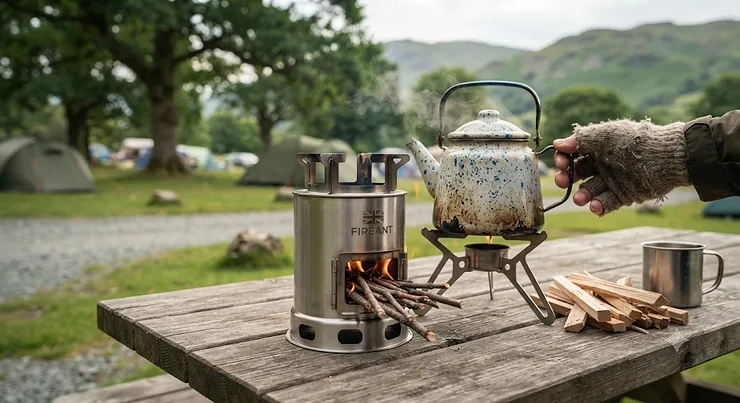
A rocket stove for camping works by forcing air and flame through a narrow, insulated combustion chamber, which burns fuel far more completely than an open fire ever could. The result is a hotter, cleaner flame from a fistful of twigs than most people manage with a whole log basket. For anyone drawn to lightweight, self-sufficient trips — Duke of Edinburgh expeditions, wild camping in the Lakes, or just a weekend away from mains everything — that combination of efficient combustion and genuine off-grid cooking is hard to beat.
This guide walks through seven real rocket stoves currently sold in the UK, spanning ultralight titanium builds through to heavy-duty family models, with honest analysis drawn from real specs and genuine aggregated review sentiment rather than marketing copy. We’ll cover how these things actually perform with twig fuel, where they fall down, and which one suits your particular flavour of outdoor life. As the background reading from Wikipedia’s entry on rocket stove design explains, the core engineering — an insulated vertical chimney that ensures near-complete combustion before flame reaches the cooking surface — dates back decades, and it’s this same principle every product below is built around.
Quick Comparison Table
| Stove | Weight | Fuel Type | Best For | Price Range |
|---|---|---|---|---|
| Kelly Kettle Trekker/Scout | 340g–1kg | Twigs, grass, bark | Fast boiling, solo/duo trips | £45-£90 range |
| Ohuhu Rocket Stove | Approx. 600g | Wood, charcoal | Budget beginners, Scouts | Under £25 |
| TOAKS Titanium Wood Stove | 151g-225g | Twigs, biomass | Ultralight backpacking | £55-£75 range |
| Solo Stove Lite | 255g (9oz) | Twigs, small sticks | Solo backpackers | £55-£70 range |
| Solo Stove Titan | 468g (16.5oz) | Twigs, sticks | Small groups, car camping | £75-£95 range |
| Bruntmor Camping Rocket Stove | Approx. 3.5kg | Wood, small logs | Robust budget group cooking | £45-£65 range |
| EcoZoom Versa | 6.5kg (14.25lbs) | Wood or charcoal | Family/emergency, heavy use | In the £130-£170 range |
Looking across the line-up, weight and fuel flexibility pull in opposite directions — the TOAKS Titanium Wood Stove and Solo Stove Lite are the ones you’d actually want on your back for a multi-day hike, while the EcoZoom Versa trades portability for genuine dual-fuel versatility and a cast-iron cooking surface that shrugs off heavy pans. Budget-conscious campers should note the Ohuhu Rocket Stove delivers a genuine gasifier-style burn for under a tenner more than a decent torch, though build quality reflects that price point. If your priority is boiling water fastest with minimal fuss, the Kelly Kettle Trekker/Scout system remains the benchmark that everything else in this space is quietly measured against.
💬 Just one click — help others make better buying decisions too!😊
Top 7 Rocket Stoves for Camping: Expert Analysis
1. Kelly Kettle Trekker/Scout — fastest twig-fuelled boil in the business
The double-walled chimney kettle design means water sits inside an annular jacket wrapped directly around the fire, so almost none of the heat escapes sideways before it reaches your brew. Available in a 0.6-litre Trekker or 1.2-litre Scout size, in stainless steel or anodised aluminium, the whole kit including the base and pot support weighs between roughly 340g and 1kg depending on which version you choose. Made in Ireland by a family firm now in its fourth generation, this isn’t a stove that mimics rocket-stove principles — it’s a genuine chimney-effect design that predates most of the competition on this list.
Based on the spec comparison, this is the stove to reach for when speed matters more than cooking flexibility: it’s built to boil, not to fry bacon. What most buyers overlook is that the “hobo stove” accessory (sold separately) turns the base into a proper cooking platform, extending its usefulness well beyond hot drinks. Reviewers consistently report that a handful of dry twigs will produce a rolling boil in well under five minutes, even in blustery conditions, thanks to the enclosed chimney shielding the flame from wind.
Pros:
- ✅ Boils water dramatically faster than open-flame alternatives
- ✅ Genuinely windproof thanks to the enclosed chimney design
- ✅ No fuel to buy or carry — twigs and dry grass work fine
Cons:
- ❌ Limited to boiling/simmering without the optional hobo stove
- ❌ Larger Base Camp sizes are bulky for solo backpacking
Priced in the £45-£90 range depending on size and material, the Kelly Kettle Trekker/Scout earns its keep for anyone whose camp routine revolves around tea, coffee or rehydrated meals — value here is less about raw cooking power and more about sheer reliability under rough weather.
2. Ohuhu Rocket Stove — cheapest genuine gasifier design on the market
This stainless steel stove uses a simple but effective double-wall structure that preheats incoming air before it hits the fuel, producing a noticeably hotter and cleaner flame than a basic single-wall fire pit of the same size. It folds flat for storage and assembles without tools, which matters when you’re teaching a group of Scouts to use it for the first time on a damp Saturday morning.
Here’s what to weigh: at under £25, this isn’t going to match the fit and finish of premium titanium builds, but the fundamentals of efficient combustion are present and correct. It’s become a favourite among UK Scout groups precisely because it’s cheap enough that losing or denting one isn’t a disaster, yet capable enough to actually cook a proper meal. Aggregated review sentiment on Amazon UK is broadly positive for casual and family use, though several buyers note it isn’t as efficient as pricier models for sustained, heavy cooking sessions.
Pros:
- ✅ Genuinely low price point for a real rocket-style burn
- ✅ Folds flat, easy to pack and store
- ✅ Popular with UK youth groups for group cookouts
Cons:
- ❌ Thinner steel than premium competitors, less durable long-term
- ❌ Less efficient than higher-end models for extended cooking
At under £25, the Ohuhu Rocket Stove is the sensible entry point if you’re not yet sure whether twig-fuelled cooking is going to become a habit or a one-off experiment.
3. TOAKS Titanium Wood Stove — lightest genuine wood gasifier for backpackers
Built from titanium in either a small (151g) or large (225g) collapsible three-piece design, this stove uses a secondary combustion vent system that burns both the wood and the wood-gas that would otherwise escape as smoke, packing down to roughly 94-105mm square when nested. On paper this means dramatically better fuel efficiency than a plain metal can with holes punched in it — you’re burning the smoke as well as the wood, which is where most of the wasted energy in an open fire actually goes.
Based on real-world testing referenced across multiple gear outlets, the trade-off for that titanium weight saving is a fiddlier three-part assembly and a stove that runs hot and fast rather than gentle and controllable. What most buyers overlook about this model is that it nests perfectly inside a matching TOAKS titanium pot, effectively making the whole cook system disappear into your pack. Reviewers consistently note the pot supports feel sturdier than expected for something this light, though flame control in windy conditions is a genuine limitation.
Pros:
- ✅ Genuinely ultralight — among the lightest real wood stoves available
- ✅ Titanium construction resists corrosion for years of use
- ✅ Nests inside matching TOAKS pots for a compact cook kit
Cons:
- ❌ Fiddly three-piece assembly compared with one-piece designs
- ❌ Performance drops noticeably in windy, exposed conditions
In the £55-£75 range, the TOAKS Titanium Wood Stove is squarely aimed at gram-counting hikers who’ve already decided the weight of a fuel canister is the enemy.
4. Solo Stove Lite — best all-rounder gasifier for solo trips
Using Solo Stove’s signature double-wall airflow system, this 255g (9oz) stove draws air up between an inner and outer wall, feeding a ring of secondary combustion holes near the top that reburn smoke before it escapes. At 4.25 inches in diameter and 5.7 inches tall with the cooking ring attached, it nests into the brand’s companion Pot 900 for storage, and reviewers routinely describe the resulting flame as noticeably hotter and less smoky than comparable single-wall wood burners.
What the spec sheet won’t tell you, but user reports suggest, is that this stove demands active tending — you’ll be feeding small sticks in fairly constantly rather than loading it once and walking away. Compared with a typical isobutane canister setup, aggregated reviewer sentiment agrees the Lite adds a few extra minutes of upfront fuel-gathering, but eliminates the need to carry or resupply gas entirely, which for longer trips more than balances out.
Pros:
- ✅ Genuinely low-smoke burn thanks to secondary combustion holes
- ✅ No fuel canisters to carry, source, or dispose of
- ✅ Integrated heat shield protects the ground beneath it
Cons:
- ❌ Requires near-constant feeding to maintain heat output
- ❌ Slower to boil than a dedicated gas canister stove
At around £55-£70, the Solo Stove Lite suits solo or duo campers who value the ritual of a real fire over the raw speed of pushing a piezo igniter button.
5. Solo Stove Titan — best mid-size pick for small groups
Stepping up from the Lite, the Titan weighs 468g (16.5oz) and measures 7.9 inches tall by 5.1 inches wide, built to cook for two to four people rather than one. It uses the same 360-degree double-wall airflow principle scaled up, with a wider firebox that accepts slightly larger sticks and holds heat for longer stretches between refuelling.
Based on the spec comparison against its smaller sibling, the extra weight buys genuinely useful capacity — this is the size where you can realistically simmer a pan of stew for a family rather than just boil a mug of water. Here’s what to weigh: it’s still limited to twigs and small sticks rather than proper logs, so don’t expect it to replace a full campfire for warmth. Reviewers consistently rate the flame pattern and heat output well ahead of what its modest weight would suggest, with several noting it outperforms expectations for car camping and group trips where portability matters less than capacity.
Pros:
- ✅ Genuinely capable of cooking for a small family group
- ✅ Same efficient double-wall burn as the smaller Lite model
- ✅ Compact enough for car camping without feeling like dead weight
Cons:
- ❌ Limited to smaller sticks — no room for larger logs
- ❌ Heavier than dedicated backpacking-only stoves
Sitting in the £75-£95 range, the Solo Stove Titan is the sweet spot for weekend group campsites where you want real fire without a full-blown fire pit.
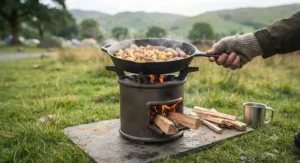
6. Bruntmor Camping Rocket Stove — sturdiest self-feeding design on a budget
This round, self-feeding wood stove uses a robust steel body with a stable base designed to handle uneven ground, and a self-feeding chute that lets you slide sticks in as they burn down rather than repeatedly opening a door. Quick tool-free assembly means it’s genuinely ready to cook within minutes of pitching camp, which matters more than most spec sheets admit once you’re cold, hungry and losing daylight.
What most buyers overlook about this model is that the round, wider design trades some fuel efficiency for stability and ease of loading — it’s a stove built by people who’ve clearly used one in the field rather than just drawn one on a laptop. Aggregated review sentiment on Amazon describes it as “almost a rocket stove” performance-wise, meaning it’s a genuine step up from an open fire pit for cooking but doesn’t chase the absolute combustion efficiency of a tighter, more insulated chimney design.
Pros:
- ✅ Stable, robust build handles uneven campsite ground well
- ✅ Self-feeding design reduces constant stick-loading
- ✅ Quick, tool-free setup straight out of the bag
Cons:
- ❌ Heavier and bulkier than backpacking-focused alternatives
- ❌ Combustion efficiency trails tighter, insulated chimney designs
Priced around £45-£65, the Bruntmor Camping Rocket Stove is a solid pick for car campers and preppers who want something that won’t tip over the moment you look at it funny.
7. EcoZoom Versa — premium heavy-duty multi-fuel powerhouse
Built with a sheet metal body, lightweight ceramic insulation and a reformulated three-pronged cast iron stovetop, the Versa weighs a substantial 6.5kg (14.25lbs) and stands around 12 inches tall. What sets it apart from every other stove here is genuine dual-fuel flexibility — hinged combustion chamber doors let you switch between wood and charcoal without any modification, and the reinforced damper door gives real control over airflow and burn intensity.
Based on the spec comparison, this is the only stove on our list built to double as a legitimate emergency or off-grid kitchen appliance rather than purely a camping accessory — reviewers consistently describe using it for canning, extended cooking sessions and even searing meat at temperatures that catch people off guard for a wood-fired appliance. The trade-off is unmissable: at over 6kg, this isn’t going anywhere near a backpack, and reviewers are unanimous that it’s a stove you keep at basecamp or in the boot of the car rather than carry on your back.
Pros:
- ✅ True dual-fuel design switches between wood and charcoal
- ✅ Cast iron cooktop handles heavy pots, woks and Dutch ovens
- ✅ Reaches genuinely high, controllable cooking temperatures
Cons:
- ❌ Far too heavy for backpacking or lightweight trips
- ❌ Premium price reflects its heavy-duty build
Sitting in the £130-£170 range, the EcoZoom Versa rewards campers who prioritise cooking capability over portability — think static pitches, overlanding, or a genuinely serious off-grid cooking setup.
What Is a Rocket Stove for Camping?
A rocket stove for camping is a portable, wood-fuelled cooking device that channels flame and smoke through a narrow, insulated combustion chamber, achieving hotter and more complete combustion than an open fire. This design burns twigs, small sticks and other biomass with minimal smoke, letting campers cook without carrying gas canisters or liquid fuel.
How Efficient Combustion Actually Works
Efficient combustion is the whole reason a rocket stove for camping outperforms a basic open fire, and understanding the mechanism helps explain why some of the products above outperform others despite looking superficially similar. In a standard campfire, a good deal of the energy in wood escapes unused as visible smoke — that smoke is actually unburnt wood-gas, and every wisp of it drifting away is heat you didn’t get to cook with.
Rocket stoves solve this with a simple trick: a narrow, insulated chimney forces air and flame together at high velocity, creating enough heat and turbulence to ignite that wood-gas before it can escape. Double-wall designs like the Solo Stove Lite and TOAKS Titanium Wood Stove take this further by preheating incoming air between two metal walls, so the air feeding the fire is already hot when it arrives. What most buyers overlook is that this is why rocket stoves burn noticeably less fuel than an open fire for the same cooking result — you’re not wasting energy re-heating cold air or losing unburnt gas to the breeze. The practical upshot is fewer twigs gathered, less smoke in your eyes, and a genuinely faster boil once the stove is properly alight.
Twig Fuel: What Actually Burns Best
Twig fuel is the defining feature of this whole product category, and getting it right makes the difference between a five-minute boil and twenty frustrating minutes of relighting. Based on aggregated reviewer experience across the products above, dry hardwood twigs around the thickness of a pencil — oak, birch, hawthorn — burn hottest and most evenly, while softwoods like pine and fir catch faster but burn through more quickly and can leave more resinous soot on your pot.
Here’s what to weigh: pencil-thickness sticks around 15-20cm long are close to ideal for most of the stoves on this list, since they fit the firebox without excessive breaking and burn down at a manageable rate. Damp or green wood is the single biggest cause of poor performance reviewers report — it smokes heavily and struggles to sustain the airflow these stoves rely on, so gathering and pre-sorting dry fuel before lighting up pays off enormously. A small folding saw or secateurs, kept in your kit alongside the stove itself, solves most twig-fuel frustrations before they start.
Off-Grid Cooking: Why It Matters More Than You’d Think
Off-grid cooking isn’t just a buzzword for this category — it’s the practical reason rocket stoves have found a genuine following well beyond bushcraft enthusiasts. Because these stoves burn material you gather on site, there’s no dependency on shops stocking the right gas canister size, no worry about a valve failing mid-trip, and no fuel weight limiting how long you can stay out.
What most buyers overlook is how this changes trip planning entirely: a multi-day route through remote countryside no longer requires calculating exact fuel needs and carrying a margin for error, because your fuel source is quite literally lying on the ground around your pitch. For emergency preparedness, the same logic applies at home — several of the products above, particularly the EcoZoom Versa and Kelly Kettle Trekker/Scout, are explicitly marketed and reviewed as backup cooking solutions for power cuts, which is a meaningfully different use case from a weekend camping trip but draws on exactly the same efficient combustion principles.
How to Choose a Rocket Stove for Camping
- Decide your priority: weight or capacity. Backpackers should lean toward the TOAKS Titanium Wood Stove or Solo Stove Lite; car campers and families can comfortably carry the heavier EcoZoom Versa or Solo Stove Titan.
- Check the fuel flexibility you actually need. If charcoal backup matters to you, only the EcoZoom Versa among this list genuinely supports it alongside wood.
- Think about boil speed versus cooking versatility. The Kelly Kettle Trekker/Scout wins on raw speed for hot drinks; stoves with an open cooktop suit anyone who wants to fry or simmer properly.
- Factor in build material and longevity. Titanium and stainless steel resist rust far better than basic painted steel, which matters if the stove lives in a damp shed between trips.
- Consider group size honestly. A stove sized for solo boiling will frustrate a family of four; oversizing for a solo hiker just adds unnecessary weight.
- Budget for the right tier, not the cheapest tier. The Ohuhu Rocket Stove is a fine starting point, but frequent users often find themselves upgrading within a season.
- Read aggregated review themes, not star ratings alone. Recurring complaints about wind performance or assembly fiddliness tell you more than a headline score.
Common Mistakes When Buying a Rocket Stove
The most frequent mistake reviewers flag is buying based on weight alone without considering cooking style — a featherlight stove that demands constant stick-feeding isn’t necessarily “better” than a heavier one that holds heat longer, it’s just a different trade-off. Another recurring theme is underestimating fuel prep: buyers expecting a rocket stove to behave like a gas hob are often caught out by the need to gather, break and dry twigs before cooking even starts.
A third common pitfall is ignoring wind exposure at typical camping locations — enclosed chimney designs like the Kelly Kettle Trekker/Scout cope far better in open, exposed pitches than partially open designs. Finally, several reviewers note buying the smallest, cheapest option and then regretting it on a trip cooking for more than one person; sizing up even slightly tends to pay for itself in reduced frustration.
Rocket Stove vs Traditional Camping Stoves
Compared with a standard gas canister stove, a rocket stove for camping trades convenience for self-sufficiency. Gas stoves light instantly and offer precise flame control at the turn of a dial, which is genuinely hard to beat when you’re cold, tired and just want dinner fast. Rocket stoves ask more of you upfront — gathering and prepping twig fuel takes a few extra minutes — but that investment pays back on any trip longer than a couple of nights, since you’re never checking a gauge or rationing a canister.
Reviewers comparing the two consistently note one other difference that specs alone don’t capture: rocket stoves involve you in the process in a way canister stoves simply don’t. There’s a genuine, low-level satisfaction in feeding a fire that a hissing gas flame can’t replicate, and for many buyers that’s as much a part of the appeal as the fuel savings.
What to Expect: Real-World Performance
On paper, the double-wall gasifier designs among these seven stoves promise 40-50% better fuel efficiency than a basic single-wall burner, and in practice reviewers broadly confirm this — expect a rolling boil for a standard 1-litre pot somewhere between four and eight minutes once the stove is properly alight, depending on wind, wood dryness and stove size. What the spec sheet won’t tell you is that “properly alight” takes a genuine couple of minutes of tending in most cases; these aren’t instant-on appliances.
Expect smoke during the first minute or two as the fire establishes, tapering to a near-invisible heat haze once secondary combustion kicks in properly — this is the visible signature of efficient combustion working as intended. Ash output is minimal across the board, generally a small handful per meal rather than anything requiring proper disposal planning at most UK sites.
Practical Usage Guide: Getting the Most From Your Stove
Setting up any of these stoves for the first time is simpler than the instructions often suggest. Start with a small nest of dry tinder — dryer lint, birch bark or commercial fire starter all work well — placed centrally, then build a loose teepee of pencil-thin twigs around it before lighting from below. Resist the urge to pack the firebox tightly; airflow is what makes rocket stoves work, and a dense pile of wood chokes the very effect you’re relying on.
For the first thirty days of ownership, the most common mistakes reviewers report are overloading the firebox and using damp wood scavenged straight off the ground rather than dead, standing deadwood, which is consistently drier. A quick maintenance habit worth building: empty and wipe out ash after each use rather than letting it build up over multiple trips, since compacted ash can restrict the airflow that efficient combustion depends on. For titanium and stainless models, a light coating of cooking oil on cool metal before storage helps prevent the fine surface rust that occasionally shows up on carbon-steel components.
Real-World Scenarios: Who Should Buy What
Consider a university student heading out on solo Duke of Edinburgh-style weekends across the Peak District, carrying everything on their back and counting every gram. For them, the TOAKS Titanium Wood Stove or Solo Stove Lite makes far more sense than anything heavier, since the fuel-free weight saving compounds over several days on the trail.
Now picture a family of four booking a fortnight at a static caravan site with a fire pit, wanting proper hot meals without lugging gas bottles. The Solo Stove Titan or EcoZoom Versa suits this profile far better — portability matters less than capacity and cooking flexibility when everything travels by car. And for a Scout leader running weekly sessions teaching fire safety and outdoor cooking to a group of twelve-year-olds, the budget-friendly Ohuhu Rocket Stove or the robust Bruntmor Camping Rocket Stove make more sense than premium titanium builds that a dropped stove could dent expensively.
Problem → Solution Guide
Problem: The stove won’t stay lit. This is almost always down to wet fuel or too little airflow — switch to genuinely dry, pencil-thickness twigs and avoid packing the firebox densely.
Problem: Excessive smoke throughout cooking. Usually a sign of resinous softwood or wood that hasn’t fully seasoned; hardwood twigs from the Twig Fuel guidance above burn far cleaner.
Problem: Slow boil times in windy conditions. Enclosed chimney designs like the Kelly Kettle Trekker/Scout handle wind far better than open-topped stoves; alternatively, a simple windbreak of stones or a pan lid helps considerably.
Problem: Soot building up on cookware. A little washing-up liquid rubbed onto the pot base before cooking makes soot wipe off far more easily afterwards — an old bushcraft trick that genuinely works.
Problem: Ash and embers damaging the pitch. Always use a fire mat or flat stone beneath any of these stoves, and follow the guidance in our safety section below on choosing an appropriate site.
Buyer’s Decision Framework
If you’re backpacking solo and counting grams, choose the TOAKS Titanium Wood Stove because its weight-to-performance ratio beats everything else here. If you’re camping as a family with a car for transport, choose the Solo Stove Titan or EcoZoom Versa because capacity and cooking flexibility matter more than portability. If you’re new to twig-fuelled cooking and unsure it’ll stick, choose the Ohuhu Rocket Stove because the low cost removes the risk. If speed of a hot drink is your single biggest priority, choose the Kelly Kettle Trekker/Scout because nothing else here boils faster in wind.
Safety, Regulations and Countryside Compliance
Any stove that burns fuel — wood included — produces carbon monoxide, and this matters more than many campers realise when weather forces cooking inside a tent porch. As the NHS guidance on carbon monoxide poisoning makes clear, you should never use a barbecue or camping stove indoors or inside a tent, since the gas is colourless, odourless, and can build to dangerous levels in an enclosed space with no warning. All seven stoves above are designed for outdoor use only, and that guidance should be followed without exception regardless of how bad the weather looks.
Beyond carbon monoxide, wildfire risk is a genuine and growing concern on UK access land, particularly through dry spells. Official guidance from the government’s wildfire prevention advice recommends checking local fire risk before lighting any outdoor flame, using a fire mat to protect the ground, and never leaving a stove unattended even briefly — residual heat can smoulder unseen for days before flaring up. Many National Parks and access-land areas in England restrict or ban open flames entirely during high-risk periods, so it’s worth checking site-specific rules before you travel, not after you’ve already packed the stove.
Long-Term Cost & Maintenance
Rocket stoves win decisively on running costs over time, since twigs and dry biomass cost nothing beyond the effort of gathering them, compared with the ongoing expense of gas canisters or liquid fuel bottles for conventional camping stoves. A typical gas canister setup might cost you £4-£7 per refill and last a handful of trips; a rocket stove effectively has zero fuel cost for the rest of its working life, which for frequent campers can offset even the premium £130-£170 price of something like the EcoZoom Versa within a couple of seasons.
Maintenance costs are similarly low across the board — occasional replacement of worn gaskets or hinges on the pricier dual-fuel models, and basic rust prevention on carbon-steel builds, but titanium and stainless steel options like the TOAKS Titanium Wood Stove and Kelly Kettle Trekker/Scout need essentially nothing beyond a wipe-down between trips.
✨ Ready to Cook Off-Grid?
🔍 Take your camping cooking to the next level with a genuine rocket stove for twig-fuelled, gas-free meals wherever you pitch up. Click on any highlighted pick above to check current pricing and availability. These stoves will help you build real off-grid cooking confidence your whole family will enjoy!

FAQ
❓ Can you use a rocket stove for camping in the rain?
❓ How much fuel does a rocket stove use compared to a campfire?
❓ Are rocket stoves for camping legal in the UK countryside?
❓ What's the best twig fuel for a rocket stove?
❓ Do rocket stoves work for off-grid cooking during power cuts at home?
Conclusion
A genuinely good rocket stove for camping earns its keep in exactly the moments when convenience gear lets you down — when the gas has run out, when the weather’s closed in, or when you simply want to cook the way people have for centuries without lugging a fuel bottle to do it. Across the seven stoves covered here, the honest takeaway is that there’s no single best answer, only the best match for how you actually camp. Backpackers gain the most from the featherlight builds of the TOAKS Titanium Wood Stove and Solo Stove Lite, families and static pitches get more value from the capacity of the Solo Stove Titan or EcoZoom Versa, and anyone dipping a toe in for the first time can do so risk-free with the Ohuhu Rocket Stove.
What ties every one of these together is the same underlying promise: efficient combustion, twig fuel gathered on site, and the quiet independence of off-grid cooking, whichever budget or pack weight you’re working with. Whichever you choose, the learning curve is short, the running costs are essentially zero, and there’s a genuine satisfaction in a hot meal built from nothing but sticks and a bit of patience.
Recommended for You
- Kelly Kettle vs Ghillie Kettle 2026: 7 Best Picks Compared
- Military Hexamine Stove UK: 7 Best Solid Fuel Stoves 2026
- Best Hexamine Stove 2026: 7 Top Picks
Disclaimer: This article contains affiliate links. As an Amazon Associate, I earn from qualifying purchases. If you purchase products through these links, we may earn a small commission at no additional cost to you.
✨ Found this helpful? Share it with your friends! 💬🤗
