In This Article
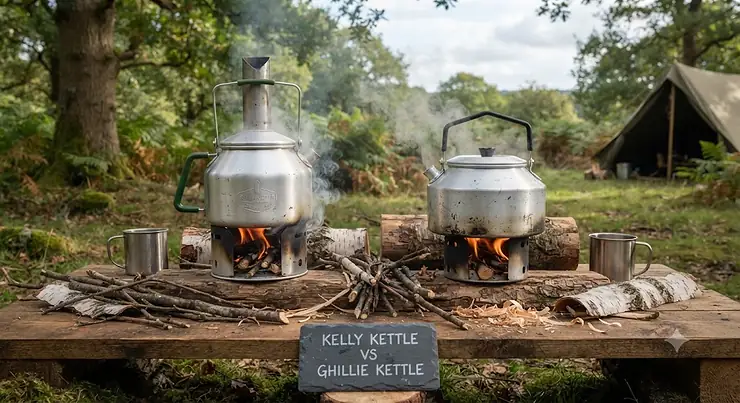
Stand two campers next to a fire and mention kelly kettle vs ghillie kettle, and you’ll get a debate that rivals “gas vs charcoal.” Both are chimney kettles — clever double-walled devices that use twigs, pine cones or scrap card to boil water in a few windswept minutes, no gas canister required. They look almost identical from ten paces. Use one for a season and the differences start to matter: how the cork or whistle behaves, how the seams hold up after year three, how much space it steals in your rucksack. This guide breaks down the real engineering differences between the two brands, walks through seven genuine models worth your money, and digs into fuel, safety and long-term running costs so you’re choosing with your eyes open, not just your wallet. Whether you’re kitting out a scout troop, prepping a bug-out bag, or just fancy a proper brew halfway up a hill, there’s a kettle here built for it.
Quick Comparison Table: Kelly Kettle vs Ghillie Kettle at a Glance
| Brand | Origin | Sealing Method | Typical Weight | Best Known For |
|---|---|---|---|---|
| Kelly Kettle | Ireland (since early 1900s) | Silicone/cork stopper on chain | 0.9–1.6kg | Widest size range, huge accessory ecosystem |
| Ghillie Kettle | Birmingham, England | Built-in safety whistle | 0.9–1.1kg | Whistle alert, hand-spun aluminium build |
| Eydon Storm Kettle | Northamptonshire, England | Cork (never fitted while lighting) | 1.0–1.3kg | Bushcraft-community reputation for thicker metal |
According to Kelly Kettle, Storm Kettle, Ghillie Kettle, Thermette, Survival Kettle and Volcano Kettle are really just trade names for the same core idea: a water jacket wrapped around a fire chamber that creates an upward chimney draught, boiling water fast even in wind or rain. The three brands above all use that same physics, so on paper they should perform identically. In practice, the sealing method is the biggest day-to-day difference — Ghillie’s whistle tells you when it’s boiling without lifting the lid, while Kelly’s cork-on-a-chain is simpler but easier to lose or scorch. Budget-wise, expect to pay a premium of roughly 10–15% for Ghillie’s hand-spun anodised finish over a comparable aluminium Kelly Kettle, while the Eydon sits in the middle ground favoured by bushcraft purists who rate its metal gauge above both.
💬 Bookmark this comparison — you’ll want to check back before you commit to a size!😊
Top 7 Bushcraft Kettles: Expert Analysis
1. Kelly Kettle Trekker Aluminium — lightest option for solo backpacking
The Kelly Kettle Trekker Aluminium is the brand’s smallest kettle, and it’s the one to reach for when every gram in your pack matters. Kelly’s own spec sheet lists the Trekker at a 0.6 litre boil capacity with a packed height of 26.5cm, a kettle width of 12cm and a widest fire-base point of 14cm, aimed squarely at solo users doing backpacking, trekking, kayaking, hill walking or keeping it in a bug-out bag. In real-world use, one reviewer who put the full Trekker kit through a week in the woods found it weighed 1.17kg including the pot, pan, grill and cup, and brought water to the boil in roughly three to four minutes once the fire was going. That’s genuinely fast for something you can fit in a daysack. Based on the spec comparison with its stablemates, the Trekker’s narrow 12cm body means less surface area for wind to grab, which explains why bushcraft reviewers keep pairing it with exposed hilltop stops. Aggregated owner reviews consistently flag the aluminium build as noticeably lighter than the stainless version, though a small number of buyers report scorched wooden handles from careless positioning over an open flame. There’s no fabricated five-star gloss here — this is a genuinely capable one-mug kettle with a couple of known quirks.
Pros:
- ✅ Lightest Kelly Kettle in the range, ideal for backpacking
- ✅ Boils in around 3–4 minutes once lit
- ✅ Compact 26.5cm packed height fits most rucksacks
Cons:
- ❌ Aluminium body can dent more easily than stainless steel
- ❌ Wooden handle needs care near open flame
Prices for the Kelly Kettle Trekker Aluminium typically sit in the £45–£60 range depending on whether you buy the kettle alone or as part of a cook kit — check current price before ordering, as Amazon listings shift regularly. For a solo hiker who just wants a fast brew without carrying gas canisters, it’s genuinely good value.
2. Ghillie Kettle Maverick Aluminium — smallest Ghillie, best for minimalist trips
Sitting at the entry point of the Ghillie range, the Ghillie Kettle Maverick Aluminium is built for anyone who wants the whistle-alert design without the bulk of the bigger models. According to a hands-on test published on SurvivalBlog, the Maverick can boil up to two cups of water at a time and comes in a silver-anodised aluminium finish, alongside a hard-anodised option for those who want extra scratch resistance. What most buyers overlook about this size is that two cups sounds modest until you remember it’s for one or two people, not a group brew — reframed that way, it’s plenty for a morning coffee on a wild camp. The tester who ran the Maverick through a controlled burn used dry sticks broken into three-to-four-inch pieces with a waterproofed cotton-ball tinder to get the fire chamber going quickly, which lines up with what most Ghillie owners recommend as standard fire-lighting practice. Reviewers across the bushcraft community consistently rate Ghillie’s hand-spun aluminium construction as a step above mass-produced alternatives, though the trade-off is a narrower size range than Kelly offers.
Pros:
- ✅ Whistle alerts you the moment water boils
- ✅ Hand-spun aluminium construction, made in the UK
- ✅ Compact enough for two-person minimalist trips
Cons:
- ❌ Smaller 2-cup capacity limits group use
- ❌ Anodised upgrade adds noticeably to the price
The Ghillie Kettle Maverick Aluminium generally lands in the £48–£65 range depending on finish, with the anodised version pushing toward the upper end — always check current price as stock and pricing shift.
3. Kelly Kettle Scout Stainless Steel Ultimate Kit — most popular all-rounder
If there’s a “default” Kelly Kettle that most people picture, it’s this one. The Kelly Kettle Scout Stainless Steel Ultimate Kit sits in the middle of the range, and Kelly’s spec sheet puts it at a 1.2 litre boil capacity, 26.5cm packed height, 15.5cm kettle width and an 18.5cm widest fire-base point, marketed toward scout groups, small families, picnics, beach days and festivals. Here’s what the spec sheet won’t tell you: stainless steel adds real weight — one detailed teardown measured the Scout kettle body alone at 38 ounces (roughly 1.08kg), with a further 17 ounces of accessories including the grill, pot, pan and handle — but that extra mass buys you genuine resistance to dents and corrosion that the aluminium Trekker simply can’t match. One verified Amazon UK buyer of the Ultimate Scout kit described it as “very well made,” noting you get “so much in the kit and it all fits nicely in the bag supplied,” with enough burn time to get cups out, add tea bags and sugar, and be ready right as the kettle hits the boil. The same reviewer flagged a genuine safety point worth repeating: it’s “horrified” territory if the green stopper is pushed in tightly while the kettle is over heat, as this can cause a build-up of pressure — always leave it loose or removed while boiling.
Pros:
- ✅ Stainless steel resists dents and corrosion long-term
- ✅ Full Ultimate Kit includes stove, cups, plates and pot support
- ✅ Comfortably serves 2–4 people per boil
Cons:
- ❌ Noticeably heavier than the Trekker or Maverick
- ❌ Never seal the stopper tightly while boiling — pressure risk
Expect the Kelly Kettle Scout Stainless Steel Ultimate Kit to fall somewhere in the £65–£90 bracket depending on which accessories are bundled — always check current price rather than relying on a fixed figure, and it remains one of the strongest value picks in this comparison.
4. Ghillie Kettle Explorer Aluminium — mid-size with a genuine safety whistle
The Ghillie Kettle Explorer Aluminium is the middle child of the Ghillie range, and it’s the one most frequently compared head-to-head with the Kelly Scout. Amazon UK’s own listing confirms it provides approximately 3.5 mugs of water in minutes, is lightweight, doesn’t require gas or artificial fuel, and can burn twigs, fir cones, dry leaves or newspaper even in wet and windy conditions. What most buyers overlook is that this is the only kettle in this entire round-up with a genuine audible boil alert as standard — Amazon confirms Ghillie Kettles include a safety whistle to let you know exactly when your kettle reaches boiling point, a feature not fitted to most competitor kettles. That’s a real practical win if you’re multitasking around camp — pitching a tent, say — rather than watching the pot. Aggregated review sentiment is broadly positive, though it isn’t spotless: one verified Amazon buyer reported their Explorer leaking from the seal connecting the inner and outer skins shortly after purchase, and described a frustrating multi-week wait for a replacement, while other reviewers on the same listing called it “outdoor essentials,” praising the fast boil and the “nice touch” of the whistling cap. Honest takeaway: most owners love it, but seam-seal quality control isn’t flawless across every unit.
Pros:
- ✅ Built-in whistle — no need to watch the fire
- ✅ Boils around 3.5 mugs in minutes
- ✅ Works in wet and windy conditions
Cons:
- ❌ Some units reported seam leaks from the inner/outer skin seal
- ❌ Customer service response on replacements can be slow
The Ghillie Kettle Explorer Aluminium typically sits around £55–£75, rising toward £100 for the anodised cook-kit bundle — check current price, as bundle contents change availability regularly.
5. Eydon Storm Kettle Original — the bushcraft community’s quality pick
Less famous on Amazon but well known on bushcraft forums, the Eydon Storm Kettle Original is the lesser-known alternative worth genuine consideration. Made by the Eydon Kettle Co. in the UK, the Original model holds 1.4 litres, comes in silver, black or NATO green, and includes a tripod accessory designed to add stability on uneven ground, with one key design difference: unlike Kelly kettles, you must never light an Eydon with the cork fitted, as doing so is dangerous — a distinction worth committing to memory if you own more than one brand. On a UK bushcraft forum thread comparing all three major brands, one long-term Kelly owner who eventually switched reported that a friend’s Ghillie Kettle had outperformed their own Kelly, while another contributor rated the Eydon as edging out both on build quality, “with maybe just the Eydon nicking it”. Reasoning like the spec comparison would suggest, the Eydon’s reputation for thicker-gauge metal is exactly why bushcraft instructors — people who put kettles through genuinely hard daily use — tend to gravitate toward it over the bigger-name brands.
Pros:
- ✅ Reputation among bushcraft users for thicker, more durable metal
- ✅ Tripod accessory improves stability on rough ground
- ✅ Available in three colourways including low-visibility green
Cons:
- ❌ Never light with the cork fitted — different safety habit to learn
- ❌ Less widely stocked than Kelly or Ghillie on major UK retailers
The Eydon Storm Kettle Original generally sits in the £70–£90 range — check current price directly, as it’s less consistently available through mainstream marketplaces than the bigger two brands.
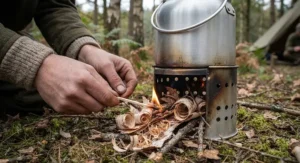
6. Ghillie Kettle Adventurer Anodised & Cook Kit — premium hand-finished bundle
For buyers who want the full Ghillie experience in one box, the Ghillie Kettle Adventurer Anodised & Cook Kit is the flagship bundle. The base Adventurer kettle alone boils approximately 1.42 litres — around 5 mugs of water — in minutes, weighs 900g, and measures 34cm by 18.5cm, and Amazon’s listing confirms it’s manufactured in the UK using the traditional age-old method, works in wet and windy conditions on natural fuel, and includes a carry bag and instructions. A UK-based reviewer who bought the aluminium cook kit version for personal use described the build as a lightweight, British-made kit that “couldn’t be easier to use,” genuinely doing what the manufacturer claims, and easy to clean afterwards. She also confirmed real-world boil speed, noting that once the base fire was properly established, the whistle sounded within about two minutes, producing enough boiling water for both a morning brew and a filled thermos mug. Honest analysis: the anodised finish costs more than the plain aluminium Adventurer, but it earns that premium through genuinely better scratch and corrosion resistance for anyone planning to keep the kettle for a decade of seasonal use rather than a single trip.
Pros:
- ✅ Largest standard Ghillie capacity at roughly 5 mugs per boil
- ✅ Hand-spun in the UK with anodised scratch resistance
- ✅ Bundled cook kit adds pan, grill and pot stand
Cons:
- ❌ Premium anodised pricing well above the base aluminium model
- ❌ Bulkier 34cm packed size, less ideal for solo backpacking
Expect the Ghillie Kettle Adventurer Anodised & Cook Kit to sit in the £100–£125 range for the full bundle — check current price, as anodised stock runs out faster than aluminium given the smaller production batches.
7. Kelly Kettle Base Camp Stainless Steel — largest option for family and group camping
Topping out the size range, the Kelly Kettle Base Camp Stainless Steel is the one to buy if you’re regularly boiling water for more than two people. Kelly’s official specifications list the Base Camp at a 1.6 litre boil capacity, 33cm packed height, 15.5cm kettle width and an 18.5cm widest fire-base point, and the brand positions it explicitly for groups, family outings, car camping, fishing, allotment days, off-roading and emergency preparedness. What the spec sheet doesn’t spell out is how that extra capacity changes the maths for a family: 1.6 litres is close to seven mugs in one burn, meaning you’re not relighting the fire twice over breakfast. One long-term owner who’s used a Base Camp model for over six years put it plainly: it’s “still going strong after a good 6-years hard use,” despite visible signs of age — a genuinely useful data point on durability that a brand-new unboxing review simply can’t offer. The same long-term owner flagged a practical habit worth adopting: it’s advisable not to over-fill the kettle, because as the water boils it can bubble out and extinguish the fire underneath.
Pros:
- ✅ Largest capacity in the round-up at 1.6 litres
- ✅ Stainless steel proven to last 6+ years of regular use
- ✅ Ideal for family camping, fishing trips and emergency kits
Cons:
- ❌ Tallest packed size at 33cm — least backpack-friendly
- ❌ Don’t overfill, or boiling water can douse the fire base
The Kelly Kettle Base Camp Stainless Steel usually sits in the £75–£100 range as a standalone kettle, climbing toward £130 for the full Ultimate kit — check current price before buying, particularly around peak camping season when demand pushes availability around.
Practical Usage Guide: Getting the Best From Your Kelly or Ghillie Kettle
Getting a chimney kettle working well isn’t complicated, but there’s a learning curve in your first few outings. Start with dry tinder — cotton wool with a smear of petroleum jelly works brilliantly, as does dry grass or birch bark if you’re foraging on site. Build a small, loose stack of pencil-thin twigs in the fire base before lighting, then feed slightly thicker sticks down the chimney once it’s drawing well; the chimney effect does the hard work of pulling flame upward, so you genuinely don’t need much fuel. Fill the kettle to roughly 80% capacity, never to the brim — every model in this guide performs worse when overfilled, since boiling water can bubble out and smother your fire. After use, let the kettle cool fully before packing it away, and give the fire base a quick shake to clear ash before your next trip; a build-up of old ash restricts airflow and slows your next boil noticeably. Maintenance-wise, stainless models need almost nothing beyond an occasional rinse, while aluminium bodies benefit from drying thoroughly to avoid the dull white oxidation that forms if they’re packed away damp. The single most common first-month mistake is using damp or green wood straight off the ground — it smoulders rather than burns cleanly, producing more smoke and a much slower boil, so always carry a small stash of dry fuel as backup even if you plan to forage on arrival.
Real-World Scenarios: Which Kettle Suits Your Adventure
If you’re a solo hiker doing 8–12 mile days and camping wild overnight, the Kelly Kettle Trekker Aluminium or Ghillie Kettle Maverick Aluminium make the most sense — both prioritise low weight and a small packed footprint over sheer capacity, and neither will noticeably drag down your base weight. If you’re a family of four heading to a campsite for a long weekend, the maths shifts entirely: the Kelly Kettle Base Camp Stainless Steel or Ghillie Kettle Adventurer Anodised & Cook Kit boil enough water in one burn for a full round of hot drinks without relighting, which genuinely matters when you’ve got hungry kids waiting. For scout leaders or Duke of Edinburgh group leads managing six to eight participants at once, the Kelly Kettle Scout Stainless Steel Ultimate Kit hits a practical middle ground — durable enough for repeated group handling, and the bundled stove and cups mean less kit to source separately. Preppers and bug-out bag builders tend to gravitate toward whichever model is lightest and most durable simultaneously; based on the spec comparison, that’s usually the stainless Trekker over the aluminium version, trading a little weight for corrosion resistance in gear that might sit unused in a bag for months at a time. And if you’re the sort of camper who rates build quality above brand recognition, the Eydon Storm Kettle Original is worth seeking out specifically — it’s the pick bushcraft instructors reach for when a kettle needs to survive daily use across an entire season of courses.
Problem → Solution: Fixing the Most Common Kettle Complaints
Problem: the kettle takes ages to boil. This is almost always a fuel or airflow issue, not a faulty kettle. Solution: check your fuel is genuinely dry, break it smaller than you think you need to, and make sure the fire base vent holes aren’t blocked with ash from a previous burn.
Problem: leaking from the seam. Aggregated reviews for both the Kelly Kettle Scout Stainless Steel Ultimate Kit and the Ghillie Kettle Explorer Aluminium mention occasional seam leaks on individual units. Solution: inspect a new kettle with a test boil at home before your first trip, and contact the retailer immediately under warranty if you spot a leak — most UK sellers will replace a faulty seam within the return window.
Problem: the cork or whistle gets scorched or lost. Solution: always remove the stopper before setting the kettle directly over the flame, and consider a spare stopper as a cheap backup — Kelly and Ghillie both sell replacement parts separately.
Problem: nowhere safe to light a fire on the trip. Solution: check the site’s rules before you travel, or use the kettle with the hobo-stove accessory many kits include, which contains the burn within a small metal tray rather than an open base.
Problem: fuel foraged on site is too damp to catch. Solution: carry a small dry-fuel kit (see below) as backup, and use the kettle’s own chimney draught to help dry slightly damp kindling once a small flame is established.
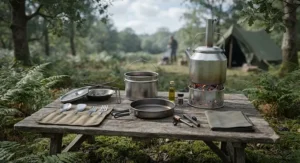
How to Choose Between a Kelly Kettle and a Ghillie Kettle
Choosing between these two brands comes down to a handful of practical questions rather than brand loyalty:
- How many people are you boiling for? Kelly’s three-tier size range (Trekker, Scout, Base Camp) gives you more granular capacity choices than Ghillie’s equivalent line-up.
- Do you want an audible boil alert? Ghillie’s whistle is a genuine practical edge if you’re multitasking around camp rather than watching the fire.
- Aluminium or stainless steel? Aluminium saves weight; stainless steel survives rougher handling and resists dents over years of use.
- What’s your budget ceiling? Ghillie’s anodised finishes and cook-kit bundles generally sit above equivalent Kelly kits — decide if the finish upgrade matters to you.
- How will you carry it? If it’s living in a rucksack for multi-day hikes, prioritise the Trekker or Maverick over the larger models regardless of brand.
- Do you already own accessories from one brand? Kelly’s Hobo Stove and pot sets are widely cross-compatible across its own range, which can save money if you’re building out a kit gradually.
- How important is UK-made provenance to you? Both Ghillie and Eydon manufacture entirely in the UK; Kelly Kettle’s roots and larger-scale production are in Ireland.
Kelly Kettle vs Ghillie Kettle: The Real Differences
Strip away the branding and both kettles solve the same problem the same way — a chimney draught pulling flame up through a water jacket. The differences that actually matter live in the details. Sealing is the first: Kelly uses a silicone or cork stopper on a chain, simple and cheap to replace, but it relies on you remembering to loosen it before boiling. Ghillie’s whistle removes that judgement call entirely, sounding automatically once the water’s ready — a genuinely useful safety-adjacent feature for anyone new to fire-based cooking. Build process is the second real difference: Ghillie kettles are hand-spun on a lathe in small UK batches, which shows in the anodised finish options, while Kelly produces at greater scale, which explains its wider size range and generally lower entry price for comparable capacity. Size range is the third: Kelly’s Trekker-Scout-Base Camp spread covers solo use through to group camping more precisely than Ghillie’s Maverick-Explorer-Adventurer line-up, which clusters a little closer together in capacity. On raw reliability, aggregated review sentiment for both brands shows the same pattern — the vast majority of buyers are satisfied, with a minority reporting seam leaks on individual units, suggesting quality control variance is a shared industry issue rather than a brand-specific flaw. If forced to pick one factor to decide on, it’s this: choose Kelly for size flexibility and lower entry cost, choose Ghillie for the whistle and hand-finished build quality.
Kelly Kettle Small vs Large: Trekker, Scout and Base Camp Compared
| Model | Capacity | Packed Height | Best For |
|---|---|---|---|
| Kelly Kettle Trekker | 0.6 litres | 26.5cm | Solo hikers, bug-out bags |
| Kelly Kettle Scout | 1.2 litres | 26.5cm | Small groups, scouts, festivals |
| Kelly Kettle Base Camp | 1.6 litres | 33cm | Families, car camping, emergencies |
Reading across the table, the jump from Kelly Kettle Trekker to Kelly Kettle Scout roughly doubles boil capacity while keeping the same 26.5cm packed height — genuinely useful if pack space, not weight, is your limiting factor. The step up to Kelly Kettle Base Camp adds real height and a corresponding jump in weight, so it’s worth asking honestly whether you need 1.6 litres in one burn or whether relighting the Scout twice would actually suit your trip better. As a rule of thumb: one Trekker boil comfortably serves one person’s brew, one Scout boil serves two to three, and one Base Camp boil serves a family of four to five without a second fire.
✨ Not sure which size fits your trips? Compare capacities above before you commit!😊
Common Mistakes When Buying a Bushcraft Kettle
The most frequent mistake is buying purely on capacity without weighing packed size against how you’ll actually carry the kettle — a Base Camp model bought for solo backpacking will sit unused in a cupboard once the novelty wears off. A close second is skipping the accessory kit to save money upfront, then discovering the pot stand, grill and hobo stove are sold separately and cost nearly as much again when bought later individually. Buyers also frequently overlook material trade-offs: choosing aluminium purely because it’s cheaper, without factoring in that stainless steel typically survives years of rougher family or scout-group handling far better. Another recurring error is assuming all chimney kettles behave identically to a standard camping stove — they don’t ignite on demand, and beginners who don’t practise fire-building technique before a real trip often end up frustrated on day one. Finally, some buyers skip reading the safety instructions on the stopper or cork, which — as genuine Amazon reviews confirm — can create a real pressure risk if sealed too tightly during boiling.
What to Expect: Real-World Boiling Performance
On paper, every kettle in this guide claims a boil time of three to five minutes. In practice, that number depends heavily on fuel quality, wind conditions and how well you’ve packed the fire base. Reviewers testing the Kelly Kettle Trekker Aluminium with dry sticks consistently report boils in the three-to-four-minute range once the fire’s properly established, while the Ghillie Kettle Adventurer Anodised & Cook Kit produced a full boil, whistle included, in around two minutes under good conditions according to one detailed personal review. Damp fuel, unsurprisingly, slows every model down considerably — sometimes doubling boil time — which is exactly why experienced users always carry a small dry-fuel backup rather than relying entirely on what they find on site. Wind, counter-intuitively, tends to help rather than hinder these kettles, since the chimney draught design was originally built to cope with exposed Irish and Scottish hillsides where a still day is the exception rather than the rule.
Building the Perfect Fire Lighting Kit for Your Kettle
A dedicated fire lighting kit turns a stubborn ten-minute wait into a reliable three-minute boil, and it doesn’t need to be complicated. At minimum, pack: a reliable ferro rod or waterproof matches as your ignition source; a handful of cotton wool balls smeared with petroleum jelly, which catch a spark instantly and burn long enough to establish flame; a small stash of dry kindling — pencil-thin sticks or commercial fire-lighting cubes — sealed in a waterproof bag so it stays usable regardless of the weather you arrive to; and a small pair of tweezers or tongs for feeding fuel into the chimney without burning your fingers. Many Kelly and Ghillie accessory bundles include a companion hobo stove, which is worth adding if you also want to cook directly rather than just boil water. Keep the whole kit in one dedicated pouch rather than scattered across your pack — the single biggest time-waster on a cold, wet morning is hunting for tinder you know you packed somewhere.
Long-Term Cost & Maintenance
Chimney kettles win decisively on running costs compared with gas-canister stoves, since twigs, pine cones and scrap card cost nothing and are rarely in short supply outdoors. Over several seasons of regular use, that adds up to real savings against the recurring cost of gas canisters, which typically run £5–£8 each and don’t last long under repeated boiling. Maintenance costs are similarly low: stainless models like the Kelly Kettle Base Camp Stainless Steel need essentially no upkeep beyond an occasional rinse, while aluminium models benefit from drying thoroughly after each trip to prevent oxidation. The main long-term cost to budget for is replacement parts — stoppers, corks and pot supports do wear out or get lost over years of use, though both major brands sell these individually rather than forcing a full kettle replacement. Given the six-year-plus lifespan reported by long-term owners of the stainless Kelly range, the effective cost-per-use of any kettle in this guide drops dramatically the longer you own it, which is worth factoring in if the premium models look expensive at first glance.
Safety, Fuel & Countryside Regulations
Before lighting any chimney kettle in the UK, it’s worth understanding where you’re legally allowed to do so. Guidance from the British Mountaineering Council makes clear that solid fuel stoves carry real carbon monoxide and fire risks in enclosed spaces and should always be used with good ventilation, well away from tent fabric — advice that applies directly to chimney kettles too, since they burn solid fuel in the same way a woodburning stove does. Never use any of these kettles inside a tent or enclosed shelter. On open land, permission matters as much as technique: many UK access areas restrict or ban open fires entirely, and it’s always worth checking the Countryside Code before lighting up, along with any local landowner or National Park rules, since byelaws in several English national parks now prohibit open fires on access land outright. Practically, that means sticking to your kettle’s enclosed fire base rather than building a separate ground fire, choosing a non-flammable surface such as stone or gravel to stand it on, and always carrying water to fully extinguish and cool the ash before you leave. The Camping and Caravanning Club’s safety advice is also worth a read if you’re new to fire-based cooking on campsites specifically, since pitch spacing and fire rules vary between sites.
Frequently Asked Questions
❓ Is a Kelly Kettle better than a Ghillie Kettle?
❓ How long does it take to boil water in a chimney kettle?
❓ What fuel can I use in a Kelly or Ghillie Kettle?
❓ Which size Kelly Kettle should I buy for camping with family?
❓ Are chimney kettles safe to use during a fire ban?
Conclusion
There’s no single winner in the kelly kettle vs ghillie kettle debate — both brands solve the same problem well, and the right pick genuinely depends on how you camp rather than which logo you prefer. If you want size flexibility and a lower entry price, Kelly’s three-tier range from the Kelly Kettle Trekker Aluminium through to the Kelly Kettle Base Camp Stainless Steel covers solo trips through family camping without needing a second brand. If an audible boil alert and a hand-finished UK build matter more to you, the Ghillie Kettle Maverick Aluminium and its larger siblings deliver that at a modest premium. And if raw build quality is your priority above brand recognition, don’t overlook the Eydon Storm Kettle Original — it’s the pick the bushcraft community consistently rates above both bigger names. Whichever you choose, the fundamentals stay the same: use dry fuel, never overfill the kettle, respect local fire rules, and let the chimney draught do the work it’s been doing for over a century.
Recommended for You
- Military Hexamine Stove UK: 7 Best Solid Fuel Stoves 2026
- Best Hexamine Stove 2026: 7 Top Picks
- Trangia Storm Cooker: 7 Best Storm-Proof Picks for 2026
Disclaimer: This article contains affiliate links. As an Amazon Associate, I earn from qualifying purchases. If you purchase products through these links, we may earn a small commission at no additional cost to you.
✨ Found this helpful? Share it with your friends! 💬🤗
