
In This Article
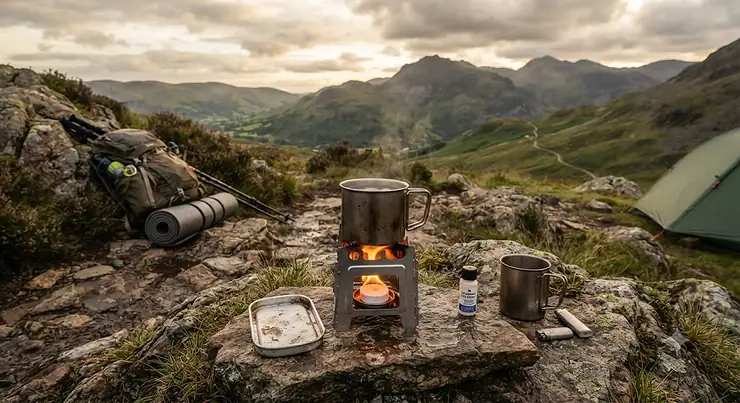
There’s a particular smell that every squaddie, scout leader and stealth camper knows instantly — a faint, fishy tang drifting from a mess tin balanced over a tiny fold of steel. That’s a hexamine stove at work, and despite decades of shinier gas-powered competition, it refuses to disappear from British kit lists. The best hexamine stove isn’t necessarily the one with the flashiest packaging; it’s the one that folds flat into a coat pocket, weighs almost nothing, and boils a brew even when the wind is doing its best to stop you.
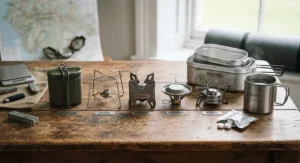
A hexamine stove is a small folding metal stand designed to hold and shelter burning hexamine (methenamine) fuel tablets, letting you rest a mug, mess tin or pot directly above the flame. It’s been standard issue with the British Army and NATO forces for decades precisely because it needs no pump, no pressurised canister and no moving parts to fail.
This guide digs into seven genuine hexamine stoves you can actually buy in the UK — from pocket-money army surplus to titanium ultralights — alongside honest analysis of Esbit fuel tablets, folding pocket stove design, and where military rations fit into the picture. Every verdict here is grounded in real specifications and aggregated customer feedback, not marketing copy, so by the end you’ll know exactly which stove suits your rucksack, your budget and your idea of a decent cup of tea. Prices below are UK ranges only — always check the current price before buying, since Amazon listings shift constantly.
Quick Comparison: Best Hexamine Stove at a Glance
| Stove | Best For | Weight (approx) | Price Range |
|---|---|---|---|
| Esbit Pocket Stove (Small) | Best all-round budget pick | 180g with fuel | £10-£15 |
| Esbit Large Folding Pocket Stove | Best for bigger pans/groups | 250-300g with fuel | £15-£20 |
| Esbit Titanium Ultralight Stove | Best for ultralight backpacking | 11.5g bare | £20-£30 |
| British Army NATO Hexamine Stove | Best genuine surplus/bug-out buy | 80-100g | £5-£10 |
| BCB FireDragon Folding Cooker | Best multi-fuel flexibility | 90-120g | £10-£15 |
| Coghlan’s Portable Folding Camp Stove | Best budget alternative brand | 100-130g | £8-£12 |
| Chazcool Folding Pocket Stove | Best cheapest lesser-known pick | 70-90g | £5-£8 |
Looking across this table, the split is really about how much you’re willing to spend to shave off grams and gain flexibility. The Esbit Pocket Stove wins the popularity contest because it balances price, availability and genuine German engineering, while the British Army NATO Hexamine Stove appeals to anyone who wants the exact kit issued to soldiers without paying commercial mark-up. Meanwhile, the BCB FireDragon Folding Cooker stands apart because it isn’t locked into hexamine alone — it happily burns gel fuel too, which matters if you’re phasing out old-school tablets. Weight differences of 50-100g might sound trivial until you’re on day four of a hike and every gram in your pack has started to feel personal.
💬 Already got a favourite in mind? Scroll down and tap the one that matches your trip.
Top 7 Hexamine Stoves: Expert Analysis
1. Esbit Pocket Stove (Small) — the benchmark budget classic
The small Esbit Pocket Stove is the stove most UK campers picture when they hear the word “hexamine,” and there’s a reason it’s stuck around since the 1930s: it simply works. Folded flat it measures roughly 9.8 x 7.7 x 2.3cm and weighs about 180g including six 14g solid fuel tablets, each of which burns for around 12 minutes and can bring 500ml of water to the boil in roughly 8 minutes. Made from electrolytically galvanized steel rather than cheap tin, it resists the rust that ruins bargain-bin imitations after a couple of wet trips.
Based on the spec comparison, this is the stove to buy if you want NATO-grade reliability without paying NATO-grade prices — it’s still used within NATO forces today, which tells you plenty about its staying power. Reviewers consistently report that the two cooking positions (open for a mess tin, closed for a smaller cup) genuinely change how stable your pot sits, and that spare tablets tuck neatly inside the folded stove for transport. The recurring gripe across forums like BushcraftUK is the smell — hexamine fumes cling to kit for days if tablets aren’t bagged separately — plus a sooty residue that blackens pan bottoms.
Pros:
- ✅ Genuinely pocket-sized and lightweight at 180g
- ✅ Durable galvanized steel, not flimsy tin
- ✅ Two cooking positions for different pot sizes
Cons:
- ❌ Hexamine smell lingers on stored kit
- ❌ Leaves sooty black residue on pans
Priced typically in the £10-£15 range, this remains the best value entry point into hexamine cooking for most buyers.

2. Esbit Large Folding Pocket Stove — best for feeding more than one mouth
Step up from the small Esbit and you get the large version, which folds out to 13.2 x 9.6 x 3.9cm and adds a third cooking position, making it far more accommodating for a proper mess tin or small pan rather than just a mug. It ships with twelve 14g tablets rather than six, which on paper just means more fuel — but in practice it means you can actually cook a meal, not just heat water for a brew.
What most buyers overlook about this model is that the extra height between the fuel tray and the pot support genuinely improves airflow, so it burns slightly hotter and more consistently in mild wind than the small version’s tighter frame. Aggregated reviews on outdoor retailer sites describe it as the go-to for two-person wild camping trips where a single small stove would mean cooking twice. The trade-off, unsurprisingly, is bulk: at roughly 250-300g with fuel, it’s noticeably heavier than the small version, and some campers find the taller profile slightly less stable on uneven ground unless you dig it in a little.
Pros:
- ✅ Three cooking positions suit bigger pans
- ✅ Twelve tablets included, more cooking per pack
- ✅ Better airflow than the small Esbit model
Cons:
- ❌ Heavier and bulkier to carry
- ❌ Taller stance can wobble on rough ground
Expect to pay in the £15-£20 range, which still undercuts most gas stove-and-canister combinations by a fair margin.
3. Esbit Titanium Ultralight Folding Stove — best for gram-counters
If the standard Esbit range is the sensible option, the titanium version is the one for people who weigh their toothbrush before a hike. Coming in at roughly 11.5g (0.4oz) bare, it’s a fraction of the weight of the steel originals while retaining the same fold-flat, tablet-fed design. Titanium’s strength-to-weight ratio is why it’s prized in ultralight circles, though Esbit’s own guidance warns it can crack if bent too aggressively when cold — a detail marketing blurbs conveniently skip.
Here’s what to weigh up: for thru-hikers and fastpackers shaving every possible gram from a kit list, this stove essentially disappears into a pack, and the tablet-based fuel system means no liquid fuel spillage risk in a rucksack. Reviewers consistently note it’s less rigid than the steel versions, so it needs a stable, flat surface and shouldn’t be treated roughly. On paper this means it suits solo, weight-obsessed trips far better than family camping where kit gets knocked about by kids and dogs.
Pros:
- ✅ Dramatically lighter than steel equivalents
- ✅ Same reliable tablet-fed fold-flat design
- ✅ Ideal for ultralight and fastpacking setups
Cons:
- ❌ Less rigid, can crack if bent when cold
- ❌ Commands a premium over steel versions
Titanium construction pushes the price into the £20-£30 range — pricier, but arguably worth it if grams are your religion.
4. British Army NATO Hexamine Folding Stove — best genuine surplus buy
This is the stove your granddad might recognise from ration kits decades ago, and it’s still being issued in more or less the same form today. Sold as genuine British Army surplus, it’s made from tough, flexible steel that folds flat and can reportedly be folded and unfolded “many times” without cracking — a claim that lines up with its reputation as the cheapest way to get authentic mil-spec kit rather than a civilian reproduction.
Based on the spec comparison, there’s honestly very little to distinguish this from the Esbit small stove functionally — both are stamped steel, both use standard hexamine tablets, both fold flat. What most buyers overlook is that surplus stock like this is genuinely used by NATO forces, so you’re getting battlefield-tested reliability at a hobbyist price, often for less than half what a commercially branded equivalent costs. The recurring criticism, echoed across bushcraft forums, is that cheap stamped-steel construction sometimes has sharp folded edges that can nick fingers or snag on kit — worth a quick file-down before your first trip. Stock also runs out fast, since surplus depends on what’s actually been decommissioned.
Pros:
- ✅ Genuine military surplus, not a replica
- ✅ Among the cheapest options available
- ✅ Folds flat repeatedly without cracking
Cons:
- ❌ Sharp stamped edges on some batches
- ❌ Stock availability can be unpredictable
At roughly £5-£10, this is often the single cheapest legitimate hexamine stove you’ll find on the UK market.
5. BCB FireDragon Folding Cooker — best multi-fuel flexibility
BCB International has spent over 40 years supplying kit to the UK military, and the FireDragon folding cooker is genuinely the current MOD-issue replacement for the classic hexamine stove — not a marketing rebrand, an actual procurement change. The clever bit is the central fuel dish, which can take a FireDragon gel sachet, liquid biofuel poured straight from a bottle, or classic hexamine blocks if that’s what you’ve already stockpiled. It ships with a simple clip-on windshield, and the frame angles inward for a mug or sits upright for a full pan.
What the spec sheet won’t tell you, but reviewers note, is how much of a difference the built-in windshield makes on exposed hillsides — one Amazon reviewer described it as “not much bigger than a cigarette packet” yet stable enough for a proper hill-country brew. Reviewers consistently note the fuel does still leave sooty residue on pans, similar to old hexamine, and it’s really built for boiling rather than simmering a meal. For anyone weaning off toxic classic hexamine fumes (which the UK MOD itself replaced FireDragon gel for), this is the honest upgrade path while keeping backward compatibility with tablets you already own.
Pros:
- ✅ Current genuine UK MOD-issue design
- ✅ Multi-fuel: gel, liquid or hexamine tablets
- ✅ Built-in clip-on windshield included
Cons:
- ❌ Still sooty with classic hexamine fuel
- ❌ Not suited to simmering, boiling only
Typically priced around £10-£15, it sits in the sweet spot between surplus-cheap and titanium-premium.

6. Coghlan’s Portable Folding Camp Stove — best budget alternative brand
Coghlan’s has been a fixture of North American camping aisles for generations, and its portable folding stove brings that same no-nonsense approach to solid fuel cooking. It’s a compact, lightweight steel stove designed to run on either canned heat or standard fuel tablets, which gives it a slight edge in flexibility over hexamine-only designs — useful if UK stockists of one fuel type run low.
Based on the spec comparison, this stove trades some of the ultra-compact folding of the Esbit range for a slightly more open, stable frame, which some buyers find easier to load a mess tin onto without fumbling. It’s a sensible pick for anyone who wants a recognised international camping brand rather than niche military-surplus sourcing, and its dual fuel compatibility (tablets or gel-in-a-can) means you’re not tied to a single supply chain if hexamine becomes harder to source. The trade-off is that, compared with genuine Esbit or army-surplus stoves, UK stock and spare-fuel availability can be patchier, since it’s more of an imported niche item here than a high-street staple.
Pros:
- ✅ Works with tablets or canned heat fuel
- ✅ Sturdy, easy-to-load open frame design
- ✅ Recognised international camping brand
Cons:
- ❌ UK stock can be inconsistent
- ❌ Slightly bulkier folded than Esbit small
Expect a price in the £8-£12 range for this dependable, if less common, alternative.
7. Chazcool Folding Pocket Stove — best cheapest lesser-known pick
Rounding out the list is a genuinely budget, lesser-known option: the Chazcool folding pocket stove, sized at roughly 95 x 75mm and built for picnics, BBQs, camping and hiking on a shoestring. It’s the kind of stove you buy three of and keep one in the car, one in a bug-out bag and one loose in a drawer, because the price barely registers against the convenience.
Here’s what to weigh up: at this end of the market, don’t expect the material quality of Esbit’s electrolytically galvanized steel — thinner stamped metal is common at this price, and reviewers of similar budget stoves on eBay and Amazon note occasional bent legs out of the packet. That said, for occasional use — a car boot emergency stove, a fishing-trip brew, a kid’s first bushcraft lesson — it does the fundamental job of holding a tablet and supporting a small pot, and its tiny folded footprint rivals the titanium Esbit for pocketability, just without the premium metal. If you’re testing whether hexamine cooking suits you before committing to a pricier stove, this is a sensible low-stakes way in.
Pros:
- ✅ Extremely low price point
- ✅ Tiny folded footprint for the pocket
- ✅ Fine for occasional, low-intensity use
Cons:
- ❌ Thinner metal than premium brands
- ❌ Less durable under frequent hard use
At around £5-£8, it’s a low-risk way to trial hexamine cooking before upgrading.
Practical Usage Guide: Getting the Most From Your Hexamine Stove
Getting a decent brew out of any of the seven stoves above comes down to a handful of habits nobody prints on the packaging. First, always light your tablet from the corner, not the centre — this lets the flame establish gradually and reduces the initial flare-up that can singe eyebrows or nearby dry grass. Second, snap or cut larger tablets into smaller pieces if you only need a quick cup rather than a full boil; hexamine tablets can be snuffed out and relit later if kept dry, so you’re not wasting fuel burning a full block for 200ml of water.
Common first-30-days mistakes include storing tablets loose in the same pocket as other kit (that fishy smell transfers fast — a simple zip-lock bag solves it), and forgetting a windshield on exposed ground, which can double your boil time in even a gentle breeze. Maintenance is refreshingly minimal: wipe soot off the stove and any pan contact points with a scourer or a splash of vinegar, and check folding hinges periodically for the sharp-edge burrs some cheaper stamped models develop. One optimisation trick borrowed from Duke of Edinburgh instructors: pre-cut your tablets into thirds at home using an old knife, so you can dose fuel precisely to the job rather than guessing in the field.
Real-World Scenarios: Which Hexamine Stove Fits Your Trip
Picture a university student heading off on a three-day Duke of Edinburgh expedition with a strict budget and a rucksack already crammed with a tent and sleeping bag — the British Army NATO Hexamine Stove or the Chazcool Folding Pocket Stove make sense here, since both cost less than a round of coffees and add negligible weight to an already-full pack.
Now picture a solo ultralight backpacker attempting a fastpacking route across the Cairngorms, shaving grams from every item on their list — the Esbit Titanium Ultralight Stove is the obvious fit, since its 11.5g weight barely registers against the boil-time convenience it provides. Finally, consider a family or small group car-camping over a bank holiday weekend, wanting to cook actual meals rather than just boil water — the Esbit Large Folding Pocket Stove or the BCB FireDragon Folding Cooker suit best, thanks to their bigger cooking positions and, in FireDragon’s case, the flexibility to switch to cleaner gel fuel once the novelty of classic hexamine soot wears off.
Problem → Solution: Common Hexamine Stove Headaches Solved
Problem: your kit smells of fish after a weekend trip. Solution: store tablets in a dedicated zip-lock bag, never loose in a pocket alongside clothing — this is the single most effective fix reported across bushcraft communities.
Problem: pans come back covered in black soot. Solution: a thin smear of washing-up liquid or dish soap on the pan’s exterior before cooking makes soot wipe off far more easily afterwards, a trick borrowed from wood-fire campers.
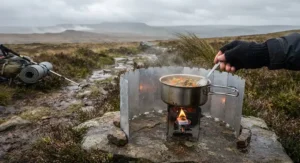
Problem: the stove won’t stay lit in wind. Solution: use a foil windshield or, if you own one, the BCB FireDragon Folding Cooker‘s clip-on shield, and always angle the stove’s open side away from the prevailing wind.
Problem: tablets have gone damp in storage. Solution: hexamine tablets tolerate sub-zero temperatures fine but hate moisture — store spares in a sealed tin or waterproof pouch, since damp tablets light poorly or not at all.
Problem: sharp folded edges on budget stoves nick your fingers. Solution: a few strokes with a small file or fine sandpaper on the fold lines before first use removes the burr that cheaper stamped-steel models like the surplus and Chazcool stoves sometimes carry.
How to Choose a Hexamine Stove
Choosing the right hexamine stove for you comes down to weighing five practical criteria against your typical trip. Here’s the expert-reasoned checklist:
- Decide your priority: weight or capacity. If every gram matters, lean titanium; if you’re cooking for two, the large Esbit or FireDragon wins.
- Check fuel flexibility. Multi-fuel designs like the FireDragon let you switch away from classic hexamine’s smell later without buying a new stove.
- Consider build material. Electrolytically galvanized steel resists rust far longer than cheap stamped tin found on some budget imports.
- Factor in windshield needs. Exposed hill walking demands either a built-in shield or a plan to improvise one from foil.
- Match your budget to frequency of use. Occasional users are well served by a £5-£10 surplus or budget stove; regular users often find the extra durability of a £15-£20 model pays for itself.
- Check UK stock availability. Genuine Esbit and army surplus tend to restock reliably; niche imported brands can be hit-or-miss.
- Read aggregated review sentiment before buying. Look specifically for comments on soot, smell and folding-edge sharpness, since these recur across nearly every hexamine stove on the market.
Esbit Fuel Tablets UK: Sourcing, Storage and Safety
Esbit fuel tablets remain the most widely stocked solid fuel in the UK, sold in small 4g cartridges (roughly 5 minutes’ burn each) right up to 14g tablets that burn for about 12 minutes and can bring 500ml of water to the boil in around 8 minutes. Chemically, they’re hexamethylenetetramine — commonly shortened to “hexamine” or just “hexi tabs” — a stable, high-energy-density fuel that’s genuinely easy to ignite even in cold, damp UK conditions, according to Wikipedia’s entry on the hexamine stove.
Based on the spec comparison, buying tablets separately from a stove often works out cheaper per burn than buying bundled kits repeatedly, particularly if you already own a stove and just need refills. One detail worth flagging honestly: several UK retailers note they cannot ship solid fuel tablets outside the UK due to airfreight restrictions, so if you’re buying as a gift for someone abroad, the stove and fuel may need to be sourced separately. Reviewers consistently note that tablets kept dry will still light reliably even after ten or more years in storage, making a stash of spares a genuinely low-maintenance addition to an emergency kit, though the persistent smell means they’re best kept sealed away from food and clothing in the interim.
Folding Pocket Stove Design: What Actually Matters
Marketing copy loves to boast about “compact folding design,” but not every folding pocket stove folds equally well in practice. What actually matters is fold-flat thickness (anything under 2.5cm genuinely disappears into a jacket pocket), the number of cooking positions (two is workable, three is noticeably more versatile for different pot sizes), and whether the stove can store spare tablets inside itself when folded — a small feature that saves fumbling for loose tablets in a rucksack pocket.
What most buyers overlook is that folding hinge quality, not overall size, determines how long a stove survives repeated packing and unpacking. Cheaper stamped-steel designs can develop stress cracks at the fold line after dozens of uses, while genuine military and Esbit designs are built to withstand hundreds of fold cycles — a detail that rarely appears in a product listing but shows up clearly in long-term owner reviews on forums like BushcraftUK and UKClimbing.
Hexamine Stoves vs Gas and Alcohol Stoves
A detailed comparison against alternatives helps put hexamine’s strengths and weaknesses in context. Gas stoves such as canister-fed burners let you control flame intensity for simmering, but they’re bulkier, need a separate pressurised canister that can’t be topped up in the field, and according to hillwalking guides, the smell of gas can occasionally draw unwanted attention on stealth pitches. Alcohol (meths) stoves like the Trangia burn cleaner than hexamine but are slower to boil and more vulnerable to being blown out entirely in strong wind unless properly shielded.
On paper this means hexamine wins decisively on packability and shelf life — tablets store for a decade if kept dry, and the stoves themselves have no moving parts to fail — but loses on cooking control, since you genuinely cannot simmer a meal without scorching it, and loses on cleanliness, since soot residue is close to unavoidable with classic tablets. For a fast boil-only brew with minimal kit, hexamine remains hard to beat; for anyone wanting to cook a proper dinner with fine heat control, a gas stove is still the more sensible long-term choice, a trade-off echoed consistently across hillwalking and bushcraft communities.
Military Rations and the Hexamine Stove: A Field-Proven Pairing
The hexamine stove’s enduring popularity owes an enormous amount to its long association with military rations. British Army ration packs have historically included a folding hexamine stove and tablets as standard, precisely because it needs no external fuel supply chain and works reliably in field conditions that would defeat more delicate equipment. According to the British Mountaineering Council’s safety guidance, solid fuel stoves like these lack the fine flame control of gas alternatives, which is precisely why military doctrine has traditionally paired them with simple boil-in-the-bag ration heating rather than complex cooking.
What most buyers overlook is that this ration-pack pedigree is exactly why genuine surplus stoves like our fourth pick remain so cheap and plentiful — decommissioned military stock regularly filters through to UK surplus retailers, giving civilian buyers access to genuinely field-tested kit at a fraction of commercial pricing. The UK MOD’s more recent shift toward BCB’s FireDragon gel system, replacing decades of classic hexamine issue, reflects growing awareness of the toxicity concerns around burning fumes in an enclosed environment — a consideration worth taking seriously if you’re recreating a ration-pack setup at home.
Common Mistakes When Buying a Hexamine Stove
The most frequent mistake buyers make is assuming all hexamine stoves are functionally identical and simply grabbing the cheapest listing without checking build material — thin stamped tin corrodes and cracks far faster than galvanized steel or titanium. A second common error is buying a stove without checking whether fuel tablets are included or sold separately, leading to an unexpectedly fuel-less first trip. Third, many first-time buyers underestimate how much the smell and soot will bother them, only to discover mid-trip that their cookware and kit now carry a persistent fishy tang. Finally, some buyers overlook UK shipping restrictions on solid fuel, assuming a stove-and-fuel bundle purchased for a friend abroad will arrive intact, when in reality tablets often can’t leave the country by air.
✨ Ready to stop guessing and pick your stove? Check current availability and grab the one that matches your trip today!
Long-Term Cost & Solid Fuel Tablet Maintenance
Total cost of ownership for a hexamine stove is refreshingly low compared with gas systems, but it isn’t zero. A stove itself is typically a one-off £5-£30 purchase depending on material, but ongoing solid fuel tablet costs add up over frequent use — a pack of a dozen 14g tablets covers roughly a dozen brews, so regular weekend campers might reasonably budget for a few pounds of fuel per month during camping season. Compared with refillable gas canisters, which cost more per swap but deliver more consistent, controllable heat, hexamine’s cost-per-boil is genuinely competitive, particularly for occasional users who’d otherwise let an expensive gas canister sit half-used for months.
Maintenance costs are close to negligible: no valves, seals or pressure regulators to replace, just the occasional file-down of a sharp fold line and a wipe of soot from the frame. The main long-term expense to budget for isn’t the stove at all — it’s replacing pans that develop stubborn carbon buildup faster under hexamine’s sootier flame than they would under clean-burning gas, something worth weighing if you’re precious about your cookware’s appearance.
Safety, Regulations and Carbon Monoxide Guidance
Any fuel-burning stove, hexamine included, produces carbon monoxide, and the risk becomes serious in an enclosed space like a tent porch or bivvy. The UK Health Security Agency specifically warns that using camping stoves inside tents or caravans poses a genuine CO poisoning risk, and that carbon monoxide can even drift into a tent from a stove burning just outside it, which is why a small CO alarm is worth packing alongside any solid fuel stove. Symptoms to watch for include headache, dizziness, nausea and confusion — if anyone in your group develops these while cooking in a sheltered spot, ventilate immediately and move outside.
Beyond CO risk, hexamine tablets themselves aren’t classed as a controlled substance, but several UK retailers won’t ship them internationally by air due to freight restrictions, so buy your fuel from a UK-based seller if you need it quickly. Always cook on a stable, non-flammable surface, keep the stove well away from tent fabric and dry vegetation, and never leave a burning tablet unattended, since — unlike a gas stove — there’s no simple valve to shut the flame off instantly if things go wrong.
FAQ
❓ What is a hexamine stove used for?
❓ Are hexamine tablets legal to buy in the UK?
❓ How long do hexamine fuel tablets burn for?
❓ Do hexamine stoves work in the rain or wind?
❓ Can you use a hexamine stove inside a tent?
Conclusion
The best hexamine stove for you ultimately depends on what you’re weighing against what you’re willing to carry. If you want the safest, most tested starting point, the Esbit Pocket Stove earns its reputation honestly — proven, affordable and still in NATO service. Gram-counters heading into serious backcountry mileage will find the titanium version worth its premium, while anyone chasing genuine military pedigree on a shoestring budget should look straight at the British Army surplus option.
What ties all seven stoves together is the same honest trade-off: hexamine cooking sacrifices fine flame control and clean pans in exchange for near-total reliability, negligible weight and fuel that survives a decade in storage without complaint. Whichever you choose, pair it with the safety habits covered above — proper ventilation, a windshield, and sensibly stored tablets — and you’ll get exactly what generations of soldiers and scouts have relied on: a hot brew, almost anywhere, almost any time.
Recommended for You
- Trangia Storm Cooker: 7 Best Storm-Proof Picks for 2026
- Trangia Stove Review 2026: 7 Best Meths Stoves UK Compared
- Best Ultralight Gas Stove 2026: 7 Featherweight Picks Tested
Disclaimer: This article contains affiliate links. As an Amazon Associate, I earn from qualifying purchases. If you purchase products through these links, we may earn a small commission at no additional cost to you.
✨ Found this helpful? Share it with your friends! 💬🤗
