In This Article
A propane butane mix for backpacking stove use is a pressurised blend of propane and butane, usually isobutane, sold in screw-thread canisters. The butane keeps the can light and the pressure low. The propane props up vapour pressure when the air turns raw. That is why one small canister can boil a morning brew in July and still manage a frosty November pitch. ⚡
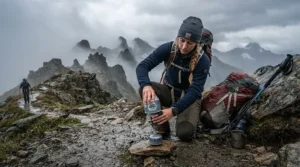
Here’s what most gear guides skip: the stove gets the glamour, but the fuel does the heavy lifting. Choose the wrong propane butane mix for backpacking stove duty and a £150 boil system sputters like a cold lawnmower. Choose the right one and a £25 burner behaves like a champion. These blends are a form of liquefied petroleum gas (LPG). The ratio inside the can decides how happily it vaporises at 2°C on a Lakeland ridge.
This guide takes a straight-talking, research-led route. I’ve combined manufacturer specifications, independent boil tests and long-running reviewer threads. I’ve then turned them into practical advice on trail fuel weight, canister-to-stove threading and lightweight backpacking systems. To be clear, I haven’t tested these products myself. Everything below is analysis built on published specs and aggregated third-party feedback, and I flag which figures come from forum reports rather than manufacturers.
By the end you’ll know which of seven options suits your season, your stove and your tolerance for pack weight. 🎒
Quick Comparison: Seven Options at a Glance
| Product | Type | Headline number | Best For |
|---|---|---|---|
| Primus Power Gas | Canister | 20% propane / 80% isobutane | Everyday three-season walking |
| Jetboil Jetpower | Canister | 190 g loaded (100 g size) | Colder trips and Jetboil kits |
| MSR IsoPro | Canister | Reported ~80/20 blend | Shoulder-season brand loyalists |
| Kovea Power Gas | Canister | Reported ~30% propane (230 g) | Value-minded cold-tolerance |
| SOTO WindMaster | Stove | 69 g, with regulator | Windy ridges, ultralight kits |
| Vango Atom | Stove | 65 g | Tight budgets |
| Jetboil Flash 1.0L | Boil system | 2-minute boil (500 ml) | Fast hot drinks and meals |
Looking at the table above, the three canisters with published or reported propane content (Primus Power Gas, MSR IsoPro and Kovea Power Gas) sit within a few percentage points of one another. Real-world differences therefore come down to the stove you pair them with. The SOTO WindMaster matters here because its regulator smooths output as the canister cools, while the budget-friendly Vango Atom has none. Mix choice matters more the simpler your burner is.
💬 Just one click — help others make better buying decisions too!😊
Top 7 Propane Butane Mix for Backpacking Stove Picks: Expert Analysis
I’ve split the seven picks into four canisters and three stoves or systems. A mix is only as good as the burner it feeds, so judging fuel in isolation misleads. Stove figures below draw heavily on the controlled boil tests in Live for the Outdoors’ backpacking stove group test, which was updated in June 2026. I couldn’t verify aggregated Amazon UK star ratings at the time of research. The review summaries below therefore reflect third-party tester and forum feedback, and I say so each time.
1. Primus Power Gas — the dependable three-season all-rounder
Primus Power Gas is Primus’s best-selling screw-thread EN417 canister, filled with 20% propane and 80% isobutane. It comes in 100 g, 230 g and 450 g sizes, and the brand rates it to operate down to around −10°C.
That 20% propane figure is a sensible UK compromise. It keeps a regulator-less stove honest on a 2°C morning without needing the heavier, thicker steel a propane-rich can would demand. Loaded weights run roughly 200 g for the 100 g can and about 390 g for the 230 g, so in the small size the metal is nearly half of what you carry.
Based on the spec comparison, this is the fuel for walkers who want one reliable can from April to October and don’t want to think about it. It’s easy to find, which matters on a long trail. If you routinely camp below freezing, a regulated stove or a higher-propane blend deserves a look.
Reviewers on Trailspace praise its burn at altitude, the easy-engaging valve and its lower price than rivals. The recurring complaint is weaker, erratic performance in the cold, particularly on unregulated stoves.
Pros:
- ✅ Widely stocked in 100 g, 230 g and 450 g
- ✅ Brand rating down to around −10°C
- ✅ Sensible 20% propane for three-season use
Cons:
- ❌ Some reviewers report patchy winter performance
- ❌ Loaded 230 g can is fairly heavy
Price: expect the 100 g size under £10 and the 230 g in the roughly £8-£13 range at the time of research; check current price. Value verdict: excellent for three-season walkers.
2. Jetboil Jetpower — four-season blend with openly published weights
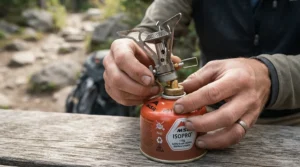
Jetboil Jetpower is a propane and isobutane mix designed for year-round use. Its standout trait is transparency about weight. Jetboil’s fuel sheet lists the 100 g can at 90 g empty (190 g loaded) and the 230 g can at 120 g empty (365 g loaded).
Those tare figures are gold for anyone doing their own trail fuel weight sums. Isobutane keeps output steady as the can empties, while the propane component lifts pressure in the cold. Jetboil follows the EN417 valve standard, so the can fits any compatible stove, though the company makes performance and safety claims only for its own fuel with its own kit. Live for the Outdoors used it for the 2 minute 14 second boil on the Jetboil Flash 1.8L.
On paper this suits Jetboil owners and anyone who wants predictable numbers. Weight-conscious solo hikers should note the loaded 100 g can is the lightest realistic starting point.
I couldn’t verify aggregated Amazon UK reviews. In forum threads, hikers rate the blend highly, but several argue that cheaper equivalent canisters perform the same, and that you’re partly paying for the badge.
Pros:
- ✅ Published empty and loaded weights for easy planning
- ✅ Four-season propane/isobutane formulation
- ✅ Compatible with any EN417 threaded stove
Cons:
- ❌ Premium over generic canisters
- ❌ Exact propane percentage isn’t published
Price: typically under £15 for either size; prices may vary. Value verdict: good, especially if you own Jetboil kit.
3. MSR IsoPro — premium shoulder-season staple
MSR IsoPro is widely reported to be an 80% isobutane, 20% propane mix. That’s the same ballpark as Primus Power Gas, though MSR doesn’t make a loud fuss about the ratio. A useful data point comes from Live for the Outdoors’ MSR Switch figures: 596 g with a 100 g IsoPro canister against a 392 g system without fuel, so a loaded small can is about 204 g.
In practice, an 80/20 blend gives dependable boiling for most UK conditions outside deep winter. What the spec sheet won’t tell you, but forum reviewers note, is that several hikers can’t tell MSR, Snow Peak and Jetboil canisters apart in use. If the ratios are close, you’re choosing on price, availability and brand comfort.
That makes it a pick for people who value consistency and who want matching branding with an MSR stove. If you’re cost-sensitive, there’s a fair argument for cheaper cans with similar mixes.
Reviewer sentiment (forums, not verified Amazon UK averages) is positive on reliability but regularly flags the price premium. Some users call it poor value next to equivalent mixes.
Pros:
- ✅ Reported 80/20 blend suits most seasons
- ✅ Consistent performance reported by users
- ✅ Easy to match with MSR stoves
Cons:
- ❌ Often dearer than comparable blends
- ❌ Ratio not prominently published
Price: around £8-£13 depending on size; check current price. Value verdict: fine, not a bargain.
4. Kovea Power Gas — higher-propane value contender
Kovea Power Gas is, by forum reports, a 230 g can with roughly 30% propane and 70% isobutane. I couldn’t confirm that ratio on the current listing, so check the label before relying on it. Listing details and availability may change.
If the figure holds, that’s a meaningfully higher propane fraction than Primus Power Gas. More propane means higher vapour pressure at low temperatures, which is a real advantage when a bare burner is fed by a chilled can. The trade-off is a slightly heavier can for the pressure involved, though it’s still comfortably backpack-friendly.
Honest take: this is the fuel for colder-leaning, budget-minded walkers. Reported 30/70 mixes have earned praise in backpacking forums as cold-capable, and the ratio is in line with the widely discussed 70/30 butane/propane blends. Frame it as a hedge against the UK’s unpredictable shoulder seasons rather than a winter-expedition fuel.
Forum reviewers describe Kovea cans as good performers for the money, with some preferring them over pricier brands. I couldn’t verify Amazon UK star ratings.
Pros:
- ✅ Reported higher propane share for colder starts
- ✅ Good value reputation among forum users
- ✅ Standard threaded valve fits common stoves
Cons:
- ❌ Ratio needs checking on the actual label
- ❌ Availability can be patchy
Price: around £7-£11 at the time of research; prices may vary. Value verdict: strong if the ratio checks out.
5. SOTO WindMaster — regulator-equipped, wind-defying burner
The SOTO WindMaster is a canister-top stove with a micro-regulator. It weighs 69 g with the TriFlex support or 87 g with the 4Flex support, and it puts out about 3,260W. In Live for the Outdoors’ comparison it was the fastest screw-on stove, boiling 500 ml in 2 minutes 30 seconds. It also managed 3 minutes 50 seconds on a January day at 2°C.
That cold result is the real story for fuel choice. A regulator stabilises flow as pressure drops, so even a modest-propane mix delivers more consistent heat. It’s one of the best ways to get four-season-like behaviour from three-season fuel.
The concave burner with its protective lip resists wind, so you use less gas chasing a flickering flame. Testers did flag stability: tall pots on a lightweight canister-top stove are wobbly, so the 4Flex support is worth the extra 18 g.
Test findings come from a controlled outdoor group test; I couldn’t verify aggregated Amazon UK review scores.
Pros:
- ✅ Regulator keeps output steadier in cold
- ✅ Fast boil with excellent wind resistance
- ✅ Very light for the performance
Cons:
- ❌ Not the most stable with large pots
- ❌ Premium price for a burner
Price: in the £50-£70 range at the time of research; check current price. Value verdict: best burner here for pairing with any mix.

6. Vango Atom — featherweight budget burner
The Vango Atom weighs 65 g, 70 g in its bag, with 3,000W output and a boil of about four minutes for 500 ml (4 minutes 2 seconds at 17°C). Live for the Outdoors named it the best-value pick. The relatively large burner and supports give decent pan stability, but there’s no regulator and no ignition.
For fuel, that matters. Without a regulator, output sags as the canister cools or empties, so the mix does more of the work. Pair the Vango Atom with a higher-propane blend such as Kovea Power Gas (if the ratio checks out) for cooler trips, and keep the can warm.
The open burner is also exposed, so wind will eat your fuel. A windshield or a sheltered spot turns it from a fair-weather stove into something genuinely useful. Testers also noted poor simmer control, which makes it a boil-and-pour stove rather than a gourmet one.
Third-party testing is positive on value and weight, with the downsides above. I couldn’t verify Amazon UK star averages.
Pros:
- ✅ Wallet-friendly and very light
- ✅ Decent power and pan stability
- ✅ Packs inside a mug
Cons:
- ❌ No regulator; fades in cold
- ❌ Poor simmer control and wind-prone
Price: comfortably under £35 at the time of research; prices may vary. Value verdict: superb budget starter.
7. Jetboil Flash 1.0L — the fast, efficient all-in-one
The Jetboil Flash 1.0L weighs 398 g, delivers 1.5kW and boiled 500 ml in two minutes in Live for the Outdoors’ test. It was named backpacking stove of the year at the 2026 LFTO Gear Awards. A heat-exchanger pot makes it efficient, and the updated one-valve ignition is much easier to operate.
Efficiency is the fuel-economy angle. Because the burner and pot work as one unit, you typically burn less gas per boil than with a loose burner and pan, which lets you carry a smaller can. For short trips of boil-in-bag meals and brews, that can offset the system’s extra weight.
Limits matter: heat control is poor for simmering, and the system is on the heavy side compared with a 69 g burner. It also isn’t the most stable. If you cook real meals, a regulated burner is more versatile.
Test feedback is strongly positive on speed and ignition. I couldn’t verify aggregated Amazon UK star averages.
Pros:
- ✅ Rapid two-minute boil in testing
- ✅ Efficient heat-exchanger design
- ✅ Everything nests inside the pot
Cons:
- ❌ Limited simmering and cooking versatility
- ❌ Heavier than burner-plus-mug kits
Price: around £150 RRP, with a £130-£170 range likely; check current price. Value verdict: excellent for hot-drink-and-dehydrated-meal hikers.
| Product | Weight | Verified performance note | Price range | Best For |
|---|---|---|---|---|
| Primus Power Gas | ~200 g (100 g) / ~390 g (230 g) loaded | 20% propane; rated to about −10°C | Under £10 / £8-£13 | All-round three-season hikers |
| Jetboil Jetpower | 190 g / 365 g loaded | Published tare weights | Under £15 | Jetboil Flash 1.0L owners |
| MSR IsoPro | ~204 g (100 g) loaded | Reported ~80/20 | £8-£13 | MSR kit users |
| Kovea Power Gas | Check label | Reported ~30% propane | £7-£11 | Budget cold-leaning trips |
| SOTO WindMaster | 69-87 g | 2:30 boil; 3:50 at 2°C | £50-£70 | Windy, cool conditions |
| Vango Atom | 65 g | ~4:02 boil at 17°C | Under £35 | Budget ultralighters |
| Jetboil Flash 1.0L | 398 g | 2:00 boil | £130-£170 | Fast boils |
Read across the rows and a pattern emerges. The stoves with regulators (SOTO WindMaster) or heat exchangers (Jetboil Flash 1.0L) squeeze more from any mix, while the bare burner (Vango Atom) depends on a stronger fuel. If you’re on a budget, the cheapest combination that holds up is a modest burner paired with a higher-propane can. Spend on the stove first if you camp year-round.
How to Handle Canister-to-Stove Threading Without Wrecking Your Valve
Good canister-to-stove threading is a ten-second skill that prevents most leaks. Most screw-thread canisters use a 7/16″ UNEF thread, informally called EN417 or a Lindal B188 valve, and Wikipedia’s EN 417 entry covers the standard. Its key warning is that the valve should self-seal when unscrewed, but you shouldn’t rely on that as a safety feature. A dirty valve can leak, and external force can damage the thread.
A simple routine
- Inspect first. Wipe grit from the valve and the stove’s O-ring. Dirt is the usual cause of leaks.
- Close the stove valve. Never thread a canister onto an open burner.
- Start by hand, straight on. Turn gently until it catches. If you feel resistance in the first turn, back off and retry. Cross-threading is how valves get damaged.
- Snug, not strangled. Hand-tight is enough; no tools.
- Check for hiss or smell. A brief puff as the seal engages is normal, but continuous hissing means unscrew and recheck.
- Light away from your face and gear.
Know your valve type
Never mix valve types. A screw-thread stove won’t work on a pierceable can, and Live for the Outdoors notes the Campingaz Twister Plus PZ only accepts Campingaz CV canisters. That limits where you can resupply. Before a trip, check that both items share the same connection, particularly if you’re mixing brands.
Cold-weather habits
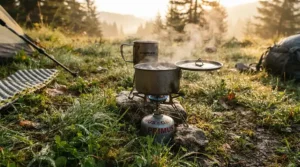
Keep the canister warm in a jacket before use, stand it on an insulating pad rather than frozen ground, and don’t point a burner flame at a can. Good canister-to-stove threading plus a warm can solves most beginner failures.
Real-World Scenarios: Three Hikers, Three Fuel Choices
Scenario 1: The budget weekend walker
You do 6-8 weekends a year in the Lakes or Peaks, mostly April to September, with a budget under £60 for the stove-and-fuel combination. A Vango Atom plus a 100 g Primus Power Gas is the sensible answer. The can is easy to find and the burner weighs next to nothing. The compromise is wind: bring a windshield or camp in the lee of a wall.
Scenario 2: The shoulder-season wild camper
You’re out solo in Scotland or Snowdonia from March to November with temperatures near freezing. Here a regulated burner like the SOTO WindMaster with a Kovea Power Gas (if the ratio holds) or Jetboil Jetpower is the logical combination. The regulator and the higher propane share cover cold mornings, and the 230 g size means you can carry a margin.
Scenario 3: The two-person long-distance trek
You’re walking the Pennine Way or a similar route with a partner and want quick evening meals. A Jetboil Flash 1.0L or a bigger system gives fast boils, and a 230 g MSR IsoPro or Primus Power Gas is the likely fuel. Forum reports suggest 100 g and 230 g threaded canisters are the standard sizes in most UK hiking shops and hardware stores, and busier trails often have grocery stores that stock them. Still, buy a spare before a remote stretch rather than counting on resupply.
Problem → Solution: Five Common Canister Headaches
1. The flame weakens or dies in the cold
Cold lowers pressure inside the can. Solution: keep the canister inside your jacket until needed, stand it on a foam pad, and choose a higher-propane mix such as Kovea Power Gas. A regulated stove like the SOTO WindMaster also helps.
2. Frost forms on the canister
Evaporating fuel draws heat from the can, so frost is normal. Solution: cook in short bursts, warm the can between uses, and avoid cooking at full power. Setting it in a shallow dish of lukewarm water is a classic trick, but keep it away from the flame.
3. It hisses when you thread it
Solution: unscrew immediately, clean the valve and O-ring, and retry. Persistent hissing means a damaged valve or seal; don’t light it.
4. The can doesn’t fit
Solution: check the connection type before buying. Threaded EN417-style cans suit screw-on stoves, but pierceable types do not.
5. You don’t know how much gas is left
Solution: weigh the can and subtract the empty weight. Jetboil’s own fuel sheet gives 90 g empty for its 100 g can and 120 g for its 230 g can. Other brands differ, so weigh an empty one if you want accuracy.
What Is Propane Butane Mix for Backpacking Stove Fuel?
Propane butane mix for backpacking stove fuel is a pressurised blend of propane with butane or isobutane, packed into a lightweight screw-thread canister. Propane keeps pressure up in cold weather, while butane gives low pressure and lighter, cheaper cans. The blend balances cold performance against pack weight for three-season hiking.
The science is simple. Propane stays liquid under pressure down to about −42°C, so it still vaporises in deep cold. Butane liquefies around −0.5°C, which is why straight butane gives up near freezing. Isobutane sits between them, boiling at roughly −12°C. Propane also holds much higher pressure at room temperature (about 860kPa against about 215kPa for butane, per one outdoor retailer’s guide). That is why pure propane needs a heavy steel cylinder. Mixing the two gives a canister light enough to carry.
| Fuel type | Cold performance | Carry weight | Control | Best For |
|---|---|---|---|---|
| Propane butane mix canister | Good, improves with propane share | Light, self-contained | Good with a regulator | Most UK hikers, e.g. SOTO WindMaster users |
| Pure butane canister | Weak near freezing | Light | Adequate | Summer-only trips |
| Multi-fuel liquid stove | Excellent, works at altitude | Heavy (475 g stove) | Fiddly | Optimus Polaris Optifuel expedition users |
| Methylated spirits | Slower boil, less control | Light stove | Basic | Minimalists |
The table shows why mix canisters dominate: they’re the best compromise of weight, simplicity and cold tolerance. A liquid-fuel stove like the Optimus Polaris Optifuel wins where you need multiple fuels or extreme cold, but it demands care and money. For most British trips, a mix canister is the sensible default.
How to Choose a Propane Butane Mix for Backpacking Stove
- Check the season. Warm months allow a modest propane share, while temperatures near freezing favour a higher one. Expect more help from a regulator than from a few extra percent of propane.
- Confirm the valve. Match the threaded or pierceable design to your stove, as covered in the threading section.
- Match canister size to trip length. A 100 g can suits solo weekends. A 230 g can suits couples or four-plus nights.
- Read the ratio. Brands don’t always publish it. If it’s missing, treat the can as unknown and check a reputable source.
- Weigh the whole kit. Gas is only half the story; the empty can adds roughly as much weight as the fuel in smaller sizes.
- Pair with your stove type. Regulated and heat-exchanger stoves (SOTO WindMaster, Jetboil Flash 1.0L) tolerate lower-propane blends better than a bare burner like the Vango Atom.
- Plan resupply. Standard 100 g and 230 g sizes are the easiest to find in the UK.
Trail Fuel Weight: Doing the Sums Before You Pack
Trail fuel weight is a sneaky line item. Beginners pack by the fuel figure on the label, but you carry the metal too. Jetboil’s fuel sheet lists a 100 g can at 190 g gross and a 230 g can at 365 g gross. In the small size, the can is nearly half the load.
Let’s run a planning example. These burn rates are my assumptions, not measured data, so adjust them to your own cooking. Say a solo hiker boils water twice a day and uses about 20 g of gas per day. Over a four-night trip that’s roughly 80 g, so a 100 g can covers it with a small margin and weighs about 190 g loaded. Carrying a 230 g can instead adds around 175 g. Two people cooking more might use 35 g a day, so over three nights that’s about 105 g, which tips you into the 230 g size.
Two practical levers help. First, efficiency: heat-exchanger systems like the Jetboil Flash 1.0L typically need less gas per boil, and a US test by Outdoor Life found the Jetboil Stash used roughly half the fuel of other stoves it tried. Second, wind: sheltering a flame can save more gas than any canister swap. Lowering trail fuel weight is as much about technique as kit.
Lightweight Backpacking Systems: Matching Mix, Stove and Mug
Building lightweight backpacking systems means treating canister, burner, mug and windshield as one package. Live for the Outdoors’ advice is to pair the smallest practical canister with a titanium mug and a minimalist burner. Its examples include the 45 g Alpkit Kraku and the 57 g Primus Micron III, both of which sit inside a mug alongside a small can.
Packing cleverness matters too. The Optimus Crux folds into the hollow base of a 230 g canister, saving bulk, though testers found it slow and wind-sensitive. At the other end, integrated systems like the Jetboil Flash 1.0L (398 g) cost weight but boil fast and efficiently. For cold or rough ground, a remote-canister stove like the Optimus Vega (186 g) sits low and lets you invert the can for better gas flow, at the price of weight.
Here’s a practical framework. If you mostly boil water, an integrated system saves fuel. If you cook, choose a regulated burner like the SOTO WindMaster. If every gram counts, the Vango Atom with a 100 g Primus Power Gas is a cheap, light starting point. Whatever you pick, the mix and the stove should share the same valve standard.
Propane Butane Canister Reviews: What Testers and Hikers Actually Report
Read enough propane butane canister reviews and a few themes keep surfacing. I couldn’t verify aggregated Amazon UK review scores at the time of research, so this summary draws on forum threads and independent tests rather than store star ratings.
- Propane share matters for cold. Hikers repeatedly say more propane means better cold-weather behaviour, and recommend avoiding low-propane cans in freezing conditions.
- Brand differences are small. Several experienced forum users say they can’t distinguish MSR, Snow Peak and Jetboil canisters in use, and consider the premium for some brands poor value.
- Primus gets mixed notes. Trailspace reviewers like it for altitude and price, but some report weaker cold performance, particularly on unregulated stoves.
- UK availability is fine. Forum posters say 100 g and 230 g threaded cans are standard in most hiking shops, and often at hardware stores.
- Generic mixes are usually fine in mild weather. One forum contributor notes that unbranded 70/30 mixes are acceptable outside winter.
Treat these as signals, not verdicts. The sensible way to read propane butane canister reviews is to look for patterns rather than single complaints. Cold failures nearly always involve a low-propane can, an unregulated stove, or both.
Common Mistakes When Buying Propane Butane Mix for Backpacking Stove Trips
Mistake 1: Buying by price per can
A cheaper can with a low propane share can cost you a failed breakfast at 1°C. Compare ratio, weight and size.
Mistake 2: Ignoring the empty-can weight
You carry the metal as well as the gas. Weigh the loaded can, not the label figure.
Mistake 3: Mismatched valves
Pierceable and threaded cans aren’t interchangeable. Verify before you buy.
Mistake 4: Assuming one mix suits every stove
A regulated stove can make a modest mix work in the cold, while a bare burner often can’t. The Vango Atom needs a stronger blend than the SOTO WindMaster.
Mistake 5: Leaving the can in the cold overnight
A frozen canister is a weak canister. Sleep with it in the tent, in a stuff sack away from your sleeping bag.
Safety, Regulations and Transport: The UK Guide
Safety with gas is mostly common sense plus a few firm rules.
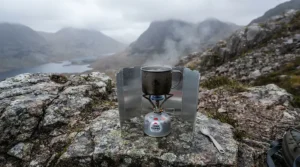
Cooking: never use a stove inside a tent. Carbon monoxide builds quickly in enclosed spaces, and it’s odourless. Cook in the porch only if the tent design allows it and with maximum ventilation.
Valves: as noted in the threading section, a dirty valve can leak, so keep it clean and check the seal each time.
Travel: UK airports restrict dangerous items. The gov.uk hand luggage guidance states that security staff can refuse anything they consider dangerous, even if it’s usually allowed. Airlines generally prohibit camping gas cartridges and stoves with gas attached, so assume you’ll need to buy fuel at your destination and confirm with your airline.
Storage and disposal: keep canisters away from heat sources and out of hot cars. Empty cans should be fully empty before disposal, and recycling rules vary by council. Jetboil’s CrunchIt tool exists to puncture empty EN417 cans for recycling, but check local guidance first.
Standards: EN417 is the relevant European standard for non-refillable metallic LPG cartridges, and UK retailers stock compliant products. Buy from reputable sellers and avoid damaged cans.
FAQ
❓ Can I use a propane butane mix for backpacking stove trips in winter?
❓ Is a 100 g or 230 g canister better value?
❓ Are all screw-thread canisters compatible with any stove?
❓ Can I fly with a gas canister in hand luggage?
❓ Which stove pairs best with a propane butane mix for backpacking stove use?
Conclusion
The best propane butane mix for backpacking stove trips isn’t a single can. It’s a pairing of ratio, stove and conditions. For most UK walkers, Primus Power Gas is the sensible default. Jetboil Jetpower gives transparent weights for those counting grams, MSR IsoPro suits shoulder-season brand loyalists, and Kovea Power Gas looks promising for colder, value-minded trips, provided the ratio checks out.
On the stove side, the SOTO WindMaster gets the most from any fuel, the Vango Atom is the budget lightweight champion, and the Jetboil Flash 1.0L is the fast, efficient system. If you remember three things, make them these. Propane share and a regulator matter most in the cold. Trail fuel weight includes the can. And good canister-to-stove threading prevents leaks.
Now it’s your turn to build your own lightweight backpacking systems and head out.
Recommended for You
- Propane Butane Mix For Cold Weather Camping: 7 Best Picks (2026)
- Propane Butane Canisters Under £10: 7 Best Cheap Buys (2026)
- Butane Canisters For Camping Stove: 7 Best Picks (2026)
Disclaimer: This article contains affiliate links. As an Amazon Associate, I earn from qualifying purchases. If you purchase products through these links, we may earn a small commission at no additional cost to you.
✨ Found this helpful? Share it with your friends! 💬🤗
