In This Article
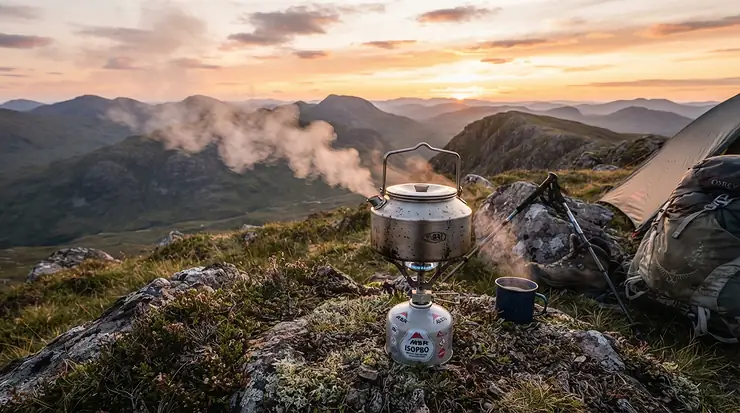
There is a special misery reserved for the walker who reaches a windy col at 6 pm, opens the valve and gets a flame the size of a birthday candle. Nine times in ten the stove isn’t to blame. The gas is. Choosing isobutane canisters for backpacking looks like the dullest line on your kit list, yet it decides whether your evening is a steaming dinner or a lukewarm sulk.
The chemistry is simple enough. Isobutane is a branched cousin of ordinary butane. It turns from liquid to gas at roughly -12°C, whereas normal butane needs to be near 0°C. That gap is why seasoned hikers fuss over blends. Add propane, which vapourises at a brutal -42°C, and you get the “four-season” mixes that keep a stove roaring when the hills turn sour.
This guide compares seven real canister options you can realistically find in the UK. Along the way it covers lightweight isobutane canisters for hiking, the isobutane vs butane canister camping debate, and how to squeeze more boil from every gram.
A quick note on honesty. I couldn’t verify a meaningful pool of amazon.co.uk star ratings at the time of research. Where I mention user sentiment, it comes from retailer Q&A and independent editorial reviews. Specs come from manufacturer and retailer listings, and the sources do disagree on some weights.
Quick Comparison: The Best Isobutane Canisters for Backpacking at a Glance
Here is the whole field on one screen before we dig in. Weights are full-can figures from retailer listings, which vary by batch. Treat prices as indicative ranges at the time of research.
| Product | Blend (as listed) | Full weight | Cold-weather claim | Price range | Best For |
|---|---|---|---|---|---|
| MSR IsoPro 227g | 80/20 isobutane/propane | ~371g | Strong, no stated limit | £8-£12 | Shoulder-season consistency |
| Jetboil Jetpower (100g/230g) | ~73% isobutane, 25% propane, 2% butane | ~195g / ~360-380g | Four-season | £5-£10 | Lightweight weekends |
| Primus Winter Gas | 80/20 isobutane/propane | ~380-390g (est.) | To -22°C | £8-£12 | Sub-zero trips |
| Primus Power Gas | Isobutane/propane (check label) | ~198g / ~390g | Spring to autumn | £5-£9 | Everyday value |
| Optimus 4-Seasons Gas | 70/25/5 isobutane/propane/butane | ~360g | Around freezing | £8-£12 | Optimus stove owners |
| Kovea Iso-Butane & Propane Canister | 72/25/3 isobutane/propane/butane | Not verified | To -23°C (retailer-listed) | £5-£9 | Budget buyers |
| Optimus Gas 230g | 50/25/25 butane/isobutane/propane | ~360-380g | Three-season | £6-£9 | Summer-only walkers |
The table shows a pattern. The cans built around an 80/20 split, MSR IsoPro 227g and Primus Winter Gas, cost more but are the ones you want when the temperature falls. Jetboil Jetpower in its 100g size is the weight-saver’s friend. Optimus Gas 230g is the cautionary tale: cheap, but butane-heavy and happiest in July.
💬 Just one click — help others make better buying decisions too!😊
Top 7 Isobutane Canisters for Backpacking: Expert Analysis
Each pick below gets the same treatment: what the specs mean on the trail, who it suits, and what the available feedback says. I’ve also included the honest drawbacks.
1. MSR IsoPro 227g — the cold-weather benchmark
The headline here is an 80/20 isobutane-propane split that MSR says contains 5% or less n-butane. That purity is what keeps pressure up as the can empties.
An editorial review lists the can at about 371g full and roughly 144g empty. Retailer listings quote anything from 324g to 377g, so weigh your own. The wide, short shape is a quiet win. It sits stably under a pot on lumpy ground, which matters more than any spec-sheet number when you’re cooking on a tussock. The self-sealing Lindal valve lets you remove the can between meals. A smaller 110g version is sold for MSR’s compact pot systems.
Based on the spec comparison, this is the can for walkers who want a dependable simmer in October and April, not just August. An independent review called it solid and unexciting, which is high praise for fuel. One retailer-page buyer reported good cold-weather boiling in snowy hills, though the pressure sagged late in the can. Another found it gave fewer boils than a rival can in a different stove, a reminder that stove pairing matters.
Pros:
- ✅ 80/20 blend holds pressure as the can empties
- ✅ Wide base is stable under pots
- ✅ Three sizes cover weekends to base camps
Cons:
- ❌ Heavier than the 100g class
- ❌ Premium price per gram of gas
Expect to pay around £8-£12. You are buying consistency, and for cold-season trips that is worth it.
2. Jetboil Jetpower — the lightweight weekender
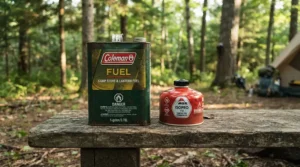
This one earns its place because the 100g size is a superb lightweight isobutane canister for hiking. Jetboil’s own estimates are about 12 litres boiled per 100g and 24 litres per 230g.
Retailers list the 100g can at roughly 194-199g full (about 9 × 7cm), and the 230g at roughly 356-380g (about 11 × 10cm). One retailer lists the blend as roughly 73% isobutane, 25% propane and 2% butane. The retailer Q&A is worth knowing: the 230g can is too wide to nest inside the Flash stove, while the 100g can fits. Those boil figures also work out to about 8-10g of gas per litre, which is a best-case number from an efficient integrated stove.
On paper, this is the sensible choice for one or two people on a weekend. A buyer in the retailer Q&A said they carry a 230g can on four-day hikes for two and haven’t run out. A different retailer’s listing calls it very good value for money, which is marketing language, so treat it with salt.
Pros:
- ✅ 100g can is light and packs small
- ✅ Three-component blend aimed at all seasons
- ✅ Works with any Lindal-valve stove, not just Jetboil
Cons:
- ❌ 230g size won’t nest in some Jetboil stoves
- ❌ Boil-volume claims are best-case figures
Expect around £5-£10 depending on size. Verdict: great value, especially in the 100g size.
3. Primus Winter Gas — Vapour Mesh for sub-zero mornings
Primus fits an absorbent paper insert called Vapour Mesh inside the can, which increases the surface area for liquid fuel to evaporate. Primus says this makes the can roughly 9% more powerful after 60 minutes of cooking and about 15% more after 120 minutes.
The blend is 80% isobutane and 20% propane, and the company rates it down to -22°C. The listed 230g dimensions are about 108 × 108 × 85mm. One Nordic retailer cautions that using it above 0°C is unnecessary and can burn unevenly, so this is a specialist can rather than an everyday one.
What this means in practice is that the can’s advantage grows as the fuel runs low, which is exactly when cold cans normally fade. If you winter-camp, ski-tour or walk the Cairngorms in February, that is the point. If you only walk in summer, you’re paying for capability you won’t use.
I found no meaningful verified review pool for this can. The sentiment I can report is that retailers consistently position it as the fastest sub-zero option, which is Primus’s own claim, so test it before betting a trip on it.
Pros:
- ✅ Rated to -22°C by the manufacturer
- ✅ Vapour Mesh helps as the can empties
- ✅ 80/20 blend suits cold, high conditions
Cons:
- ❌ Overkill for summer trips
- ❌ Pricier than three-season cans
Expect around £8-£12. Verdict: worth it for winter, wasteful for July.
4. Primus Power Gas — the sensible all-rounder
Primus calls this its best-selling gas, a propane-isobutane mix intended for spring through autumn. It is the can I’d call the default.
Listings show 100g and 230g sizes at about 198g and 390g full, and a 450g size for bigger stoves. One UK retailer pitches the 100g for a one-night bivi for two and the 230g for two nights. One caution: some retailers list 80% isobutane and 20% propane, while an older listing shows 25/25/50 propane/isobutane/butane. Read the label on the can in your hand.
The commentary here is about flexibility. Even with temperatures dropping below freezing, Primus says the gas still gives enough pressure to run a stove, so this suits UK weather, which is rarely decided in advance. The company also says it offsets emissions.
I couldn’t verify an amazon.co.uk review pool, so no sentiment to report beyond retailer positioning as a versatile, good-value can. Treat that as a starting point, not proof.
Pros:
- ✅ Widely available in 100g, 230g and 450g
- ✅ Handles changeable spring and autumn weather
- ✅ Fits Primus and MSR threaded stoves
Cons:
- ❌ Blend wording varies between listings
- ❌ Not built for deep winter
Expect around £5-£9. Verdict: strong value for most UK walkers.
5. Optimus 4-Seasons Gas — the tamper-cap trick
Optimus lists a 70% isobutane, 25% propane and 5% butane mix in a steel can. It weighs about 360g in the 230g size, with dimensions of roughly 110 × 110 × 90mm.
The clever detail is the cap. It shows whether a can is new or used, which saves you from discovering a part-empty can at the wrong moment. Optimus says stable performance continues around freezing and at altitude, and it works best with stoves that support a four-season mode. The brand also notes a folded Crux stove can be stored inside the cap area.
The reasoning is simple. If you own an Optimus stove, this can is the obvious partner. If you don’t, it is a perfectly reasonable can but not a category leader on price.
I found no verified review pool here either. The consistent theme in retailer copy is reliability close to freezing, rather than extreme cold.
Pros:
- ✅ Isobutane-led 70/25/5 blend
- ✅ Cap shows new versus used
- ✅ Steel construction, EN 417 threaded
Cons:
- ❌ Cold claims stop around freezing
- ❌ Priced like a premium can
Expect around £8-£12. Verdict: a neat fit for Optimus stoves, otherwise optional.
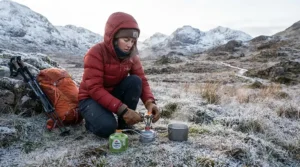
6. Kovea Iso-Butane & Propane Canister — budget with a catch
Kovea’s mix is listed as 72% isobutane, 25% propane and 3% n-butane. A Malaysian retailer lists an operating range from 40 to -23°C, and a 230g size with dimensions of about 11 × 11 × 9cm.
Here is the catch. I found Kovea cans listed with a screw thread, and also one listing with a bayonet-style self-sealing valve. A bayonet can will not fit a standard screw-thread stove. Check the thread before you click.
The analysis is that this is an attractive budget can on paper. The blend is close to the premium cans. But cold limits are retailer-listed, not independently tested, and UK availability can be patchy.
I couldn’t verify a review pool, so I won’t invent sentiment. The honest summary is that the spec is promising and the proof is thin.
Pros:
- ✅ Isobutane-led blend close to premium cans
- ✅ Cold-weather range listed to -23°C
- ✅ Typically cheaper per gram
Cons:
- ❌ Some Kovea cans use a bayonet valve
- ❌ Limited verified feedback and patchy UK stock
Expect around £5-£9. Verdict: good value if the thread matches.
7. Optimus Gas 230g — the butane-heavy contrast
I’ve included this one deliberately. It lists a 50% butane, 25% isobutane and 25% propane mix, so it is not an isobutane-led can. It carries a 3-season label and complies with EN 417. Retailers list about 360-380g, and one flags it as not for extreme cold.
This is the clearest illustration of isobutane vs butane canister camping. More butane means a cheaper, gentler mix that is fine in summer. As the temperature falls, normal butane stops vapourising well and your flame weakens.
The use case is narrow but real. If you only camp from June to August and carry a 230g can for a long weekend, this will boil water without fuss. Buy it for that, not for a bivi above the snowline.
Again, no verified review pool to report. The retailer information is clear on one point only: it is a seasonal can.
Pros:
- ✅ Inexpensive for summer use
- ✅ Standard EN 417 thread
- ✅ Familiar 230g size
Cons:
- ❌ Butane-heavy mix fades in the cold
- ❌ Not suited to shoulder seasons
Expect around £6-£9. Verdict: fine for July, risky for October.
What Are Isobutane Canisters for Backpacking?
Isobutane canisters for backpacking are sealed steel cylinders of liquefied petroleum gas, usually an isobutane and propane blend, that screw onto a compatible stove. Isobutane vapourises at a lower temperature than normal butane, so your stove keeps its pressure and flame strength in cooler weather and as the can empties.
Most threaded canisters meet a European standard, EN 417, which is why most stoves accept most cans. They also use a self-sealing valve so you can unscrew a can without losing gas. That makes the system tidy and fast, which is why it dominates modern backpacking.
Here is the practical bit. The canister is a pressure vessel with a liquid inside. When you open the valve, liquid boils off into gas, and that boiling cools the can. Cold gas has less pressure, the flame weakens, and the can cools further. Good blends exist to break that loop.
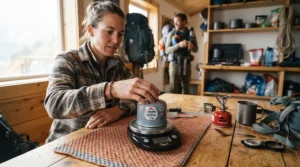
Isobutane vs Butane Canister Camping: What the Chemistry Means
The question of isobutane vs butane canister camping comes down to one number: boiling point. Normal butane boils at about -0.5°C, isobutane at about -11.7°C, and propane at about -42°C. UK outdoor retailer Alpkit notes that high-quality fuel canisters typically contain 80% isobutane and 20% propane.
| Feature | Butane-heavy canister | Isobutane-heavy canister |
|---|---|---|
| Boiling point | ~-0.5°C | ~-11.7°C |
| Cold-hill performance | Weakens near freezing | Holds better below freezing |
| Pressure as can empties | Drops sooner | Holds steadier |
| Best For | Summer car camping | Three-season and winter backpacking |
One myth deserves a quick correction. You’ll see claims that isobutane packs far more energy per gram. The two are isomers with almost identical energy content, so the real difference is vapour pressure, not heat. This is a point where the spec sheet is quietly more modest than the marketing.
The table shows why Optimus Gas 230g lags in cold weather while Primus Winter Gas and MSR IsoPro 227g keep going. In practice, if you walk beyond summer, choose isobutane-led blends. If you camp only in warm months, a butane-heavy can saves a few pounds.
How to Choose Isobutane Canisters for Backpacking
Here is a simple route to the right can.
- Match the blend to your coldest night. Walking only in summer? A butane-heavy mix will do. Going into autumn or spring? Pick an isobutane-led blend such as Primus Power Gas or Optimus 4-Seasons Gas.
- Check the thread. Look for a screw-thread, EN 417 can. Some brands also make bayonet cans, so confirm before buying a Kovea Iso-Butane & Propane Canister.
- Size to your trip. A 100g can suits a weekend. A 230g can suits longer trips or two people. A 450g can suits base camps.
- Check stove nesting. Some integrated stoves hold only the smaller size, as with Jetboil Jetpower in the Flash.
- Count grams carried versus grams burned. A larger can often means carrying fuel you never use.
- Plan for resupply. UK walkers report 100g and 230g cans are the common sizes in hiking shops and often on busy trails.
- Weigh value per gram of gas, not price per can. The value table later in this guide helps.
Lightweight Isobutane Canisters for Hiking: Where Trail Weight Savings Really Come From
The gram-counting crowd obsesses over stoves and forgets the fuel. The best trail weight savings usually come from matching the can to the trip.
Take a solo three-night trip with about a litre of water boiled per day. Using the 8-10g per litre implied by Jetboil’s figures, that is roughly 25-30g in an efficient system, or perhaps 50-60g with an open pot in wind. A 100g can covers that with margin. A 100g can weighs about 195g full, against roughly 360-380g for a 230g can. Choosing the smaller can saves about 165-185g, roughly the weight of two big bars of chocolate.
Dive further and you find the secret. Carry a can that matches your plan, and weigh it. Empty shells are about 95-100g for the 100g size and about 140-150g for the 230g size, so a kitchen scale tells you exactly what’s left. That is cheaper and lighter than hauling a spare “just in case”.
The caveat is that bigger cans buy peace of mind in the cold. If you’re heading somewhere remote in winter, an extra 100g is cheap insurance.
Canister Burn Efficiency: Getting More Boil from Every Gram
Canister burn efficiency is mostly about behaviour, not gadgets. These are the habits that stretch a can:
- Lid on, always. Heat escapes from an open pot faster than you’d think.
- Match pot to burner. A wide, shallow pot spreads flame badly. A tall, narrow pot captures more of it.
- Shield the flame, not the can. A windshield around the burner helps. Wrapping it tightly around the canister can overheat the can, which is dangerous.
- Don’t run flat out. A moderate flame wastes less heat past the pot’s edges.
- Keep the can warm. In cold weather, a can that has been in your jacket overnight gives a stronger flame than one left on the ground.
- Measure water. Boil what you’ll drink, not what fits.
Honest expectation: efficiency claims are best-case numbers measured in calm conditions. A good integrated stove might approach the figures quoted earlier, but wind, altitude and cold will push the real number up.
Backpacking Stove Systems and Canister Pairing
Your choice among backpacking stove systems shapes which can you want. Integrated systems nest the pot, burner and can together, and they’re highly efficient but limit your can size. Modular systems use a separate burner that screws onto the can, which gives freedom of size but usually costs a little efficiency in wind. Compact burners are the lightest of all, but their stability on a small can suffers.
Here is how I’d pair them, based on the spec comparison. An integrated stove suits Jetboil Jetpower, particularly the 100g can. A screw-on burner pairs well with the wide, stable MSR IsoPro 227g. An Optimus stove naturally suits Optimus 4-Seasons Gas.
The real trap is mixing a tiny burner with a tall, narrow can. It looks fine on a table and wobbles in a gale. If stability matters, go for the squat 230g cans.
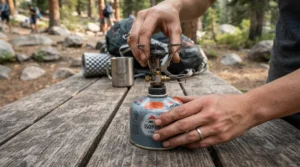
Price Range and Value: Cost per Gram of Gas
Value isn’t the sticker price. It’s the cost per gram of usable gas, and the usable part depends on how cold it is.
| Product | Fuel size | Indicative price range | Approx. cost per 100g of gas | Best For |
|---|---|---|---|---|
| MSR IsoPro 227g | 227g | £8-£12 | £3.50-£5.30 | Cold-season reliability |
| Jetboil Jetpower | 100g | £5-£8 | £5.00-£8.00 | Lightest weekends |
| Jetboil Jetpower | 230g | £7-£10 | £3.00-£4.30 | Longer trips |
| Primus Winter Gas | 230g | £8-£12 | £3.50-£5.20 | Sub-zero trips |
| Primus Power Gas | 230g | £5-£9 | £2.20-£3.90 | Everyday value |
| Optimus 4-Seasons Gas | 230g | £8-£12 | £3.50-£5.20 | Optimus stove owners |
| Kovea Iso-Butane & Propane Canister | 230g | £5-£9 | £2.20-£3.90 | Budget buyers |
| Optimus Gas 230g | 230g | £6-£9 | £2.60-£3.90 | Summer-only walkers |
These per-100g figures are my arithmetic from indicative ranges, so use them for ranking, not for budgeting to the penny. The small 100g can is clearly the most expensive per gram, which is the price of its weight advantage. Primus Power Gas and Kovea Iso-Butane & Propane Canister are the pence-per-gram winners, while MSR IsoPro 227g and Primus Winter Gas charge for cold-weather capability.
The bigger picture is that a can costs a few pounds, while a failed dinner on a wet hillside costs a lot more. Buy the blend your coldest trip needs.
Real-World Scenarios: Three Walkers, Three Canisters
The Peak District weekender. Two nights, one litre of water boiled per day, mild weather, a solo integrated stove. Budget is tight. The Jetboil Jetpower 100g is the logical fit: light, small, and sized to the trip. Spend on a lightweight can and keep the change for a good brew.
The Cairngorms shoulder-season couple. Three nights in late October, overnight lows below freezing, a modular stove, two people cooking real dinners. The Primus Winter Gas or MSR IsoPro 227g makes sense here. The extra pounds buy a steady flame when the can is cold. Add a spare 100g can if the forecast looks grim.
The Pennine Way long-distance walker. Two weeks, resupply every few days, variable weather, a tight daily budget. UK walkers report that 100g and 230g cans are the common sizes in hiking shops and often on busy trails. Primus Power Gas is the sensible default, buying a 230g can each resupply and weighing it as you go. Check the thread on cheaper alternatives such as the Kovea Iso-Butane & Propane Canister before relying on them.
Notice the pattern. The right can depends on temperature, trip length and resupply, not on the brand name.
Practical Usage Guide: Your First 30 Days with a Canister Stove
Here is the routine that avoids most early mistakes.
- Inspect before you leave. Check the can for dents, rust and a clean valve. Don’t use a damaged can.
- Thread gently. Screw the burner on straight until snug, never forced. Cross-threading is the classic beginner error.
- Leak-check outdoors. Brush a little soapy water around the join. Bubbles mean a leak. Stop and replace.
- Cook outside, always. Never use a stove inside a tent or in a closed space.
- Weigh as you go. Note the empty weight once, then subtract after each trip.
- Warm cold cans safely. Keep the can in your jacket or sleeping bag overnight. Never warm it over a flame.
- Store upright, cool and dry. Keep cans away from sun and hot cars.
Common mistakes in the first month: overtightening, running on full flame, forgetting to carry the empty-can weight in your head, and arriving at the trailhead with the wrong thread type. A short checklist taped inside your stove bag fixes all four.
Common Mistakes When Buying Isobutane Canisters for Backpacking
Buying by grams alone is the big one. Two cans with the same fuel weight can behave very differently in the cold because the blend differs. Here are the others I see most often:
- Assuming “isobutane” on the label means mostly isobutane. Check the percentages. Optimus Gas 230g lists 50% butane.
- Ignoring valve type. Screw-thread and bayonet cans are not interchangeable.
- Over-buying size. Carrying 450g for a weekend wastes more weight than any stove upgrade saves.
- Under-buying for winter. Running short on a cold trip is dangerous, not just annoying.
- Trusting boil-time claims. They’re measured in kind conditions. Plan with a margin.
- Storing in a hot car. Heat raises pressure in any sealed can.
The cure is simple. Read the blend, check the thread, and plan fuel around your coldest night.
Safety, Regulations and Getting Gas to the Trailhead
Canisters are dangerous goods when transported by air, and airlines are strict. The Civil Aviation Authority’s banned items guidance says camping stoves with fuel attached are normally not permitted, with limited exceptions for stoves fully purged of fuel. Airlines such as easyJet also state that gas refills are not permitted. In practice, don’t fly with canisters. Buy them at your destination and confirm your airline’s rules first.
On the ground, a few UK habits help:
- Look for EN 417 on the can.
- Many UK retailers can’t post canisters, so check delivery eligibility on the amazon.co.uk listing before you plan around it.
- Empty cans should be completely used, and some councils reject punctured ones. Check your local council’s guidance before binning.
- Never cook in a closed tent, because of fire and carbon monoxide risk.
Treat the can with the same respect as any pressurised container, and it will treat you well.
FAQ
❓ How long does a 230g canister last on a three-night backpacking trip?
❓ Can I use any threaded canister with my backpacking stove?
❓ Is isobutane gas better than butane for cold UK hills?
❓ Where can I buy isobutane canisters near UK trailheads?
❓ How do I know how much gas is left in my canister?
Conclusion
The best isobutane canisters for backpacking aren’t the most expensive or the most famous. They’re the ones matched to your coldest night, your trip length and your stove. For most UK walkers, Primus Power Gas is the sensible everyday choice. For colder trips, MSR IsoPro 227g and Primus Winter Gas earn their premium. If weight is your obsession, Jetboil Jetpower in the 100g size is hard to beat. Optimus 4-Seasons Gas suits Optimus stove owners, and the Kovea Iso-Butane & Propane Canister is a tempting budget pick if the thread matches. Keep Optimus Gas 230g for summer only.
Remember the three habits that matter more than any brand: read the blend, check the thread, and weigh your can. Do those and you’ll rarely meet that sad little flame on a windy col again.
✨ Ready to fuel your next adventure? 🥾
Click any highlighted product above to check current pricing and availability on amazon.co.uk, then pack the can that fits your trip. Hot food on a cold hill is worth every gram! 🔥
Recommended for You
- Propane Butane Mix For Backpacking Stove: 7 Best Picks (2026)
- Propane Butane Mix For Cold Weather Camping: 7 Best Picks (2026)
- Propane Butane Canisters Under £10: 7 Best Cheap Buys (2026)
Disclaimer: This article contains affiliate links. As an Amazon Associate, I earn from qualifying purchases. If you purchase products through these links, we may earn a small commission at no additional cost to you.
✨ Found this helpful? Share it with your friends! 💬🤗
