In This Article
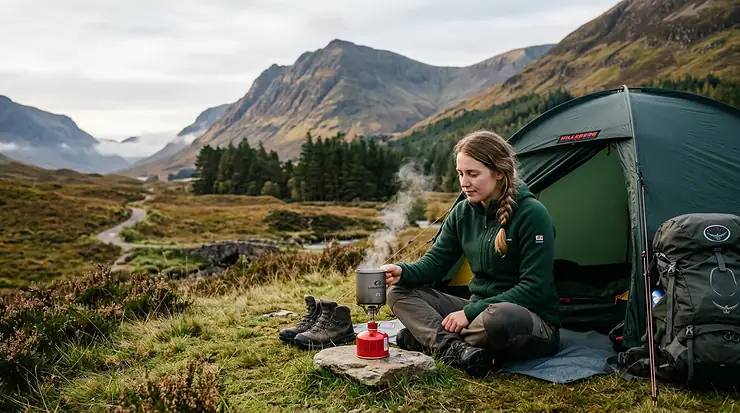
There’s a moment — somewhere on a rain-lashed hillside in the Peak District, hands numb, waterproofs doing their level best — when a reliable screw top camping stove stops being a piece of gear and becomes something more like a small miracle. You twist it onto your gas canister, click the igniter, and suddenly there’s a hot cup of tea coming. Everything is marginally better. That’s the magic of a well-designed canister stove, and it’s why more UK walkers, wild campers, and weekend adventurers are choosing one over any other type of outdoor cooking kit.
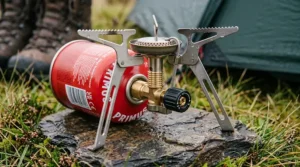
A screw top camping stove — also known as a canister-top or threaded gas valve stove — simply screws directly onto a self-sealing EN417 threaded gas canister. No hoses. No pumps. No priming rituals that make you feel like you’re performing surgery in the dark. Fold out the pot supports, screw the burner onto your isobutane canister, spark it up, and you’re cooking. For the vast majority of three-season UK camping and walking, this design hits the sweet spot between weight, convenience, and performance in a way that nothing else quite manages.
But choosing the right one is trickier than it looks. There are dozens of models on Amazon.co.uk ranging from under £20 to well over £100 — and the price difference doesn’t always tell the story you’d expect. A £15 titanium stove can genuinely outperform a £60 model in the right conditions. A £110 integrated system looks clever until a British gale reduces it to a fancy paperweight without a windshield.
In this guide, I’ve pulled together the seven best screw top camping stoves currently available on Amazon.co.uk in 2026, covering the full spectrum from ultralight budget options to premium all-weather performers. I’ve assessed each one not just on specs, but on what they actually mean for someone camping in Britain — where “dry day” is an optimistic forecast and “mild drizzle” is basically summer.
Quick Comparison: Best Screw Top Camping Stoves UK 2026
| Stove | Weight | Output | Boil Time (1L) | Price Range | Best For |
|---|---|---|---|---|---|
| BRS-3000T | 26g | 2,700W | ~3 min | Under £20 | Ultralight budget backpackers |
| MSR PocketRocket 2 | 73g | 3,500W | 3.5 min | £45–£60 | All-round trail use |
| SOTO Amicus | 82g | 2,900W | ~3.5 min | £35–£50 | Wind-resistant simmering |
| Fire Maple Buzz | 85g | 3,100W | ~3 min | £25–£38 | Budget compact cooking |
| MSR PocketRocket Deluxe | 83g | 3,500W | ~3 min | £70–£85 | All-conditions performance |
| Jetboil Flash | 371g (system) | 2,600W | 1 min 40 sec (500ml) | £100–£125 | Speed & convenience |
| Primus Essential Trail | 91g | 2,800W | ~3.5 min | £38–£55 | Value-conscious trekkers |
What this table tells you: The BRS-3000T wins on weight and price, but there’s a significant jump in all-weather reliability once you move up to regulated stoves like the MSR PocketRocket Deluxe. The Jetboil Flash is in a different category altogether — it’s not competing on weight but on the sheer speed of boiling water. For most UK walkers doing two-to-four day trips in non-winter conditions, the MSR PocketRocket 2 or SOTO Amicus represents the best balance of performance and value, sitting neatly in that £40–£55 range where you get real capability without taking out a small loan.
✨ Don’t Miss These Exclusive Deals!
🔍 Ready to upgrade your camping kitchen? Click any highlighted product name in this guide to check current pricing and availability on Amazon.co.uk. These are hand-picked picks that genuinely earn their place in a pack.
💬 Just one click — help others make better buying decisions too! 😊
Top 7 Screw Top Camping Stoves: Expert Analysis
1. BRS-3000T Ultralight Titanium Canister Stove
The BRS-3000T is the stove that made the ultralight backpacking community do a collective double take. Twenty-six grams. That’s it. The same weight as a few sheets of A4 paper, and it fits inside a matchbox with room to spare.
The three folding pot-support arms are made from titanium alloy, and the whole thing screws directly onto any EN417 threaded screw on gas canister — your standard Primus, Coleman, or own-brand isobutane cartridge. Output is rated at 2,700W, which sounds modest but is enough to bring a litre of water to the boil in around three minutes in calm, mild conditions. There’s no built-in igniter, so bring a lighter or matches — not ideal when your hands are soaked through after a Scottish ridgeline crossing, but a minor inconvenience for the price.
Here’s who this stove is genuinely for: solo wild campers, ultralight enthusiasts, and anyone who’s obsessive about pack weight. If you’re counting grams on a Dartmoor overnight and need something that functions without breaking the bank, it’s hard to argue against it. UK reviewer feedback is consistently positive for fair-weather use, with most noting it performs well as a backup or emergency stove — but several flag that it slows noticeably in wind without an external windshield.
What most buyers overlook: the BRS-3000T’s minimalist pot-support arms are narrow, which means large pots wobble. Stick to a 750ml–900ml pot and you’ll have no issues. Go bigger and you’re asking for trouble.
✅ Under £20 — exceptional value for a titanium stove
✅ Genuinely featherlight at 26g
✅ Compatible with all EN417 screw on gas canister stoves
❌ No igniter — bring a backup
❌ Narrow supports limit pot size
Price range: Under £20 on Amazon.co.uk — arguably the best value-per-gram ratio in this entire list.
2. MSR PocketRocket 2 Ultralight Backpacking Stove
If the BRS-3000T is the stove you buy on a dare, the MSR PocketRocket 2 is the one you buy with confidence. It’s been the benchmark canister-top stove for a reason — light enough at 73g to vanish inside a small pot, powerful enough at 3,500W to boil a litre in around 3.5 minutes, and built by a brand with a long track record in serious outdoor kit.
The serrated, collapsible pot supports fold out to accommodate pots of various sizes — considerably more stable than the BRS-3000T’s thin arms. Flame adjustment is smooth and intuitive, meaning you can actually simmer without it becoming a frustrating game of near-misses. The stove runs on standard isobutane-propane canister fuel — the same threaded gas valve stove format compatible with Primus, Jetboil JetPower, Coleman, Snow Peak, and virtually any other EN417 canister you’ll find in an outdoor shop in Britain.
In my experience, this is the stove that just gets out of the way and lets you cook. No fussing, no drama. UK campers working the Three Peaks, the Pennine Way, or summer wild camps in Snowdonia will find it reliably excellent in moderate conditions. The spec sheet won’t tell you this, but in a British headwind it will lose some efficiency — you’ll want a lightweight windshield if you’re regularly cooking on exposed ground.
UK customer reviews highlight the compact carry case and the quick setup as standout features. One reviewer who’d been using it on Munro walks since 2022 called it “utterly reliable in everything short of a full Highland gale.”
✅ Trusted MSR build quality — expect years of use
✅ Excellent flame control for simmering
✅ Compact with included protective case
❌ No pressure regulator — performance dips in cold weather and low-canister conditions
❌ Three-point support can be unstable with wide pots
Price range: £45–£60 on Amazon.co.uk — mid-range pricing for a stove that earns every penny.
3. SOTO Amicus Compact Camping Stove
Japan’s SOTO has quietly become one of the most respected names in backpacking stove design, and the Amicus is why. It weighs just 82g, produces 2,900W of output, and — this is the detail that matters for British campers — it performs noticeably better in wind than most comparably priced screw top camping stoves.
The burner head on the Amicus sits slightly lower and has a more compact profile than the PocketRocket 2, which means wind has less to work with. SOTO has also engineered excellent flame control into this stove: the adjustment valve has a longer travel range than most, which makes proper simmering genuinely achievable rather than merely theoretical. The pot supports are fixed in position (not folding), which some campers find reassuring for stability — though it means the stove takes up slightly more pocket space.
This is the stove I’d recommend to someone heading on a week’s walking in the Lake District or a spring circuit in the Brecon Beacons — somewhere with unpredictable weather and a mix of sheltered valleys and exposed ridgelines. The SOTO Amicus handles that variability better than most at this price.
The Cookset Combo version includes two aluminium pots and a lid — extraordinary value if you’re starting from scratch, essentially giving you a complete cooking system for the price of many stoves alone.
UK users praise the low profile and the reliable blue flame. A handful note the pot supports feel slightly less robust than the MSR’s, though none report any failure in regular use.
✅ Superior wind performance for a non-regulated stove
✅ Excellent simmer control
✅ Available as Cookset Combo for superb overall value
❌ Fixed pot supports mean bulkier to pack than folding alternatives
❌ No pressure regulator limits cold-weather performance
Price range: £35–£50 for the solo stove, £45–£65 for the Cookset Combo on Amazon.co.uk.
4. Fire Maple Buzz Compact Camping Gas Stove
Fire Maple doesn’t have the brand recognition of MSR or SOTO in Britain, but this Chinese outdoor brand has earned a genuine following among gram-conscious campers who want solid performance without the premium price tag. The Buzz weighs 85g and outputs a respectable 3,100W — quick enough to boil 500ml in roughly 90 seconds in calm conditions, which is impressive for a stove in the £25–£38 bracket.
The piezo ignition is built in and works reliably — a genuine quality-of-life improvement over the BRS-3000T’s nothing-included approach. The three-armed folding pot supports are sturdier than they look, and the stove fits neatly inside many standard cookpots alongside a small gas canister for tidy one-pot packing.
What Fire Maple gets right at this price: consistency. The flame adjusts smoothly from a rolling boil to a workable simmer, which puts it ahead of several pricier competitors that struggle at low heat. Where it falls short is all-weather performance — no pressure regulator means output drops noticeably on cold mornings or with a near-empty canister, and the burner head is exposed enough that it’ll have a rough time on a Cairngorm plateau in October.
For a UK buyer doing summer camping, festival weekends with camping cooking, or mild three-season hiking in relatively sheltered terrain, the Fire Maple Buzz punches well above its weight. It’s an honest stove that does what it says.
UK reviewers on Amazon.co.uk consistently rate it four stars and above, with most praising the igniter and the compact packed size.
✅ Built-in piezo igniter at an impressively low price
✅ Better simmer control than most budget stoves
✅ Solid 3,100W output
❌ Wind performance is modest — carry a windshield
❌ No pressure regulator affects cold-weather reliability
Price range: £25–£38 on Amazon.co.uk — the best budget pick if you want an igniter included.
5. MSR PocketRocket Deluxe Canister Stove
The MSR PocketRocket Deluxe is, in essence, the PocketRocket 2 with the two features that actually matter for demanding British conditions: a pressure regulator and a broader burner head.
The pressure regulator is the critical upgrade here. It maintains consistent fuel pressure regardless of canister temperature or fill level, which means the stove performs at the same rate whether the canister is full and it’s 15°C, or three-quarters empty and it’s 2°C on a late-October camp in the Cairngorms. For anyone venturing into the hills between October and April in Scotland or Northern England, this isn’t a luxury — it’s arguably a necessity.
Output matches the standard PocketRocket 2 at 3,500W, but the broader burner head distributes heat more evenly across the pot base, giving genuinely better simmer control. MSR have fitted what they describe as their most durable push-start piezo igniter yet — and it does feel more robust than the generic igniters found on budget stoves.
The weight penalty over the PocketRocket 2 is just 10g — the weight of two 5p coins — which is an irrelevance for most campers. The price difference is more significant: you’re paying roughly £20–£30 more for the Deluxe over the standard model, and whether that’s worth it depends almost entirely on whether you camp in cold weather or low-canister conditions. If you do, it absolutely is.
UK users who’ve taken this stove on winter wild camps in the Highlands or late-autumn Scottish island crossings report it as a transformative improvement over non-regulated stoves.
✅ Pressure regulator — consistent performance in cold and low-canister conditions
✅ Broad burner head for better heat distribution and simmering
✅ Durable push-start igniter
❌ Higher price point than the standard PocketRocket 2
❌ Still wind-sensitive without a separate windshield
Price range: £70–£85 on Amazon.co.uk — the pick for serious three- and four-season UK camping.
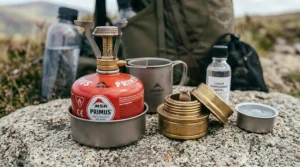
6. Jetboil Flash Personal Cooking System
The Jetboil Flash is a fundamentally different kind of product from everything else on this list. It isn’t just a screw top camping stove — it’s a complete integrated cooking system where the stove, insulated cup, and lid form a single unit. That 1-litre cup with its FluxRing heat exchanger base and insulating cosy boils 500ml of water in one minute and forty seconds. That’s not a typo.
The Flash screws onto any standard EN417 self-sealing gas cartridge stove canister, uses a push-button igniter, and locks the cup to the burner via a secure three-point system. The colour-change heat indicator on the cosy shifts from cool grey to vivid orange as the water approaches boiling — a small touch that prevents the classic backpacking mistake of lifting the lid too early and losing precious heat.
What you’re trading for this speed and convenience is weight (371g versus the 73g of the PocketRocket 2), bulk, and simmer flexibility. The Flash is optimised for boiling. Simmering is possible but imprecise — this is a stove for dehydrated meals, instant coffee, and soup pouches, not for cooking from scratch. The wide integrated cup also means you can’t easily use it with other pots unless you add Jetboil’s separate Pot Support 2.0 accessory.
For a UK buyer who does regular weekend walking trips and wants to boil water fast without faff — perhaps heading out on a Friday after work and not wanting to fiddle with loose components in a car park in the dark — the Jetboil Flash is hard to argue against. It just works, and it works faster than anything else here.
UK reviews on Amazon.co.uk are strongly positive, with several buyers noting it as their go-to kit for [Duke of Edinburgh] expeditions and solo overnighters in Dartmoor.
✅ Fastest boil time on this list by a significant margin
✅ Self-contained, foolproof integrated system
✅ Colour-change heat indicator is genuinely useful
❌ Significantly heavier and bulkier than standard canister stoves
❌ Limited simmer control — not suited to complex cooking
Price range: £100–£125 on Amazon.co.uk — prime-eligible and well worth checking for Prime member delivery.
7. Primus Essential Trail Stove
Primus is a Swedish brand that’s been making camping stoves since 1892 — which, by outdoor industry standards, is practically ancient history. The Essential Trail is their entry-level screw top camping stove and it’s a tidy bit of kit: 91g, 2,800W output, three folding pot supports, and a conventional twist-valve flame adjuster that works exactly as you’d expect.
There’s no igniter (bring a lighter), no pressure regulator, and no wind-specific engineering. What the Primus Essential Trail does offer is solid build quality from a brand with a genuine track record, a smooth and predictable flame at all power levels, and a reputation for longevity. Primus components are widely available across UK outdoor retailers — useful context if you ever need a replacement O-ring or valve part, though most users report these stoves running without issue for years.
The Essential Trail strikes me as the right choice for a UK buyer who wants a simple, reliable screw on gas canister stove from a trusted European brand, without paying the premium of MSR or adding the complication of integrated systems. It’s less exciting than some of the above options. It’s also the sort of stove you pack for thirty years and never think about replacing.
Primus is also a UKCA-compliant European brand, and their EN417 canisters are widely available across UK outdoor shops, including Cotswold Outdoor, Go Outdoors, and on Amazon.co.uk.
UK feedback emphasises the reliable, straightforward operation and the brand’s reassuring customer service reputation.
✅ Trusted European brand with decades of reliability
✅ Smooth, predictable flame at all levels
✅ Clean, compact design
❌ No igniter included
❌ No pressure regulator — cold-weather performance is average
Price range: £38–£55 on Amazon.co.uk — a solid, unfussy choice from a genuinely reputable brand.
How to Set Up and Use a Screw Top Camping Stove: A Practical Guide for UK Conditions
First Use: The Basics Done Right
Setting up a screw top camping stove is straightforward, but a few habits make a meaningful difference — particularly in the damp, changeable conditions that British campers will recognise.
Step 1: Check your canister thread. All the stoves in this guide use the EN417 Lindal Valve standard — the global threading format for self-sealing gas cartridge stoves. Primus, Coleman, Jetboil JetPower, Snow Peak, and most own-brand canisters from outdoor shops use this thread. Campingaz Easy-Click (CV) canisters do not — they use a bayonet-style fitting and will not screw onto an EN417 stove without an adapter.
Step 2: Screw the stove on firmly but not forcefully. Hand-tight is correct. Over-tightening can damage the valve seat; under-tightening risks a gas leak. If the threads feel stiff, check for debris or cross-threading.
Step 3: Deploy the pot supports before lighting. This sounds obvious, but fumbling with folding arms after ignition is a good way to knock a boiling pot off the canister.
Step 4: Light at low flame. Open the valve minimally, ignite — lighter, matches, or built-in piezo — then increase to desired heat. This reduces gas waste and avoids the momentary flare that can singe eyebrows.
British Conditions: Practical Tips
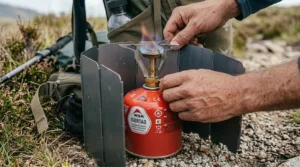
Wind is your enemy. Even a gentle breeze can reduce fuel efficiency by 30–40% on an unshielded canister stove. A lightweight aluminium windshield (available for under £10 on Amazon.co.uk) pays for itself in fuel savings within two or three trips. Position it around the stove but not so close that it traps radiant heat around the gas canister.
Cold mornings matter more than cold nights. Gas canisters perform well enough at 5°C–10°C but slow down meaningfully below 5°C. If you’re camping in autumn or winter, warm the canister briefly in an inner jacket pocket before cooking — not near an open flame — to restore pressure. This is less necessary with regulated stoves like the MSR PocketRocket Deluxe.
Stability on uneven ground. Canister-top stoves have a relatively high centre of gravity — a pot of water sits well above the ground on top of the canister. On genuinely uneven terrain, consider a foldable canister stand (widely available on Amazon.co.uk, typically under £8). For the Jetboil Flash, the tripod base largely solves this.
Wet weather storage. Moisture can corrode the stove’s burner assembly over time. After trips in British drizzle — so, most trips — dry the stove before storage and apply a minimal amount of silicone grease to the O-ring seal annually.
Which Screw Top Camping Stove Is Right for You? A UK Buyer’s Framework
Not every stove suits every camper. Here’s a practical decision guide:
If you’re a solo ultralight backpacker counting every gram — particularly for long-distance routes like the Pennine Way or Cape Wrath Trail — the BRS-3000T at under £20 and 26g is a no-brainer. Accept its limitations (no igniter, no regulator, limited wind performance) and carry a windshield and a lighter. It will reward you.
If you want the best all-round canister stove for three-season UK use — weekend wild camps, day walks, bothies, and the like — the MSR PocketRocket 2 or the SOTO Amicus are your options. The MSR wins on raw boil time; the Amicus wins on wind resistance and simmer control. If you tend to cook on exposed ridgelines, choose the SOTO. If you camp mostly in sheltered spots, the MSR edges it.
If you camp between October and April in Scotland, the Pennines, or exposed Welsh peaks — where temperatures routinely drop to single figures and near-empty canisters are a reality — the MSR PocketRocket Deluxe is worth the extra spend. The pressure regulator is the feature that separates it from a merely good stove to a genuinely reliable one in British shoulder-season and winter conditions.
If you’re buying for family camping, Duke of Edinburgh expeditions, or group trips where speed and simplicity beat weight savings — the Jetboil Flash makes an excellent case for itself. One system, one click, water boiling in under two minutes. Students and first-time wild campers particularly appreciate the foolproof nature of the integrated design.
If you’re budget-conscious but want an igniter included — the Fire Maple Buzz at £25–£38 is a genuine surprise. Don’t let the low price fool you into underestimating it; for fair-weather UK camping, it holds its own against stoves at twice the price.
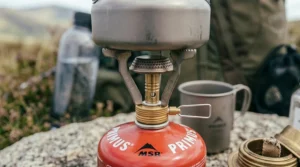
How to Choose a Screw Top Camping Stove in the UK: 6 Expert Criteria
Choosing a screw top camping stove isn’t complicated, but there are six criteria worth thinking through properly before you part with your money.
1. Weight and packability. For backpacking, aim below 100g for the stove head itself. The BRS-3000T (26g) is the extreme lightweight end; the PocketRocket 2 (73g) and SOTO Amicus (82g) represent the practical sweet spot. Integrated systems like the Jetboil Flash (371g total) are heavier but self-contained.
2. Pressure regulation. Non-regulated stoves — which includes most models below £60 — lose output as the canister empties or temperature drops. This matters far more in the UK than in warmer countries. If you camp in autumn, winter, or at altitude (Scottish Munros, for instance), a regulated stove like the MSR PocketRocket Deluxe is worth the premium.
3. Wind performance. Standard canister-top screw top camping stoves are, bluntly, poor in wind. The SOTO Amicus and SOTO WindMaster (higher up the price scale) handle this best among screw-top designs. For serious exposure, a windshield is essential regardless of stove.
4. EN417 compatibility. All stoves in this guide use the EN417 Lindal Valve thread — the standard for virtually all self-sealing gas cartridge stoves sold in the UK and Europe. Just confirm your canister uses the same standard (the threaded top rather than a bayonet fitting) before buying.
5. Simmer control. If you cook actual food — not just boil water for dehydrated meals — you need a stove with good low-flame control. The SOTO Amicus, MSR PocketRocket Deluxe, and Primus Essential Trail all offer usable simmer. The Jetboil Flash does not, and the BRS-3000T is average at best.
6. Value over time. A £70 stove that lasts fifteen years costs far less than a £20 stove you replace every two seasons. MSR and Primus in particular have strong reputations for durability — and replacement O-rings and parts are available from UK retailers if needed.
Common Mistakes When Buying a Screw Top Camping Stove in the UK
Assuming all gas canisters fit. The EN417 threaded valve is the UK standard for isobutane canister stoves, but Campingaz Easy-Click (CV) cartridges use a different bayonet fitting. Campingaz is widely sold in UK supermarkets and petrol station forecourts, so it’s an easy mistake to make. Check the canister top before you buy either the stove or the gas.
Ignoring cold-weather performance. Manufacturers quote boil times at 20°C sea level, no wind. Britain is rarely any of those things. Isobutane-propane mixes perform better in cold than pure butane — look for canisters labelled “propane mix” or “power gas” for autumn/winter use. And seriously consider a regulated stove if you camp between November and March.
Buying the lightest stove and forgetting a windshield. The BRS-3000T’s 26g saving over the PocketRocket 2 becomes irrelevant if you’re burning twice the fuel per meal because the wind is stripping heat off your pot. A 40g aluminium windshield entirely changes the maths.
Choosing an integrated system when you need versatility. Jetboil systems are brilliant at what they do, but they’re limited to their own cup unless you add accessories. If you want to cook with your own lightweight titanium pot, a standard screw-on stove gives you far more flexibility.
Buying a US-market stove that doesn’t meet UK/EU gas canister standards. Most stoves on this list are sold globally and accept EN417 canisters without issue, but some budget stoves on Amazon.co.uk marketplace listings are designed for North American propane canisters (the wider, heavier Lindal V thread). Double-check compatibility before purchasing — look for “EN417” in the product description.
Real-World Performance in British Conditions: What the Specs Don’t Tell You
Published specifications are measured in a lab at 20°C with a full canister, zero wind, and conditions that roughly correspond to a pleasant afternoon in the south of England in May. For the eight or nine months a year when British weather is doing something less cooperative, here’s what actually happens.
The wind problem. A 15 km/h breeze — nothing dramatic, the sort of thing you barely notice walking — increases water boil time by 50–100% on an unshielded canister stove. The Jetboil Flash’s integrated cosy and the SOTO Amicus’s low-profile burner both mitigate this better than average; the BRS-3000T in an open field is fighting a losing battle.
The cold canister problem. Below 5°C, isobutane-propane mix (the standard UK camping gas blend) starts to lose pressure. Below 0°C, it becomes unreliable without a pressure regulator. This is why the MSR PocketRocket Deluxe earns its price premium for Scottish winter campers: the regulator maintains output as the canister cools and empties, keeping your boil time consistent even on a frost-stiff October morning.
The altitude non-problem. Unlike some countries, UK camping rarely involves serious altitude. Even the highest point in England (Scafell Pike, 978 metres) and Scotland (Ben Nevis, 1,345 metres) doesn’t create enough atmospheric pressure drop to meaningfully affect isobutane canister stoves. Don’t let altitude anxiety drive your purchasing decision for domestic UK use.
The damp gear problem. British mornings are reliably damp. A stove left unprotected in a tent porch will accumulate condensation on the burner head. This rarely causes functional problems but does encourage corrosion over years of use. The simple fix: a small zip-lock bag for stove storage. All the stoves on this list are stainless steel or aluminium construction in the key components, so actual weather damage is slow — but good habits extend any stove’s life.
EN417 Gas Canister Compatibility and UK Standards
For a screw top camping stove to function, it needs to thread onto a compatible gas canister. In the UK and across Europe, the dominant standard is the EN417 Lindal Valve — a threaded valve that self-seals when the stove is removed, allowing partial canisters to be safely stored and reused. Every stove on this list uses this threading.
UK consumers have access to a wide range of EN417 canisters on Amazon.co.uk and in outdoor shops: Primus Power Gas (propane/isobutane mix), Coleman C500, Jetboil JetPower, and own-label products from brands like Taylor & Brown. For most three-season UK camping, the standard propane/isobutane mix — typically 20–30% propane, 70–80% isobutane — performs well at temperatures down to around -5°C before output becomes noticeably impaired.
Under UK product safety regulations, gas canisters sold for camping use must meet the relevant EN standards for pressure vessel safety. While the UKCA marking (which replaced CE post-Brexit) is not universally visible on all imported canisters, reputable brands like Primus, Coleman, and Campingaz maintain compliance with EN417 and associated European safety standards. For Northern Ireland buyers, note that the CE marking remains valid under the Windsor Framework.
One practical note: used canisters cannot be recycled in standard UK council recycling collections. Some outdoor retailers (including Cotswold Outdoor and specialist camping shops) accept empty canisters for appropriate disposal. Using a canister puncturing tool before recycling as scrap metal is one option; checking your local council’s guidance is the sensible first step.
Long-Term Cost of Owning a Screw Top Camping Stove in the UK
The upfront price of a stove is only part of the story. The real cost over time depends almost entirely on how much gas you burn and how long the stove lasts.
A standard 230g EN417 canister costs £5–£9 on Amazon.co.uk (cheaper in multipacks). It holds roughly 230g of gas, which is enough for approximately 12–15 litres of boiled water under normal conditions — call it five to eight solid meals or fifteen hot drinks. For a weekend trip (Friday to Sunday, two people), expect to use one to two canisters.
The stove itself, if you buy MSR or Primus quality, should last a decade or more with basic maintenance. An MSR PocketRocket 2 at £50 used twice a month for ten years works out at roughly 21p per use before gas — effectively invisible in your camping budget. Even the Jetboil Flash at £110, used regularly, becomes excellent long-term value.
What the spec sheet won’t tell you: fuel efficiency varies significantly between stoves, and efficiency matters on longer trips. The Jetboil Flash’s integrated heat exchanger makes it noticeably more fuel-efficient than open canister stoves in calm conditions — the insulated cup traps heat that would otherwise dissipate. On a week-long trip, that difference might save you carrying an extra 230g canister, which more than compensates for the extra weight of the system itself.
Replacement parts for MSR and Primus stoves — O-rings, pot-support arms — are available in the UK from specialist retailers. For the BRS-3000T and Fire Maple Buzz, parts are less accessible but the stoves are inexpensive enough that most users simply replace rather than repair.
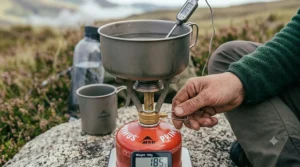
FAQ: Screw Top Camping Stoves UK
❓ What does 'screw top camping stove' mean?
❓ Are EN417 screw on gas canister stoves available everywhere in the UK?
❓ Can I use a screw top camping stove in cold weather in the UK?
❓ What gas canisters are compatible with screw top camping stoves in the UK?
❓ How long does a 230g gas canister last on a screw top camping stove?
Conclusion: The Best Screw Top Camping Stove for UK Adventures
The right screw top camping stove is the one that matches your actual camping habits — not the one with the most impressive spec sheet or the most expensive price tag. For ultralight solo adventurers on summer Munro trips, the BRS-3000T at under £20 is a quietly extraordinary piece of kit. For the majority of UK campers doing regular three-season weekend walks, the MSR PocketRocket 2 or SOTO Amicus offer the best balance of weight, performance, and price in the £35–£60 bracket. Step up to the MSR PocketRocket Deluxe for four-season reliability, or into the Jetboil Flash ecosystem for unmatched boiling speed and all-in-one convenience.
What all of these stoves share is the fundamental virtue of the screw top design: simplicity. Screw it on. Light it. Cook. There’s a reason this format has dominated backpacking stoves for decades, and there’s no sign of it changing. British weather will do its worst regardless — but with the right stove in your pack, at least the tea will always be hot.
✨ Ready to Find Your Perfect Stove?
🔍 Click any product name above to check the latest prices and availability on Amazon.co.uk. Prime members get free next-day delivery on most of these models — and with any stove purchase over £25, standard delivery is typically free for non-Prime orders too.
Recommended for You
- Push Fit Camping Stove UK 2026: 7 Best Picks & Buying Guide
- Screw Top vs Push Fit Camping Stove: 7 Best UK Picks for 2026
- Best Single Burner Camping Stove UK 2026: 7 Top Picks Reviewed
Disclaimer: This article contains affiliate links. As an Amazon Associate, I earn from qualifying purchases. If you purchase products through these links, we may earn a small commission at no additional cost to you.
✨ Found this helpful? Share it with your mates! 💬🤗
