
In This Article
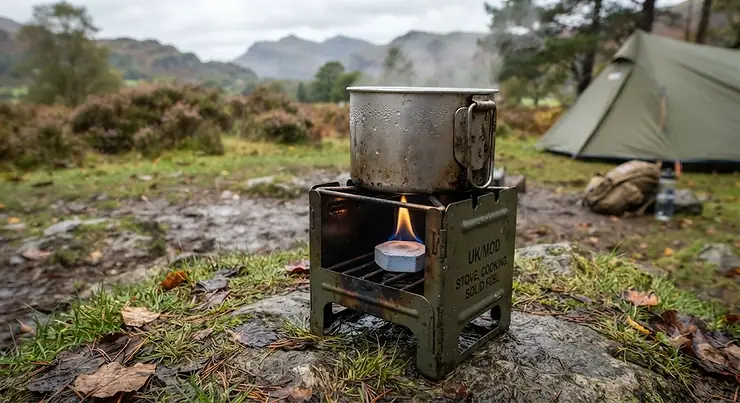
There’s something almost stubborn about a military hexamine stove. It has no batteries to charge, no piezo igniter to snap, no valve to seize solid with age. You fold it flat, you strike a match, and thirty years later it still works exactly the same way it did the day some quartermaster stamped it into a kit list. That’s the appeal, and it’s also why so many people land on this page slightly confused about which one to actually buy.
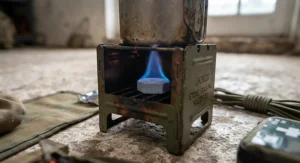
So, what is a military hexamine stove? It’s a small folding metal stand, typically steel, designed to hold and shield a burning hexamine fuel tablet while a mess tin or mug sits on top. Originally NATO field-ration kit, it’s now equally at home in a bushcraft roll or a car boot emergency bag.
This guide compares seven genuinely available options, weighs up the wider category of portable cooking stoves it sits within, and walks through where a solid fuel stove uk buyer should actually spend their money. We’ll cover budget surplus kit, mid-range modern replacements, and a couple of options most people have never heard of but probably should have. Full affiliate disclosure sits at the bottom of the page, as it should.
Solid Fuel Stove UK Options: Quick Comparison Table
Before the deep dive, here’s the shape of the market. Prices below are approximate ranges checked at the time of research — always confirm current pricing before buying, since stock and cost shift constantly on surplus gear especially.
| Stove | Type | Approx. Weight | Price Range | Best For |
|---|---|---|---|---|
| British Army Genuine Issue Hexamine Cooker | Genuine surplus | ~140-655g | around £8-£35 | Authentic collectors, budget bushcraft |
| Esbit Original Pocket Stove | Folding steel | ~110-180g | around £12-£20 | All-round reliability |
| BCB CN360 FireDragon Solid Fuel Mini Cooker | Modern gel/solid | ~110-125g | around £10-£18 | Cleaner-burning alternative |
| Esbit Titanium Ultralight Folding Stove | Titanium | ~11.5g | around £25-£35 | Ultralight backpackers |
| Coghlan’s Portable Folding Camp Stove | Folding steel | ~130g | under £15 | First-time buyers on a budget |
| Highlander Folding Solid Fuel Stove | Folding steel | ~120g | under £12 | Casual campers |
| Chazcool Folding Pocket Stove | Folding steel | ~90-100g | under £10 | Backup or spare stove |
Looking across this table, the spread tells its own story: weight and price barely move together at the cheap end, but they diverge sharply once titanium enters the picture. The British Army Genuine Issue Hexamine Cooker sits at an odd angle in this comparison because “genuine surplus” pricing depends entirely on condition and whether original packaging survives, which is worth remembering before you assume the cheapest listing is the best deal. For anyone building emergency kit on a budget, the honest starting point is usually one of the sub-£15 steel options rather than the titanium stove, however tempting the spec sheet looks.
💬 Found a comparison you didn’t expect? Share this table with a friend who’s still using a gas burner for everything!
Top 7 Military Hexamine Stoves: Expert Analysis
1. British Army Genuine Issue Hexamine Cooker — the original NATO-issue folding stove
There’s a particular satisfaction in owning the actual item, not a replica of it, and the British Army Genuine Issue Hexamine Cooker delivers exactly that.
Made from pressed steel and typically supplied “new and unissued” through UK surplus retailers, this is the same design that’s equipped British and NATO forces for decades. Closed dimensions run around 12 x 9.5 x 3cm, folding out to roughly 11.5 x 9.5 x 6.5cm, with total kit weight (stove plus tin and fuel) sitting near 655g depending on the supplier’s bundle. What that means in practice: it nests neatly with a standard mess tin, and the legs fold inward so it doubles as a stand for other cups too.
Based on the spec comparison with modern alternatives, this stove’s main selling point isn’t performance — it’s authenticity and simplicity. There’s genuinely nothing to break. Reviewers consistently note that surplus stock condition varies supplier to supplier, so buying from a specialist army surplus retailer with clear “new and unissued” grading matters more here than with almost any other item on this list.
Aggregated feedback across surplus retailers points to satisfaction with build quality but a recurring theme: fuel isn’t always included, and buyers frequently need to order hexamine tablets separately.
Pros:
- ✅ Genuine original-pattern military surplus, not a copy
- ✅ Virtually indestructible pressed-steel construction
- ✅ Folds flat and doubles as a wind guard
Cons:
- ❌ Fuel tablets often sold separately at extra cost
- ❌ Condition varies noticeably between surplus sellers
At around £8-£35 depending on condition and bundle, the value case rests on treating it as a genuine collectible as much as a working cooker — a fair trade if authenticity matters to you.
2. Esbit Original Pocket Stove — the internationally recognised benchmark
If there’s a default answer to “which solid fuel stove should I buy,” it’s usually the Esbit Original Pocket Stove, and there’s a reason this German-designed folding stove has become the reference point for the entire category.
Constructed from electrolytic galvanised steel that resists rust far better than bare tin, the stove offers two cooking heights, one for the smaller variant and up to three for the larger version, and typically ships with a handful of 14g fuel tablets that store inside the folded stove itself. In practice, that internal storage means less rattling gear in your pack and a genuinely pocket-sized unit when closed.
Honest analysis here is straightforward: this is the stove most people should default to unless they have a specific reason not to. It suits absolute beginners because there’s nothing to get wrong, and it suits experienced bushcraft users who simply want a dependable backup that always lights first time.
Aggregated review sentiment across major retailers consistently highlights reliability and the tablets’ resistance to wind, with a recurring complaint being the sooty residue left on pan bottoms after repeated use.
Pros:
- ✅ NATO-recognised design trusted worldwide
- ✅ Rust-resistant galvanised steel build
- ✅ Fuel tablets store neatly inside the folded stove
Cons:
- ❌ Leaves sooty residue on pan bases over time
- ❌ Slower boil times than gas-canister alternatives
Sitting in the £12-£20 range with fuel typically included, this is the safest first purchase for anyone new to a military hexamine stove setup.
3. BCB CN360 FireDragon Solid Fuel Mini Cooker — the modern, cleaner-burning replacement
Time hasn’t stood entirely still in this category, and the BCB CN360 FireDragon Solid Fuel Mini Cooker is the clearest evidence of that. It’s the design that’s actually replacing the classic hexamine cooker in current British Army field ration kits.
The stove is compact — roughly 75mm x 28mm x 115mm and around 125g — and uses BCB’s FireDragon gel fuel rather than traditional hexamine tablets, though it will still accept classic hexi blocks if that’s what you’ve already stocked up on. A removable windshield clips on for extreme weather, and the retractable side walls adjust to hold anything from a small mug to a larger pan.
What most buyers overlook about this model is that it isn’t just a lighter hexamine stove — it’s solving a genuinely different problem. FireDragon fuel is described as non-toxic and virtually odourless when burning, which matters far more than it sounds if you’ve ever tried to cook inside a bivvy with traditional tablets. Reports from serving personnel who’ve handled both describe the FireDragon system as noticeably easier to light and cleaner in use, though the fuel capsules can’t all be stored inside the stove the way hexamine tablets can, so overall bulk doesn’t shrink quite as much as the smaller stove size suggests.
Pros:
- ✅ Cleaner, low-odour burn than traditional hexamine
- ✅ NATO-approved and currently issued to UK forces
- ✅ Multi-fuel — accepts gel, solid blocks or classic hexi tabs
Cons:
- ❌ Fuel capsules don’t all store inside the stove
- ❌ FireDragon fuel costs more per use than basic hexamine
In the £10-£18 range, this is the pick for anyone who wants modern military-issue kit rather than something purely nostalgic.
4. Esbit Titanium Ultralight Folding Stove — the premium option for gram-counters
For the crowd who weighs their toothbrush before a trip, the Esbit Titanium Ultralight Folding Stove exists specifically to shave weight off an already featherlight category.
At roughly 11.5g, it’s a fraction of the weight of the standard steel Esbit stove while keeping the same fold-flat, two-position design. Titanium’s advantage over steel here isn’t really strength — it’s that a titanium sheet this thin doesn’t warp or corrode the way steel eventually does under repeated heat cycling.
Here’s what the spec sheet won’t tell you outright: titanium conducts heat differently to steel, meaning some users report needing slightly more patience with flame positioning to get an even burn under a pan. That’s a fair trade for backpackers shaving grams off a multi-day route, but it’s genuinely not worth the premium for someone cooking in the garden twice a year.
Aggregated feedback from ultralight hiking communities frequently praises the packed size and negligible weight while noting the higher price relative to performance gained versus the standard steel version.
Pros:
- ✅ Remarkably light at around 11.5g
- ✅ Corrosion-proof titanium won’t rust in storage
- ✅ Identical fold-flat design to the standard Esbit
Cons:
- ❌ Noticeably pricier than steel equivalents
- ❌ Less forgiving of clumsy flame positioning
Expect to pay in the £25-£35 range, a genuine premium buy rather than a default recommendation.
5. Coghlan’s Portable Folding Camp Stove — the accessible budget alternative
Not every buyer wants or needs a genuine military pattern, and the Coghlan’s Portable Folding Camp Stove covers that gap neatly as a lesser-known but perfectly capable Canadian-brand alternative.
Built from lightweight folding steel, it accepts either canned heat or standard fuel tablets, giving it a touch more flexibility than a hexamine-only design. At around 130g folded, it’s comparable in size to the classic military pattern without needing to be sourced from a specialist surplus dealer.
Based on the spec comparison, this stove trades a little of the “genuine military” appeal for wider fuel compatibility and easier high-street availability — a sensible compromise if you just want something that works without hunting down a surplus specialist.
Aggregated customer sentiment is generally positive on value, with reviewers commonly noting sturdy construction for the price, though a minority mention thinner metal than expected on the legs.
Pros:
- ✅ Accepts canned heat as well as solid fuel tablets
- ✅ Widely stocked, no surplus-hunting required
- ✅ Genuinely budget-friendly entry point
Cons:
- ❌ Leg metal feels thinner than military-pattern steel
- ❌ Lacks the “genuine issue” collectability factor
At under £15, it’s a sensible pick for someone who wants a working stove without the surplus-shopping rabbit hole.
6. Highlander Folding Solid Fuel Stove — the low-key UK outdoor brand pick
Highlander doesn’t shout about its kit the way some brands do, but the Highlander Folding Solid Fuel Stove deserves a spot here as a lesser-known option from a long-established UK outdoor supplier.
The design follows the familiar folding-steel format, sized to sit comfortably under a mess tin or small pan, and is aimed squarely at casual campers, festival cooking and fishing trips rather than serious expedition use. It’s priced to be an impulse purchase rather than a considered investment.
What most buyers overlook here is that “budget UK brand” doesn’t automatically mean “worse” — for occasional use, the practical difference between this and a pricier surplus stove is minimal, since both burn the same tablets at roughly the same rate.
Aggregated feedback across UK outdoor retailers tends to group this stove with the brand’s wider solid-fuel accessory range, generally positive on straightforward, no-fuss functionality for occasional outdoor cooking.
Pros:
- ✅ Genuinely low cost for occasional use
- ✅ Familiar, easy-to-use folding format
- ✅ Backed by an established UK outdoor brand
Cons:
- ❌ Not built for heavy, repeated expedition use
- ❌ Less refined finish than premium alternatives
Priced under £12, this suits someone who wants a spare stove sitting in the garage rather than a primary piece of kit.
7. Chazcool Folding Pocket Stove — the compact spare worth keeping in the car
Rounding out the list, the Chazcool Folding Pocket Stove is the kind of product most buyers stumble across almost by accident while comparing solid fuel options online — and it earns its place as a genuinely useful backup.
At around 95 x 75mm folded, it’s among the most compact stoves in this roundup, built from folding steel in the now-familiar wind-guard shape. It’s marketed broadly across picnic, BBQ and emergency-use categories rather than specifically at military buyers, which keeps the price low.
Honestly, this is the stove you buy as a second unit — one for the car boot, one in a bug-out bag, one left permanently in a tackle box. It’s not going to replace a primary hexamine stove for regular bushcraft use, but as redundancy, the low cost makes it easy to justify.
Aggregated feedback is limited compared to the bigger brands here, with reviewers who have used it noting it performs adequately for basic boiling tasks without any standout praise or complaints.
Pros:
- ✅ Extremely compact folded footprint
- ✅ Low enough cost to buy as a spare
- ✅ Straightforward wind-guard folding design
Cons:
- ❌ Smaller brand with a thinner review history
- ❌ Feels less robust than established military patterns
At under £10, it’s best treated as a backup rather than your only stove.
Compact Cooking Made Simple: Setup, Fuel and Maintenance
Getting compact cooking right with a hexamine stove is less about the stove and more about the small habits around it. Unfold the legs fully before lighting — a half-open stove is unstable and more likely to tip a pan. Place it on bare earth, stone or a metal tray rather than dry grass or a picnic table, since the underside gets genuinely hot within a minute of lighting.
For your first few uses, expect the fuel tablet to take slightly longer to catch than a match itself; a lighter held to the corner of the tablet for three or four seconds is more reliable than trying to strike-and-touch in one motion. Once lit, resist the urge to keep adjusting the pan position — hexamine burns steadily rather than roaring like gas, so patience saves fuel.
Maintenance is minimal but not zero: wipe soot from the underside of your pan after each use so it doesn’t transfer to your pack, and check folding hinges periodically for rust if you’re storing the stove somewhere damp. The most common first-30-days mistake is buying a stove without checking whether fuel tablets are included — several of the genuine surplus listings sell the cooker alone, and turning up on a cold hillside without fuel rather defeats the point.
Real-World Scenarios: Bushcraft, Army Surplus Collecting and Emergency Kits
Three profiles come up again and again when people search for this kind of kit, and each points to a slightly different stove.
The bushcraft beginner, likely in their twenties, building a first proper outdoor kit on a modest budget: the Esbit Original Pocket Stove is the sensible starting point, cheap enough to experiment with and forgiving enough that a bad first attempt doesn’t feel like wasted money.
The army surplus gear collector, drawn to genuine period-correct kit rather than pure practicality: the British Army Genuine Issue Hexamine Cooker is the obvious pick, since authenticity is the entire point of the purchase for this buyer.
The prepper or emergency-kit builder, stocking a car boot or under-stairs cupboard against power cuts: a pairing of the Coghlan’s Portable Folding Camp Stove as a primary and the Chazcool Folding Pocket Stove as a redundant spare covers that need without much outlay, since both are inexpensive enough to duplicate across multiple kits.
Buyer’s Decision Framework: Which Hexamine Stove Suits You?
If you want genuine period military kit and don’t mind hunting for stock, choose the British Army Genuine Issue Hexamine Cooker, because authenticity is worth more to you than convenience.
If you want one dependable stove and nothing more to think about, choose the Esbit Original Pocket Stove, because it’s the category benchmark for a reason.
If weight above all else is your priority on multi-day routes, choose the Esbit Titanium Ultralight Folding Stove, because every gram genuinely counts over distance.
If you want the cleanest-burning, most current military-pattern option, choose the BCB CN360 FireDragon Solid Fuel Mini Cooker, because it’s what’s actually being issued today.
If budget is the deciding factor and you just need something that works, choose either the Coghlan’s Portable Folding Camp Stove or the Highlander Folding Solid Fuel Stove, because both keep cost low without sacrificing basic function.

How to Choose a Military Hexamine Stove
- Decide whether authenticity matters to you. A genuine surplus stove and a modern replica burn fuel identically — the price difference is purely about provenance.
- Check whether fuel is included. Several genuine surplus listings sell the cooker only, so factor in a separate tablet purchase before you commit to a price.
- Weigh material against use case. Steel is tougher and cheaper; titanium is lighter but pricier and slightly less forgiving to use.
- Consider fuel type flexibility. Traditional hexamine tablets are cheap and widely stocked, while gel-based systems like FireDragon burn cleaner but cost more per use.
- Think about redundancy. A single stove is a single point of failure — many experienced users carry a cheap spare precisely because solid fuel stoves are inexpensive enough to duplicate.
- Match size to your mess tin or mug. A stove that’s too small for your cookware wastes heat around the edges rather than under the base.
- Read genuine review history where it exists. Established brands like Esbit have decades of aggregated feedback; newer or lesser-known brands simply have less data to judge them by.
As background reading on the stove’s design confirms, the folding frame does double duty as both a cooking platform and, when flipped, a windbreak for the flame — a detail worth remembering when comparing designs, since not every modern copy replicates that original engineering trick faithfully.
Common Mistakes When Buying Army Surplus Gear and Solid Fuel Stoves
The single most common mistake is assuming “army surplus” automatically means cheap and low-quality — genuine issue kit is often better engineered than commercial equivalents, precisely because it’s designed to survive being dropped, soaked and abused repeatedly.
The second mistake is buying the stove without checking fuel compatibility first. Not every tablet size fits every stove’s platform comfortably, and mismatched fuel can burn unevenly or spill outside the intended burn area.
A third mistake, more relevant to army surplus gear generally, is trusting vague condition descriptions. “Good used condition” can mean anything from lightly worn to genuinely rusted; reputable surplus sellers describe condition specifically, and it’s worth avoiding listings that don’t.
Finally, buyers frequently underestimate boil times. Solid fuel is genuinely slower than gas — expect several minutes longer to boil the same volume of water, and plan cooking schedules accordingly rather than assuming parity with a canister stove.
Military Hexamine Stove vs Gas Canister Stove
The comparison people actually want answered is hexamine versus gas, and the honest answer is that neither wins outright — they solve different problems.
A hexamine stove has no moving parts, no valve to fail, and fuel tablets that store for years without degrading meaningfully. A gas canister stove boils water dramatically faster and gives genuine flame control, but the canister itself is bulkier, can’t be refilled in the field, and becomes useless once empty regardless of how careful you were with it.
For emergency preparedness, hexamine’s shelf-stable simplicity wins. For serious multi-day cooking where meal quality matters, gas wins comfortably. Reviewers and outdoor safety bodies alike note that solid fuel and liquid fuel stoves carry a higher fire and carbon monoxide risk than gas equivalents when used carelessly indoors, which is worth weighing alongside raw performance — see the safety section below for the specifics.
What to Expect: Real-World Performance
On paper, a hexamine tablet sounds unimpressive next to a gas burner’s instant blue flame. In practice, the experience is different to what the spec sheet implies. Expect roughly five to eight minutes to bring 500ml of water to a rolling boil with a single standard tablet, longer in wind or cold, and expect a visible but manageable amount of soot on your pan afterwards.
The flame itself burns low and steady rather than roaring, which actually suits slow tasks like simmering rehydrated rations far better than it suits fast boiling. Wind is the biggest real-world variable; without the stove’s own fold-out sides acting as a shield, a stiff breeze can meaningfully extend cooking time or snuff a low flame outright.
Bushcraft Stove Choices for Beginners and Experienced Woodsmen
For anyone building a bushcraft stove setup specifically, the calculus differs slightly from general camping. Beginners benefit most from the Esbit Original Pocket Stove, since its forgiving, foolproof design means early mistakes with fire-lighting technique don’t turn into wasted trips.
Experienced woodsmen, who typically already carry a firesteel and natural tinder as their primary method, tend to value a hexamine stove purely as backup redundancy rather than a first resort — in which case the compact, low-cost Chazcool Folding Pocket Stove or Highlander Folding Solid Fuel Stove earn their keep precisely because they’re cheap enough to leave permanently in a kit bag without a second thought.
Where bushcraft use differs most from casual camping is frequency: a stove used weekly needs sturdier hinges and a proven track record, which tips the balance back toward the established Esbit range over lesser-known alternatives for anyone using their kit seriously rather than occasionally.
Long-Term Cost & Maintenance
The total cost of ownership on a hexamine stove is refreshingly simple compared with gas systems, since the stove itself rarely needs replacing. The ongoing cost is entirely in fuel tablets, typically sold in packs and consumed at a rate of one to two tablets per meal depending on cooking time and conditions.
Over a year of occasional weekend use, fuel costs stay modest — considerably less than the equivalent spend on gas canisters, which are discarded once empty regardless of how much unused gas remains inside them due to pressure drop. The trade-off is time rather than money: solid fuel takes longer per boil, so the total cost of ownership favours hexamine on price but favours gas on convenience.
Maintenance costs are effectively zero. Beyond the occasional wipe-down and a check for rust on hinges, there’s nothing to service, no seals to replace, and no valve mechanism to eventually wear out.
Safety, Regulations and Carbon Monoxide Compliance Guide
Solid fuel stoves are genuinely useful, but they carry real risks that deserve straightforward, unglamorous treatment rather than downplaying.
Never use any solid fuel, gas or liquid fuel stove inside a sealed tent or bivvy without ventilation. Incomplete combustion produces carbon monoxide, which is odourless and can build up dangerously in an enclosed space long before you notice anything wrong. If you or anyone nearby develops a headache, dizziness or nausea after cooking in a confined space, get into fresh air immediately and treat it as a genuine warning sign, not something to shrug off.
Beyond carbon monoxide, wildfire risk applies just as much to a small hexamine tablet as to a full campfire. Current government guidance advises avoiding open fires in the countryside and using only designated, safe areas, a rule worth following even with a stove this small, particularly during dry summer months when fire risk ratings climb across much of the UK. Always let the stove cool fully before packing it away, and never leave a lit tablet unattended, even briefly.
✨ Don’t Miss These Exclusive Deals!
🔍 Ready to pick your stove? Check current pricing and availability on any of the options above before your next trip out — a reliable backup stove is one of the cheapest pieces of insurance in your entire kit bag.
FAQ
❓ Is a military hexamine stove legal to own in the UK?
❓ How long does a hexamine fuel tablet burn for?
❓ Can you use a hexamine stove indoors?
❓ What's the difference between hexamine and Esbit fuel?
❓ Do I need a licence to buy army surplus solid fuel stoves?
Conclusion
Choosing between these seven stoves really comes down to what you’re optimising for. If it’s authenticity, the British Army Genuine Issue Hexamine Cooker is the obvious answer. If it’s all-round dependability at a fair price, the Esbit Original Pocket Stove remains the sensible default that most buyers should start with. Gram-counters should look at the Esbit Titanium Ultralight Folding Stove, while anyone wanting genuinely current military-issue kit should consider the BCB CN360 FireDragon Solid Fuel Mini Cooker. Budget-conscious buyers are well served by the Coghlan’s Portable Folding Camp Stove and Highlander Folding Solid Fuel Stove, and the Chazcool Folding Pocket Stove earns its place as a cheap, sensible spare.
Whichever you land on, a hexamine stove remains one of the simplest, most dependable pieces of kit you can own — no batteries, no valves, nothing complicated to fail when you need it most. Check current prices before you buy, since stock and availability shift often on surplus gear especially.
✨ Ready to build out your kit properly? Compare the options above and pick the stove that actually matches how you plan to use it — not just the one with the best-looking listing photo. ✨
Recommended for You
- Best Hexamine Stove 2026: 7 Top Picks
- Trangia Storm Cooker: 7 Best Storm-Proof Picks for 2026
- Trangia Stove Review 2026: 7 Best Meths Stoves UK Compared
Disclaimer: This article contains affiliate links. As an Amazon Associate, I earn from qualifying purchases. If you purchase products through these links, we may earn a small commission at no additional cost to you.
✨ Found this helpful? Share it with your friends! 💬🤗
