In This Article
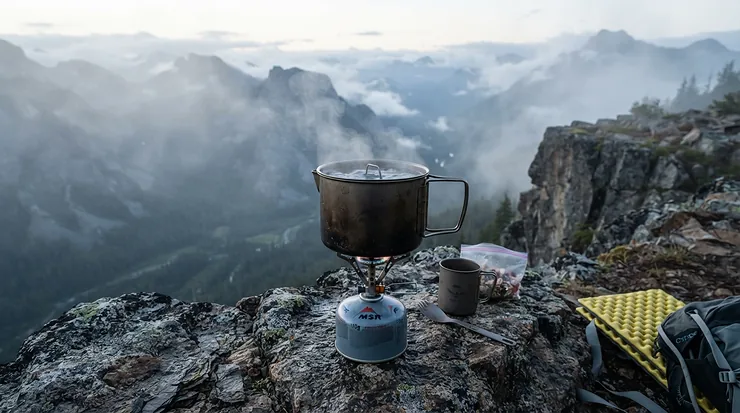
There’s a special kind of misery reserved for the person crouched in a freezing tent, thumb on the igniter, listening to a stove cough, sputter and die. The kettle stays cold. The dehydrated chilli stays cold. Morale, frankly, drops below the thermometer. Nine times out of ten the stove isn’t broken; the fuel is simply wrong for the job. Choosing isobutane canisters for high altitude is less about brand loyalty and more about chemistry, temperature and a surprising dollop of physics. Think of the blend as a relay team: propane sprints in the cold, isobutane holds the pace as the can empties.
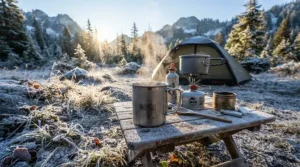
Here’s the twist that catches most people out: thin air is rarely the culprit. Cold is. That changes which canister you buy, how you carry it and what you do at 6 a.m. when your water bottle has frozen solid. This guide covers seven real canisters sold to UK buyers, from a budget lowland back-up to a vapour-mesh winter specialist. Along the way we unpack altitude pressure performance, cold-air canister behaviour and mountaineering fuel choice. We also distil isobutane canister reviews from what retailers, roundups and hill-going forum users actually report. Prices are ranges only, so check current listings before you buy.
What Are Isobutane Canisters for High Altitude?
Isobutane canisters for high altitude are screw-thread (EN417) steel cartridges filled with an isobutane-rich blend, typically 70-80% isobutane and 20-25% propane. Isobutane boils at about −11.7°C, and the added propane keeps pressure up where isobutane alone would sulk. That is why these blends suit cold, low-pressure mountain conditions.
Quick Comparison: Isobutane Canisters for High Altitude at a Glance
Here’s the short version before the deep dive. Blend figures and temperature limits come from manufacturer and retailer listings rather than lab tests, so treat them as claims to weigh, not guarantees.
| Canister | Blend (as listed) | Quoted cold limit | Best For |
|---|---|---|---|
| Primus Winter Gas | 80% isobutane / 20% propane, plus Vapour Mesh | Down to about −22°C | Sub-zero winter trips |
| MSR IsoPro | 80/20 isobutane/propane, 5% or less n-butane | No figure published | Reliable alpine all-rounder |
| Jetboil Jetpower | Propane/isobutane (sources cite 80/20 or about 70/25/5) | “Four-season”, no figure | Jetboil owners, shoulder seasons |
| Optimus 4-Seasons Gas | 70% isobutane / 25% propane / 5% butane | Stable around freezing, altitude-rated | Alpine summers |
| Primus Power Gas | Propane/isobutane (retailers list 80/20) | Roughly −10°C to −15°C | UK year-round value |
| Coleman C300 Xtreme | 60% butane / 40% propane | Quoted down to −27°C | Coldest, shortest outings |
| Highlander Valved Gas Cartridge | Propane/butane/isobutane (ratios unpublished) | Not stated | Budget lowland back-up |
Reading across, Primus Winter Gas and Coleman C300 Xtreme make the boldest cold claims, but they get there differently: vapour-enhancing paper versus brute-force propane. MSR IsoPro and Optimus 4-Seasons Gas sit in the sensible middle, with clear blends and strong altitude credentials. Budget buyers should note that Highlander Valved Gas Cartridge doesn’t publish its ratios, so you can’t judge its cold limit from the label.
💬 Just one click — help others make better buying decisions too!😊
Top 7 Isobutane Canisters for High Altitude: Expert Analysis
Each pick below gets analysis built on published specs and reported user experience, not borrowed from a product page. Review sentiment is aggregated from retailer pages, roundups and forums, and where the evidence is thin, the text says so.
1. Primus Winter Gas — vapour mesh built for sub-zero cooking
The standout trick is a sheet of absorbent paper inside the can, branded Vapour Mesh, which gives liquid fuel far more surface to evaporate from.
The 230g size lists at roughly 390g gross, and the blend is 80% isobutane to 20% propane, the same mixture as Primus Power Gas. Primus claims about 9% more power after an hour of cooking and about 15% more after two hours, and UK stockists quote use down to around −22°C. That timing matters, because a chilled canister fades precisely when you’re deep into a snow-melting session.
Based on the spec comparison, the mesh earns its keep on multi-day winter trips rather than quick brews. It doesn’t change the propane share, so you still need to keep the can warm in deep cold. Think of the mesh as a helpful assistant, not a miracle worker.
Reviewers on UK hill-walking forums regularly steer winter campers towards Primus Winter Gas, although one sceptical poster argues winter mixes are largely marketing because the butane fraction stays liquid below freezing. A Nordic retailer also advises against using it above 0°C, citing uneven burning.
Pros:
- ✅ Vapour Mesh boosts vaporisation as the can empties
- ✅ Quoted use down to around −22°C
- ✅ Standard EN417 thread fits most stoves
Cons:
- ❌ Costs more than standard four-season blends
- ❌ Reportedly burns unevenly above freezing
Expect around £9-£12 for 230g. That’s a small premium that’s easy to justify when the forecast says frost and silly in July.
2. MSR IsoPro — low n-butane, high consistency
Where this canister shines is purity: MSR says its isobutane contains 5% or less n-butane, the sluggish cousin that stalls in the cold.
The blend is 80% isobutane and 20% propane, sold in 110g, 227g and 450g sizes. Retail listings put the 227g can at roughly 325g to 380g gross, so weigh yours rather than trusting any single figure. A float gauge on the smaller two sizes gives a rough read on what’s left, and the 110g can slots inside the 1.0L WindBurner and Reactor pots.
In practice, low n-butane means the can keeps delivering as it empties. That makes it a sensible default for alpine routes and cold-but-not-arctic nights. There’s no published low-temperature limit, so treat it as a strong all-rounder rather than a deep-freeze specialist.
A Cascade Designs distributor page shows a high average from a small pool of votes (15 at the time of research). Gear roundups routinely rank MSR IsoPro near the top for cold weather, though many of those lists carry affiliate links, so weigh them accordingly.
Pros:
- ✅ Low n-butane share keeps pressure steadier
- ✅ Float gauge on 110g and 227g sizes
- ✅ 110g size nests inside compatible MSR pots
Cons:
- ❌ No published low-temperature limit
- ❌ Some retailers sell it in-store only
Expect around £8-£12 for 227g. That’s fair for the consistency, though hazardous-goods shipping rules mean online availability can be patchy.
3. Jetboil Jetpower — widely stocked four-season fuel for efficient stoves
The headline here is convenience: three sizes (100g, 230g and 450g) and a self-sealing valve that lets you remove the can from the stove for transport.
Jetboil rates the 230g can at roughly 23 to 28 litres of boiled water in its own systems. That’s a best-case figure, so expect less when it’s cold or windy. The blend is where sources disagree: one review site cites 80/20 isobutane/propane, while a Finnish retailer lists about 70% isobutane, 25% propane and 5% n-butane. Gross weight sits around 380g for the 230g size.
Either way, the propane share is roughly 20-25%, so it behaves like other four-season blends: fine in frost with a warm can, increasingly sulky below about −10°C when used upright. The Finnish retailer says as much, calling it a genuine three-season fuel that tolerates some sub-zero use with preheating. It recommends propane-heavy fuel or a liquid-fuel stove for real winter.
Roundups frequently name Jetboil Jetpower a top pick for efficiency, and reviewers consistently flag the same cold-weather caveat.
Pros:
- ✅ Three sizes, widely stocked
- ✅ Self-sealing valve for easy transport
- ✅ Efficient partner for Jetboil systems
Cons:
- ❌ Published composition varies by source
- ❌ Fades below about −10°C used upright
Expect around £8-£12 for 230g. It’s good value if you already own a Jetboil, and less compelling for deep-cold trips.
4. Optimus 4-Seasons Gas — a published blend with real propane muscle
The 230g can lists 70% isobutane, 25% propane and 5% butane, a refreshingly transparent recipe. Retailers pitch it specifically at mountaineering and high-altitude use.
Gross weight is about 360g and it measures roughly 110 x 90mm. The protective cap doubles as a new-or-used indicator, a small feature that saves arguments at the gear swap. Optimus says it performs best with stoves that have a four-season mode, naming its Vega and Polaris models. A quarter propane share means higher internal pressure than ordinary blends, but the 5% butane is still there and will show in very cold, upright use.
Here’s what to weigh: this is a strong choice for alpine summers and Scottish shoulder seasons, when mornings dip a few degrees below zero. One French retailer describes it as dependable around 0°C regardless of altitude, which is a modest, believable claim. For sustained deep cold, you’d want an inverted-capable stove as well.
The verifiable review pool is tiny: a French retailer shows top marks from just two reviews. That’s encouraging but statistically thin, and we couldn’t verify a larger independent sample.
Pros:
- ✅ Transparent 70/25/5 blend
- ✅ 25% propane lifts cold-weather pressure
- ✅ Cap shows whether the can is new
Cons:
- ❌ Very small verifiable review pool
- ❌ Best matched to four-season-mode stoves
Expect around £8-£11 for 230g. It’s solid value for alpine use if you can find it in stock.
5. Primus Power Gas — the sensible UK year-round workhorse
The appeal is versatility: Primus pitches it as the blend for uncertain weather, from spring through to early winter.
It comes in 100g, 230g and 450g sizes, with a self-sealing screw thread, and the 230g lists at about 390g gross. UK retailers describe it as propane/isobutane at 80/20 and quote a lower limit between roughly −10°C and −15°C. One stockist calls it probably the best mix for general UK conditions. Older forum posts quote a 50% butane recipe, so trust current labels over old forum lore.
On balance, Primus Power Gas handles British winter hills at −5°C to −10°C if you keep the can warm. It’s the canister that makes sense when you want one fuel for everything. Step up to Primus Winter Gas only when your trips regularly go well below freezing or involve long snow-melting sessions.
Review evidence is more reputation than data. A Backpacking Light commenter singles out genuine Primus canisters as dependable, and the wider pool is mostly anecdote.
Pros:
- ✅ Versatile spring-to-winter blend
- ✅ Three sizes and self-sealing valve
- ✅ Often the cheapest here per brew
Cons:
- ❌ Lower limit quoted inconsistently by retailers
- ❌ No vapour-enhancing insert
Expect around £6-£10 depending on size. That’s excellent value for mixed conditions.
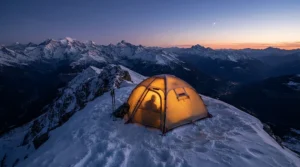
6. Coleman C300 Xtreme — the propane-heavy cold-night gambler
A quick honesty note: this is a butane/propane can (60% butane, 40% propane), and the label doesn’t specify isobutane. It earns a place because its propane share is the highest here.
The 230g can weighs about 351g gross, uses the standard EN417 screw thread and has a double-sealed resealable valve. Coleman and UK retailers quote operation down to −27°C. Based on the spec comparison, the 40% propane is what could make that plausible, since propane boils at roughly −42°C.
Forum analysis is more cautious. One Backpacking Light thread argues the −27°C figure would need about 40% propane and an inverted canister, and notes there’s no Vapour Mesh equivalent. Another contributor points out that propane evaporates first, so an upright can’s mix drifts over time.
So treat Coleman C300 Xtreme as a short-trip, coldest-night option, ideally with a stove that can run inverted. Retailer pages repeat the claim but offer little independent testing.
Pros:
- ✅ Highest propane share in this round-up
- ✅ Resealable double-safety valve
- ✅ Standard EN417 screw thread
Cons:
- ❌ Butane type not specified on label
- ❌ −27°C claim lacks independent testing
Expect under £10 for 230g. Good value as a cold-night specialist, but not an obvious everyday can.
7. Highlander Valved Gas Cartridge — the budget lowland back-up
The standout is accessibility: it’s a UK-sold, self-sealing cartridge in 100g, 230g and 450g sizes.
Highlander describes a propane, butane and isobutane mix that supports lower-temperature performance, and says it’s compatible with most stoves, including Jetboil models. The catch is that no ratios are published. Without them you can’t estimate the cold limit, so treat it as a three-season fuel by default.
That makes Highlander Valved Gas Cartridge a sensible spare for lowland camps, hut kitchens and car-boot emergencies. It’s not the one to stake a winter bivouac on.
One UK retailer page shows three reviews, all positive, which is pleasant but far too small to count as evidence. We found no larger independent review pool.
Pros:
- ✅ UK-sold with three size options
- ✅ Self-sealing valve for safe removal
- ✅ Compatible with most screw-thread stoves
Cons:
- ❌ No published blend ratios
- ❌ Higher cost per gram in 100g size
Expect under £10 for the 100g size. It’s fine as a back-up, but larger cans usually offer better value per gram.
Top 7 at a Glance: Weight, Price and Review Evidence
| Canister | 230g-class gross weight (as listed) | Price range (230g unless noted) | Review evidence | Best For |
|---|---|---|---|---|
| Primus Winter Gas | About 390g | Around £9-£12 | Forum recommendations, one sceptic | Multi-day frosty trips |
| MSR IsoPro | About 325-380g (227g size) | Around £8-£12 | Small high-scoring sample, roundups | Alpine all-rounder |
| Jetboil Jetpower | About 380g | Around £8-£12 | Roundup favourite, cold caveats | Jetboil owners |
| Optimus 4-Seasons Gas | About 360g | Around £8-£11 | Tiny sample (two reviews) | Alpine summers |
| Primus Power Gas | About 390g | Around £6-£10 (size-dependent) | Brand reputation, limited data | UK year-round |
| Coleman C300 Xtreme | About 351g | Under £10 | Forum doubts over −27°C claim | Short, coldest outings |
| Highlander Valved Gas Cartridge | Not listed | Under £10 (100g) | Three positive reviews | Budget back-up |
The weights barely separate these canisters, so the choice comes down to blend and review evidence. Primus Power Gas is the value anchor, while Primus Winter Gas costs a little more for the cold-weather features. Optimus 4-Seasons Gas and Highlander Valved Gas Cartridge have the thinnest review data, so lean on their listed specs and keep expectations measured.
Practical Usage Guide: Getting the Best from Isobutane Canisters for High Altitude
Even the best blend underperforms if you treat it like a tin of beans. A few habits make the difference, and most cost nothing.
Before you leave
- Check the label for blend and EN417 thread. Pierce-type cartridges and screw-thread canisters don’t swap.
- Weigh each canister at home and write the gross weight on it. Gauges are rough; scales are honest.
- Pack a small foam pad to stand the can on, because snow and rock steal heat quickly.
On the hill
- Keep the canister inside your jacket while you set up, and sleep with it in the bottom of your bag. UK forum users report this reliably rescues the first brew.
- Insulate the can, not just the stove. Chris Townsend’s winter camping tips note that when the fuel container is separate, insulating it matters more than insulating the burner.
- Keep the can only hand-warm. Warm-water baths are a popular trick, but never use boiling water or direct flame.
- A windshield helps, but never trap heat around the canister itself.
Mistakes in the first 30 days: carrying cans in external pockets, leaving a stove screwed on in the rucksack, and trusting a gauge instead of weighing. Fix those three and you’ll avoid most cold-morning disappointments.
Real-World Scenarios: Three Trips, Three Canister Choices
Specs mean little until they meet a real itinerary. Here are three profiles, each matched to the canisters that make sense.
The Cairngorms weekend. Two friends, two nights, temperatures from −5°C to −10°C, a handful of winter trips a year and a tight fuel budget. Primus rates a 230g can at roughly two bivouac nights for two, so Primus Winter Gas fits neatly. Keep the can in a jacket during setup and consider MSR IsoPro in 110g as a warm-weather spare.
The Alpine hut-to-hut summer. One big trip a year, nights near freezing above 3,000 metres, cooking mostly breakfast and the occasional hot meal. Optimus 4-Seasons Gas or Jetboil Jetpower suit this well, particularly with Jetboil or Optimus stoves. Buy locally on arrival, because UK airport rules restrict flammable gas (see the safety section).
The Himalayan trekking peak. Three weeks, camps above 5,000 metres, nights well below −15°C and snow-melting by the hour. This is where an upright canister stove struggles. A liquid-fuel stove, or a remote-canister stove run inverted, is the safer plan. If you do take canisters, a propane-heavy option like Coleman C300 Xtreme or Primus Winter Gas helps, but budget extra fuel and don’t believe any label that promises miracles.
Problem → Solution Guide: When the Flame Fades
Most cold-weather stove failures fall into five patterns. Each has a practical fix.
1. The flame shrinks after a few minutes. Evaporation is chilling the can. Stand it on foam, use a warm-water bath, or switch to Primus Winter Gas for long cooking sessions, where Vapour Mesh helps most late in the can’s life.
2. It won’t light on frosty mornings. The can is too cold to build pressure. Sleep with it in your bag overnight, and favour a blend with 25% propane such as Optimus 4-Seasons Gas.
3. Strong start, weak finish. Propane burns off first, leaving an isobutane-heavy remainder. Weigh the can, and carry a fresh one for the coldest night. MSR IsoPro‘s low n-butane helps it hold steadier as it empties.
4. The can is frosting or running too hot. Chilling and overheating are both warning signs. Keep it only hand-warm, and never wrap heat around it.
5. It won’t thread or it leaks. Check the EN417 thread and the valve seat. Many classic Campingaz cartridge types use a different connection, whereas Coleman C300 Xtreme uses the standard screw thread. If you smell gas, move away from ignition sources and don’t use it.
Altitude Pressure Performance: Why Thin Air Isn’t Your Enemy
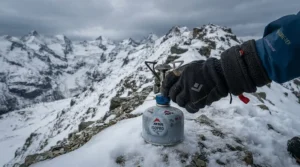
Here’s the part that surprises people. A canister’s internal pressure depends on what’s in it and how warm it is, not on how high you’ve climbed. Meanwhile the air pushing back against the valve gets thinner with height. On Everest’s summit, ambient pressure is roughly 300 mbar, according to a pressure chart discussed in Backpacking Light’s cold-canister analysis. A stove only needs the canister pressure to beat the air outside, so at altitude even a cold, sleepy can keeps pushing gas out. That’s why old Himalayan expeditions got away with butane-based cartridges, as one commenter on that article recalls.
So altitude pressure performance is mildly in your favour as far as the canister goes. The catches lie elsewhere. First, temperature usually falls with height, and that is the real stove-killer. Second, water boils at a lower temperature as pressure drops, roughly 1°C lower for every 285 to 300 metres climbed and about 71°C on Everest. Your brew is “done” sooner, but food cooks slower. Third, melting snow demands far more energy than heating liquid water. When you size your fuel, plan around temperature and time, not summit height.
Cold-Air Canister Behaviour: What Happens Inside the Can Below Zero
Inside every canister, liquid fuel evaporates to feed the burner, and evaporation steals heat. Burn hard in cold air and the can chills itself, pressure sags and the flame shrinks, a loop that feels like the stove slowly losing the will to live. This cold-air canister behaviour is why the blend matters so much. Isobutane boils at about −11.7°C and propane at roughly −42°C, whereas n-butane boils near −0.5°C. A blend heavy in n-butane therefore stalls around freezing. A contributor to the Backpacking Light discussion estimates isobutane’s vapour pressure is about 50% higher than n-butane’s.
Propane also evaporates first. Use a canister upright in the cold and the vapour is richer in propane than the liquid, so the leftover fuel drifts towards isobutane. That’s why a half-empty can performs worse than its label suggests, and why carrying a fresh can for the coldest night is smart. Vapour Mesh, as in Primus Winter Gas, tackles the surface-area side of the problem.
Inverting a can only suits stoves designed for liquid feed, such as remote-canister models with a preheat loop. Turning a canister-top stove upside down invites flare-ups, so don’t.
How to Choose Isobutane Canisters for High Altitude
Use this seven-step checklist, in order.
- Read the blend, not the slogan. Look for isobutane and propane with a low n-butane share. “Four-season” on its own tells you very little.
- Match propane share to your coldest night. Around 20% suits frosts. Technical discussions on Backpacking Light suggest roughly 25% propane or more for colder conditions.
- Confirm the thread. EN417 screw-thread canisters fit most modern stoves, but check before you buy.
- Size for the trip. Choose 100g for solo weekends and 230g for two bivouac nights for two, going to 450g for groups or snow-melting.
- Plan to weigh. Gauges are rough, and a scale is cheap.
- Budget for warming and spares. A second can beats optimism.
- Buy locally if flying. Canisters don’t travel by air (see the safety section).
Common Mistakes When Buying
- Trusting a “−27°C” claim without checking the blend or the stove type.
- Buying cheap, unspecified butane cans. One Walkhighlands poster describes generic cheap canisters as typically pure butane and nearly useless in the cold.
- Using a nearly empty can on the coldest night.

Isobutane Canister Reviews: What Buyers and Testers Actually Report
Let’s be upfront: large, independent isobutane canister reviews are thin on the ground, because a can of gas is hard to review beyond “it burned”. What exists falls into four buckets, each with quirks.
Roundups. Gear lists routinely name Jetboil, MSR and Primus products as favourites, and several make cold-weather vapour pressure the deciding factor. Many carry affiliate links, so read them for patterns rather than verdicts. One roundup also notes that cold or altitude can cut a small canister’s boil count to single digits.
Forums. UK hill-walking threads are more candid. Posters recommend winter blends and warming tricks, a few call winter mixes a gimmick, and several note that canister-top stoves are simply the wrong tool for long deep cold.
Retailer ratings. Typically a handful of votes. MSR IsoPro, Optimus 4-Seasons Gas and Highlander Valved Gas Cartridge pages show strong scores from tiny samples, which is encouraging but inconclusive.
Technical write-ups. Most useful of all, because they explain why a canister behaves as it does.
The consistent message across isobutane canister reviews is that nobody reports a label fixing a cold problem on its own. Warming, stove design and fuel level matter just as much. Where review evidence is thin, this article leans on blend chemistry and published specs instead, and flags the gap.
Mountaineering Fuel Choice: Canister Stoves vs Liquid Fuel
Every mountaineering fuel choice is a trade between convenience and cold-weather muscle. Canister stoves light instantly, weigh little and need almost no maintenance. That makes them brilliant for hut-to-hut Alpine trips and most British winter days. Liquid-fuel stoves win when temperatures plunge, because liquid fuel doesn’t depend on a can’s pressure. One roundup calls white gas the superior pick for sub-zero, high-altitude work, and one reviewer says serious winter mountaineers should want a liquid-feed stove regardless of canister brand.
There’s a middle path. Chris Townsend notes that stoves allowing the canister to be inverted behave like liquid-feed stoves, and Walkhighlands posters rate remote-canister stoves with preheat loops for snow-melting trips. The cleverest mountaineering fuel choice is often the same canister plus a smarter stove.
| Factor | Isobutane canister stove (upright) | Liquid-fuel stove |
|---|---|---|
| Deep-cold reliability | Fades below about −10°C unless warmed or inverted | Generally preferred below zero |
| Simplicity | Screw on, light, boil | Priming and more maintenance |
| Running cost | Can get expensive when melting lots of snow | Refillable bottles often cost less |
| Pack weight (short trips) | Light and tidy | Heavier set-up |
| Best For | Alpine summers, UK winter day trips | Expeditions, sustained deep cold |
Looking at the table, canister stoves win on speed and simplicity, while liquid fuel wins when the temperature falls and the snow-melting marathon begins. If your trips mostly sit between 0°C and −10°C, a propane-rich canister such as Primus Winter Gas or MSR IsoPro is the sensible, light option. Beyond that, treat canisters as a convenience and plan a second stove type.
Long-Term Cost & Maintenance: What a Canister Really Costs per Brew
At around £9-£11 for a 230g can, and Jetboil’s own figure of roughly 23 to 28 litres of boiled water per can in its systems, the best-case cost lands near 30p to 50p per litre. Cold and altitude erode that. If low temperatures halve efficiency, you’re at roughly 60p to £1 per litre, which is why snow-melting trips eat budgets. Refillable liquid fuel often costs less per litre, but demands heavier kit and more upkeep.
Value, then, is about matching the can to the conditions. Paying a few pounds extra for Primus Winter Gas on a frosty weekend can save a whole second canister. Paying for it on a July camp saves nothing. Likewise, Highlander Valved Gas Cartridge at under £10 for 100g is a higher cost per gram, which suits a lowland back-up rather than a daily driver. Larger 450g sizes typically offer better price per gram but add bulk.
Maintenance is minimal but real. Store canisters upright and dry, because steel rusts. Wipe the valve seat before screwing on a stove, and don’t leave a stove fitted for long storage. Check each can for dents and valve damage. MSR labels its canisters recyclable, but local rules vary, so check yours before binning empties.
Safety, Regulations & Travel Rules for Canister Fuel
Canister fuel is extremely flammable, so a few non-negotiables apply. Screw-thread canisters follow the European EN417 standard, which keeps valves and stoves compatible, but it doesn’t make them forgiving. Never puncture, refill or heat a canister, as retailers and manufacturers repeatedly warn. Cook in ventilated spaces, because carbon monoxide builds quickly in a closed tent, and keep canisters away from open flames.
Travel is where plans quietly fall apart. The UK Civil Aviation Authority’s banned-items guidance says camping stoves with fuel attached, or used ones, are normally not permitted, with exceptions only for stoves completely purged of fuel. UK airport guidance also lists gas cylinders as prohibited in hold baggage, and airlines can apply stricter rules than the regulator. Translation: don’t pack canisters for the Alps, Pyrenees or Nepal. Buy them after landing from outdoor shops, and fly the stove clean.
Online buying has its own wrinkle. Several European retailers sell canisters in-store only because hazardous-goods shipping rules restrict couriers, and some UK stockists won’t post them either. Always check delivery terms before assuming you can order a can for your trip.
FAQ
❓ Which isobutane canister is best for winter mountaineering in the UK?
❓ Are winter-blend canisters worth the extra money?
❓ Can I fly with isobutane canisters to the Alps or Himalaya?
❓ How many 230g canisters do I need for a week-long trek?
❓ Can I use a Coleman cartridge on my EN417 stove?
Conclusion
Choosing isobutane canisters for high altitude comes down to three questions: how cold will it get, how long will you cook and what stove are you holding? For frosty weekends and snow-melting stints, Primus Winter Gas is the specialist. For all-round alpine reliability, MSR IsoPro and Optimus 4-Seasons Gas make a persuasive pair. Jetboil Jetpower is the convenient option for Jetboil owners, and Primus Power Gas is the UK year-round workhorse. Coleman C300 Xtreme brings propane-heavy punch for the coldest outings, and Highlander Valved Gas Cartridge is the budget back-up.
Remember the big lessons. Thin air helps your canister while cold hurts it, so warm the can, weigh it, insulate it and respect the limits of your stove design. A sound mountaineering fuel choice often means pairing the right canister with a stove that can run inverted, or carrying liquid fuel for the coldest trips. If you’re flying, buy at your destination, and treat label claims as claims, not guarantees. Pick the canister that suits your coldest night, not the average afternoon, and your brew gets made whatever the thermometer says.
✨ Ready to fuel your next adventure?
🏔️ Click any highlighted canister above to check current pricing and availability, then pack the blend that matches your coldest night. Your future self, warm brew in hand, will thank you! ☕
Recommended for You
- Isobutane Canisters For Backpacking: 7 Proven Picks (2026)
- Propane Butane Mix For Backpacking Stove: 7 Best Picks (2026)
- Propane Butane Mix For Cold Weather Camping: 7 Best Picks (2026)
Disclaimer: This article contains affiliate links. As an Amazon Associate, I earn from qualifying purchases. If you purchase products through these links, we may earn a small commission at no additional cost to you.
✨ Found this helpful? Share it with your friends! 💬🤗
